

Why AI Video Needs Directorial Thinking
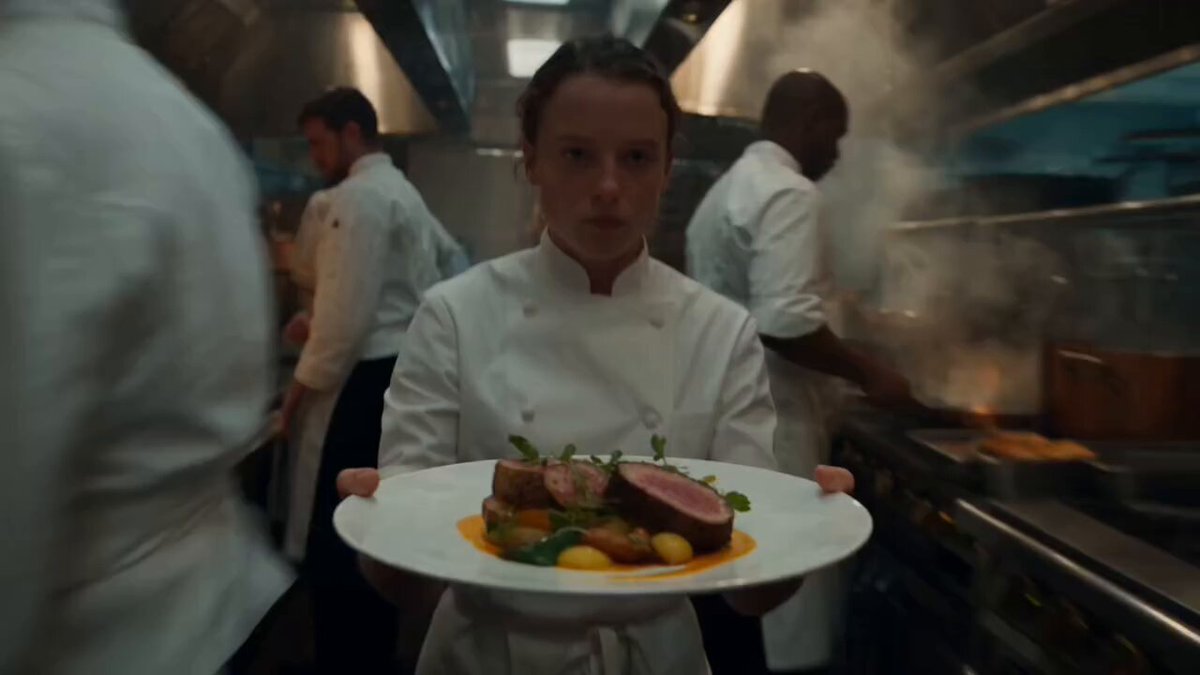
The generative video landscape has a strange imbalance. Modern models can render skin, water, fabric, weather and firelight with startling fidelity. What they cannot do is decide what should be on screen, in what order, and why. Anyone who has spent a weekend producing clips knows the feeling: each individual shot looks impressive, yet the assembled sequence feels like a slideshow with a soundtrack.
The missing layer is directorial intelligence — the habit of thinking in scenes, beats and visual grammar before touching a prompt box. A single shot is a technical artifact. A sequence is an argument. If your generated footage never adds up to a point of view, no amount of resolution will rescue it.
This guide is a practical workflow for putting structure first. It covers how to build a narrative skeleton that survives generation, how to translate that skeleton into a shot list a model can actually follow, how to use light and color as narrative tools, and how to keep continuity across dozens of independently generated clips. It is written for short-form creators, brand teams, animators and anyone building a repeatable AI video pipeline.
The Narrative Skeleton: Structure Before Prompts
Amateur AI video work usually begins with a visual idea — "a robot in a rainy neon street." Professional work begins with a change: something must be different at the end than at the beginning. That difference is the spine you hang every shot on.
Compressing three acts into sixty seconds
A forty-second brand film still has a setup, a turn and a resolution. The proportions change, not the logic. A workable distribution for short-form:
- Setup (0–25%): establish place, subject and one clear desire or problem.
- Escalation (25–70%): introduce friction, contrast or a surprising development.
- Resolution (70–100%): show the outcome, then hold one final image long enough to land.
If you cannot state your story in one sentence with a verb — "a courier crosses a flooded city to deliver a letter" — you are not ready to generate. Write that sentence at the top of your project file. Every shot must either advance it or be cut.
Beat sheets that survive generation
A beat sheet is a numbered list of emotional or informational turns. Keep it to five to nine beats for anything under two minutes. For each beat, note three things: what the audience must understand, what the audience should feel, and which single image best carries both. That image becomes your anchor shot.
Beats also protect you from a common trap: generating whatever looks good in the moment. When a spectacular clip arrives that does not serve a beat, the beat sheet gives you permission to discard it without agonizing.
From beat to scene to shot
Once beats are locked, expand each into a scene with a location, a time of day and a character state. Only then break scenes into individual shots. This three-step funnel — story, scene, shot — is the difference between a coherent film and a highlight reel.
Building a Shot List That Machines Can Follow
A shot list is a production document, not a wish list. For AI workflows it doubles as a prompt specification, so the terminology you choose matters enormously.
Shot size vocabulary
Use industry terms consistently, because models respond to them with reasonable reliability:
- Extreme wide / establishing: geography, isolation, scale.
- Wide: subject in full with surroundings.
- Medium: waist up; the workhorse of dialogue and action.
- Medium close-up: chest up; intimacy without losing context.
- Close-up: face or object; emotional emphasis.
- Extreme close-up: detail as punctuation; use sparingly.
A practical rule for pacing: vary shot size deliberately. Three consecutive medium shots feel flat regardless of content. Alternating wide, medium and close creates rhythm without any camera movement at all.
Camera movement as grammar
Movement carries meaning. Decide what each move is doing before you request it:
- Static tripod: observation, stability, formality.
- Slow push in: growing realization or intimacy.
- Pull out: revelation of context, isolation, endings.
- Pan or tilt: reveals information across space; good for establishing.
- Tracking / dolly: companionship with a moving subject.
- Handheld: urgency, documentary immediacy, instability.
- Crane or drone: grandeur, geography, transitions.
One movement per shot is the safest default. Models frequently mangle combined moves — a push with a simultaneous pan usually produces warped geometry.
Lens, depth and framing cues
Add focal-length language to your shot descriptions. "35mm, shallow depth of field, subject sharp, background softly blurred" is far more actionable than "cinematic." Similarly, specify framing rules when they matter: centered symmetry for formal or surreal moments, off-center with negative space for tension, low angle for dominance, high angle for vulnerability.
Lighting and Color as Narrative Tools
Light is not decoration. In a sequence, light tells the audience where to look and how to feel about what they see.
Motivated light beats pretty light
Ask where light comes from inside the world: a window, a streetlamp, a phone screen, a fire. Motivated sources make generated frames feel physically real. When a shot is lit by a plausible source, shadows fall in consistent directions and the eye accepts the image immediately.
Palette continuity across shots
Choose a two- or three-color palette for the film and keep it. If your opening uses teal shadows and warm practicals, the third scene should still live in that family unless you are deliberately signaling a new world. Write the palette into every prompt: "cool blue shadows, warm amber highlights, muted desaturated midtones."
Time of day and emotional temperature
Time of day is a powerful scene-setting shortcut. Golden hour reads as hope and nostalgia; overcast noon reads as clinical or bleak; blue hour reads as quiet transition; night with hard practicals reads as tension. If your story moves through an emotional arc, move the light with it — and then note the exact lighting state in your shot list so generated shots can match each other.
Prompt Anatomy: From Beat to Frame
Once planning is done, prompts become translation rather than invention. A reliable structure for video prompts:
- Subject and wardrobe
- Action in progress
- Camera: size, angle, movement, lens
- Lighting: source, direction, quality
- Color and palette
- Environment and atmosphere
- Style and medium references
Example: "A courier in a soaked yellow rain jacket walking toward camera through knee-deep floodwater, medium shot, low angle, slow push in, 35mm, lit by flickering overhead streetlights with cold blue ambient fill, desaturated teal palette with warm sodium highlights, submerged city street at dusk, volumetric mist, photoreal cinematic."
That prompt is long, but every clause is doing work carried over from the shot list.
Negative prompts and failure modes
Track the errors your chosen model produces most often and put them in a negative field: extra limbs, morphing faces, text artifacts, watermark, warped hands, flickering exposure, duplicate subjects, jittery edges. Keep the list short and specific; a bloated negative prompt often suppresses desirable detail.
Iteration loops and take management
Treat generation like filming: multiple takes, one keeper. Generate three to five variants per shot with small variations in seed or wording, then select against a fixed criterion — does it serve the beat? Log which prompt produced the keeper. After two projects you will have a personal library of phrasing that works, which is worth more than any single setting.
Maintaining Continuity Across Generated Shots
Continuity is where sequence-level quality lives or dies. Viewers forgive a slightly odd frame; they do not forgive a character whose jacket changes color between cuts.
Reference frames and keyframing
Use a still image as a reference or start frame whenever the tool supports it. Locking the first frame of a shot to a previously approved image dramatically improves consistency of face, wardrobe and environment. For movement shots, keyframe the start and end poses and let the model interpolate.
Character and wardrobe consistency
Write a character bible: age range, hair, distinguishing features, exact clothing with colors, and any accessories. Copy that block verbatim into every prompt featuring that character. Do not paraphrase; small wording changes cause large visual drift. If your tool supports reusable character references or identity conditioning, use them for every appearance.
Environment and prop continuity
Note the layout of recurring locations: which side the door is on, what is on the table, where the light source sits. Store an approved master shot of each location and reference it whenever you return to that space. Props matter too — a red umbrella introduced in scene two is a continuity obligation for the rest of the film.
Managing the Generation Queue and Review Cycle
Once you are producing dozens of shots, project management becomes the bottleneck, not rendering.
Prioritize by risk
Generate your hardest shots first: complex movement, multiple characters, unusual lighting. If a difficult shot proves impossible, you still have time to redesign the sequence around it. Easy static shots can be produced in a batch at the end.
Version naming that survives a week
Adopt a naming convention before you need it: scene04_shot02_v03_pushin_35mm. Include scene, shot, version and a short descriptor. Sort by approval status in folders: to_generate, review, approved, rejected. This single habit prevents the most common form of creative paralysis — not knowing which of forty files is the good one.
A review checklist
Run every approved clip through the same questions:
- Does it serve its beat?
- Are framing and lens consistent with neighbors?
- Is the light direction compatible with the previous shot?
- Any anatomy, text or physics artifacts?
- Does the cut into and out of it work?
Rejecting early is cheaper than fixing in an editor. A shot you cannot fix in ten minutes of trimming should be regenerated.
A Worked Example: A Sixty-Second Documentary Opener
Suppose the assignment is a one-minute opener about a lighthouse keeper's final season.
Beats: (1) the lighthouse at dawn, vast and isolated; (2) the keeper climbing the stairs, routine and worn; (3) the lamp lit at dusk; (4) an empty chair on the final night; (5) dawn again, the light going out.
Shot list: extreme wide drone approach for beat one; three shots for beat two — wide of the tower interior, medium of hands on the rail, close-up of a weathered face; a slow push into the lamp for beat three; static wide of the empty chair with negative space for beat four; a pull-out from the dark lamp to the horizon for beat five.
Lighting arc: cool pre-dawn blues, warm interior tungsten, golden lamp glow, single cold practical on the chair, pale grey dawn. The palette tightens as the story ends.
Continuity anchors: a master still of the keeper, a master still of the lamp room, and a fixed wardrobe description repeated word for word in every prompt.
The result is under a dozen shots, yet it reads as a complete film because every clip was chosen to serve a beat, and the visual language was designed in advance rather than discovered by accident.
Common Mistakes and How to Avoid Them
Generating before writing. The single largest time sink. An hour of planning saves ten hours of regeneration.
Using vague adjectives. "Cinematic," "beautiful" and "epic" carry almost no information. Replace them with camera, lens, light and palette specifics.
Changing prompt wording between related shots. Paraphrasing breaks continuity. Reuse exact blocks for anything that must match.
Overloading single shots with complex action. Models handle one clear action well. Split busy moments into two shots and cut between them.
Ignoring audio and pacing. Silence makes even good AI footage feel synthetic. Plan music cues and sound design alongside the edit, and cut on beat.
Chasing a perfect shot that serves no beat. Delete it. Nostalgia for a render is not a story reason.
FAQ
How long should my first AI video be?
Thirty to sixty seconds. Short projects let you complete the full loop — structure, shot list, generation, continuity, edit — and learn where your pipeline breaks before committing to something larger.
Do I need a shot list if I am working alone?
Especially then. A shot list replaces the memory and coordination that a crew would otherwise provide. It also becomes your generation checklist, so nothing gets forgotten in the rush.
How many takes per shot is reasonable?
Three to five for important shots, one or two for simple statics. Judge against the beat, not against your favorite render.
What is the fastest way to improve consistency?
Lock a character and location reference image, then reuse the exact same descriptive text block in every prompt. Consistency is mostly a discipline problem, not a model problem.
Should I generate in order?
No. Generate the riskiest shots first, then fill in. Editing order and generation order are rarely the same.
How do I know when a sequence is finished?
When every shot can be justified by a beat, the cuts work on playback, and adding another clip would not improve the story. That is a stronger signal than any technical benchmark.
Where to Go From Here
The tools will keep improving. Resolution, motion coherence and prompt adherence will all get better, and the advantage that technical novelty once provided will continue to shrink. What will not automate itself is the decision-making: which story to tell, which image carries it, and which shots to throw away. Build the habit of planning in scenes and beats, translate that plan into a disciplined shot list, and hold every generated frame to the standard of its purpose. That workflow scales from a thirty-second social clip to a multi-scene narrative piece — and it is the part of the craft that stays yours.
