
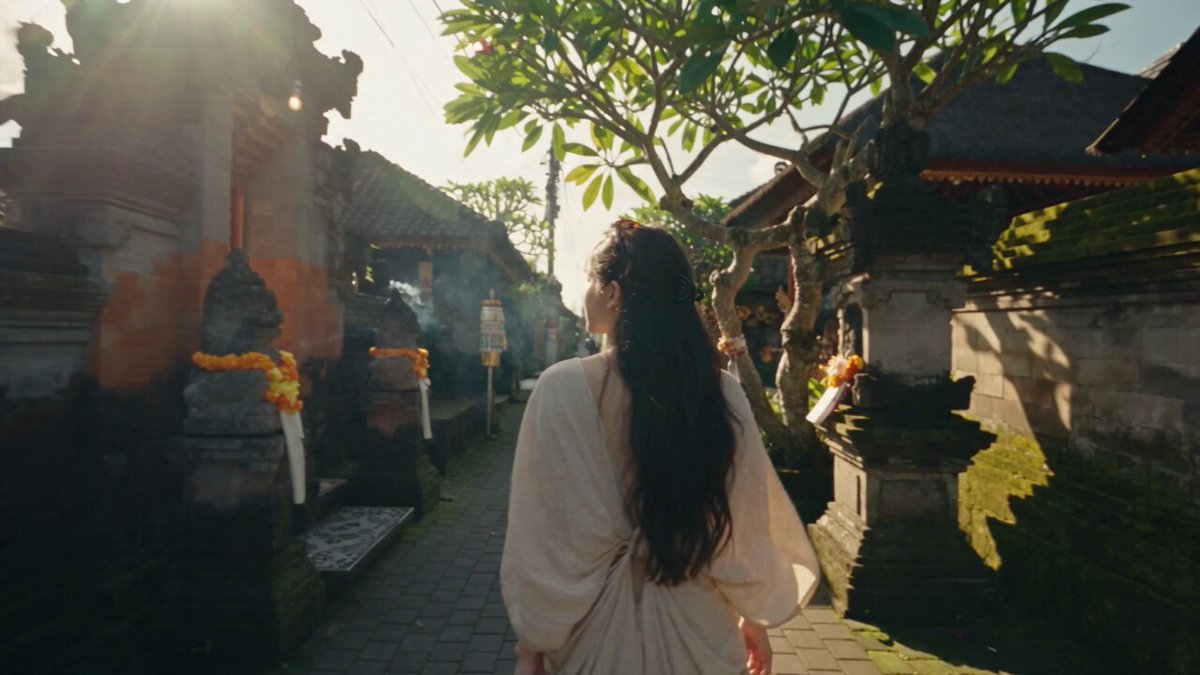
Turning a written idea or a handful of stills into a cinematic clip used to require a camera crew, a lighting kit, a location permit, and weeks in an edit suite. Today a single creator can brief a scene in a browser, generate a dozen variations before lunch, and cut a finished sequence the same week. The tools changed dramatically, but the craft did not. The people who get consistently good results treat AI video like a production pipeline rather than a slot machine.
This guide lays out a neutral, tool-agnostic workflow for going from text and images to cinematic clips. It covers how text-to-video and image-to-video differ, how to choose a generation model for a specific shot, how to keep characters and objects consistent across cuts, how to control camera and lighting, how to troubleshoot the usual failures, and how to finish and deliver. Nothing here depends on a single platform, so you can apply it to whatever generator is available to you now and whatever replaces it next quarter.
Why text and image inputs now drive real productions
For years, generated video was a novelty: short, blurry, and structurally incoherent. The turning point came when models stopped treating motion as decoration and started treating it as a physical process. Modern generators infer depth, infer how fabric folds, and infer how light behaves when a subject turns. That shift is what makes them usable for actual storytelling rather than for social-media gimmicks.
At the same time, the cost of iteration collapsed. A shot that once required booking a studio can now be attempted forty times in an afternoon. That changes creative behavior more than it changes budgets. When retries are cheap, directors take risks, test strange framing, and explore variations they would never have scheduled. The professional skill becomes curating rather than producing: generating many candidates, recognizing quickly which one is alive, and discarding the rest without sentiment.
The remaining bottleneck is not raw image quality. It is intent. Generators are excellent at completing a described world and terrible at guessing what you meant. Every section below is ultimately about reducing that ambiguity.
What text-to-video handles well
Text-to-video excels at establishing shots, abstract transitions, atmosphere, and anything where the exact identity of the subject matters less than the mood. A prompt describing a foggy harbor at dawn with a slow crane up will usually deliver something usable quickly. It is also the fastest path to a style test: you can explore three visual directions in ten minutes before committing to one.
Where it struggles is specificity. If you need the same actor's face in five shots, or a product that looks identical across a sequence, pure text prompting will drift. Treat text-to-video as your concepting and coverage engine.
What image-to-video handles well
Image-to-video starts from a still and animates it. This is the workhorse for anything with visual continuity requirements. Because the first frame is fixed, the model inherits your character design, wardrobe, color palette, and lens character. Product shots, character close-ups, branded content, and anything that must match an existing art direction all benefit enormously.
The tradeoff is that your still must already be good. A weak composition cannot be rescued by animation; it will simply move badly for five seconds. This is why the block-out phase described later matters so much.
Where hybrid pipelines win
Almost every serious project is hybrid. You generate stills first, approve the ones that work, animate the approved frames, and use text-to-video only for inserts, transitions, and coverage that does not need identity continuity. This sequencing gives you editorial control at each stage: reject a composition before spending time on motion, reject a motion pass before spending time on sound.
The building blocks of a modern AI video pipeline
It helps to think in layers rather than in single prompts. A clip is the output of several decisions stacked on top of each other, and when something looks wrong you can usually trace it to one layer.
The prompt layer
This is subject, action, environment, light, lens, and mood. Strong prompts are specific about physics and vague about trivia. "A woman in a wool coat walks toward camera through wet snow, breath visible, shallow depth of field, overcast light, slight handheld sway" gives the model constraints it can honor. Listing seven adjectives about her personality gives it nothing.
The reference layer
References are stills, character sheets, or style frames supplied to anchor identity and look. They are the single biggest lever on consistency. Whenever a project has more than two shots featuring the same subject, references stop being optional.
The motion and control layer
This covers camera moves, motion strength, duration, and any structural controls the tool exposes, such as depth hints, pose guides, or start-and-end frame pairing. Control is what separates a shot that reads as intentional from one that reads as random.
The assembly layer
Editing, sound, grading, and delivery. Many creators under-invest here and then blame the generator for a sequence that simply has no rhythm. A well-cut mediocre shot beats a beautiful shot that sits on screen two seconds too long.
Choosing the right model for the shot you need
Different generators have different personalities. Rather than declaring one the winner, match the model to the shot. Four criteria do most of the work.
| Criterion | What to look for | Typical best fit |
|---|---|---|
| Realism | Natural skin, believable motion blur | Dialogue-free character shots, brand films |
| Stylization | Strong illustrated or painterly coherence | Music videos, explainers, social spots |
| Motion complexity | Handles crowds, water, cloth, vehicles | Action beats and establishing shots |
| Consistency | Holds identity across many generations | Series, recurring characters, product lines |
Realism versus stylization
If a clip needs to pass as live action, prioritize models with strong temporal coherence and conservative motion. If it needs to feel designed, prioritize models with pronounced style bias, because they deliver a look without requiring heavy grading later.
Motion complexity and physical plausibility
Crowds, splashing water, smoke, and fast vehicles separate strong models from weak ones. Test with a deliberately hard prompt: a person walking through a busy market while the camera tracks sideways. If limbs separate from bodies or background extras flicker, that model is not ready for your action sequence.
Shot length and retry economics
Longer generations are convenient but expensive in time. In practice, generating six short clips and cutting them together usually produces a better result than one long clip, because you keep only the seconds that work and you gain edit points for free.
Consistency requirements
If your project has a recurring subject, weight consistency heavily in model choice, even at some cost to raw beauty. A slightly less gorgeous clip that matches the previous five shots is worth more to the audience than a stunning orphan.
Solving the consistency problem with reference-driven generation
Character drift is the most common reason AI video projects look amateur. The fix is procedural, not magical.
Build a character sheet first
Before generating any motion, create three to five approved stills of each main subject: front, three-quarter, profile, and one expressive variation. Approve them as a set, not individually. If they do not look like the same person, keep refining until they do, because every later problem inherits this flaw.
Lock wardrobe, palette, and lens
Write down wardrobe, hair, and key colors in a reusable paragraph, then paste that paragraph into every prompt for that character. Do the same for lens language: focal length, aperture feel, and camera height. Consistency across a sequence is often more about consistent language than about the model.
Reuse seeds and prompt skeletons
Where a tool exposes a seed, reuse it across variations of the same shot. Where it does not, keep a prompt skeleton with fixed slots for action and camera, and change only the slot you need. This keeps the surrounding context stable, which is what actually anchors the look.
Multiple characters in one frame
Two-character shots break more often than single-character shots. Generate them with explicit spatial instructions, and prefer framing where both faces are visible at a similar angle, since the model has more evidence to work with. If a shot keeps failing, split it into two singles and let the edit imply the interaction. Audiences read coverage as conversation.
A repeatable workflow from brief to final cut
This sequence works for a thirty-second social spot and for a three-minute narrative short. The time allocated changes; the order does not.
Write a shot-level brief
Convert your idea into a shot list with one line per shot: subject, action, camera, light, duration, and purpose in the story. If a shot has no purpose, cut it before generating anything.
Block the scene with stills
Generate stills for every shot, place them on a timeline in order at the correct durations, and watch the sequence as a slideshow. Most structural problems, weak pacing, redundant shots, missing transitions, become visible at this stage for almost no cost.
Animate with layered motion prompts
Animate only approved stills. Describe one primary motion and one secondary motion per clip. A camera push plus a subtle head turn reads well; a camera push plus a head turn plus a coat flutter plus a crowd surge usually collapses into mush.
Iterate in short takes, not long ones
Generate four to six seconds at a time. Select the best take, trim the dead frames, and move on. Accumulating discarded long clips is how projects stall.
Assemble and cut to rhythm
Cut to the pace of the piece, not the pace of the generation. A tense scene benefits from shorter clips; a contemplative one can hold a single shot for eight seconds. Use sound to carry transitions so visual cuts feel motivated.
Polish with sound and grade
Add ambience, footsteps, and music before you judge the visuals. Sound changes perceived image quality dramatically, because the audience stops scrutinizing motion when the audio gives them a narrative reason to look elsewhere.
Cinematic control: camera, light, pacing, sound
Camera language models understand
Generators respond well to conventional vocabulary: slow dolly in, handheld sway, locked-off tripod, crane up, orbit left. They respond poorly to jargon invented on set. Name the move, name the speed, and name the framing.
Lighting and color direction
Lighting descriptions do more for perceived production value than any other prompt element. Golden hour backlight, single practical lamp, overcast diffusion, or hard noon sun each produce a recognizable look. Pick one per scene and keep it consistent, because mixed lighting across cuts is the fastest way to look like a compilation rather than a film.
Pacing and edit rhythm
Vary shot length deliberately. Alternating a long establishing shot with three quick reaction shots creates energy without any camera movement at all. This is editing craft that predates AI by a century and remains the most reliable quality upgrade available to a solo creator.
Sound as a first-class layer
Record or source ambience, add foley for actions the viewer sees, and choose music that supports the emotions you intend. Audio also masks small visual imperfections, which is legitimate craft rather than cheating.
Troubleshooting the most common AI video failures
Faces that morph and hands that melt
Reduce motion amplitude for that clip, increase reference weight, and shorten duration. If the problem persists, reframe so the face is larger and the movement is smaller. Close-ups with minimal action are far more reliable than full-body walk-and-talks.
Flicker, texture crawl, and warping backgrounds
Flicker usually comes from high-frequency detail: foliage, gravel, brickwork, chain-link fences. Simplify the background, reduce motion, or push those details out of focus. A shallow depth of field is a technical fix disguised as an artistic choice.
Prompt drift between shots
When shot four no longer matches shot one, compare the two prompts side by side. Drift is almost always caused by an unexplained change in lighting, lens, or wardrobe wording rather than by the model.
Overloaded prompts that flatten the image
Long prompts full of competing instructions produce average, generic results. Trim to the six or eight elements that matter, and test additions one at a time. The best prompts read like concise shot descriptions, not like paragraphs of aspirations.
Finishing and delivery: resolution, frame rates, and aspect ratios
Upscaling and detail recovery
Upscaling helps, but it cannot invent structure that was never there. Fix composition and framing before you upscale, then apply a light sharpening pass. Heavy sharpening amplifies artifacts and makes generated footage look synthetic.
Frame interpolation and slow motion
Interpolating to a higher frame rate can smooth motion, but it also introduces warping around fast-moving edges. Use it sparingly on clips where motion is already smooth, and avoid it on hands, hair, and water.
Aspect-ratio variants and safe areas
Generate for your primary aspect ratio, then reframe for secondary platforms. Vertical crops need their own composition decisions; a center crop of a wide shot frequently decapitates the subject. When you know you need vertical, frame slightly looser and keep the subject centered.
Captions, loudness, and platform specs
Burn in or upload captions, normalize loudness to platform expectations, and export at a bitrate that survives re-compression. These unglamorous steps decide whether your carefully crafted clip looks professional on someone else's phone.
Working as a team: assets, reviews, and version control
Naming conventions that survive a project
Use a predictable pattern such as project_scene_shot_take. When six people generate twenty clips a day, naming is the only thing preventing an unrecoverable mess.
Review checkpoints
Hold three reviews: stills approval, motion approval, and final cut approval. Reviewing stills first saves the most time, because changes are cheapest there and most expensive after animation.
Building a reusable asset library
Save approved character sheets, prompt skeletons, lighting recipes, and sound beds. Over a few projects this becomes a personal studio style guide and cuts your setup time dramatically.
Frequently asked questions
Do I need to write prompts differently for text-to-video and image-to-video?
Yes. Text-to-video prompts must describe the whole world, including subject, environment, and light. Image-to-video prompts only need to describe what changes: motion, camera, and the atmosphere shift. Over-describing an image-to-video clip often causes the model to fight your reference.
How many generations should a good shot take?
For a straightforward shot, three to six attempts is normal. For a complex two-character shot with specific motion, expect twenty or more. If a shot has failed thirty times with the same prompt, the prompt is the problem, not the model.
Can I mix outputs from several generators in one project?
You can, and most experienced creators do. Keep a consistent grade, grain, and aspect ratio across all clips so the seams disappear. A shared color treatment does more for unity than using a single tool does.
Is a longer clip or several short clips better?
Short clips, almost always. They cost less time to generate, give you more edit points, and let you discard weak seconds without losing strong ones.
What is the fastest way to improve output quality?
Improve your input stills and simplify your motion. Most disappointing clips come from a mediocre composition plus too much simultaneous movement, not from an inferior generator.
How do I keep a character consistent across a long sequence?
Approve a character sheet, lock wardrobe and lighting language in a reusable prompt block, reuse the same references for every shot, and avoid changing lens descriptions mid-scene.
The workflow above is deliberately unglamorous: brief, block, animate, cut, polish, deliver. That order is what turns a folder of interesting clips into something an audience will actually watch to the end.
