
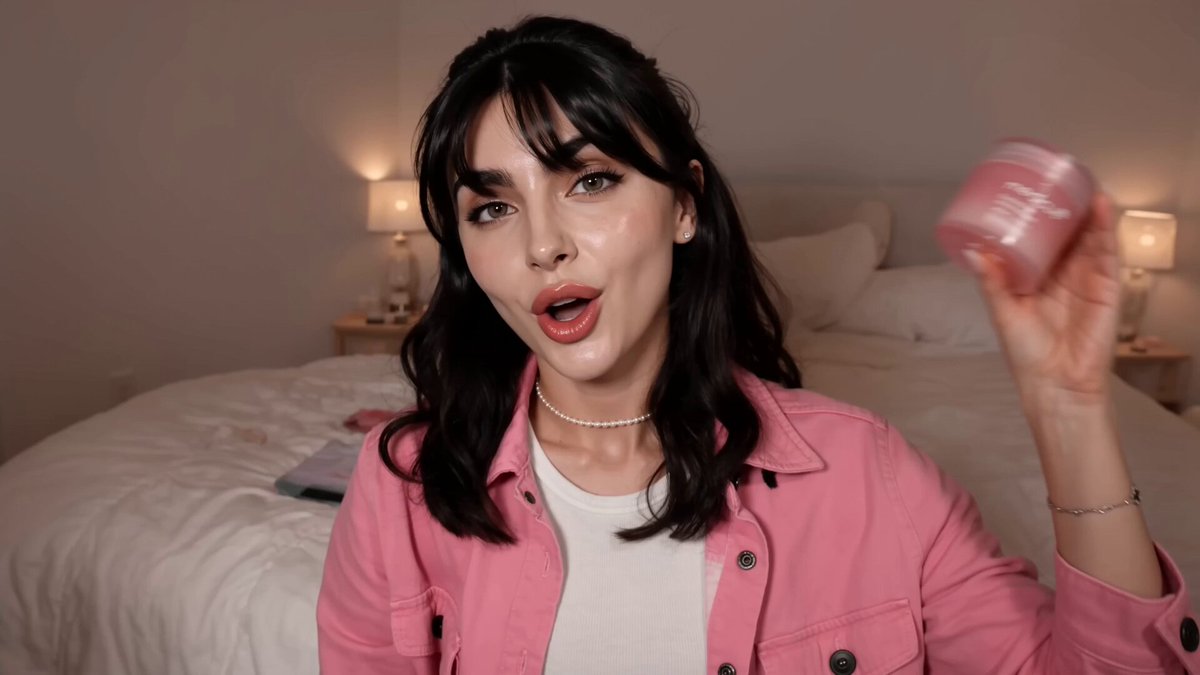

A few years ago, describing a crowd, a rain-slicked street, and a character in a specific jacket to a machine and watching it assemble a photorealistic moving scene felt like science fiction. Today it is a routine tool in creative workflows. The jump from text prompt to photorealistic video is arguably the single biggest shift in digital content creation in a generation, and it is reshaping how advertising, filmmaking, social content, and product demos are produced.
This article explains how that jump is actually made. We will look at why photorealism is technically hard, how AI video synthesis has evolved, what the leading models of the moment bring to the table, how you keep a character consistent across shots, and how all of it fits into a practical day-to-day workflow. The goal is a grounded mental model of the technology, so you know what it can do, where it still struggles, and how to use it well.
Why Making Moving Images Real Is So Hard
Photorealistic video is a fundamentally harder problem than photorealistic stills. A still image only needs to look right at one instant. Video has to look right across time: the light must not flicker, the person's face must not shift between frames, the physics of a falling object must feel continuous, and a character's identity must survive from one shot to the next. Nail the first frame and the tenth, but if the two look like different people or different worlds, the whole effect collapses.
Two separate things must go right at once. Spatial detail is about how convincing a single frame looks, the texture of fabric, the fall of light, the skin and shadow. Temporal coherence is about how the frames chain together into motion that does not stutter or morph unpredictably. Early systems were strong at one and weak at the other; they could paint a gorgeous frame but the motion between frames would wobble, or they could keep motion smooth but only at the cost of a cartoonish look.
The leap forward came when systems began to separate these two concerns instead of fighting them in a single pass. A model that can generate high-fidelity spatial frames and a separate mechanism that enforces temporal coherence across sequences produces results that look dramatically more like real video. This decoupling is the design shift that made photorealistic generation practical.
From Static Prompts to a Director's Mind
Early text-to-video tools were prompt-followers in the simplest sense: describe something, get a clip, hope the output is close to the intent. They had no notion of story, shot composition, or continuity. The next generation of tools behaves more like a director's assistant, able to interpret a prompt not just as a single instruction but as the beginning of a scene that should hold together.
This matters because the tools audiences now expect are not one-off novelty clips. They expect a character in the same location doing a coherent sequence of actions, with consistent lighting and a matching emotional tone. The difference between "generate a clip of a street" and "generate a coherent scene with a lead character who walks through a street at dusk" is the difference between a demo and a produced shot.
As these tools mature, the practical skill for a creator shifts from prompting to directing: feeding the system reference material, setting the tone, describing both the subject and the way it should be framed, and evaluating output against the intent rather than simply collecting the first plausible result. The tool is acquiring judgment, and the creator's job is to bring their own.
The Tools Defining This Moment
The field has settled into a few tiers, and knowing which tier fits a task saves a lot of time and frustration. At the high-fidelity end sit models like the ones behind Flux, Runway, and Sora, which aim at maximal realism and detailed narrative understanding. These generally produce the most cinematic output, and they also tend to be the most expensive and the slowest, so they are best reserved for hero shots and moments that genuinely need the quality.
A middle tier of international and open-source contenders such as Kling, PixVerse, and Hunyuan brings realism and control at a more accessible price point, and often with stronger support for specific use cases like fast turnaround or particular visual styles. The open-source side of this tier is important because it lets developers fine-tune and integrate models into their own tools, which is how these capabilities end up inside the software creators already use.
At the accessibility tier sit tools like Luma, Pika, and MiniMax, which emphasize speed and user-friendliness over absolute fidelity. These are ideal for ideation, mood boards, social clips, and any task where a near-miss at speed beats a perfect render that took an hour. The right answer to most production questions is a tier, not a single model. A strong workflow deliberately mixes tiers: an access tier for tests and drafts, a mid tier for volume, and a high-fidelity tier for the moments that will be seen most closely.
Keeping a Character Consistent Across Shots
The enemy of every generative video story is character drift. Generate a person in one scene and they look slightly different in the next, and the audience's suspension of disbelief evaporates. Consistency is not a luxury; it is the difference between a story and a series of unrelated clips.
The strongest current tool for this is multi-image fusion: provide the system with reference images of the character and use those as anchors while generating. Instead of describing the person anew every shot, the model carries their identity forward from the reference. When combined with keyframing, where you define the important frames and let the model fill in between them, you get both identity and motion with much less drift.
For a practical creator this changes what is possible. A brand spokesperson, a recurring mascot, or a protagonist in a narrative no longer has to be rebuilt from a prompt every scene. One strong character reference, maintained across a shoot, lets you write longer and richer sequences. When the technology can hold identity steady on its own, your time goes to the story rather than to babysitting the face.
Fusing Multiple Inputs for Richer Outputs
Beyond a single character, the field is moving toward true multimodal fusion: combining more than one image, more than one style, or an image with text to produce a cohesive result. Want a product shot that matches the visual language of a reference still? Want two characters combined into a single frame that honors both designs? These are fusion problems, and modern systems handle them with far more grace than the one-input-to-one-output models of the early days.
Fusion is what makes the output feel intentional rather than generic. A single prompt produces content; fused references produce something that belongs to a specific vision, your vision. The styles and characters and moods that define your work can be carried into generation instead of being recreated hoping each time.
The flip side is that fusion requires more foresight. You have to curate your reference material carefully, because garbage in produces garbage out, and you have to check that the fused output honors all the inputs rather than collapsing toward whichever is most dominant. Treat reference sets as an asset you maintain, and the tooling rewards you with consistency you could not have gotten from prompts alone.
Using These Tools in a Real Workflow
The most practical way to adopt generative video is not to replace your pipeline overnight but to insert it where it saves the most time. Three uses pay for themselves quickly. First, ideation: generate quick test clips from prompts to find a direction before committing to a full shoot. Second, gaps: use generation to fill shots that are impractical or impossible to film, such as a location you cannot access or an angle the camera could not reach. Third, iteration: generate a base render, re-prompt or feed better references, and refine rather than starting from the beginning each time.
Because rendering is expensive in both money and time, structure your work to fail fast. Get the cheap, fast tier to prove the concept, lock your references and your direction, and only then spend the slow, high-fidelity tier on the shots that will actually be seen. The difference between a budget that spirals and a budget that stays controlled is almost always this ordering.
Keep your human judgment firmly in charge of the calls that matter: tone, truth, intent, taste. The model generates options; you decide. Every polished generative pipeline is really a feedback loop between a fast machine and a human who knows what the result should feel like.
Where the Technology Still Struggles
Being clear about the limits makes the tool far easier to trust. Physics is still imperfect. Complex interactions, liquids, rapid motion, and many interacting objects can produce artifacts that an eye catches immediately. Subtle, natural motion of hands and faces remains hard, and the "uncanny" moments tend to come not from bad rendering but from motion that is just slightly wrong. Long-form consistency, holding a truly identical character across an entire extended video, remains a challenge that multi-image fusion improves but does not fully solve.
Finally, there is the question of cost and infrastructure. High-fidelity rendering demands serious compute, and heavy jobs benefit from a queue so that long renders run in the background rather than blocking everything else. The practical advice is to plan for this before you need it, and to design your workflow so that only the shots that justify the expense are sent to the expensive tier.
Frequently Asked Questions
Can anyone make photorealistic video now? Yes at the level of a simple shot, and the tier system means even individuals can afford high-fidelity output for the moments that matter.
Is there a risk the output will look machine-made? Less and less as temporal coherence improves, though physics and fine motion still give things away. Careful references and human review of the important frames reduce this a great deal.
How much time does it save compared to traditional CGI? For many shots it compresses what used to take days of 3D work into minutes of computation and review, though it does not replace an artist's judgment.
Should I use one model or several? Use a set. Match the tier to the task, high-fidelity for hero shots, fast tiers for ideation, and fusion or keyframing where consistency matters.
A Sound Editing Habit for Better Visual Rhythm
One skill that separates amateur generative video from professional is treating sound and image together rather than as afterthoughts. A clip that looks photoreal still feels cheap if its pacing is governed by nothing. Some editorial rhythm, a beat change at the cut, a pause before the payoff, an audio cue that mirrors the visual movement, makes the output read as directed rather than generated.
A simple habit pays off: before exporting, watch the piece with the sound off, then listen to it with your eyes closed, then put them together. The mute pass checks that the visuals carry the story on their own. The listening pass checks that the music actually supports the mood rather than fighting it, because the wrong soundtrack can flatten even a gorgeous render. The combined pass is where you finally judge whether the two halves honor each other. Most professional-looking results are not produced by more capable tools than the ones you already have; they are simply edited with intention across both channels, and that habit costs nothing except a few minutes of attention at the end of the edit.
Photorealistic video is no longer a distant promise but a working part of the creative toolkit. Understanding why motion is hard, how the current models solve it, and how to match tools to tasks lets you use the technology to its real strength: turning a text prompt into a moving image that genuinely looks real, and doing it consistently enough to tell an actual story.
