
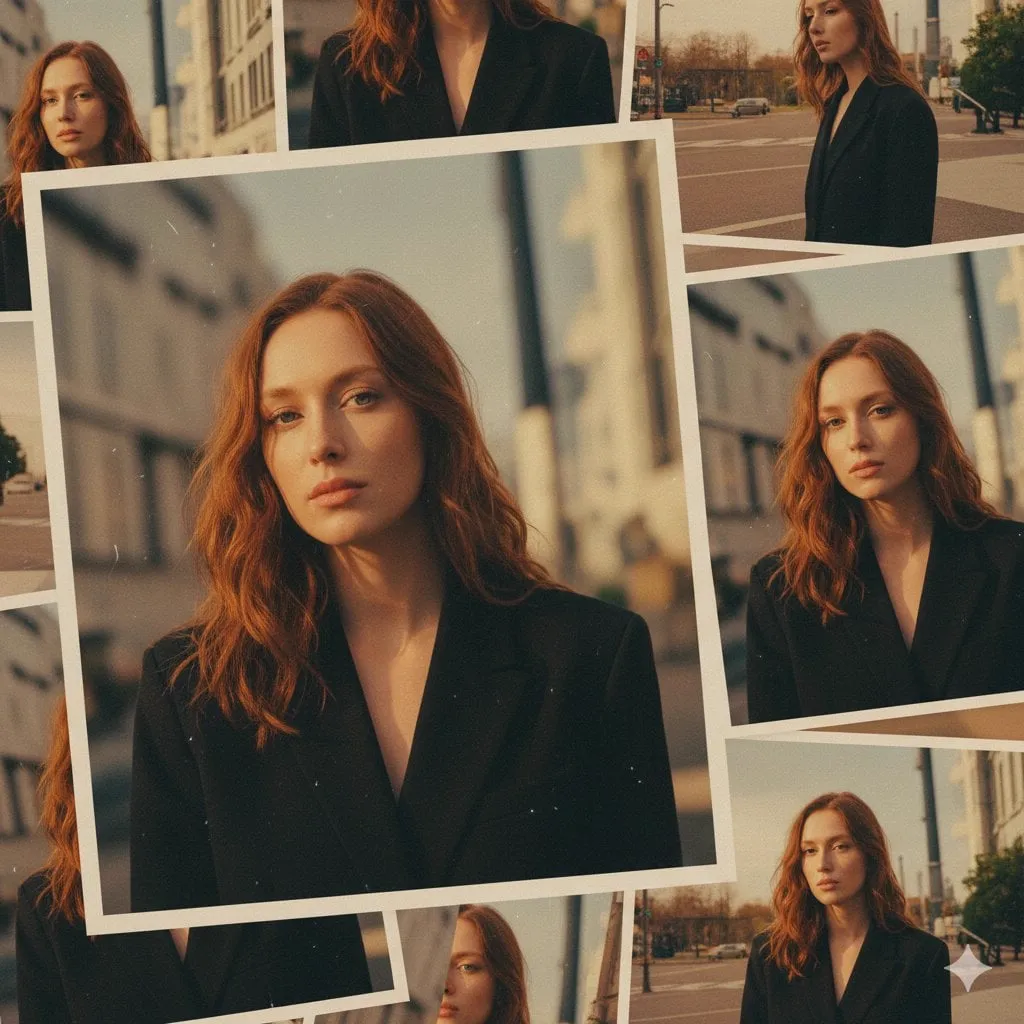
Most people who try generative video for the first time hit the same wall. The image is clean, the motion is plausible, the render finishes on time — and the result feels like nothing. It looks like a video, but it does not feel like a scene. That gap between technically correct output and emotionally resonant output is the single hardest problem in AI video production, and it is almost never solved by a better model. It is solved by better writing, better shot planning, and a deliberate approach to sound and pacing.
This guide walks through the entire chain, from a plain text idea to a finished piece that makes someone lean in. It covers how emotion actually gets encoded in generated footage, how to write prompts that carry feeling instead of just description, how to translate mood into camera language, how to hold a character consistent across shots, and how to build a repeatable workflow you can run again next week without starting from scratch.
Why Emotional Depth Is the Hardest Part of AI Video
Generative video tools are optimized for plausibility. They are trained to produce frames that look like they belong to a real scene, and they are extremely good at that. What they are not optimized for is intention — the sense that every frame was chosen by someone who wanted you to feel a specific thing at a specific moment.
That is why so much AI video feels interchangeable. A prompt like "a woman walking through a rainy street at night, cinematic" describes a state of the world. It does not describe an emotional event. The model fills the gap with statistical averages: generic rain, generic neon, generic sadness. The output is competent and forgettable.
Emotional depth comes from three sources, none of which live inside the model:
- Specificity of situation. A character wants something concrete right now and something stands in the way. Emotion is a byproduct of pressure, not a label.
- Choice of shot. Where you put the camera determines what the audience knows and what they are forced to imagine. A wide shot withholds; a close-up insists.
- Timing and sound. The same shot cut two seconds earlier or paired with a different room tone reads as tense, tender, or comic.
Everything in this guide is a way of putting intention back into a process that defaults to averages.
How Emotion Actually Gets Encoded in a Generated Shot
Before writing prompts, it helps to understand what the model can and cannot control. Generative video responds to visual and temporal information. It does not understand motivation. So emotion has to be encoded in properties the model can actually render.
Four levers do most of the work:
Facial and body micro-behavior. Tension in the jaw, a swallowed breath, hands that don't know where to go, a half-step backward. Describing these beats describing "she is nervous," because the model renders behavior far more reliably than it renders internal states.
Lighting logic. Hard light with a single source reads as confrontation or exposure. Soft, wraparound light reads as safety or nostalgia. Practical light inside the frame — a lamp, a screen, a fire — reads as intimacy because it gives the scene a believable source.
Compositional pressure. Negative space above a character suggests smallness. A tight frame with the subject pressed against the edge suggests entrapment. Empty space behind someone's shoulder suggests loneliness without ever stating it.
Motion rhythm. Slow, continuous movement (a dolly, a drifting camera) feels contemplative. Handheld micro-shake feels immediate and unstable. Static frames feel observational and let the performance carry the weight.
When you write prompts, you are not describing a mood. You are describing the physical conditions that produce a mood in a viewer. That single reframing improves output more than any parameter tweak.
Writing Source Text That Carries Emotion
Everything downstream inherits the quality of the text you start with. A flat script cannot be rescued in post. Here is how to make the source material emotionally loaded before a single frame is generated.
Lead with want, not with description
Open every scene by answering one question: what does this character want in the next thirty seconds, and what makes it hard? A paramedic wants to reach the patient; the stairwell door is chained. A daughter wants to say something true at dinner; her mother keeps refilling the water glasses. The want creates pressure. The obstacle creates behavior. Behavior is what the model can render.
Use sensory verbs, not adjectives
Adjectives are weak instructions. "Beautiful sunset" gives the model almost nothing. "Sunlight crosses the wall in one slow stripe and touches her ear" gives it a direction, a rate, and a target. Replace every adjective with an action, a texture, or a change over time.
Write the unspoken beat
Strong scenes have a moment where nothing is said and everything changes — a hand withdrawn, a glance that arrives a beat too late, a door left open. Identify that beat explicitly in your script. Then design a shot whose entire purpose is to capture it. These are the shots that make an audience feel something rather than merely watch.
Control rhythm on the page
Sentence length in your script becomes cut rhythm in your edit. Three short sentences become three fast cuts. One long sentence becomes a slow push. Write the pacing you want to see, then honor it in the timeline.
Separate what is said from how it is said
Note delivery alongside dialogue: "barely audible," "too fast, like she has rehearsed it," "said while looking at the table." These notes shape voice performance, lip timing, and which take you keep. They also force you to decide what the scene is really about before you spend time rendering.
Translating Emotion Into Camera Language
Once the text has feeling, the camera has to serve it. This is the step most AI creators skip, and it is the step that separates a reel from a scene.
Shot size as emotional distance
- Extreme wide: isolation, scale, insignificance. Use when the point is that a person is small in their situation.
- Wide: context and geography. Use to establish what is at stake physically.
- Medium: conversation and negotiation. Neutral, functional, the backbone of dialogue.
- Close-up: insistence. Use sparingly — its power is proportional to how rarely you spend it.
- Insert: a hand, an object, a detail. Inserts are how you externalize interiority without narration.
Movement as intent
A slow push-in says the audience is being drawn toward a realization. A slow pull-out says the character is being left behind. A lateral track says the world continues regardless. A handheld drift says the camera is a participant, not an observer. Choose movement by asking what you want the audience to feel about their own position in the scene, not about the character alone.
Lens and depth cues
Shallow depth of field isolates a subject from a noisy world, which reads as subjective focus or overwhelm. Deep focus keeps everything equally present, which reads as clarity or exposure. Generative models respond well to explicit lens language — focal length, aperture feel, distance from subject — because it constrains composition in useful ways.
Color as continuity of feeling
Decide on a palette per emotional movement, not per scene. A film might run warm-neutral for safety, then desaturate and shift cool as the character loses ground. Because AI shots are generated piecemeal, color is one of the most reliable ways to make separate clips feel like one continuous experience.
Holding Character and Mood Consistent Across Shots
Inconsistency destroys emotion faster than bad lighting. If the audience notices the face changed, they stop feeling and start analyzing.
Practical measures that work across most text-to-video systems:
- Write a character block and reuse it verbatim. Age, build, hair, wardrobe, distinguishing features, and two or three behavioral tics. Copy it into every prompt rather than paraphrasing it.
- Fix the wardrobe. Clothing is the strongest anchor the model has. Changing a jacket between shots breaks continuity instantly.
- Generate a reference still first. Lock a look, then use it as the visual anchor for related shots so lighting and features stay aligned.
- Keep the environment in the prompt, not just the background. Name the room, the time of day, the light direction, and one object that persists. Persistent objects do more for continuity than any technical trick.
- Accept controlled imperfection. Slight variation is bearable; total reset is not. Prioritize facial structure, hair silhouette, and wardrobe over minor details.
Mood continuity is a separate discipline. Keep a written "emotional state" note for each scene — what the audience should feel walking in and walking out — and check every shot against it. If a shot is beautiful but pulls the feeling in the wrong direction, cut it.
Sound, Voice, and Music as Emotional Multipliers
Audiences attribute a large share of emotional intensity to sound, and AI video workflows routinely underinvest here. Three layers matter.
Room tone and ambience. Silence in a generated clip sounds synthetic because real rooms are never silent. A faint hum, distant traffic, or rain on a window makes a scene feel inhabited. Ambience also does continuity work: the same room tone across shots tells the audience they are still in the same world.
Voice performance. If your piece has dialogue, direct the voice the way you would direct an actor: intention first, volume second. A line delivered flat and quiet can be more powerful than one delivered loudly. Watch lip-sync drift and prefer shots where the face is partly turned or in motion, which hides small timing errors and looks more natural.
Music restraint. The instinct is to score every emotional beat. Resist it. Let two or three seconds of ambience carry a moment, then bring music in. The contrast does more work than a continuous swell, and it makes your loud moments actually loud.
A useful rule: decide what the audience should hear first and what they should feel second. If the music is telling them what to feel before the image has earned it, pull the music back.
A Repeatable Production Workflow
This is the sequence that consistently produces emotionally coherent AI video without endless re-rendering.
Stage 1 — Emotional brief. One page. Who wants what, what blocks them, what the audience should feel at the start and at the end. No shot ideas allowed yet.
Stage 2 — Beat sheet. Break the piece into four to eight beats, each with a single emotional turn. If a beat has no turn, it is not a beat.
Stage 3 — Shot list. For each beat, one to three shots. For each shot, note size, movement, subject action, light logic, and the emotion it carries. This document is your real script.
Stage 4 — Prompt writing. Convert each shot into a prompt containing subject, action, environment, light, lens, movement, and mood words used sparingly. Reuse your character block verbatim.
Stage 5 — Cheap iteration. Generate short low-cost versions of the difficult shots first. The shots involving faces, hands, or complex motion break most often; find out early.
Stage 6 — Assemble rough. Cut with temp sound before polishing anything. Emotional problems are visible in a rough cut and invisible in a folder of beautiful clips.
Stage 7 — Sound pass. Lay ambience first, then voice, then music. Re-cut for timing once the sound is in — sound almost always wants a different rhythm than the picture.
Stage 8 — Color and finish. Unify the palette, match contrast between shots, and check the transitions where emotional tone shifts.
Stage 9 — Watch once with the sound off, then once with your eyes closed. The first pass tests whether the images carry the story. The second tests whether the sound carries it. If both work independently, you have a piece that works together.
Common Mistakes That Flatten Emotion
- Describing moods instead of conditions. "Melancholic atmosphere" gives the model nothing. Describe the rain, the time of day, the direction of light, and what the character's hands are doing.
- Cutting too fast. Fast cuts feel energetic but prevent feeling. Emotion needs duration — a shot held two seconds longer than comfortable is often exactly right.
- Showing the face for everything. Sometimes the most emotional choice is the back of a head, a doorway, or an empty chair. Withholding is a tool.
- Generating before the shot list exists. Prompt-first workflows produce pretty clips that cannot be edited into a scene.
- Ignoring the first three seconds. Attention is decided early. Open on a specific, unresolved image rather than an establishing sweep.
- Fixing performance problems in the edit. If the take does not carry the beat, regenerate it. No amount of cutting rescues a flat moment.
- Over-scoring. Continuous music removes contrast and, with it, most of the emotional range available to you.
Choosing Tools and Setting Decision Criteria
There is no single best text-to-video system; there is the right one for a given shot. Evaluate tools against your actual needs rather than benchmark reels.
Prioritize fidelity to prompt when your scene depends on precise composition, props, or light direction. Prioritize motion realism when the shot involves physical action, crowds, or camera movement. Prioritize character consistency when a face recurs across multiple shots — this is usually the deciding factor for narrative work, and it is worth sacrificing some image polish to get it. Prioritize iteration speed and cost per attempt when you are exploring, because you will generate many more takes than you expect. Prioritize control interfaces — start frame, end frame, motion direction, camera path — when continuity between shots matters more than novelty.
A practical test: take one emotionally demanding shot from your shot list and run it through two or three systems. Compare which one produced the behavior you asked for, not which one produced the nicest single frame. Behavior is the harder problem and the better predictor of finished quality.
Also budget for the boring parts: retries, upscaling, frame interpolation, and audio. A workflow that produces a great clip in ninety seconds but requires an hour of cleanup is slower than one that produces a good clip in three minutes.
Frequently Asked Questions
How many shots do I need for a short emotional piece? For a sixty-to-ninety second piece, eight to fifteen shots is a healthy range, and several should be under two seconds. Fewer than six shots usually means you are relying on individual images rather than building feeling over time.
Can AI video carry emotion without any dialogue? Yes, and often better. Silence forces the audience to read behavior, light, and pacing. Many strong AI pieces work entirely with ambience and a single music cue, because dialogue without a convincing performance is the fastest way to break the illusion.
What is the most common reason an AI video feels empty? The script describes a situation instead of a want under pressure. If you cannot state in one sentence what the character is trying to get and what is stopping them, the model has nothing to build behavior from.
Should I generate one long clip or many short ones? Short clips, always. Generative systems drift over duration, and editing gives you control over rhythm. Treat generation as footage acquisition and the timeline as authorship.
How do I keep a character consistent without a face-swap pipeline? Lock the description, wardrobe, and environment text, generate a reference still, and lean on shots that partially obscure or turn the face. Consistency is easier to protect than to repair.
What separates an amateur result from a professional one? Usually sound and restraint. Professionals hold shots longer, use fewer music cues, and spend more of their time on the emotional brief than on prompt tweaking. The image quality gap between tools has narrowed; the intention gap has not.
How do I know when a piece is finished? When you can watch it without thinking about the process. If your attention lands on a jacket color, a lip-sync slip, or a music cue that arrives too early, that is the note — fix it and watch again.
Where to Start Tomorrow
Pick one emotionally loaded beat — a moment with a want, an obstacle, and an unspoken turn — and take it all the way through the workflow: brief, beat sheet, shot list, prompts, rough cut with ambience, then music. Keep it under sixty seconds. Do not aim for a masterpiece; aim for one shot that makes you feel something you did not specify in words.
Once you have that shot, you have a method. Scale it by adding beats, not by adding render time. Emotional depth in AI video is not a technical achievement — it is an editorial one, and it is built the same way it has always been built: by deciding exactly what the audience should feel, and then removing everything that does not serve it.
