
Why Text-to-Video Stopped Being a Demo
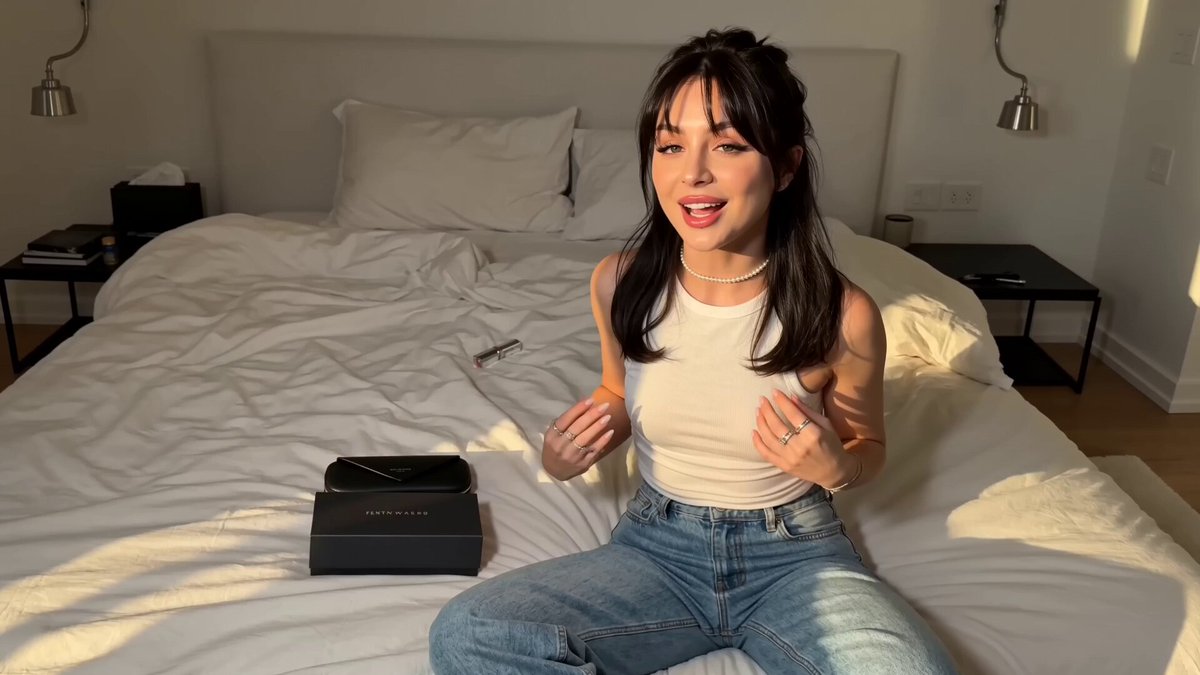
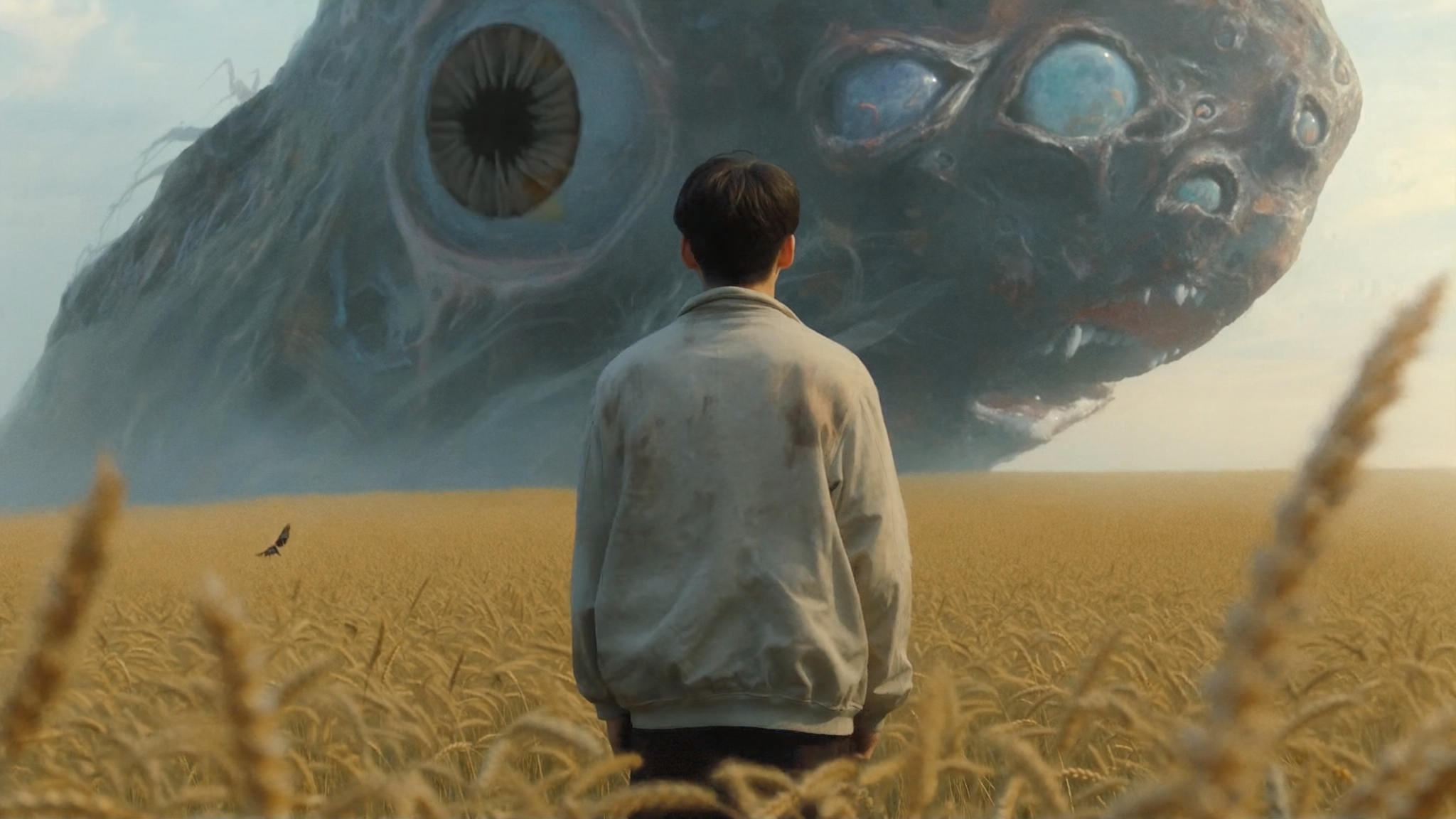
A few years ago, text-to-video meant six seconds of a melting face. Today it means a usable shot with coherent lighting, a subject that keeps its identity across cuts, and camera movement that reads as intentional rather than accidental. That shift matters because it changes who can produce video at all. A solo marketer can assemble a product teaser. A documentary team can previsualize a complex sequence before committing to a location shoot. A game studio can turn static mood boards into moving references that communicate tone to a whole art department.
The most important change is not raw image quality. It is control. Leading text-to-video systems now accept structured prompts, reference images, first-and-last frame constraints, and sometimes motion direction from a driving clip. The craft has moved from "getting anything to render" to "directing the output." Once a tool is controllable, it stops being a novelty and starts being a production step.
This guide covers how the current generation of text-to-video models actually behaves, where each family of models tends to win, how to write prompts that survive a model switch, and which workflow habits separate people who ship finished videos from people who accumulate half-finished experiments.
How Modern Text-to-Video Models Actually Work
Diffusion transformers and temporal coherence
Most leading systems combine a diffusion process with a transformer backbone. The model is trained to remove noise from a latent representation, and the transformer's attention mechanism is allowed to run across time as well as space. That spatiotemporal attention is the key architectural idea: instead of generating thirty independent images and hoping they line up, the model learns relationships between frame one and frame one hundred.
In practice this produces three observable behaviors. First, identity persistence — a character's jacket color and facial structure stay consistent for several seconds. Second, physical plausibility — water pours, cloth folds, and objects fall in ways that roughly follow real physics, because the training data encodes those regularities. Third, camera continuity — a slow dolly remains a slow dolly instead of snapping into a new angle halfway through.
Where these systems still struggle is anything requiring long-horizon planning: a character leaving frame and returning with a changed appearance, precise text rendering, or choreography with many interacting bodies. Understanding those failure modes before you write a prompt saves hours.
What benchmarks measure, and what they miss
Public leaderboards usually score a handful of dimensions: prompt adherence, motion smoothness, aesthetic quality, and sometimes subject consistency. Those numbers are useful for a first shortlist and nearly useless for a final decision, because they do not measure the things that decide real projects.
Benchmarks rarely capture how expensive a retry is, how well the model handles your specific subject category, whether it supports the aspect ratio your delivery requires, how predictable its output is across repeated runs, or whether the surrounding tooling lets you edit a shot instead of regenerating it. A model that scores second on a leaderboard but nails your exact use case on the first attempt is the better model for you.
So treat any comparison table as a starting point. Run your own three-shot test on each candidate: one dialogue-free action beat, one shot with a human face in motion, and one shot with complex background detail. That thirty-minute test will tell you more than any ranking.
The Model Landscape: Strengths and Best Fits
Sora — long shots and physical plausibility
Sora built its reputation on world-model-style simulation: extended shots, consistent environments, and interactions that respect basic physics over a longer duration than earlier systems managed. It tends to be a strong choice when you need a scene to breathe — a camera drifting through a location, a continuous take that establishes geography — rather than a rapid sequence of cuts.
Its practical caveats are typical of the frontier tier: output can be less predictable than a heavily-tuned smaller model, generation takes time, and prompt adherence for very specific compositions sometimes needs several attempts. Use it where atmosphere and continuity are the point.
Kling — prompt comprehension and human motion
Kling earned attention for reliable interpretation of detailed prompts, especially in Chinese and English, and for human movement that avoids the rubbery-limb problem. If your shot depends on a person walking, turning, gesturing, or performing a physical task, this family of models is often the fastest route to something believable.
It also tends to handle stylized and narrative prompts well, which makes it useful for storyboard-to-animatic pipelines where a director needs to see a beat played out rather than described.
Runway — editorial control and surrounding tooling
Runway's differentiator is less the raw generator and more the ecosystem around it: motion brushes, camera controls, inpainting, style references, and a timeline-oriented interface. For editors and motion designers, that control surface often matters more than a marginal quality difference. When you need to fix one region of a shot rather than reroll the whole thing, tooling depth wins.
PixVerse and Luma — speed and stylization
These models often shine when iteration speed is the bottleneck. They are good at producing a usable stylized render quickly, which suits social-first content, animatics, and mood exploration. Luma's family tends to produce smooth, dreamlike motion well; PixVerse tends to be friendly to anime, illustration, and high-contrast stylized looks.
Mid-tier and regional models: MiniMax Hailuo, Vidu, Hunyuan
Beyond the headline names there is a growing middle tier: MiniMax Hailuo, Vidu Q1, Hunyuan, and similar systems. Their strategic value is straightforward — different aesthetic priors, different prompt-language strengths, different capacity profiles. A model trained heavily on East Asian visual culture will read certain prompts differently than one trained on Western advertising footage, and that difference is a feature, not a flaw. For teams producing localized campaigns, running the same prompt through two regional models and comparing the results is one of the fastest ways to find a house look.
A Decision Framework for Choosing a Model
Rather than defaulting to whichever model is trending, score candidates against your actual constraints. Six questions do most of the work:
- Shot type. Is this a continuous establishing shot, a dialogue beat, a product macro, or a stylized montage? Continuity-heavy shots favor long-horizon models; stylized montages favor fast, aesthetically opinionated ones.
- Subject risk. Human faces and hands are the hardest common subject. If your shot is face-forward, weight models with strong human-motion reputations.
- Duration and resolution. Some systems cap usable clip length well below their advertised maximum. Test the length you actually need, at the aspect ratio you actually deliver.
- Iteration budget. Estimate how many attempts a shot will need. A cheaper, faster model that takes six tries can beat a premium model that takes two — but only if you can judge quality quickly.
- Control requirements. Do you need to lock a composition with a reference image, extend a clip, or replace an object? That narrows the field fast.
- Rights and delivery. Commercial licensing terms, watermarking, and export formats should be checked before creative decisions are locked in.
Write the answers down. A one-page model brief prevents the common failure of switching tools mid-project because a single shot went badly.
Writing Prompts That Hold Up Across Models
Use a consistent shot-level structure
Most models respond well to prompts organized in a predictable order: subject, action, camera, lighting, style, and duration. For example: "A ceramicist shapes a bowl on a spinning wheel, hands wet with clay, medium shot slowly pushing in, warm tungsten light from the left, shallow depth of field, documentary realism, five seconds."
That structure is portable. When you move the same prompt to a different model, you are changing the renderer, not the direction. Keep prompts in a shared document with one line per shot so you can diff them when a result disappoints.
Reference images, style locking, and multi-image conditioning
Where a model supports image conditioning, use it. A reference image communicates more about composition, palette, and character than three paragraphs of adjectives. Multi-image setups let you combine a character reference with a location reference, which is the practical way to keep a series visually coherent.
Two rules help. First, keep references stylistically consistent with each other — mixing a photoreal reference with an illustrated one usually produces mush. Second, always keep the text prompt even when using images; it steers motion, which images alone cannot express.
Repairing failures with negative prompts and targeted edits
When a shot fails, resist the urge to rewrite everything. Diagnose first: is the problem composition, motion, or texture? Composition problems need prompt restructuring or a reference image. Motion problems need simpler action verbs and explicit camera language. Texture problems — waxy skin, plastic surfaces, oversharpened detail — often respond to negative prompts or a style modifier.
If the model supports regional editing or inpainting, fix the broken region instead of rerolling. Regenerating a whole shot to repair one hand is the single most common waste of time in AI video work.
Sound design is part of the prompt
Silent video reads as unfinished. Plan audio in parallel with generation: ambient beds, foley for actions, and music that matches the pacing you asked the model for. Some pipelines generate synchronized audio, but even then, layering a real ambience track in an editor dramatically improves perceived quality. Dialogue is still best handled with separate voice generation and lip-sync tooling rather than hoping the base model gets it right.
A Repeatable Production Workflow
Pre-production: storyboard before you generate
Generate nothing until you have a shot list. Write each shot on one line with: purpose in the edit, duration, camera move, subject, and reference asset. This document becomes your prompt source and your review checklist. Teams that skip it end up with beautiful clips that cannot be assembled into a sequence.
Generation: batch, label, and review in passes
Run each shot in small batches of two to four variations rather than dozens. Label outputs with the shot number and a variant letter. Review in passes: pass one is a gut check on composition and motion; pass two is a detail check on faces, hands, and background artifacts; pass three is a watch-through at final pace. Reviewing at speed matters — many flaws are invisible in a still and obvious in motion.
Assembly: cut to rhythm, then fix
Edit before you polish. A rough assembly reveals which shots are actually weak; often a shot that looked mediocre in isolation works perfectly as a two-second cut. Only after the rough cut should you invest in upscaling, frame interpolation, or color work. Interpolating footage that is about to be trimmed is wasted effort.
Delivery: bake in the platform constraints
Export masters at the highest practical resolution and archive the project file with prompt text attached. Prompt logs are documentation: when a client asks for a variation next quarter, the log is the difference between a fast turnaround and starting over.
Common Mistakes That Waste Time and Budget
- Over-prompting. Stacking twenty adjectives dilutes the signal. Six to ten concrete details outperform a paragraph of vibes.
- Ignoring aspect ratio and duration limits until export. Cropping a 16:9 render to vertical destroys framing that you carefully wrote into the prompt.
- Chasing one perfect shot instead of ten good ones. Sequences sell; isolated hero shots rarely do.
- Never testing the model's failure boundary. Knowing what breaks a model is as useful as knowing what it does well.
- Skipping continuity planning. Consistent characters require reference images, locked wardrobe descriptions, and identical lighting language across shots.
- Trusting leaderboards over your own sample. Rankings measure averages; your project is a specific case.
- Forgetting provenance. Track which model, prompt, and reference produced each approved shot. Without that record, revisions become guesswork.
Rights, Access, and Practical Constraints
Before a shot enters a client deliverable, confirm the commercial terms of the model you used, whether outputs are watermarked, and whether the platform claims any usage rights over generated media. Requirements differ meaningfully between providers and change over time, so check at the start of a project rather than at delivery.
Access is the other constraint. Some systems are available through general subscriptions with usage limits, others through professional tiers, API access, or regional availability differences. If your workflow depends on automation, API predictability — rate limits, queue times, output stability — matters more than the user interface. Test queue behavior during your actual working hours, because a model that is instant at midnight can be slow at 3 p.m.
Finally, consider data handling. If you are generating footage of real locations, branded products, or recognizable people, review each provider's policy on uploaded references. For sensitive work, keep a documented chain of custody from prompt to final export.
FAQ
Do I need a different model for every shot?
No, but a mixed pipeline is normal. Most teams pick one primary model for consistency and a secondary model for specific weaknesses, such as human motion or stylized looks. Document which is which.
How long should a generated clip be?
Shorter than you think. Three to six seconds covers most editorial needs, and shorter clips are easier to control and cheaper to reroll. Long continuous takes look impressive in demos but are hard to cut around.
Why does the same prompt give different results each time?
Generation is stochastic. Fixing a seed helps when the model supports it, but small prompt changes often matter more. Lock a seed for consistency within a shot, and release it when you are still exploring.
Can text-to-video replace a camera crew?
For some shots, in some contexts, yes. For scenes requiring specific real people, precise product accuracy, or legal documentation, no. The realistic use is a hybrid: generated establishing shots, transitions, and concept beats alongside captured footage.
What is the fastest way to improve output quality?
Improve your references and simplify your prompts. Most quality problems are direction problems, not model problems.
How do I keep a character consistent across shots?
Combine a fixed reference image, an identical wardrobe and feature description, matching lighting language, and the same model and seed family for that character's shots. Consistency is a system, not a single setting.
Should I upscale everything?
Only approved shots. Upscaling doubles processing time and can amplify artifacts, so reserve it for the final cut and compare before and after at playback speed.
The teams that get the most from text-to-video are not the ones chasing every new model release. They are the ones with a shot list, a repeatable prompt format, a shortlist of two or three models they know intimately, and a review process that catches problems before polishing. Pick your tools against your constraints, test them on your own three shots, and keep a written log of what worked. That discipline turns an unpredictable generator into a dependable part of the production pipeline.
