
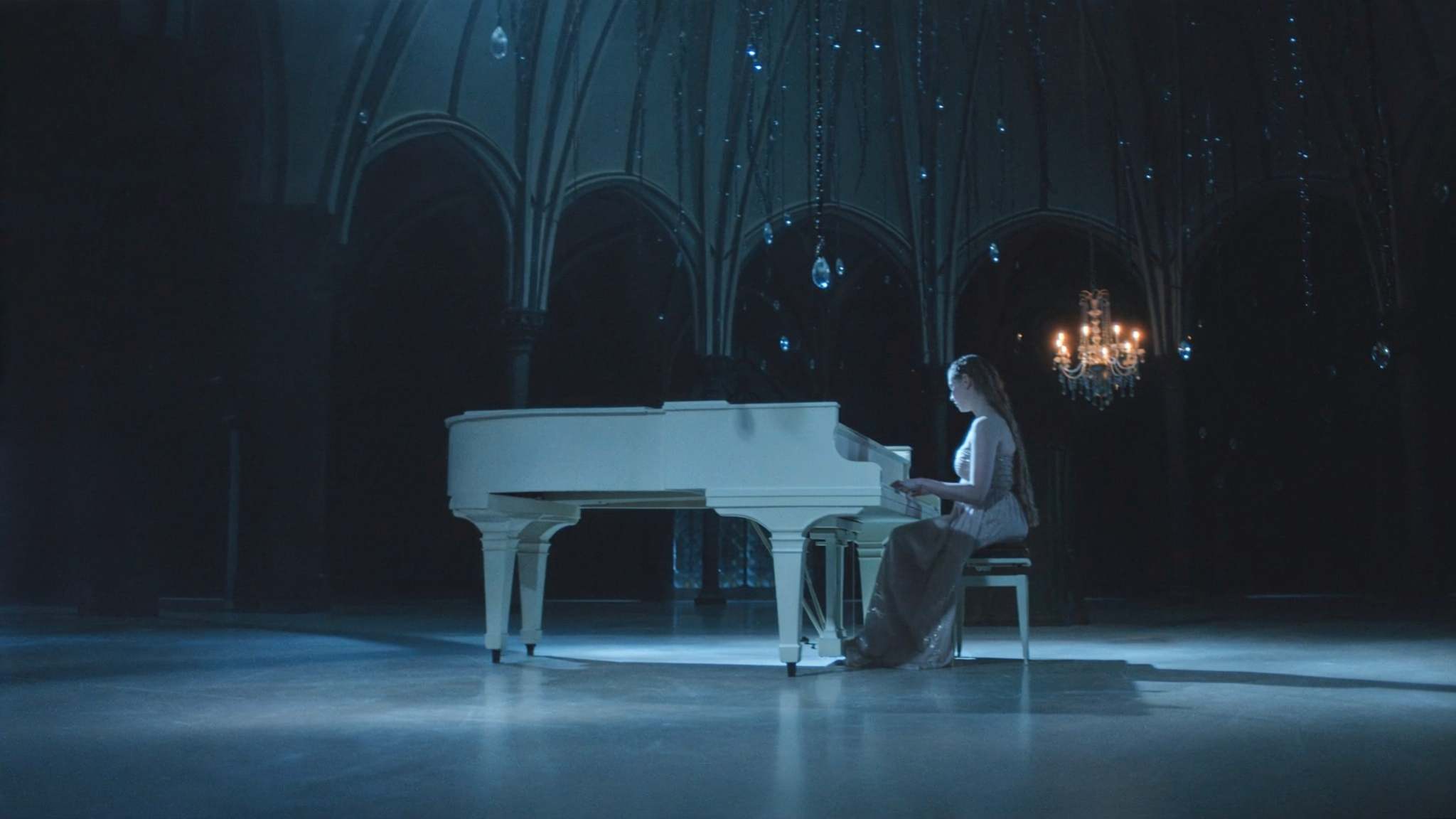
Text-to-video generation has crossed a quiet but important threshold. It is no longer judged by whether a single clip looks like a miracle — it is judged by whether a team can direct it repeatably. One gorgeous shot is easy to celebrate. A twelve-shot sequence with a recognizable character, coherent lighting, believable motion, and a clear narrative beat is the real test, and it is the test most creators fail on their first attempt.
That shift changes how you work. Instead of typing a poetic sentence and hoping, you plan shots, lock references, generate variations, assemble in an editor, and finish with sound. This guide walks through a complete workflow you can reuse: how to choose between competing engines, how to write prompts that describe motion rather than still frames, how to keep characters and branding consistent, and how to catch problems before you publish.
Start With Output Requirements, Not With the Model
Most people begin by opening the most talked-about tool and typing a prompt. That is backwards. The tool should be the last decision you make, because the same prompt behaves very differently depending on where it runs and what you need the final file to do.
Define the destination format first
Before generating anything, answer four questions in writing:
- Aspect ratio and resolution. Vertical for social, 16:9 for YouTube and presentations, square for certain ad placements. Engines handle these differently, and some produce much stronger results in one ratio than another.
- Shot duration. A four-second clip behaves differently from a twelve-second clip. Many models degrade in coherence after the first few seconds, so long shots usually need to be built from shorter pieces.
- Delivery deadline and revision tolerance. If the client will ask for three rounds of changes, you need an engine that is cheap and fast to re-run, not one that produces a flawless single take you cannot afford to redo.
- Sound requirements. Dialogue, voiceover, ambience, music. Deciding this early prevents the classic problem of generating beautiful footage that cannot hold a spoken line.
Work backwards to shot lengths
Once you know the destination, break the piece into shots. A thirty-second deliverable is rarely one generation; it is typically eight to fifteen fragments of two to five seconds each, joined with cuts, transitions, or match-on-action edits. Writing the shot list before you write prompts is the single highest-leverage habit in AI video production. It turns an open-ended creative task into a set of small, testable problems.
What Text-to-Video Does Well — and Where It Breaks
Engines have become genuinely good at some things and remain unreliable at others. Knowing the boundary saves hours.
Strengths worth exploiting
- Atmosphere and environment. Wide landscapes, weather, neon streets, interiors with moody light. These are consistently strong because the model has seen enormous amounts of similar footage.
- Slow, continuous camera moves. Dolly-ins, slow orbits, drift shots. The physics is simple and errors are hard to notice.
- Texture-heavy inserts. Water, smoke, fabric, food, machinery. Short clips of texture read as intentional even when imperfect.
- Stylized looks. Animation, painterly, retro film, graphic illustration. Style covers a lot of small inconsistencies.
Weaknesses to design around
- Hands, tools, and fine manipulation. Anything requiring precise finger articulation still fails often. Frame it out, hide it with motion, or cut before the action completes.
- Long dialogue delivery. Lips and phonemes drift. Practical workaround: use off-screen narration, cutaway coverage, or stylized characters where the audience is not tracking mouth shapes.
- Complex multi-character interaction. Two characters are manageable. Four characters touching an object usually collapse into mush.
- Physical continuity across cuts. Object positions, garment details, and screen direction will drift unless you actively control them with references and consistent prompt language.
A useful rule: if a real film crew would need a stunt coordinator or a props department, assume the model will struggle.
Choosing an Engine: Generalist, Specialist, or Hybrid
Generalist video models
These take a text prompt and return a clip. They are fast to test, broadly capable, and the right starting point for mood pieces, B-roll, and exploration. Their weakness is control: you get what the model decides, and consistency across many shots depends heavily on prompt discipline.
Image-first pipelines with motion
Here you generate a still frame you love, then animate it. This is the most reliable route when you need a specific look, a specific character, or a locked composition. You gain control over lighting, framing, and identity, and you lose some spontaneity — the motion tends to be more literal and less surprising.
Hybrid and specialty engines
Some tools excel at camera movement, some at stylized animation, some at photoreal humans, and some at fast iteration. Serious teams keep two or three in rotation rather than swearing loyalty to one. A practical pattern is a workhorse for exploration, a high-fidelity engine for hero shots, and a fast cheap engine for placeholder timing during editing.
A practical selection matrix
| Need | Best fit | Why |
|---|---|---|
| Mood B-roll and atmosphere | Generalist text-to-video | Fast, forgiving, strong environments |
| Locked character across shots | Image-first pipeline | Reference frames hold identity |
| Precise product framing | Image-first with motion control | Composition is fixed before motion |
| Rapid timing tests | Lightweight fast engine | Iterate cheaply, replace later |
| Stylized animation | Specialty stylized engine | Consistent line and color treatment |
Prompting for Motion Instead of Frames
The most common prompting mistake is describing a photograph. Video prompts need verbs, camera behavior, and a sense of where the shot begins and ends.
The five-part shot prompt
A reliable structure looks like this:
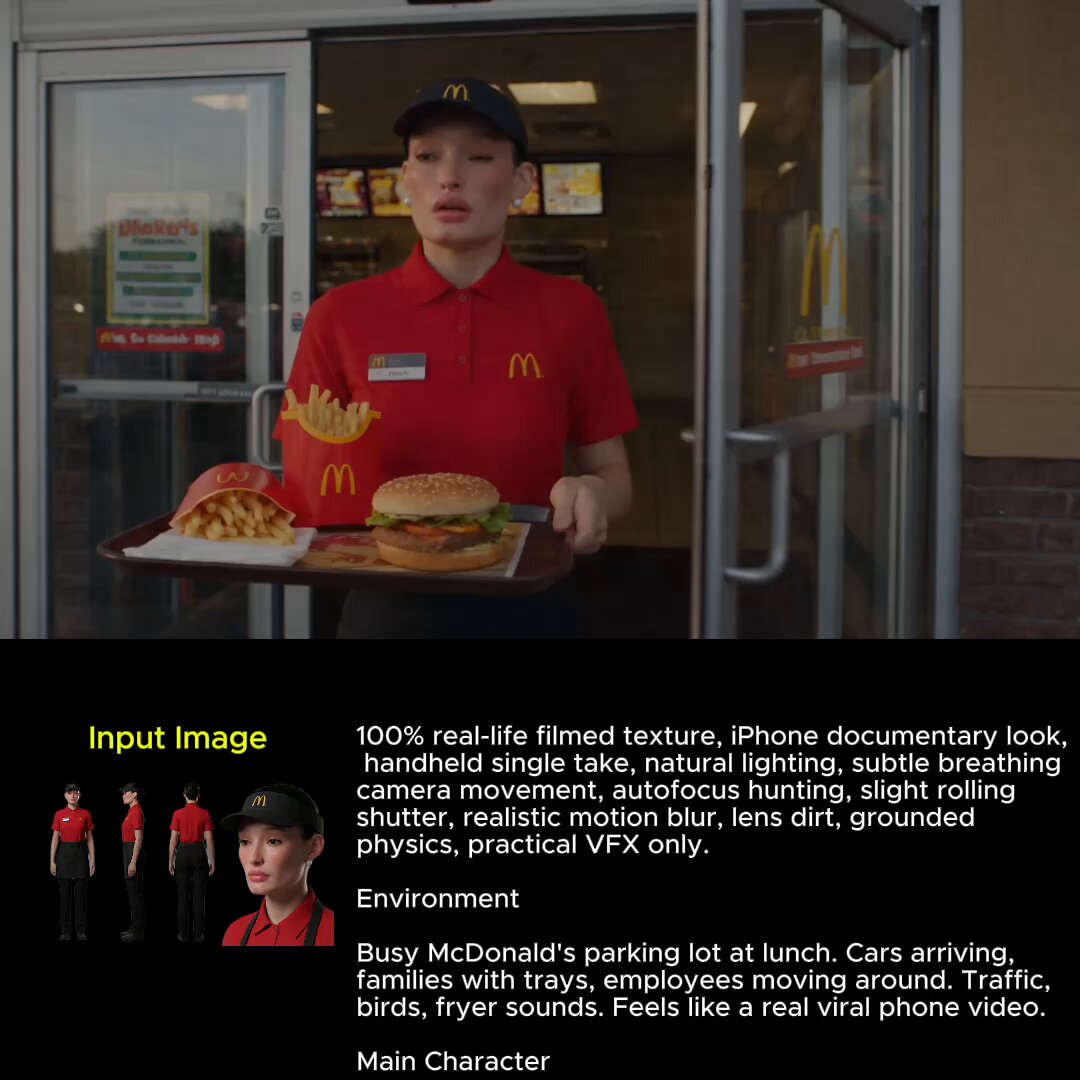
- Subject and identity. Who or what, with enough detail to stay consistent: age range, wardrobe, hair, distinguishing features.
- Action and its arc. What changes from the first frame to the last: "walks toward camera, pauses, turns head left."
- Camera. Lens feel, height, and movement: "low angle, 35mm, slow dolly-in, handheld micro-shake."
- Environment and light. Location, time of day, key light direction, color temperature.
- Style and finish. Film stock, grain, contrast, color grade, animation style.
Short, specific prompts usually beat long, poetic ones. "A glass of water on a windowsill, slow push in, morning backlight, soft dust in the air" will outperform three sentences of metaphor.
Camera and lens language that models understand
Terminology that reliably produces a result includes: dolly in, dolly out, tracking shot, crane up, orbit, handheld, static lock-off, rack focus, shallow depth of field, wide angle, telephoto compression, over-the-shoulder, and top-down. Combine one movement with one lens description and stop. Stacking three movements produces mush.
Constraints and negatives
Negative constraints matter as much as positive description. Common useful exclusions: extra fingers, warped faces, floating objects, text artifacts, jittery motion, sudden zoom, duplicate limbs. If you are generating anything with a logo or a sign, explicitly exclude invented lettering — models love to hallucinate typography.
Consistency: Characters, Props, and Brand Style
Consistency is where amateur output and professional output diverge most sharply.
Reference frames and identity locking
Generate a character sheet first: front, three-quarter, and profile views in neutral light, plus two or three emotional expressions. Save those as your canonical references. Every subsequent shot should be generated from the closest matching reference rather than from a text description alone. When a shot drifts, the fix is almost always to regenerate from a better reference rather than to add more adjectives to the prompt.
Style bibles
Write down your rules and reuse them verbatim:
- Color palette in hex values or named references
- Lighting direction and quality for each location
- Lens and grain treatment
- Wardrobe and prop list per character
- Typography and lower-third style for any on-screen text
Copy-pasting the same style block into every prompt is not lazy — it is the mechanism that makes a sequence feel like one film.
Handling wardrobe and props
Small details drift fast. A jacket that is dark green in shot one becomes olive in shot five. Two safeguards work well: keep wardrobe simple and high-contrast, and describe it identically every time. If a prop matters narratively — a letter, a ring, a device — give it a dedicated insert shot early so the audience locks onto it, then avoid close-ups of it later under different lighting.
Shot Planning: Coverage, Timing, and Rhythm
From storyboard to shot list
Sketch, even crudely. Stick figures are enough. Convert the sketch into a table with columns for shot number, description, duration, camera movement, reference image, and status. This table becomes your production tracker and prevents the classic late-stage panic of realizing you never generated a bridge shot.
Beat timing before visual polish
One of the most efficient habits is generating rough, low-fidelity versions of every shot at the correct duration, assembling them into a full timeline, and only then replacing each placeholder with a polished generation. Editing a sequence of beautiful clips that do not fit the rhythm is painful; editing rough clips that already work is fast.
Coverage that buys you options
For any important moment, generate three variants: a wide, a medium, and an insert. Even if you only intended to use one, an editor with options can fix pacing problems, hide a weak generation, or extend a beat without regenerating anything.
The End-to-End Workflow
Step 1: Pre-production
Lock the script, the shot list, the style bible, and the character references. Budget your generation allowance across shots: roughly 40 percent for hero moments, 40 percent for standard coverage, 20 percent held back for fixes. Teams that spend everything on the opening shot usually run out before the ending.
Step 2: Generation passes
Generate in batches by location rather than by story order. Grouping all shots in one environment lets you keep lighting language identical, which materially improves continuity. Keep a simple log: prompt version, reference used, seed if available, and a one-line verdict. When a client asks for a change six weeks later, that log is the difference between a re-render and a rebuild.
Step 3: Selection and assembly
Import everything into an editor. Rough-cut for story first, ignoring imperfection. Then do a continuity pass, then a polish pass. Resist the urge to fix individual clips before the structure works — you will waste effort on shots that get cut.
Step 4: Sound and finishing
Ambience, foley, music, and voiceover do more for perceived realism than another round of visual generation. Add subtle camera shake, grain, and a unified color grade across all clips. Applying the same grade to every shot is the cheapest way to make fragments from different generations feel like one production.
Step 5: Delivery
Export at the required resolution and bitrate, keep a master file, and archive the project with references and prompts intact. Future you will want to re-cut this.
Editing, Upscaling, and Audio
Upscaling tools can rescue soft footage, but they also amplify artifacts. Use them on clips that are clean but low-resolution, not on clips that are structurally broken. Where motion is jittery, frame interpolation sometimes helps and sometimes makes it worse — test on a short segment before committing to a full pass.
On audio: build a layered bed rather than a single music track. Room tone underneath, a music bed at moderate level, spot effects on actions, and a final limiter. This masks the small visual imperfections audiences notice when a scene is silent. If you are using narration, write it for the ear — shorter sentences, fewer clauses — and record or generate it before finalizing visuals so the edit can breathe with the voice.
Common Mistakes That Kill AI Video Projects
- Skipping the shot list. The single biggest cause of unfinished projects and runaway generation budgets.
- Chasing perfection in one clip. Ten variations of the same shot produce one usable clip; ten variations of ten shots produce a film.
- Inconsistent prompt wording. Changing adjectives between shots breaks continuity invisibly.
- Front-loading the good stuff. If shot one is spectacular and shot twelve is a placeholder, viewers remember the ending.
- Ignoring sound until the end. Audio fixes more problems than re-rendering ever will.
- No naming convention. Untitled exports from four sessions become an unmanageable pile within a day.
- Letting one engine dictate the look. Match the engine to the shot, then unify with grade and grain.
Quality Control Checklist Before You Publish
Run every sequence through the same checks:
- Does each shot have a clear reason to exist?
- Is the character recognizable across every appearance?
- Do hands, faces, and objects stay intact at full speed?
- Is screen direction consistent across cuts?
- Does lighting match between adjacent shots in the same location?
- Is there any hallucinated text, logo, or signage?
- Do the audio levels sit within broadcast norms?
- Does the first three seconds earn attention, and does the last shot land?
- Has the master file been archived with references and prompts?
- Would you publish this under your own name?
FAQ
How long should a single AI-generated clip be?
Two to five seconds is the reliable zone for most engines. Longer generations lose coherence, drift in identity, or introduce motion artifacts. Build longer sequences by cutting between shorter shots.
Do I need a storyboard if I am working alone?
Yes, even a rough one. A storyboard is not for a client — it is the tool that prevents you from generating shots you never use and discovering at the end that you are missing connective tissue.
What is the fastest way to fix an inconsistent character?
Generate a clean character reference sheet and regenerate the drifting shot from the nearest matching reference instead of adding more descriptive words. Reference images control identity far more reliably than adjectives.
Should I use one engine or several?
Several, in most cases. Use a fast generalist for exploration and timing, a high-fidelity engine for hero shots, and an image-first pipeline whenever identity or composition must be exact. Unify the result with color grading, grain, and consistent sound design.
Why does my footage look fake even when the image quality is high?
Usually because of sound and motion. Silent, static, perfectly clean clips read as artificial. Layered ambience, subtle camera movement, grain, and a unified grade solve more of this than improving resolution.
How do I handle dialogue scenes?
Prefer off-screen narration, reaction shots, and cutaways over direct lip-sync. Design your shot list so the audience never needs to study a mouth in close-up for more than a beat.
What should I log for every generation?
The prompt version, the reference image used, the seed where available, the settings, and a one-line verdict. This is the difference between a fast revision and starting from scratch.
The pattern behind all of this is unglamorous: plan the shots, control the references, unify the finish, and let sound carry the illusion. The teams producing convincing text-to-video work are not the ones with the most impressive single clip — they are the ones with a repeatable workflow that survives a deadline, a revision request, and a second project.
