
Text-to-video generation stopped being a demo category and became a production step. A written shot description now yields footage that holds together well enough to cut into a real project, which changes the planning math for small teams: fewer location days, faster concept approval, and a new bottleneck called generation review. The useful question is no longer whether a model can render a clip at all, but which model, prompt shape, and pipeline checkpoint gets a specific shot finished today.
This guide lays out a repeatable workflow for text-to-video production: how the main model families differ, how to write prompts that produce controllable motion, how to structure generation inside a real edit, and how to review clips before they reach anyone outside the team. It assumes you are shipping something — an ad, a title sequence, a social series — rather than casually exploring.
How Text-to-Video Generation Actually Works
Most current systems pair a text encoder with a video diffusion or transformer backbone. The encoder converts your prompt into a dense representation of subject, style, setting, and implied motion. The backbone then denoises a latent volume: a stack of frames rather than a single image, so spatial detail and temporal change are predicted together. That joint prediction is what lets a model hold a jacket texture steady for two seconds while still obeying the instruction that the character turns their head.
Two design choices shape output quality more than any marketing claim.
Temporal attention determines how far back the model looks when deciding what happens next. Wider windows produce better long takes and more coherent camera moves, but they smear fine detail and consume far more compute. This is why a model that looks superb in a four-second clip can fall apart at ten seconds.
Physical priors determine whether training data taught the model how cloth folds, how water breaks, how objects fall, and how weight shifts through a human step. Models with stronger priors produce fewer uncanny artifacts in motion-heavy shots even when their still frames look comparable to competitors.
Model families also diverge in what they optimize. Some chase photorealism and long-form coherence. Others chase stylistic range, precise camera control, or raw iteration speed. That is the single most important operational fact in this whole field: a serious production rarely relies on one model for every shot. It runs a small stable of two or three, each assigned work it is good at.
Two practical consequences follow. First, resolution and aspect ratio are not equally mature. Many models compose beautifully in widescreen and lose their footing in vertical framing, especially with wide camera moves or two-person blocking. Second, duration is not a quality setting. Asking for a longer clip does not give you more story; it gives the model more chances to drift. Most working pipelines treat two to four seconds as the normal unit of generation and build longer sequences in the edit.
Matching Models to Shot Types
The fastest way to waste a day is to write a shot list and then ask one model to render all of it. Instead, tag every shot with the single quality it depends on most, then route shots to the model that delivers that quality.
Long-Horizon Coherence and Photoreal Environments
Sora-class models became the reference point for sustained scenes. Prompts that describe one continuous action tend to hold together, and camera language such as slow dolly in or handheld follow is interpreted with reasonable accuracy. These models are the natural first choice for establishing shots, environmental realism, and continuity shots where the background must stay stable while something small happens in the foreground.
Where they struggle: very fast action, dense simultaneous movement, and scenes that require several distinct subjects to interact physically.
Human Motion and Camera Choreography
Kling-class models tend to be strong on body mechanics: walking, turning, gesturing, sitting down, and moderate camera choreography such as an arc around a subject. They are frequently used for character-driven shots where the credibility of the body matters more than environmental complexity, and they handle stylized action well.
Where they struggle: scenes with many background extras, complex crowd logic, and shots that demand exact product geometry.
Character Consistency with Stills Plus Motion
Runway Gen-4 paired with Flux-style image models is a strong default when the same person must appear in six shots. Flux produces high-fidelity stills and dependable subject references; the motion model then animates from that reference with editing-oriented features such as character consistency across shots and finer camera direction. This pairing solves the hardest problem in episodic AI video: keeping identity stable between cuts.
Speed, Style, and Exploration
The fast, style-forward group — PixVerse, MiniMax Hailuo, Tencent Hunyuan, and similar tools — is excellent for stylized, animation-adjacent, or social-first clips where visual punch matters more than physics fidelity. Their best use is not final delivery but cheap exploration: generate ten rough concepts in the time it takes a heavyweight model to produce one, pick the direction, then rebuild the winner on a heavier model.
A Simple Routing Rule
Write the shot list, then answer one question per shot: does this shot have to prove a body, a place, a face, or a mood? Bodies go to motion-strong models. Places and continuity go to coherence-strong models. Faces across multiple cuts go to reference-image pipelines. Mood and style go to the fast group, usually for exploration first. That single routing rule eliminates most of the thrash teams experience in their first month.
A Repeatable Workflow from Script to Final Cut
A workflow beats a favorite model. This one holds up across short films, ads, and social series because every step produces something reviewable.
Lock the Shot List Before You Generate Anything
Write the script, then break it into shots with duration, framing, camera motion, and the one quality each shot must deliver. Two to four seconds per generated clip is a realistic starting unit. Shots that need to run longer are usually better assembled from two generations joined in the edit than forced out of a single take. Reviewing a shot list takes twenty minutes; discovering in the edit that you generated the wrong coverage takes a day.
Generate Stills Before Motion
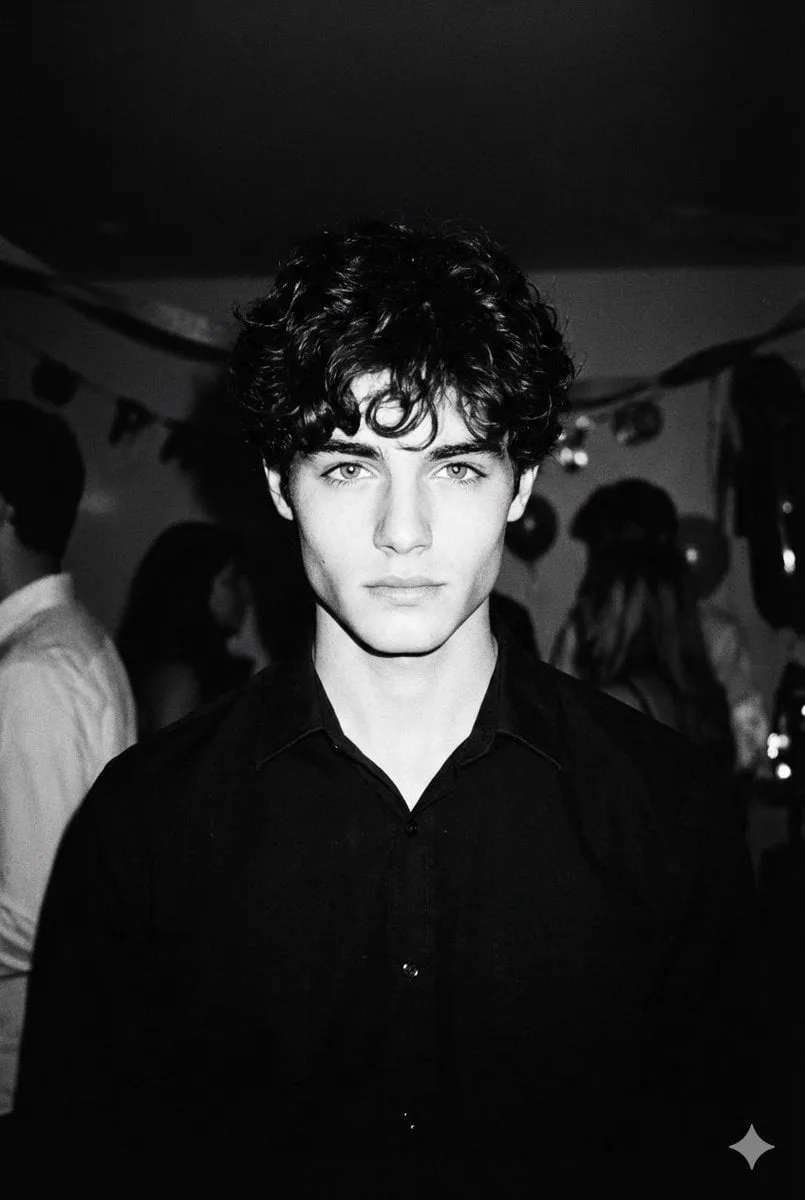
Stills are cheap, fast, and easy to compare side by side. Generate three to five key frames per shot, pick the strongest, and use it as the starting reference. This step catches casting, wardrobe, and composition problems before you invest time in motion. It also gives you a fixed visual target to judge every generated clip against, which is far more reliable than memory.
Animate Approved Stills with Image-to-Video
Once a still is approved, animate it with a short motion instruction focused only on what changes: the head turns slightly, the curtain moves in the breeze, the camera pushes in two meters. Image-to-video dramatically improves subject consistency because identity and composition are already resolved in the first frame. Text-only generation is still useful for exploration and for shots with no recurring subject.
Assemble in Story Order, Then Fix in Order
Cut generated clips into a rough assembly before polishing anything. Order of operations matters: story first, then timing, then motion cleanup, then color, then sound. Editing early reveals which shots are actually unnecessary, and every shot you delete is a shot you do not have to regenerate.
Add Sound Before You Polish Color
Sound is not a final garnish. Footsteps, room tone, fabric movement, and ambience do more to sell generated footage than another render pass. A clip with slightly soft motion but convincing sound design reads as intentional; a sharp clip with silence reads as a test render. If you only have time for one polish pass, spend it on audio and the cut rhythm.
The Anatomy of a Prompt That Moves
Text prompts for video are not longer image prompts. They are a compressed shooting plan. The model has to resolve subject identity, action, camera behavior, lighting, and physics at once, so the prompt has to give all five enough specificity to be decided.
The Five-Part Shot Prompt
A dependable template: subject and wardrobe, action with a clear beginning and end, camera behavior, lighting and atmosphere, and a realism or style anchor. Example: a woman in a charcoal wool coat steps off a curb and turns toward a passing bus, medium shot with a slow dolly in, overcast morning light with soft shadows, photorealistic with shallow depth of field.
Each part answers a question the model would otherwise guess. Vague camera language is the most common omission and the cheapest to fix. If you can describe a shot to a camera operator in one sentence, that sentence is probably a good prompt.
Camera Language Models Understand
Keep to one movement per clip: slow push in, slow pull out, lateral tracking, gentle handheld follow, static lock-off, slow arc. Compound moves such as zoom in while panning are the single most common cause of jitter and hidden cuts. If the story needs two moves, split them across two generations and join them with a cut or a dissolve.
Negative Constraints: Short and Specific
Useful negative instructions include: no text overlays, no logo distortion, no extra fingers, no sudden camera shake, no scene cuts, no subtitles. Keep the list short and specific. Long negative lists tend to flatten output because the model spends capacity avoiding rather than building. Treat negatives as surgical tools, not as a wish list.
Encouraging Smooth Motion
Motion realism is better encouraged than forbidden. Words like gradual, continuous, slow reveal, and steady follow produce smoother movement than intensity words like dramatic or explosive, which often introduce jitter and frame-to-frame instability. If you want energy, get it in the edit with pacing and sound rather than in the prompt.
When Prompts Fail: A Diagnostic Library
Most failures repeat. Learn these six patterns and you will diagnose a bad clip in seconds instead of regenerating blindly.
Subject Morphs Mid-Clip
Cause: the described action is too long or contains two distinct beats. Fix: shorten the action to one verb phrase and split the second beat into its own shot.
Camera Jumps or Stutters
Cause: compound camera instruction or conflicting motion language. Fix: one movement only, and remove any reference to handheld energy in the same line.
The Scene Drifts to Another Location
Cause: environment described once at the start, then left to decay. Fix: restate the environment in the final clause, for example still in the same narrow alley.
Lighting Flickers or Shifts Color
Cause: multiple light sources or vague time of day. Fix: specify one source and one time, such as single window light, late afternoon.
Limbs Warp During Fast Motion
Cause: speed plus proximity to camera. Fix: reduce motion speed and increase described distance, for example full body in frame, walking slowly.
Text, Hands, and Reflections Break
Cause: fine structure combined with rapid occlusion, the hardest problem for temporal models. Fix: keep these elements farther from camera, reduce motion, or remove them as the subject of the shot unless the story truly depends on them.
All six fixes follow one rule: when a model fails, remove options rather than adding adjectives.
Quality Control: The Shot Review Checklist
Review every clip against the same list before it enters the timeline. Does the subject stay consistent through the last frame? Does motion resolve rather than stop mid-action? Is the camera move continuous with no hidden cut? Are hands, text, and reflections free of obvious artifacts? Does lighting stay directional and stable? Does the clip cut cleanly into the neighboring shots?
Score each item pass or fail. A clip with two failures is usually cheaper to regenerate than to repair, and regeneration also sharpens your prompt library for the next project. Keep failures visible in a shared note so the team learns which prompt patterns keep breaking. Review at normal speed in context, not on a looped replay — looping hides bad endings, and the ending is exactly where most clips fail.
One more discipline: never approve a clip you have not watched with its neighbors. Individual clip quality and sequence quality are different measurements, and the sequence is what the audience sees.
Planning Compute, Batching, and a Prompt Library
Generation is the bottleneck in most pipelines, so treat it like a scheduling problem rather than a creative mood.
Group prompts by model so you are not switching tools every ten minutes. Queue background or low-priority shots while you review hero shots. Run a single test generation whenever you change a prompt structure significantly, then batch the winners at higher resolution. That test-first habit prevents the classic disaster of queueing forty clips from an untested template.
Keep a text file of every prompt that produced an approved clip, along with the model, aspect ratio, and any settings that mattered. Within a month that file becomes the most valuable asset you own, because it converts luck into repeatability. Reuse prompt skeletons aggressively; changing one clause is faster and safer than writing from scratch. Name entries with a scheme you can search, such as product-closeup-dollyin, and note the failure mode each skeleton tends to produce so you know what to watch for.
If your team works across time zones, batch generation overnight and review in the morning. Review quality drops sharply after the twentieth clip in a row, and tired review is how bad footage reaches the timeline.
Budgeting Time and Money Without Surprises
Plan attempts, not renders. Nothing in text-to-video lands on the first attempt, so estimate six to fifteen generations for any shot that must survive client review, and pick the model that makes the tenth attempt fast and cheap over the model that makes the first attempt beautiful. Iteration speed compounds: three extra refinement rounds usually beat one expensive hero render, because each round teaches you something about the prompt.
Budget in three pools: exploration, production, and rescue. Exploration is cheap and high-volume. Production is your approved shot list. Rescue is the reserve you keep for the two shots that refuse to work. Never spend the rescue pool during exploration. When a shot exhausts its attempts, change the approach rather than the adjective — switch model, switch to image-to-video, change framing, or cut the shot entirely. A shot that does not work after fifteen attempts is usually a story problem, not a rendering problem.
Also budget review time explicitly. A forty-shot piece with three candidates per shot means a hundred and twenty clips to watch. If nobody is scheduled to review them, the project stalls even though generation finished.
Common Mistakes That Slow Teams Down
Asking one model to do everything is the classic error. Writing twenty-line prompts with contradictory camera moves is the second. Polishing before the edit exists is the third, and it produces beautiful clips that refuse to cut together.
Other recurring mistakes: skipping aspect-ratio tests and discovering late that vertical framing breaks your wide shots; forgetting sound entirely; storing prompts nowhere; judging clips on looped playback; regenerating instead of diagnosing; approving clips without watching them in sequence; and treating longer clips as automatically better. Teams also overuse intensity adjectives, underuse reference images, and attempt dialogue-heavy shots without a plan for lip behavior.
The antidote is boring: fixed shot list, stills first, one camera move per clip, review in context, prompt library on disk, sound before color. None of it is glamorous, and all of it is what separates a finished piece from a folder of interesting clips.
FAQ
Do I need expensive hardware to start?
Usually not. Most capable models run through hosted interfaces, and a mid-range laptop handles prompting, review, and editing comfortably. Local generation becomes relevant when you need volume, privacy, or tight control over settings rather than occasional shots. Start hosted, learn the prompt patterns, then decide whether local hardware earns its place.
How long should a single generated clip be?
Two to four seconds is the practical sweet spot for most work. Longer takes are possible but degrade faster and are hard to repair when one moment fails. Build long sequences from several short clips joined in the edit, and reserve long takes for shots where continuity is the entire point.
Why do hands, text, and reflections break so often?
They combine fine structure with rapid occlusion, which is the hardest problem for temporal models. Reduce motion speed, keep these elements farther from camera, or avoid making them the subject of the shot unless the story demands it. When in doubt, cover a hand with a prop or a sleeve, and put product text on a static insert instead of a moving shot.
How do I keep a character consistent across shots?
Generate a reference still first, lock wardrobe and lighting in the prompt text, then use image-to-video or a reference-image feature. Consistency is a pipeline outcome, not a single-prompt trick. Keep the same wording for the character across every prompt in the sequence, and change only the action and camera clauses.
Should I upscale generated footage?
Upscale after the shot is approved, never before. Motion artifacts get magnified along with detail, so upscaling early hides problems you still need to fix at the source. If a clip needs heavy upscaling to look acceptable, the underlying generation is probably the wrong take.
Can I use generated footage commercially?
It depends on the tool, the plan you are on, and the rules that apply where you operate. Read the current terms of the specific service you use, and keep records of your prompts, reference images, and any source assets so you can show how each clip was produced.
What is the fastest way to improve output quality?
Change one variable at a time and keep notes. Most teams improve fastest by fixing three things: one camera move per clip, stills before motion, and review at normal speed in sequence. Those three habits solve more problems than any single model upgrade.
How many models should a small team maintain?
Two or three, each with a clear role: one for coherence and environment, one for human motion, one fast tool for exploration and stylized inserts. More than that and you spend your day comparing rather than finishing. Reassess the lineup only when a shot type keeps failing across your whole stable, not after every new release.
