

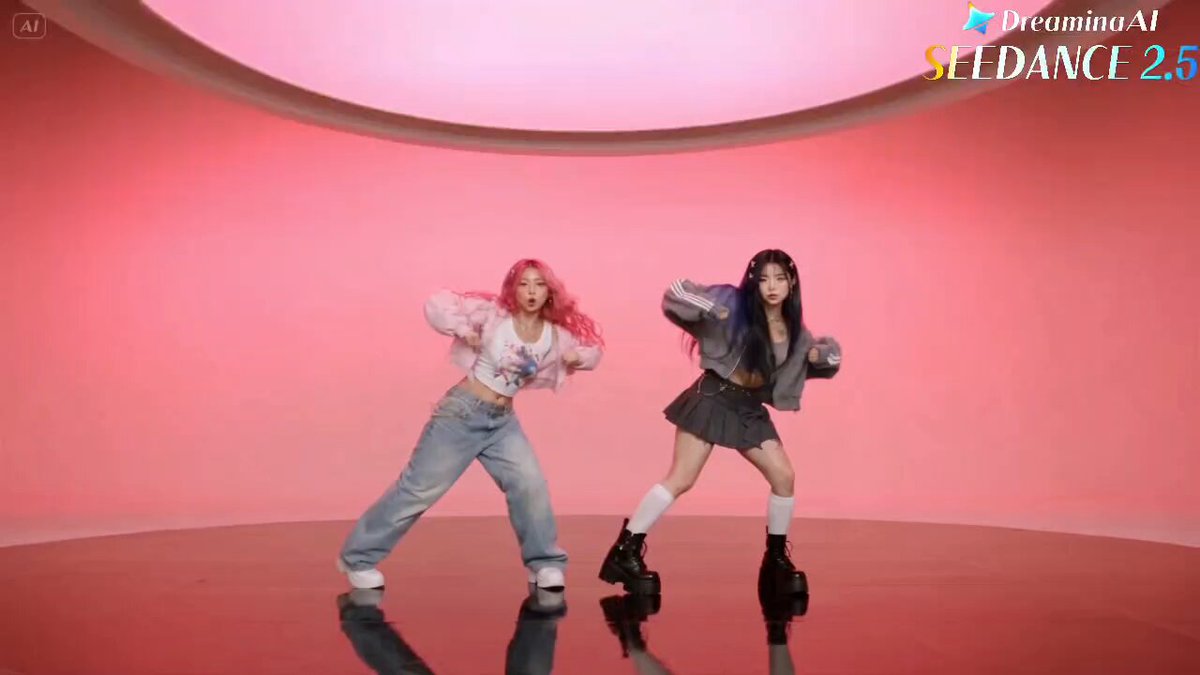
AI video generation has collapsed the distance between an idea and a finished shot. What once required a crew, a location, and a colourist can now be prompted, refined, and exported in an afternoon. But that speed created a new bottleneck: judgment. Platforms do not watch your video the way a fan does. They score it automatically, often within seconds of upload, and those scores shape who ever sees it. Understanding automated video quality evaluation is now a core production skill rather than a technical footnote.
This guide breaks down what modern evaluation systems look for, how to test your own footage against the same criteria, and which fixes move the needle fastest.
Why quality scoring decides who sees your AI video
Every large platform faces the same arithmetic problem: far more uploads than human reviewers. The answer is a tiered system. A machine model scores each upload on technical fidelity, perceptual quality, and content coherence, then routes strong candidates into recommendation pools while weak ones sink into limited distribution. High-scoring videos get surfaced in feeds, suggested sidebars, and search; low-scoring ones quietly starve.
Three consequences follow. First, quality is no longer only a matter of taste; it is a gate you either pass or fail. Second, small technical defects that a casual viewer might tolerate can drag a whole video down, because most scoring models average quality across the entire timeline. Third, the signals that satisfy a machine model usually satisfy humans too: sharp, stable, well-framed footage holds attention.
The important nuance for generated video is that automated scoring is far less forgiving of the artifacts generators produce, such as flicker, warping, and identity drift, than a person scrolling on a phone. A viewer might not consciously register that a face changes shape between cuts. A model trained to detect that exact defect will.
What modern evaluation systems actually measure
From pixel error to perceptual judgment
Older metrics such as peak signal-to-noise ratio and structural similarity measured how closely a processed video matched an original. They were designed for compression research, not for judging generated content, and they correlate poorly with what people perceive. A heavily denoised clip can score well on pixel similarity while looking like plastic.
Modern systems replace single-number fidelity with multi-axis perceptual scoring. Instead of one figure, expect a vector: sharpness, temporal stability, texture naturalness, colour consistency, motion realism, and alignment with the stated content. Each axis can fail independently, which is why two clips that look similar to you can score very differently.
Learned perceptual models and opinion training
The backbone of contemporary evaluation is a network trained on large sets of human judgements. Raters compare pairs of clips or rate them on absolute scales, and the model learns to predict those responses. The result behaves like a panel of viewers rather than a calculator.
For creators, the practical takeaway is that perceptual models reward natural texture and punish synthetic smoothing. Skin with pores, fabric with visible weave, and grain that moves consistently all read as high quality. Waxy faces, banded gradients, and frozen noise patterns read as artificial even at high resolution.
Transformer models reading context
Attention-based architectures changed video evaluation because they can examine a whole sequence at once rather than frame by frame. That allows contextual questions: does this object persist across the shot, does the camera move plausibly, does the subject's clothing stay the same colour, does the action in the prompt actually appear?
This is where alignment scoring lives. A clip can be technically flawless and still score poorly because it does not depict the requested subject, action, or setting. Treat evaluation as two independent axes: perceptual quality and semantic alignment. Most frustration comes from fixing one while ignoring the other.
The quality signals that correlate with distribution
Identity and facial stability
Faces carry the highest weight in almost any evaluation model, because they are what audiences look at and what generators struggle with most. Stability across frames, consistent eye position, a stable hairline, and plausible teeth matter more than overall sharpness. A slightly soft but consistent face outperforms a razor-sharp face that morphs every twelve frames.
Temporal coherence and motion plausibility
Models look for physics that hold together: consistent motion blur direction, limbs that do not merge into the background, cloth that reacts to movement. Jitter between consecutive frames, often introduced by interpolation, registers as a defect even when individual frames look clean.
Fine detail, texture, and noise
Sharpness must be real rather than sharpened. Aggressive unsharp masking produces halos that perceptual models flag. Consistent grain is fine; noise that pulses or freezes is not. Watch background texture, foliage, crowds, and patterned surfaces, where both generators and compressors break down.
Audio and small-screen readability
Audio is not an afterthought. Lip-sync offset beyond roughly a tenth of a second is detectable, and pipelines increasingly score speech intelligibility, background noise, and consistency between voice and visible speaker. Composition matters too: evaluation happens at multiple scales, including thumbnails. If your subject is lost in a wide frame, the clip is judged on a version you never intended.
A pre-publish QA workflow that catches problems early
Lock a reference set
Before you render a series, export three frames that represent the intended look: a hero frame, a mid-motion frame, and a detail frame. These become your anchor. Every later version is judged against them, not against your memory of the previous render, which becomes unreliable after twenty iterations.
Build a spot-check grid
Never review a generated clip by scrubbing casually. Extract stills at fixed intervals, roughly every half second for a five-second clip, and place them side by side. Identity drift, exposure pumping, and background melting become obvious in a grid and nearly invisible in playback.
Score before you upload
Rate each clip on a short rubric, fix the weakest axis, and re-render only that. Rewriting a whole prompt to repair one shaky hand usually trades a small defect for a larger one. Surgical fixes, such as a different seed, a locked reference image, or a shorter shot, preserve what already worked.
Re-encode deliberately
Platforms transcode everything, but they cannot rescue a badly encoded source. Export at a sensible bitrate for the resolution, avoid generating at one size and upscaling to another, and keep the aspect ratio native to the destination. Re-encoding a crisp master once is cheap; re-encoding an already compressed file twice is where mush comes from.
A reusable scoring rubric
Rate each axis from one to five and treat anything below four as a fix candidate.
| Axis | What you are checking | Fast failure sign |
|---|---|---|
| Face stability | Identity holds across frames | Features shift between cuts |
| Temporal coherence | Motion and exposure stay consistent | Flicker, jitter, warping |
| Detail and texture | Real sharpness without halos | Plastic skin, banded gradients |
| Semantic alignment | Clip matches the brief | Wrong action or setting |
| Audio | Speech and effects are clean | Offset lip-sync, clipping |
| Small-scale readability | Subject reads in a thumbnail | Busy, low-contrast framing |
A clip averaging four or above on every axis is usually ready. A clip scoring five in sharpness and two in face stability is not, because the weakest axis dominates how the video feels.
The most common failure modes and how to fix them
Flicker and exposure pumping
Usually a sign of an unstable seed, a reference image fighting the prompt, or an over-aggressive interpolation pass. Shorten the shot, lock lighting language in the prompt, and review the raw output with interpolation disabled so you can see what the model actually produced.
Identity drift
Faces wander when the model has no anchor. Use a consistent reference image, keep the subject in similar pose and lighting between shots, and avoid long continuous takes with large camera moves. Cutting between shorter stable shots almost always beats one drifting hero take.
Warping hands, text, and logos
Generators struggle with small structured detail. Avoid close-ups of hands unless they serve the story, render text as an overlay in post rather than in-frame, and keep logos out of generated imagery entirely. Replacing a generated logo with a designed asset takes a minute and removes an entire category of defects.
Background melting during camera moves
Motion amplifies every background artifact. Slow the move, reduce parallax, or add a subtle depth-of-field treatment so imperfect detail is less visible. Shallow focus is a legitimate creative choice and a useful technical shield.
Audio drift and lip-sync problems
Check offset on sustained speech rather than short reactions. Regenerate or re-dub the offending segment, or reframe to a wider shot where imperfect sync is less noticeable. Clean room tone and normalise levels before export; a quiet, consistent track reads as professional.
Over-smoothing
Upscalers and denoisers love to erase texture. Compare before and after at full resolution rather than at thumbnail size, and back off whenever skin or fabric starts looking like wax. A slightly noisy authentic frame usually beats a smooth synthetic one.
Model, prompt, and pipeline choices that raise your baseline
Shorter shots raise quality more reliably than any single setting. Four to six seconds per generation gives the model less time to diverge, and editing three short stable shots together produces a more convincing scene than one long unstable take.
Reference-driven consistency tools matter more than raw resolution once you are past 1080p. Locking a character, a palette, or a layout removes the biggest source of variance in multi-shot sequences. Keep prompts specific about light, lens, and motion, and vague about things generators cannot render. Camera language such as slow push-in or handheld follow improves coherence because it constrains motion; stacking five conflicting actions in one prompt does the opposite.
Finally, decide deliberately when to upscale. Upscaling a clean 1080p render can help distribution; upscaling a soft render mostly amplifies softness. Test on a short clip before committing a whole project.
Encoding and delivery settings that protect your score
Match frame rate to the source rather than the destination, keep bitrate generous for high-motion footage, and normalise colour and levels before concatenating clips from different sources into one encode. Deliver vertical for vertical destinations and horizontal for horizontal ones; letterboxed verticals waste screen area and read as low effort to models and viewers alike.
Write captions for anything containing speech. They improve accessibility, increase watch time in sound-off environments, and give evaluation pipelines clean text signals. Design the first three seconds as carefully as the last, because retention curves and quality scores are both shaped heavily by the opening.
FAQ
Do compression metrics still matter? They matter less than perceptual scores but are not irrelevant. Bad encoding destroys texture and motion consistency, which perceptual models then punish. Encode cleanly and the technical metrics take care of themselves.
How long should a generated shot be? Four to six seconds is the sweet spot for most current models. Longer shots are possible, but quality decays with duration and evaluators average across the whole timeline.
Can I fix problems in editing instead of regenerating? Often yes. Stabilisation, colour matching, grain matching, and trimming the weakest frames solve more than people expect. Regenerate only when the defect is structural, such as a wrong pose, wrong subject, or broken identity.
Does resolution guarantee a good score? No. A sharp 720p clip with a stable face and coherent motion usually outranks a soft, flickering 4K clip. Resolution is one input among many.
Why does a clip look fine locally but bad after upload? Transcoding exposes low-bitrate encodes, banding, and noise. Test your export against a re-encoded copy at a lower bitrate before publishing, and add a touch of grain if gradients band.
Should I use interpolation to hit a higher frame rate? Only when source motion is clean and slow. Interpolation amplifies warping and adds jitter that evaluation models detect as a temporal defect.
Final checklist
Score every clip on six axes before upload. Fix the weakest axis with the smallest possible change. Keep shots short, lock references, export once from a clean master, write captions, and frame for the smallest screen your video will appear on.
Do that consistently and the automated gate stops being an obstacle. It becomes an advantage, because the same traits that satisfy a scoring model are the ones that hold a viewer's attention: a stable subject, coherent motion, honest texture, and a clear reason to keep watching.
