

Why Viral Video Still Wins the Feed
Short, gripping video is the default language of social platforms. Algorithms prioritize watch time, completion rate, shares, and rewatches — all of which favor tight, emotionally clear clips over polished but slow brand films. That shift has two consequences for marketers. First, volume matters: you need many attempts to find the one that catches. Second, speed matters: trends decay in days, not months.
AI video generation changes the economics of both. Instead of booking a shoot for every idea, you can prototype ten hooks in an afternoon, test them, and only invest production effort in the winners. This guide walks through the full workflow: concepting, hook writing, model selection, character continuity, editing rhythm, platform packaging, and scaling output without burning out. It is written for creators and marketing teams who want repeatable results, not one-off lucky hits.
The Anatomy of a Scroll-Stopper
Viral video is not random. It reliably contains a few structural ingredients. Understanding them lets you design intentionally rather than hoping.
The first 1.5 seconds decide everything
Most viewers decide whether to keep watching before any story begins. The opening frame must do one of four jobs:
- Pattern interrupt: something visually unexpected — an impossible perspective, a surreal object, a sudden transformation.
- Curiosity gap: a question the viewer cannot answer without watching ("This is why your edits feel flat").
- Stakes: a visible consequence (before/after, failure, countdown).
- Recognition: a hyper-specific situation the target audience instantly identifies with.
When generating with AI, you control this frame precisely. Write your prompt as a still image description first: subject, action, framing, lighting, mood. Generate several variants, then pick the frame that reads clearly even at thumbnail size. If it does not work as a frozen image, it will not work as a video opening.
A single, legible idea per video
Videos that try to say three things say nothing. The strongest performers communicate one idea with one emotional payoff. Write the idea as a sentence before you write any prompt: "A tired designer discovers an AI tool that fixes lighting in one click." If you cannot compress the video into one sentence, split it into a series.
Emotional velocity
The clip should change emotional state, not just show motion. That can mean tension to relief, confusion to clarity, ordinary to absurd. AI generation makes these transitions easy to stage because you can specify a change in lighting, environment, or character expression between shots.
Loopability and rewatch value
Endings that connect back to the opening boost replays. A simple trick: make the final frame visually rhyme with the first, so the loop feels intentional. Replays are one of the strongest signals you can send.
Building a Concept Pipeline Before You Generate
Most teams fail at volume because they generate before they think. A concept pipeline fixes that. Spend thirty minutes writing ideas, not prompts.
- List audience frustrations. Ten complaints your audience has about their work, hobby, or daily life.
- Convert each into a tension sentence. "You spend hours editing and it still looks amateur."
- Attach a visual metaphor. A tangled cable, a foggy window, a spinning clock.
- Write the payoff. What does resolution look like in one image?
- Draft a hook line. Under nine words, spoken or on-screen.
This gives you a batch of concepts grounded in real audience psychology rather than visual novelty. Visual novelty without relevance gets views but not follows, clicks, or sales.
Keeping a swipe file of structures
Collect structures, not content. Examples: "Three mistakes," "Nobody talks about this," "Watch until the end," "Same scene, two styles," "Day one versus day thirty." Reuse the structure with new subject matter. Structures are the reusable asset; topics are disposable.
Choosing the Right Generation Approach for Each Shot
Different shots need different techniques. Trying to generate everything with one method produces inconsistent results and wasted time.
Text-to-video for concepts and B-roll
Use text-to-video when you need atmosphere, abstract visuals, landscapes, product-adjacent imagery, or rapid concept tests. It is fastest and cheapest in terms of iteration time. Keep prompts structured: subject, action, environment, camera, lighting, style, mood. Add negative guidance for anything you consistently dislike, such as warped hands, text artifacts, or jittery motion.
Image-to-video for controlled framing
When the composition matters — a specific angle, a branded layout, a character close-up — start from a still image. Generate or design the still, then animate it. This gives you a stable composition and dramatically improves consistency across shots because the base frame is fixed.
Reference-driven generation for recurring characters
If your format features the same character across episodes, consistency is your brand. Use reference-based workflows where a character sheet or a locked reference image drives every shot. Keep a folder with: front, three-quarter, and profile views; neutral and expressive faces; and two or three outfits. Descriptive text alone drifts; visual references anchor.
A decision rule
- Need speed and volume? Text-to-video.
- Need composition control? Image-to-video.
- Need continuity? Reference-driven generation.
- Need live-action realism with a human face? Consider shooting the talent and generating only the environment, or use a hybrid where the generated footage supports real footage.
Prompt Craft for Video, Not Stills
Video prompts describe change over time. Still prompts describe a state. The most common beginner error is writing a beautiful still prompt and expecting motion.
Describe the beat, not the frame
Weak: "A woman in a red coat standing in a rainy city at night, cinematic."
Stronger: "A woman in a red coat steps off a curb into rain; the camera tracks beside her as neon reflections stretch across the wet asphalt; she turns toward the lens and smiles; slow push-in; moody cyan and magenta lighting."
The second describes progression, camera behavior, and a final beat. That is what produces usable clips.
Control camera language explicitly
Useful terms: slow push-in, dolly left, handheld follow, static wide, overhead descent, whip pan, rack focus, orbit. Camera movement is one of the most reliable ways to make generated footage feel intentional rather than floaty.
Keep shots short and cut on motion
Generate in short segments and cut on movement. Long generated clips tend to drift in anatomy, lighting, or geometry. Four to six seconds per shot is usually plenty for social formats, and cutting mid-motion hides imperfections.
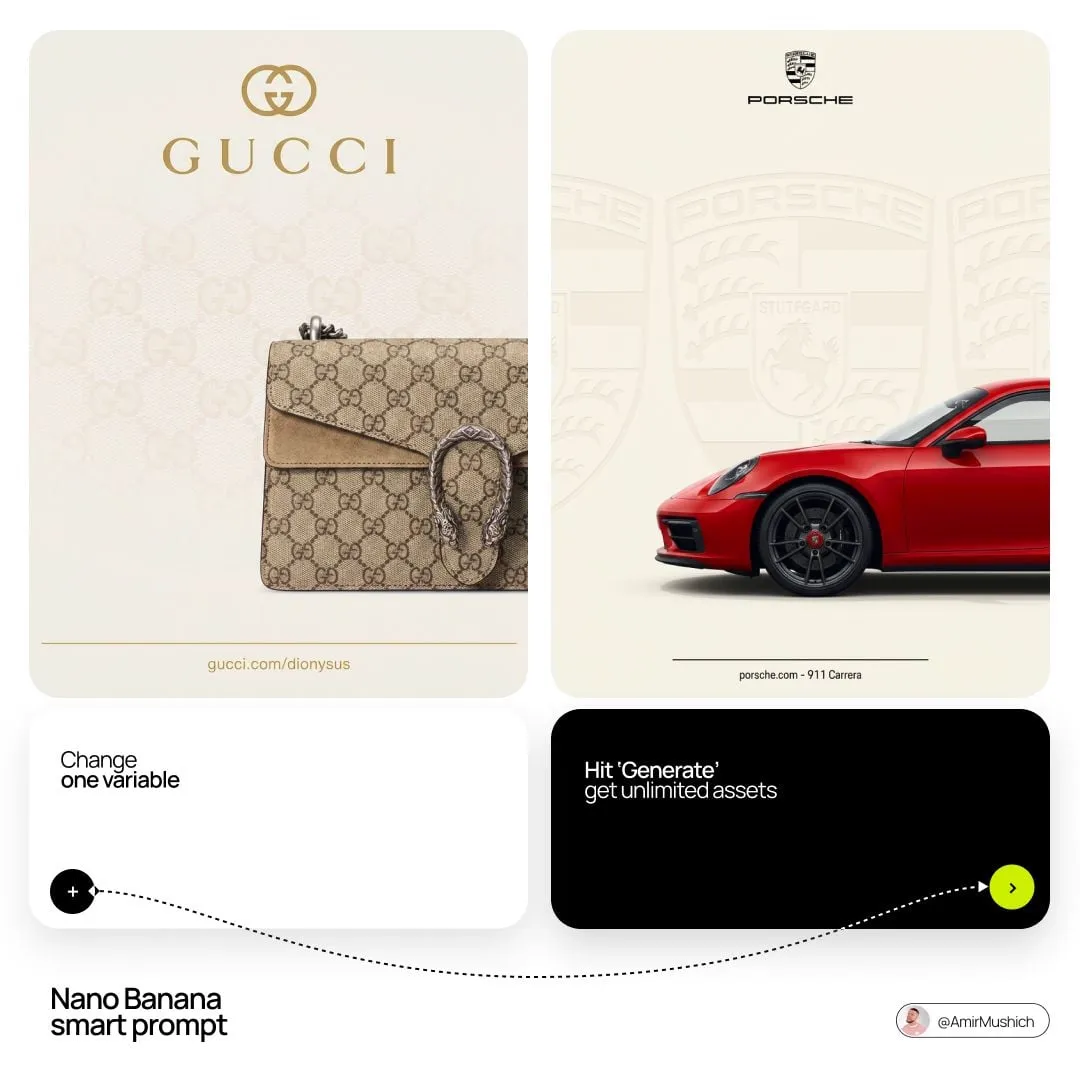
Iterate in one variable at a time
If a clip fails, change one thing: camera, lighting, or action. Changing all three makes it impossible to learn what worked. Keep a simple log of prompt, settings, and outcome so your team builds institutional knowledge instead of rediscovering the same lessons.
Continuity: The Hardest Problem in AI Video
Audiences forgive stylistic variety but not broken continuity. Inconsistent faces, outfits, props, and lighting destroy credibility within seconds.
Solve continuity at the planning stage
Create a visual bible before generating anything:
- Character sheet: face, hair, build, wardrobe, distinguishing details.
- Palette: three to five hex-level colors that define the look.
- Lighting rules: for example, key light always from camera left, cool shadows, warm highlights.
- Lens rules: consistent focal length feel, consistent depth of field.
- Set list: recurring locations with reference frames.
Then, for every shot, attach the relevant references and repeat the same descriptive phrases. Repetition is not lazy; it is how consistency is enforced.
Continuity across cuts
Match on action: end shot A with a motion and begin shot B mid-motion. Match on color: carry a dominant color across the cut. Match on sound: let audio bridge the edit. These are classic editing techniques, and they matter more, not less, when footage comes from generative models.
When continuity cannot be achieved
Switch formats instead of fighting. Use silhouette, hands-only shots, over-the-shoulder angles, or a narrator-led structure where the character is heard but rarely fully seen. Many successful AI-led formats hide faces entirely by design.
Editing Rhythm That Makes Generated Footage Feel Expensive
Raw generation is only half the job. Editing is where average clips become convincing.
Cut faster than feels comfortable
In the first five seconds, cut every one to two seconds. As the video progresses, you can slow down. This front-loaded pacing matches how attention decays.
Add motion to static frames
If a shot feels lifeless, add a slow scale or position drift in the edit. Subtle push-ins of three to five percent over two seconds read as camera movement and add production value at no generation cost.
Use sound design aggressively
Sound is the cheapest authenticity signal available. Layer:
- A music bed with a clear rhythmic hook.
- Whooshes and impacts on cuts and transitions.
- Ambience (rain, room tone, crowd) to glue generated shots together.
- A punchy voiceover or on-screen text rhythm.
Mixing these layers makes disparate shots feel like one continuous world.
Color grade for cohesion
Apply one look to all shots: consistent contrast curve, consistent color balance, consistent grain. Even a simple adjustment layer can unify footage from different generations and make the whole piece feel deliberate.
Platform Packaging: Titles, Captions, and Thumbnails
Great video with weak packaging underperforms. Packaging is part of the creative, not an afterthought.
Write the caption as a second hook
The caption should extend curiosity, not summarize. If the video shows a process, the caption can name the unexpected outcome. If the video is emotional, the caption can name the feeling. Keep the first line under twelve words; that is what is visible before truncation.
On-screen text should be readable at a glance
Rules that consistently work:
- Maximum six words per text card.
- Large type, high contrast, safe margins from edges.
- Text appears on the beat, not randomly.
- Never let text cover the subject's face.
Thumbnails and cover frames
Choose a cover frame with a clear focal point and a facial expression if a face is present. If your format has no face, use a strong object and high contrast. Add minimal text — three words maximum — and test two covers when the platform allows it.
Aspect ratios and safe zones
Generate or crop for the primary platform first, then adapt. Vertical for short-form feeds, square for mixed placements, horizontal for long-form embeds. Keep key action away from interface areas where captions, buttons, and profile elements sit.
A Practical End-to-End Workflow
Here is a repeatable weekly workflow that a small team can sustain.
Day 1 — Research and concepts. Collect ten audience frustrations. Write ten tension sentences and ten hooks. Choose eight to produce.
Day 2 — Prompting and stills. For each concept, generate key stills. Pick the strongest opening frame for each. Lock references for any recurring character.
Day 3 — Video generation. Generate four to six shots per concept. Keep a log. Do not chase perfection; chase usable.
Day 4 — Assembly. Edit in your editor of choice. Cut on motion, add text, add sound design, grade.
Day 5 — Packaging and publish. Write captions, choose covers, schedule posts across platforms with appropriate aspect ratios.
Day 6–7 — Review. Track three metrics per video: three-second retention, completion rate, and shares. Identify which hooks and structures beat the median, then double down on those in the next batch.
What to do with a winner
When a video outperforms, do not move on. Produce two or three variations: same structure with a different subject, same subject with a different hook, same hook with a different visual metaphor. Most successful accounts are built on variation, not constant novelty.
What to do with a loser
Diagnose by stage. If three-second retention is low, the hook or opening frame failed. If retention drops mid-video, pacing or clarity failed. If completion is high but shares are low, the payoff was not emotionally or practically useful. Each diagnosis points to a specific fix.
Scaling Output Without Losing Quality
Volume without systems produces chaos. Systems make volume sustainable.
Template your formats
If you run a recurring series, templatize the structure: intro beat, three points, payoff, call to action. Then only the content changes. Templates reduce decision fatigue and make production predictable.
Build a reusable asset library
Maintain folders for: backgrounds, overlays, transitions, sound effects, music stems, fonts, character references, and prompt snippets that reliably work. Every video you make should donate something back to the library.
Batch by task, not by video
Writing all hooks at once, generating all stills at once, and editing in a single block is dramatically faster than context-switching across projects. Batch work also improves quality because you stay in one mode of thinking.
Use a two-tier quality bar
Not every video needs to be a flagship. Define a fast tier for testing ideas and a polished tier for confirmed winners. This prevents perfectionism from killing your testing velocity.
Working With AI Responsibly and Effectively
A few practical guardrails protect both your brand and your workflow.
- Disclose synthetic media where required. Platform rules and local regulations increasingly require labeling AI-generated content. Build this into your publishing checklist.
- Avoid depicting real people without consent. Use fictional characters or licensed talent.
- Do not train on other artists' work without permission or license. Use models and assets with clear usage terms.
- Keep a human in the loop for claims. AI can produce convincing footage but is not a fact-checker. Verify any product claim or statistic you put on screen.
- Preserve your brand consistency. Your visual bible is also a brand asset; treat it as documentation that outlives any single tool.
Common Failure Modes and Fixes
Problem: Output looks plastic or uncanny.
Fix: Reduce motion complexity, add real-world imperfection cues (grain, handheld micro-movement, imperfect lighting), and cut faster so viewers have less time to analyze any single frame.
Problem: Characters change between shots.
Fix: Move to reference-driven generation, lock wardrobe and lighting terms, and shorten shots.
Problem: Videos look technically fine but get no engagement.
Fix: The problem is relevance, not visuals. Return to audience frustrations and rewrite hooks around specific, recognizable situations.
Problem: Production feels slow despite AI.
Fix: You are likely generating before planning. Invest thirty minutes in concepts and prompts; it usually saves hours of generation.
Problem: Every video feels different.
Fix: Standardize palette, fonts, sound design, and pacing. Consistency trains the audience to recognize you instantly.
Frequently Asked Questions
How long should a viral-style social video be?
For short-form feeds, seven to thirty seconds is the sweet spot for reach, while thirty to sixty seconds works for explainers and story-driven clips. Match length to the single idea: if the idea needs ninety seconds, split it.
Do I need a recurring character to grow an account?
No, but consistency helps. Some formats succeed with a narrator, a product, or a visual motif. Pick one anchor element and keep it stable across videos.
How many videos should I publish per week to see traction?
There is no universal number, but testing velocity matters more than polish. Many accounts find their breakout structure within twenty to forty attempts. Publish consistently enough that you can compare results.
Can AI video replace filming entirely?
For many formats, yes. For others, a hybrid is stronger: film the talent and product, generate environments and B-roll. Choose based on where control matters most.
What metrics actually predict a hit?
Three-second retention tells you the hook works. Completion rate tells you pacing works. Shares tell you the payoff is worth passing on. Track those three before worrying about follower counts.
How do I keep quality high as I scale?
Templates, asset libraries, batched tasks, and a clear two-tier quality bar. Systems scale; improvisation does not.
Final Checklist Before You Publish
- One clear idea, stated in a single sentence.
- Opening frame works as a still image.
- First five seconds cut fast and read clearly with sound off.
- Character and lighting look consistent across every shot.
- Text is short, large, and safe from interface edges.
- Sound design includes music, effects, and ambience.
- Caption extends curiosity in its first twelve words.
- Cover frame has a clear focal point.
- Aspect ratio matches the platform.
- AI disclosure applied where required.
Running this checklist takes two minutes and catches most of the mistakes that quietly suppress reach. Combine it with the weekly workflow above, review your metrics honestly, and iterate on your winners. Viral video is not a lottery — it is a system of clear ideas, strong hooks, disciplined continuity, sharp editing, and consistent testing. Build the system once, and every new video becomes faster and more likely to land.
