

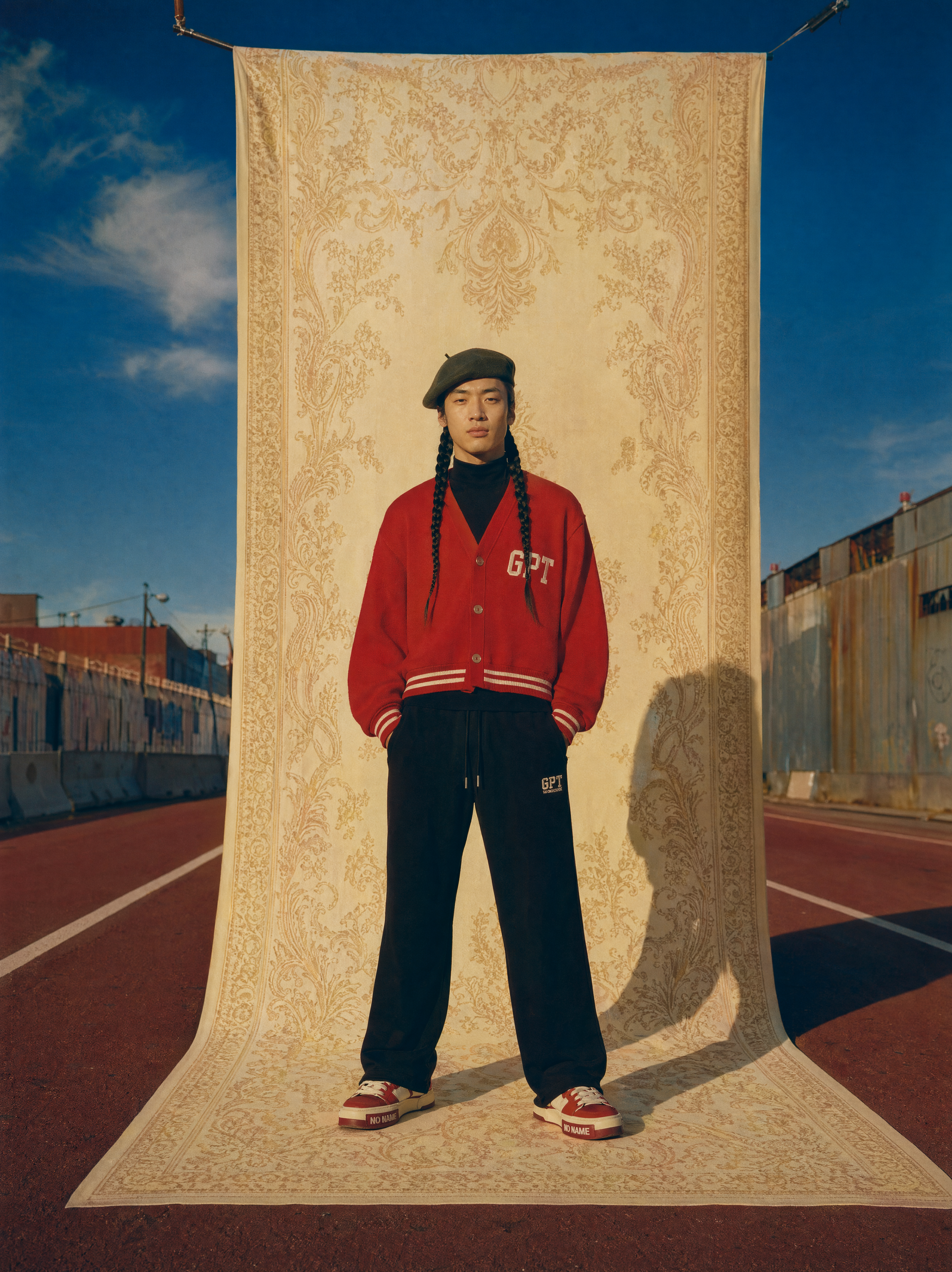
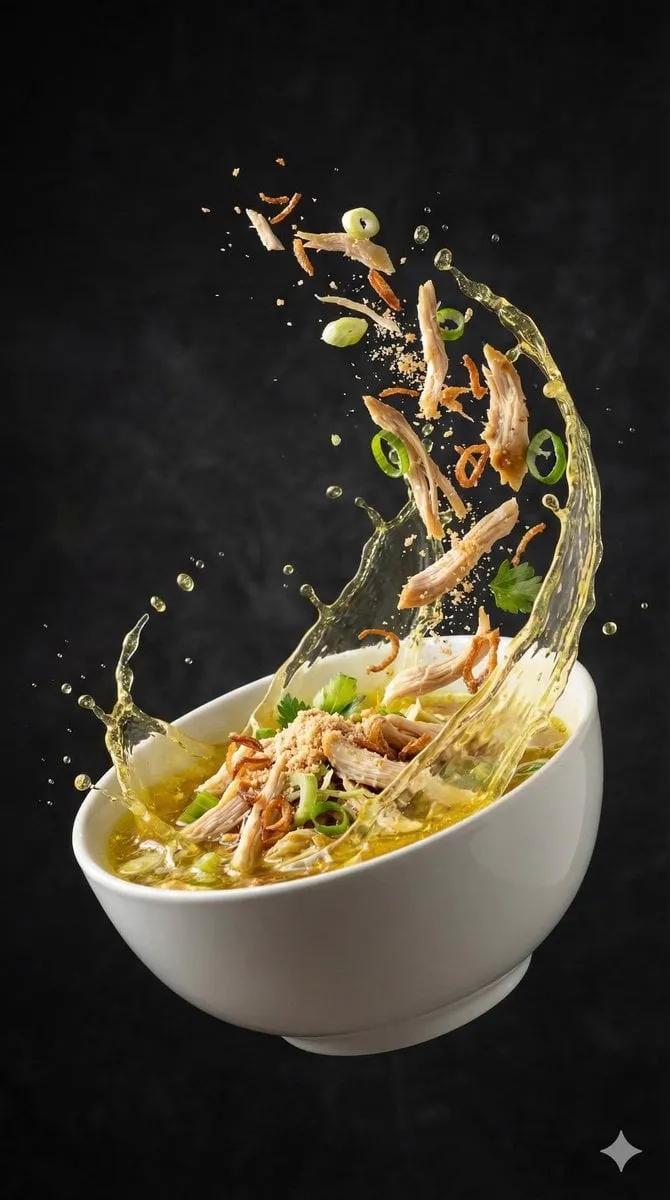
The video you just watched had flawless lighting, a face that never glitched, and hands that moved exactly the way real hands move. You did not question it. That is the goal. The people who make that happen are not filmmakers in the traditional sense. They are advanced AI data trainers, and their work is designed to be invisible.
For years, the conversation around generative AI focused on raw capability. Can the model produce a dog? Can it render rain? Those questions have been answered. The harder question now is reliability: can the model produce the same dog, in the same style, across twenty scenes, with consistent motion and no artifacts? That question is not answered by the model alone. It is answered by the people who curate the data, design the fine-tuning runs, and evaluate every frame. That discipline is what this article is about.
What an advanced AI data trainer actually does
An advanced AI data trainer is a specialist who shapes how a generative model behaves after its initial training. A base model, fresh out of pretraining, knows a little about everything. It can generate a generic city street, a generic person, a generic product shot. But generic is not enough for production work. A brand needs its exact product, its exact spokesperson, its exact lighting style. A filmmaker needs a specific character who looks the same in every scene. A game studio needs a world with consistent rules.
The data trainer closes that gap through a cycle of four activities:
- Dataset design: deciding what examples the model needs to see in order to learn the target style or subject.
- Curation and cleaning: removing duplicates, mislabeled frames, watermarks, and low-quality samples that poison the learning signal.
- Fine-tuning runs: configuring and launching training jobs that adjust the model's weights on top of the curated data.
- Evaluation: testing the fine-tuned model against a held-out set of prompts, scoring consistency, fidelity, and failure modes.
This is a much broader job than classic data labeling. A labeler annotates what is already there. A trainer decides what should exist in the first place and then verifies that the model can produce it on demand. The distinction matters because the bottleneck in modern generative pipelines is no longer compute alone. It is the quality of the signal going into each training run.
Why invisible AI output is the new standard
The phrase becoming invisible has a specific meaning here. When AI assistance is done well, the audience cannot tell it was involved. The character does not morph between shots. The product logo does not melt. The shadows obey the same light source across the scene. The motion of hair, fabric, and water follows believable physics. None of these qualities are flashy. They are precisely the qualities that make an image or video pass as real footage.
Invisible output matters for several reasons. First, trust: audiences abandon content that feels synthetic, and platforms demote it. Second, brand safety: a company cannot put its product in front of customers if the rendering occasionally distorts the packaging. Third, economics: every artifact costs a regeneration, and regenerations cost time and money. A model that is right ninety-five percent of the time is dramatically cheaper to operate than one that is right seventy percent of the time.
What gives a model away in practice is usually small: inconsistent reflections, extra fingers, characters that change clothing between shots, text that rearranges itself, motion that accelerates or freezes without reason. The advanced trainer builds a mental checklist of these failure classes and designs data and tests specifically to catch them.
From labeling to model architecture: how the role evolved
The first wave of AI content work was annotation. Teams of people drew boxes around objects, transcribed speech, and tagged images so models could learn the basics. It was necessary work, but it was also mechanical. The second wave added prompt engineering, where people learned to phrase instructions that reliably produced good outputs. That role is still useful, but it has limits: prompting can nudge a model, yet it cannot teach the model a subject it never saw during training.
The third wave, which is where advanced data training lives, is architectural. The trainer thinks in terms of the full learning pipeline: what data is collected, how it is filtered, how it is weighted, how it is paired with captions, and how the resulting fine-tune is validated. This is closer to what an ML engineer does than what an annotator does, but it sits on the creative side of the pipeline. The best trainers speak both languages: they understand diffusion and transformer internals well enough to make technical decisions, and they understand visual storytelling well enough to know what good looks like.
This evolution explains why the role commands more responsibility now. A mistake at the labeling stage wastes a few hours. A mistake at the fine-tuning stage wastes a training run and can degrade model quality for weeks. The advanced trainer is the person who prevents those expensive mistakes before they happen.
Core skills you need
If you want to move into this field, focus on four skill clusters.
Data literacy is the foundation. You need to know how to inspect a dataset at scale: how to spot near-duplicates, how to check resolution and aspect ratio distributions, how to detect watermarks and text artifacts, and how to write simple scripts to profile a folder of thousands of images or clips. Tools like Python, pandas, and image hashing libraries are table stakes.
Model mechanics come next. You do not need to implement a diffusion model from scratch, but you do need to understand the concepts: training versus inference, learning rate and epochs, overfitting and underfitting, LoRA and other parameter-efficient fine-tuning methods, and how captions condition generation. This knowledge lets you read training logs with intent instead of guessing.
Prompt-to-data synthesis is the creative core. A large part of modern dataset curation is generating synthetic examples with stronger models, then filtering them, then using them to teach a smaller or more specialized model. Knowing how to write prompts that produce clean, varied, correctly labeled samples is a genuine craft.
Evaluation design is what separates juniors from seniors. Juniors look at a few outputs and say it looks good. Seniors build a test set, define measurable criteria, and run structured comparisons between model versions before any creative decision is made.
The fine-tuning loop: a step-by-step workflow
A typical fine-tuning project for a video or image model follows a predictable sequence. Walk through it once and you will recognize it in every tool you use later.
Step one is define the target. Write down exactly what the model must learn: a character, a product, a style, a camera grammar. Ambiguity here propagates through the whole project. If you cannot describe the target in one sentence, refine it before touching data.
Step two is collect the source material. For a character, that means a set of reference frames from multiple angles, in multiple lighting conditions. For a style, that means a curated gallery of examples that represent the style and deliberately exclude near-misses. More data is not automatically better; coverage is better. Ten images spanning ten different conditions beat fifty images of the same pose.
Step three is clean and caption. Remove anything with compression artifacts, watermarks, or irrelevant content. Then write captions that describe the visual facts rather than the emotional intent. Consistent, factual captions are what anchor the model to the right features.
Step four is run a small validation batch before committing to a large job. A quick low-epoch run costs little and tells you whether the dataset is usable. If the outputs show artifacts, fix the data first. Training on bad data just produces a model that has memorized the errors.
Step five is the production run, followed immediately by structured evaluation. Generate a fixed set of test prompts, compare against the base model and against previous fine-tunes, and record the differences. Keep the test prompts constant across runs so you can compare versions honestly.
Step six is iteration with discipline. Change one variable at a time: more epochs, different data mix, different caption style. If you change three things at once and the result improves, you will not know which change caused it.
Building a clean dataset and reducing model noise
Model noise is the umbrella term for the random-looking errors that creep into generated media. It includes visual noise, such as grain and compression artifacts the model invented, and semantic noise, such as a character whose identity drifts between shots. Clean data is the primary weapon against both.
The first rule is deduplication. Near-identical frames waste training capacity and cause the model to overfit a single moment. Hash-based deduplication catches exact copies; perceptual hashing catches near-copies.
The second rule is label consistency. If captions describe the same subject differently across examples, the model learns a muddled association. Standardize terminology before training, not after.
The third rule is negative curation. Some datasets include content that actively misleads the model: text overlays, watermarks, faces of other people in a character set, or frames where the subject is partially occluded. Filtering these is tedious but essential, and it is exactly the kind of work that cannot be fully automated yet.
The fourth rule is distribution thinking. If ninety percent of your frames are close-ups, the model will produce close-ups regardless of what the prompt asks. Balance your dataset so that angles, lighting, and actions appear in proportions that match how you will actually use the model.
Temporal coherence and photorealism techniques
For video work, the hardest technical problems are temporal coherence and photorealism. Temporal coherence means that an object maintains its identity across frames: the character keeps the same face, the jacket keeps the same logo, the background stays stable while the camera moves. Photorealism means the final frames pass the scrutiny of a human eye.
Practical techniques for coherence include training on clips rather than isolated frames where possible, so the model learns motion patterns; using first-frame and last-frame conditioning, so the model has fixed anchors to interpolate between; and enforcing identity through reference images at inference time, either through image-to-video prompting or through tools that accept a character sheet.
Photorealism is improved by curating high-resolution, artifact-free source material, by avoiding overly compressed reference clips, and by validating skin texture, fabric detail, and lighting behavior specifically. A useful trick is to render test frames in grayscale as a separate check: color can distract the eye, while gray frames expose texture and shape problems immediately.
Evaluating output like a professional
Evaluation deserves its own discipline because it is where most pipelines quietly degrade. Define three levels of checks.
Level one is mechanical: resolution, frame count, aspect ratio, duration, and whether the output matches the prompt's stated subject. These can be automated and should be checked on every generation.
Level two is perceptual: identity consistency, style consistency, motion quality, and artifact presence. These need human judgment, but they can be structured with a rubric that assigns a score per dimension rather than a single overall impression.
Level three is comparative: how does this model version perform against the previous one on the same test prompts? Keep a leaderboard. It is the only honest way to decide whether a new fine-tune is an improvement or just a change.
A common mistake is evaluating only the successes. A model that produces ten perfect clips and three disasters is different from a model that produces thirteen decent clips. Record failure modes explicitly: what kind of prompt caused the failure, what the artifact looked like, and what data change would plausibly fix it.
Tools and model libraries worth knowing
You do not need to master every tool, but you should know the landscape well enough to recommend the right one for a job. Image generation families such as Flux, Stable Diffusion, and DALL-E remain the backbone for stills and for conditioning video. Video generation models such as Sora, Kling, Runway, and Pika set the quality bar for motion, while specialized options like MiniMax Hailuo, Luma Ray, and PixVerse compete on cost and specific capabilities.
For training work, familiarize yourself with fine-tuning platforms and parameter-efficient methods like LoRA, which let you adapt a model with a fraction of the compute of full training. For data work, learn the standard curation stack: scripting with Python, perceptual hashing, and simple dataset viewers. Most importantly, learn the evaluation patterns that are tool-agnostic, because tools change quickly and judgment does not.
A practical suggestion: pick one image model and one video model, and build a complete mini-project with each. Fine-tune a small character set, evaluate it, and document the whole loop. That portfolio piece teaches more than reading ten tutorials.
Building a portfolio and getting hired
Entry points into advanced data training are still forming, which is good news for people who build evidence of skill. Companies hiring for this role look for three things: demonstrated data work, demonstrated fine-tuning experience, and a reliable evaluation habit.
Start by publishing a well-documented case study. Show the before and after of a fine-tune, the dataset you built, the failures you found, and the rubric you used. A documented failure with a clear fix is worth more than a polished demo. Then contribute to open data projects if you can, and build a small public evaluation set for a model family you care about.
On the resume, lead with numbers: dataset size after cleaning, artifact rate before and after, evaluation score improvements across versions. Numbers signal engineering rigor; adjectives signal nothing.
The role is also a path, not a destination. Many advanced trainers move into product roles, model operations, or creative direction because the skill set transfers: they understand what models can and cannot do, and they know how to make them useful under production constraints.
FAQ
Is an advanced AI data trainer the same as a prompt engineer?
No. Prompt engineering works with a fixed model. Data training changes the model itself through curated data and fine-tuning. They are complementary, but the responsibilities and leverage are different.
Do I need a computer science degree?
Not strictly. The field rewards demonstrated ability: solid data skills, working fine-tunes, and honest evaluation. Many practitioners come from design, film, or marketing backgrounds and learn the technical side on the job.
How much compute does fine-tuning require?
It depends on the method. Parameter-efficient approaches like LoRA can run on a single capable GPU for small datasets. Full fine-tuning of large video models is usually done through hosted platforms.
Is synthetic data actually useful?
Yes, when used carefully. Synthetic examples from stronger models can expand coverage and teach consistency, provided they are filtered to the same standard as real data. Unfiltered synthetic data amplifies the source model's errors.
How do I keep a character consistent across scenes?
Use a consistent reference set, train identity into the model with a dedicated fine-tune if possible, and anchor generations with reference images. Also standardize the character's description in every prompt so the model sees a stable target.
What is the biggest mistake beginners make?
Starting a large training run before validating the dataset. A quick test run on a small sample catches most data problems and saves days of wasted compute.
The field is still young, and the definition of the role will keep shifting as models improve. But the underlying job will not go away: someone has to decide what the model should learn, give it clean examples, and check that the result is good enough to show the world. If you build those skills now, you will be the person making the invisible happen.
