
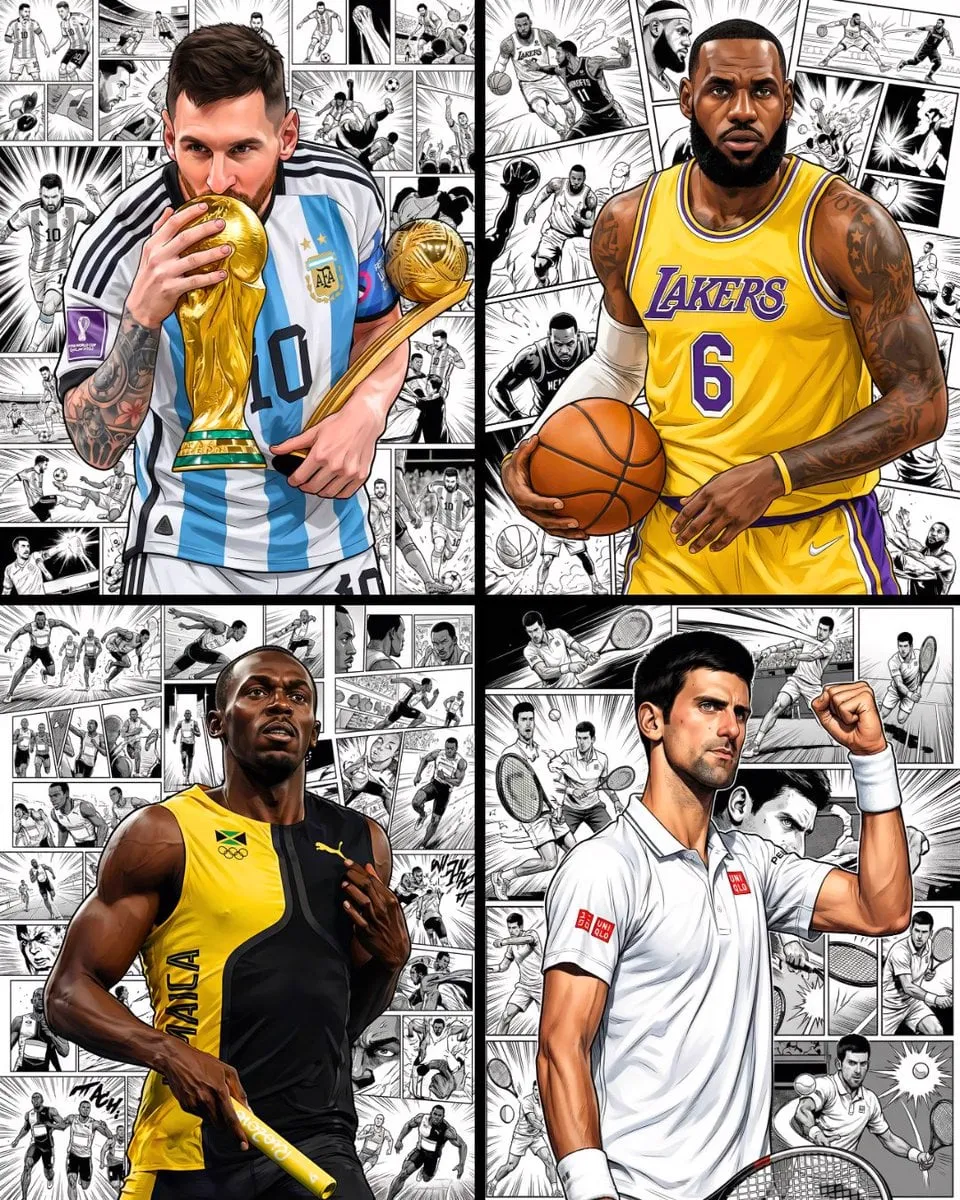
Advertising is in the middle of a production revolution. What once required a crew, a studio, and a six-figure budget can now be produced by a small team with AI tools. The demand for personalized, rapidly produced video ads has exploded, and brands that can move quickly without sacrificing quality have a real advantage.
But the tools are not the hard part. The hard part is the process. AI video generation rewards structure: clear objectives, disciplined prompting, and a workflow that keeps quality consistent from the first frame to the final export. This guide walks through that process step by step, so you can produce advertising videos that actually sell, not just videos that look impressive in a portfolio.
Start With the Objective, Not the Tool
The most common mistake in AI advertising is starting with the tool: "let's see what this model can do" is a great way to burn budget and produce nothing useful. Advertising videos exist to change behavior, so define the behavior before you touch any software.
What is the job of this video? Build awareness of a product nobody knows? Drive clicks to a landing page? Explain a complex feature to reduce support calls? Announce a launch to an existing audience? Each job has a different structure, length, and call to action. A brand-awareness spot can afford to be cinematic and slow; a direct-response ad needs to earn its click in seconds.
Write the objective down in one sentence, with the target metric attached: "this video should generate X clicks at Y cost per click", or "this video should explain the refund policy to reduce support tickets". When the creative process gets hard, the objective is your compass.
Know the Audience Before You Generate
An advertising video is a conversation with a specific person, not a broadcast to everyone. The more precisely you define that person, the better your prompts and scripts will be.
Build a quick audience profile: who are they, what problem do they have, what are they afraid of, what do they want at the end of the day? Then think about where they are in the journey. A cold audience needs proof and clarity; a warm audience that already knows you needs a nudge and an offer.
This profile feeds directly into the creative. The tone, the imagery, the examples, the objections you address: all of it should come from the audience's reality, not from your taste. When in doubt, use their words. Pull real phrases from reviews, support tickets, and community discussions, and put them into the script. Advertising that echoes the customer's own language feels instantly relevant.
From Objectives to Scripts and Storyboards
Once the objective and audience are clear, translate them into a script. Keep it short. A thirty-second ad is roughly seventy-five words of voiceover at most, often less. Every word has to earn its place.
The classic structure still works: hook, problem, solution, proof, call to action. The hook grabs attention in the first seconds with a specific claim or question. The problem names the pain the audience feels. The solution introduces your product or service as the answer. The proof adds credibility: a number, a testimonial, a before-and-after. The call to action tells them exactly what to do next.
Turn the script into a storyboard: one line per shot, describing the image, the camera movement, and any on-screen text. You do not need beautiful drawings; stick figures and arrows are fine. The storyboard is the contract between the script and the visuals, and it is what you will feed to the AI generation step.
Choosing the Right Model for the Job
AI video tools are not interchangeable. Each model has strengths, and choosing the wrong one wastes time and money. For advertising, three capabilities matter most.
Realism: if you are selling a physical product, you need photorealistic output that does not look generated. Human faces, hands, and product logos are the hardest parts; test them early. Style control: if your brand has a visual identity, you need a model that can follow it consistently, which usually means working from reference images, not text alone. Speed: for A/B testing and iteration, you need a fast pipeline, even if final renders use a slower, higher-quality model.
The professional approach is a small stack: one model for photoreal product shots, one for stylized scenes, one for image-to-video animation. Test each on your specific use case before committing. A model that performs beautifully on a landscape demo may fail completely on a close-up of your product.
Prompt Engineering for Advertising
An advertising prompt is different from a creative prompt. It has to be precise, repeatable, and controllable, because you will iterate on it dozens of times.
Structure your prompts in layers. The scene layer: what is visible, in what setting, with what lighting and color grade. The action layer: what moves, and how. The camera layer: angle, lens feel, movement. The style layer: photorealistic, cinematic, product-hero, clean minimal. The negative layer: what must not appear, such as distorted hands, weird text, extra fingers.
Keep the style layer fixed across all shots of one campaign so the video feels like one production. Vary only the scene and action layers. And document every working prompt: the exact phrasing that produced the good shot becomes your reusable asset for the next campaign.
One warning: AI models are bad at rendering text. Logos, numbers, and words on screen will often come out garbled. Plan to overlay text in your editor rather than asking the model to generate it.
Keeping Visuals Consistent Across Scenes
The fastest way to make an AI ad look amateur is inconsistency: the product changes shape, the lighting shifts between cuts, the spokesperson becomes a different person. Consistency is not a nice-to-have; it is what makes the viewer trust what they see.
Build reference assets before production. Product shots from several angles, logo files, brand color swatches, and if you use a spokesperson or mascot, a character sheet with consistent features. Use these references for every scene that includes the product or the person. Image-to-video models that accept a starting frame are especially valuable here: the approved product photo becomes the first frame of the scene.
Lighting consistency matters as much as the product itself. If the brand is bright and airy, every scene must be bright and airy. Lock the lighting description in your style layer and resist the urge to vary it scene by scene.
Pre-Production: Camera, Scene, and Style Direction
Think like a director before you generate. The decisions that make an ad feel professional are made before the first render: shot list, camera movement, pacing, and art direction.
Plan a shot list from the storyboard: establishing shot, close-up on the product, action shot, testimonial shot, call-to-action shot. Decide the camera language: static hero shots for products, subtle push-ins for emotion, quick cuts for energy. Match the camera language to the objective: a luxury product wants slow, steady, confident moves; a viral social ad wants fast, energetic cuts.
Decide the art direction: real locations or clean studio backgrounds? Natural light or dramatic product lighting? Real people or stylized characters? These choices define the brand feel, and they should be made deliberately, not left to whatever the model happens to produce.
Sound and Music: The Half of the Video People Forget
Viewers judge video quality by sound as much as by image, and AI production pipelines often ignore it. A video with great visuals and no sound feels broken; one with good sound feels finished.
Plan the audio track from the start. Voiceover: write it, record it or synthesize it with a natural-sounding voice, and edit it tightly. Music: choose a track that matches the emotional arc, with a clear ending or a loop point for social formats. Sound design: subtle whooshes on transitions, product sounds, ambient room tone. These details add the "expensive" feeling that separates professional ads from home-made clips.
Master the audio levels: the voice must be clearly louder than the music, and the overall level must match the platform's standard. If you publish to multiple platforms, check the loudness on each one, because they normalize differently.
Post-Production and Platform Adaptation
The generation step produces raw material, not a finished ad. The editor's job is where the ad becomes professional: cutting to the beat, adding text overlays, color grading the shots to match, and assembling the final story.
Cut to the rhythm of the music or the pace of the voiceover. Remove any frames where the AI output flickered or warped; viewers forgive fast cuts but not visible glitches. Overlay the text yourself: hooks, key claims, and the call to action. Grade the shots together so the colors match across scenes; even a subtle mismatch looks like a production error.
Then adapt for the platform. A 9:16 vertical version for TikTok and Reels, a 16:9 version for YouTube, a square version for in-feed ads on some platforms. Different platforms also have different expectations for length and pacing, so cut versions deliberately rather than re-uploading the same file everywhere.
Measuring Performance and Iterating
An advertising video is never finished; it is a hypothesis to be tested. Set up measurement before launch: track impressions, view-through rate, click-through rate, and the conversion metric tied to the objective you defined in step one.
Diagnose with the funnel. If views are low, the problem is distribution or the hook. If view-through is low, the pacing or the first seconds are wrong. If clicks are low, the call to action or the offer is weak. If conversions are low, the landing page is the bottleneck, not the video.
Iterate on one variable at a time. Produce two or three variants of the hook and test them against each other. Let the data pick the winner, then push the winning version harder. Over time, you will build a library of proven hooks, proven structures, and proven prompts, and the cost per effective ad will keep falling.
Building a Repeatable Production System
The difference between a team that makes one good ad and a team that makes a hundred good ads is a system. The creative process described in this guide is repeatable, but only if you deliberately build it into routines, templates, and documentation.
Start with templates: a script template with the hook-problem-solution-proof-CTA structure, a prompt template with the scene-action-camera-style layers, and a storyboard template with columns for shot, image, camera, and text. Each new campaign starts from the template, not from a blank page.
Build a prompt library. Every time a prompt produces a shot that works, save it with a note about why it worked. After a few campaigns, the library becomes a proprietary asset: it encodes your brand's visual language and your team's hard-won lessons. The same goes for a hook library: collect every hook that outperformed, and reuse the patterns.
Standardize the review process. Every campaign passes the same gates: objective approved, audience profile written, script reviewed against the objective, storyboard reviewed against the script, references approved before generation, and final render checked for consistency, audio, and platform format. The gates sound bureaucratic, but they are what keep quality stable as volume grows.
Finally, document the numbers. Track cost per ad, time per ad, and performance per format. Over time you will see which products, which platforms, and which formats justify the investment. The system is what turns a single successful ad into a repeatable advertising engine.
FAQ
Do I need to disclose that ads are AI-generated? Regulations vary by country and platform. Many require disclosure for AI-generated advertising content, and some platforms have specific labeling rules. Check the requirements for your market before publishing.
Can AI handle my product's logo and packaging? Models often distort logos and text. The reliable workflow is to generate clean scenes and overlay the product photography and logos in post-production.
How much does AI advertising cost compared to traditional production? For simple formats, a fraction: no crew, no studio, no travel. Complex, photoreal, actor-driven spots still need professional handling, but even those cost significantly less than traditional production.
How long does a full AI ad take to produce? With a clear script, references, and a practiced workflow, a simple thirty-second spot can go from concept to final render in a day or two of focused work.
What if the results look cheap? Usually the problem is consistency, lighting, or sound, not the model. Lock the style layer, plan the lighting, and invest in the audio track; these three fixes do more than any model upgrade.
Is it worth keeping a human editor? Absolutely. The model generates raw material; the editor gives it intent. Editing, grading, sound, and pacing are where advertising becomes persuasive, and those skills remain firmly human.
