
Why AI Animation Is Reshaping Content Creation
Animation used to be one of the most exclusive crafts in media. Between the drawing skills, the software licenses, the render farms, and the years of experience, producing even a short animated piece required either a studio budget or a rare combination of talents. That is why most independent creators never seriously considered animation, even when they knew animated content performs well with audiences. The demand was always there; the production capacity was not.
AI has removed that barrier in a remarkably short time. A creator who cannot draw can now describe a character, a scene, and a style in words, and receive animation frames that match the description. A team that could only produce one animated video per month can now iterate on several in a week. The creative bottleneck has moved from production skill to creative judgment: deciding what to make, how to keep it consistent, and how to make it stand out in a crowded feed.
The market response has been predictable. Short-form platforms reward visually striking, fast-moving content, and animation is exactly that. Animated explainers, animated characters reacting to trends, animated trailers for imagined films, and animated versions of real products are all formats that draw attention. For creators, the opportunity is not just efficiency. It is access to a visual language that was previously closed, and with it, a way to build a distinctive brand that is hard to copy.
Choosing the Right Model for the Job
Not all animation tasks are the same, and the first skill to learn is matching the task to the model. The main categories are straightforward.
Photorealistic animation is for product visuals, architectural walkthroughs, and realistic characters. These tasks favor image-to-video and text-to-video models with strong fidelity and physical plausibility. The goal is to make the impossible look real: a product in motion, a space that does not exist yet, a character that behaves like a human.
Stylized animation is for cartoons, mascots, and branded characters. These tasks favor models that can hold a distinctive aesthetic without drifting into photorealism. The reference image is the key tool here: a well-designed character sheet keeps the style consistent from scene to scene.
Motion and effect animation is for transitions, kinetic typography, and abstract sequences. These tasks favor speed and flexibility over fidelity, and they are often where creators get the most value from fast, low-cost models because the output quality threshold is lower.
The practical approach is to build a small test suite: one scene per task type, run it through the candidate models, and compare on the dimensions that matter for your content. Five minutes of benchmarking saves days of regret later.
Premium Models: When Quality Wins
Every project has a hero piece: the launch trailer, the flagship episode, the pitch video that represents you at your best. For those pieces, premium models are the right investment. They deliver the highest fidelity, the most consistent characters, and the most controllable camera work. They are also the most expensive and the slowest, which is exactly why they should be reserved for the pieces that justify the cost.
The discipline is to know your hero pieces in advance. A weekly social clip is not a hero piece; a season launch is. Spend the premium budget where the audience's first impression is formed, and let the workhorse models carry the routine content. Teams that apply this two-tier strategy get the quality of a big studio on a small budget, because they concentrate their expensive compute on the moments that matter.
Budget-Friendly Models: Speed and Iteration
The underrated half of the strategy is the fast, affordable models. Their quality is lower than the premium tier, but their speed makes them ideal for the creative loop: draft, review, revise, repeat. Most of the value in AI animation comes from iteration. The first version of a scene is rarely the best version, and the ability to regenerate cheaply is what lets creators explore options without fear of cost.
Budget models are also the right tool for volume. Daily content, multiple platform versions, A/B test variants, and storyboard drafts do not need top-tier fidelity. Using premium models for these tasks is not just wasteful; it slows the whole pipeline. The smart workflow generates rough versions on fast models, locks the direction, and only then renders the final hero assets on the premium tier.
Keeping Characters Consistent Across Scenes
Consistency is the number one quality signal in animation. Audiences forgive many flaws, but a character whose face changes between scenes breaks the illusion instantly. The good news is that consistency is a workflow problem with known solutions.
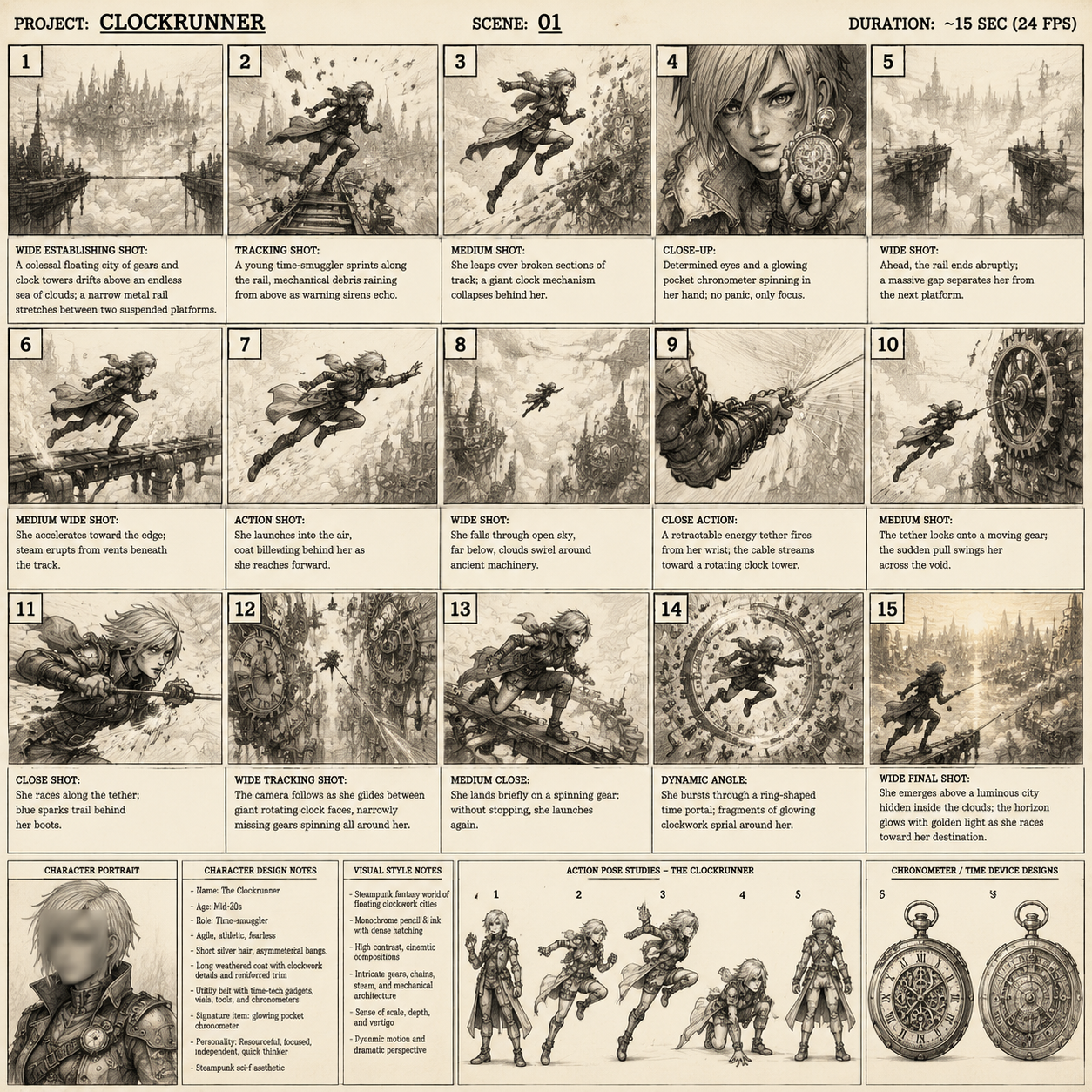
The foundation is a strong character sheet. Create reference images that show the character from multiple angles, with clear details of the face, outfit, and proportions. Every generation for that character should be anchored to these references. The prompt describes what happens in the scene; the reference defines who the character is.
The second layer is keyframe control. For critical shots, define the start and end poses, or even a few poses in between, and let the model fill in the motion. This keeps the scene on a defined path and prevents the model from drifting into an unrecognizable version of the character.
The third layer is multi-image fusion, which merges several references into one coherent scene. Use it to place the character in a new environment, to combine a character with a prop, or to build a group scene where each character comes from its own reference sheet. The result is a scene that feels composed rather than generated.
Directing the AI: Scene Planning and Structure
Animation without structure is a collection of pretty shots. Before generating anything, plan the piece like a director would. Write the story in beats: what happens, what the audience should feel at each moment, and what each shot needs to show. This plan becomes the generation brief, and it keeps the whole project coherent even when the shots are produced at different times.
An agentic approach takes this further. Instead of generating shot by shot, describe the full scene to a tool that can break it into a shot list, suggest camera moves, and sequence the action. The tool handles the structural work of translating intent into shots, which is precisely the part of directing that used to require years of experience.
The plan also drives the audio. Once the shot structure exists, the voiceover and music can be matched to the emotional arc: tense scenes get slower music and lower narration, upbeat scenes get faster pacing. Planning structure first means the audio and visuals arrive aligned instead of being stitched together in post.
A Step-by-Step Trailer Workflow
Movie trailers are a perfect use case for AI animation because they are short, emotionally driven, and visually dense. Here is a workflow that produces a credible trailer from scratch.
Step one: define the concept. Write a one-paragraph logline for the imaginary film, identify the genre, and decide the emotional arc. This is the creative north star for everything that follows.
Step two: design the assets. Create the character sheet and the key location references. If the trailer features one hero character, invest in making that character excellent; it carries the whole piece.
Step three: write the trailer structure. A classic structure is hook, build, turn, and payoff. Map each beat to one or two shots, and write the shot list with the keyframes for the shots that need strict control.
Step four: generate the shots. Use the fast models for early versions, review them against the shot list, and iterate on prompts and keyframes until the direction is right. Then render the final versions on the premium tier.
Step five: assemble the edit. Cut the shots to the music, add the title cards, and shape the pacing. This is where the trailer rhythm comes alive.
Step six: finish the sound. Add voiceover if the trailer uses narration, balance the music against the sound effects, and do a final pass on the overall mix. The audio is what makes a trailer feel like a trailer.
Step seven: review against the concept. Watch the finished trailer with fresh eyes and ask whether it delivers the feeling described in the logline. Revise the weakest shots, and release.
Prompt Engineering Tips That Actually Work
Prompting for animation has a few practical patterns that outperform generic advice.
Be specific about the visual style. Name the aesthetic direction instead of leaving it open: painterly, cel-shaded, gritty concept art, clean vector. The model needs a target, and style words are the fastest way to give it one.
Use reference images for identity, not just prompts. Prompts describe action and mood; references define who and what. The most reliable way to keep a character recognizable is to never generate that character without the reference anchored.
Separate the stable and the variable. Keep the style and character elements constant across prompts, and change only the action, the camera, and the lighting. This makes the output comparable across shots, which is what the edit needs.
Describe the camera. A trailer lives on camera language: close-up, wide, dolly-in, handheld. The model can honor these directions, and consistent camera vocabulary makes the final edit feel intentional.
Iterate on failure, not on hope. When a shot misses, change one thing at a time and regenerate. Blindly regenerating the same prompt produces the same problems; targeted changes produce learning.
Monetizing AI-Generated Animation
AI animation opens several revenue paths. The direct path is content monetization: animated series, short-form characters, and trailer-style pieces that build an audience through platform revenue sharing. The brand path is client work: businesses need animated explainers, product animations, and social assets, and the production cost has dropped enough that a solo creator can serve them profitably. The asset path is licensing: a distinctive character or style can be licensed to other creators and brands, turning the creative asset into recurring income.
The people who monetize best treat their output as a product line rather than a series of one-offs. They build characters and styles that can appear in many pieces, they package their workflow into faster delivery, and they measure which formats and audiences generate the most value. The technology makes production cheap; the business discipline makes it profitable.
Common Mistakes and How to Avoid Them
The most common mistake is skipping the asset kit. Creators who start generating without reference images and a style guide spend the whole project fighting inconsistency. Fix it by investing in the character sheet first.
The second mistake is using one model for everything. The result is mediocre in every category. Fix it by benchmarking models per task and routing work accordingly.
The third mistake is treating the first generation as final. AI animation rewards iteration, and the difference between amateur and professional work is usually three or four revision passes. Fix it by building revision into the schedule.
The fourth mistake is ignoring the audio. A visually strong piece with weak sound falls flat. Fix it by planning the voiceover and music in the structure stage, not as an afterthought.
The fifth mistake is abandoning the workflow between projects. Every project should make the next one faster. Fix it by saving prompts, reference kits, and style guides as reusable assets.
FAQ
Do I need drawing skills to use AI animation? No. The skills that matter are writing clear prompts, designing good reference images, and making consistent creative decisions. The drawing happens in the model; the judgment happens in your head.
How long does a one-minute animated trailer take? With a ready asset kit and a clear shot list, a solo creator can produce a credible draft in a few hours and a polished version in a day or two. The asset kit is usually the biggest time investment, and it pays for itself across projects.
What if the character changes appearance mid-project? Rebuild the reference sheet from the best version and regenerate the affected shots. Consistency is maintained by the reference, so whenever the reference improves, the whole project improves.
Can I sell the animated content I create? Yes, subject to the terms of the tools you use and the rights to any material you trained on. When in doubt, check the commercial-use terms of the specific model and platform.
How do I make my animated content stand out? Original characters, consistent style, and strong audio. Most AI animation looks similar because creators skip the asset kit and the audio work. Those two investments are the fastest way to look different.
Conclusion
AI has turned animation from a closed craft into an accessible medium. The models handle the drawing; the creator supplies the judgment. The teams and individuals who thrive will be the ones who treat the technology as a production system: benchmark models per task, invest in character and style assets, plan structure before generating, iterate ruthlessly, and finish the audio. The tools will keep improving, but the workflow discipline is what turns a powerful technology into a durable creative advantage.
