

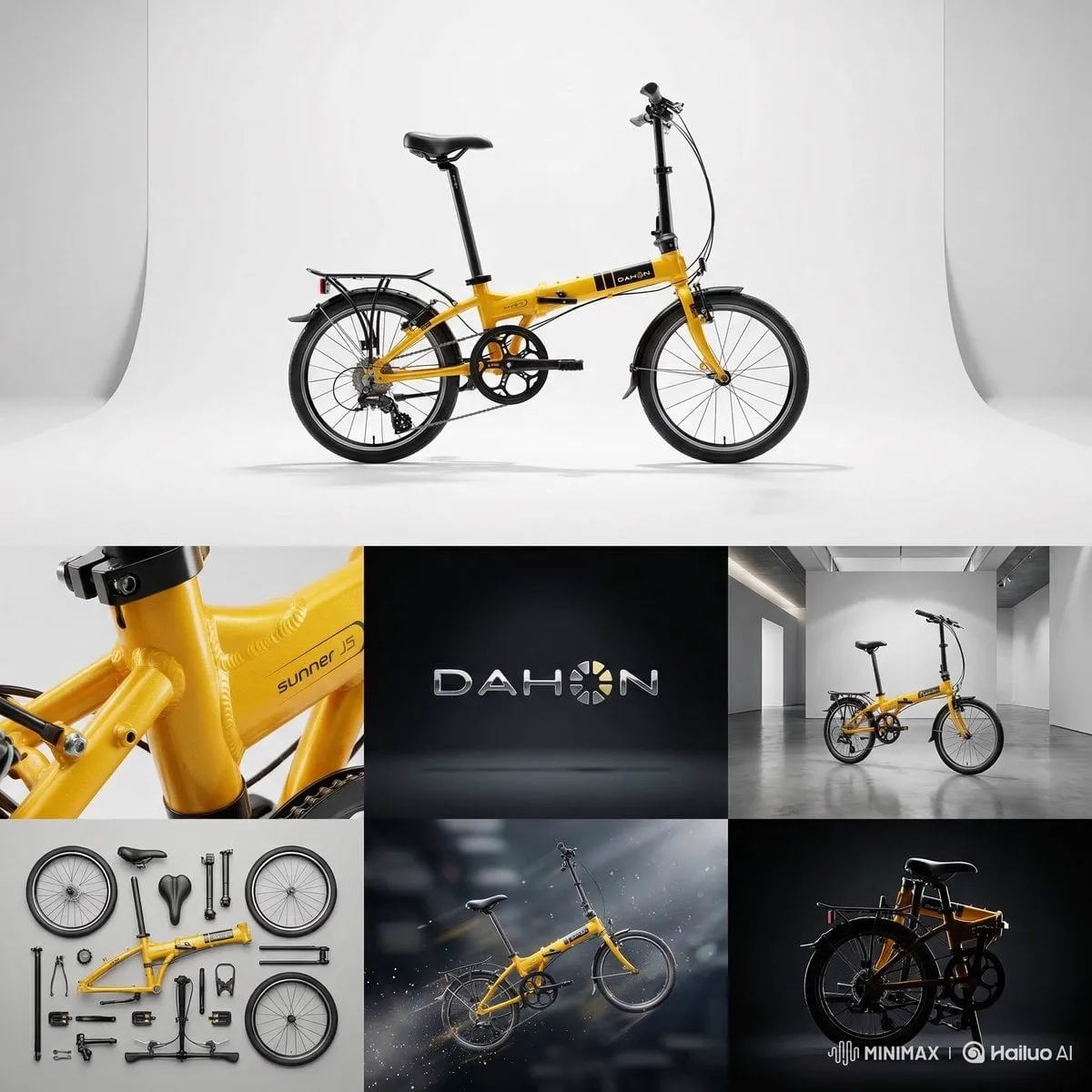
For industrial 3D freelancers, the past few years have been a quiet revolution. Projects that used to demand days of modeling, texturing, lighting, and simulation — think machine assemblies, architectural walkthroughs, product demonstrations — can now be produced, at least in part, by generative AI models that synthesize finished-looking frames in minutes. That shift is uncomfortable for some and liberating for others, but it is not a fad. Clients are asking for faster iterations, lower production costs, and more variations, and the freelancers who learn to combine their existing 3D skills with AI-assisted workflows are the ones winning those projects.
This guide looks at what changed in AI animation for industrial work, where the technology genuinely helps, where it still falls short, and how to build a practical workflow that protects your quality bar while making you dramatically more productive.
Why industrial 3D freelancers should care
Industrial visualization sits in an unusual spot. The subject matter — machines, factories, products, architecture — demands technical accuracy, yet the buying decisions are often emotional: a client chooses a render because it looks impressive, clear, and trustworthy. Traditional production is expensive because every variation requires manual rework. Change the camera angle and you re-light the scene. Change the product color and you re-render everything.
AI models attack exactly this pain point. Once a visual style is established, generating variations of a scene — new angles, new lighting moods, new environments — becomes a matter of prompts and reference images rather than hours of scene rework. The freelancer's job shifts from executing every pixel to directing the generation and guaranteeing quality. That is a better position to be in: fewer repetitive hours, more creative control, and a faster path to more client iterations.
Where AI fits in a 3D pipeline — and where it does not
The most common mistake is treating AI as a replacement for the whole 3D pipeline. In practice, AI is strongest in specific stages, and knowing which is which saves you from painful failures.
AI is excellent at: concept exploration (quick style frames before you commit), photorealistic variation (same scene, different light or mood), camera and composition testing (finding angles worth developing), and finishing touches (backgrounds, textures, atmospheric effects). A well-crafted prompt can generate a production-quality still or short clip that would take a traditional pipeline hours to light and render.
AI still struggles with: exact dimensional accuracy, complex mechanical articulation, repeating patterns that must match precisely, and long sequences where every detail stays consistent. A conveyor system with 200 identical bolts is still a job for a proper 3D scene, not a prompt. Treat AI as the fastest way to get 80 percent of the way there, and your modeling and compositing skills as the guarantee that the final 20 percent is correct.
Choosing the right model for the job
The model landscape has split into clear categories, and each fits different industrial use cases. You do not need one tool for everything; you need the right one per task.
For photorealistic stills and style consistency, the Flux family of models is a strong default. Its image quality and prompt adherence make it ideal for product hero shots and architecture frames. For short cinematic clips with real motion, Runway's Gen series is a proven choice, particularly when you need controllable camera moves. For narrative video with strong physics and natural motion, OpenAI's Sora sets the bar, though it asks for more careful prompting and longer renders. For fast, high-energy motion with strong character and scene control, Kling models are competitive, especially when you need output quickly. Hunyuan and similar open options matter when you want full control, self-hosting, or cost predictability at volume.
The practical takeaway: keep two or three models in your toolbox and match them to the deliverable. A hero product video gets the best narrative model. A mood study gets the fastest image model. A client review draft gets whatever produces the most useful approximation in the least time.
Keeping characters and scenes consistent
Consistency is the number one quality problem in AI animation, and it is worse for industrial work because clients notice when a machine's proportions change between shots. The fix is the same discipline used in character work: reference sets.
Build a reference set of five to ten images for each recurring subject — the product, the machine, the location. Use the same descriptive block in every prompt, and when you move to video, anchor keyframes to the reference images so the model has a concrete target instead of a vague description. Keep a style sheet with the dominant colors, materials, and lighting logic of the project, and check frames across scene boundaries in every review pass.
When a client asks for "the same shot but warmer light," resist the urge to describe it in a fresh prompt. Reuse the scene reference, adjust only the lighting words, and compare the output against the original frame. That discipline is what keeps a multi-shot project coherent instead of a collection of unrelated pretty clips.
Audio and multimodal integration
Industrial videos rarely end with silent footage. Clients need voiceovers explaining the product, diagrams, and on-screen text, and the video has to hold together when audio arrives. Plan for audio before you generate, not after.
Decide the video length from the narration script, then build the shot list to match the script's rhythm. A ten-second explanation of a component deserves a close shot of that component; a line about overall capacity deserves the wide establishing shot. When you edit, cut to the voiceover's emphasis points, and let the music set the overall tempo. Many modern tools accept audio as an input alongside the video prompt, which helps the model sync motion to rhythm — use that when it is available, but always review the result with human judgment.
Managing cost and batch efficiency
Cost control is where freelancers either win or lose on AI-assisted projects. The expensive mistake is using a premium model for every frame when most frames do not need it.
Use the best model only for the shots the client will actually judge — the hero frames, the final renders, the close-ups of the key product feature. Use faster, cheaper models for exploration, drafts, and anything that will be replaced later. Batch similar generations together when the platform allows it, because most systems price by compute and a batch of similar frames is cheaper than the same number of unrelated frames run one by one.
Track your cost per shot the same way you track hours. If a draft pass costs a tenth of a final pass and saves you from redoing an entire scene, it is the best investment in the project. If a model choice triples the bill without a visible quality difference, switch.
A practical workflow: from brief to delivery
Here is a workflow that works across most industrial projects:
- Clarify the brief. What does the client need to show, and who is watching? Write the shot list from the answer, not from the mood of the day.
- Create the style frames. Use a fast image model to explore look and feel. Two or three directions, presented to the client before any video generation.
- Lock the references. Product shots, environment shots, material and lighting notes — agreed and frozen before production.
- Generate hero shots first. The frames that carry the message get the best model and the most iteration.
- Fill in the supporting shots. Cheaper models, faster passes, matched to the locked references.
- Edit, add audio, and do a consistency pass. Check proportions, colors, and lighting across scene boundaries, then deliver the review cut.
This order front-loads the decisions that matter and pushes the expensive work to the end, which keeps both your budget and your revision count under control.
Common pitfalls
- Using one model for everything. Fix: match models to deliverables and keep two or three in rotation.
- Generating before the shot list exists. Fix: write the list from the brief first; generation against a plan is cheaper than planning after generation.
- Accepting drift in the name of speed. Fix: build reference sets and do a consistency pass before delivery.
- Ignoring audio until the end. Fix: write the script first and build the shot list from it.
- Underpricing AI-assisted work. Fix: clients pay for the result and the speed, not the hours — price accordingly, and track your true cost per shot.
Client communication and deliverables
AI-assisted production changes the conversation with clients, and freelancers who handle that well protect both their margins and their relationships. The first principle: be transparent about the workflow without apologizing for it. Clients care about the result, the timeline, and the price — not about which tool produced the frames. Explain that you combine AI generation with professional 3D and post-production skills, and that the process allows more iterations and faster revisions than traditional rendering.
Set expectations early about revision cycles. AI iteration is fast, but it is not unlimited: define in the contract how many rounds of style changes are included, and what additional exploration costs. The most common source of friction is a client who treats "quick AI variations" as an infinite resource. A simple framing that works: style directions are explored in the early phase, and once a direction is locked, changes to the look are priced as new work.
Deliverables matter too. Structure the delivery like any professional project: the locked style frames, the final video at the agreed resolution, the source shots, and a short note on the versions used so the client can request changes coherently. Clean delivery makes you look more professional than the average AI freelancer, which is exactly the positioning that lets you charge sustainable rates.
FAQ
Will AI replace industrial 3D freelancers?
It will replace the parts of the work that are repetitive execution, not the judgment. Clients still need someone who knows what a technically correct render looks like, who can fix what models get wrong, and who owns the quality guarantee. Freelancers who add AI to their pipeline become faster and more valuable, not obsolete.
Do I need to learn prompting deeply?
You need enough prompting skill to control shot size, camera movement, lighting, and style, and enough judgment to know when a result is wrong. Deep prompt engineering is less important than the planning and consistency disciplines around it.
What is the fastest win for an experienced 3D artist?
Style exploration. Use a fast image model to generate ten lighting and material directions in an hour, then develop the one the client likes in your real 3D pipeline. It shortens the most expensive part of the traditional workflow: the early client feedback loop.
How do I guarantee dimensional accuracy with AI?
You do not rely on AI for it. Use AI for look and feel, and keep the accurate geometry, dimensions, and articulation in a real 3D scene. Composite the AI-generated style over or alongside the accurate model, or use AI output as reference for the final render.
How should I price AI-assisted projects?
Price by deliverable and value, not by hours, and be transparent that AI shortens production. Clients are paying for speed and quality. Keep a cost-per-shot ledger so you know your margin, and build revision limits into the contract like you would with any project.
What if a client asks me to redo the entire video in a new style?
Price style changes as new work from the exploration phase forward. The original brief defined one direction; a new direction is a new project. State this in the contract up front so the conversation is about scope, not about generosity.
How do I explain AI in my portfolio without hiding the process?
Show the process: a style frame, the reference set, and the final shot side by side. Clients and other freelancers respect a documented workflow, and it demonstrates the consistency and quality-control skills they are actually paying for.
