

The Moment Anime Went Fully Generative
Anime has always been a labor-intensive medium. A single animated minute can require hundreds of hand-drawn frames, and consistency across those frames is one of the hardest crafts in the industry. That is why the rise of AI anime generators feels like a genuine turning point: the tools have moved from producing rough, unstable clips to generating full scenes with characters that recognizably stay the same person from shot to shot.
What makes this moment different from earlier generative experiments is control. The first wave of AI anime content was recognizable at a glance but fell apart under scrutiny: faces shifted, hairstyles mutated, and backgrounds warped between frames. The second wave, the one we are in now, is built around consistency as a first-class feature. Diffusion-based models have become good enough at understanding anime aesthetics that they can preserve a character's identity, clothing, and color palette across motion, angle changes, and lighting shifts.
This article breaks down how modern AI anime generation works, why the catgirl trend became such a powerful test case for the technology, and which models deliver the best results for different kinds of anime content.
Why Anime Is a Harder Problem Than Photorealism
It sounds counterintuitive, but generating convincing anime is in some ways harder than generating photorealistic video. Photorealistic models have the advantage of a dense, consistent training distribution: the real world obeys physics, and most images of people share structural rules. Anime is a stylization, and every artist's style compresses reality differently. Eyes are oversized, hair defies gravity, and line weights carry emotional meaning.
A model generating anime must therefore learn a visual grammar, not just a physical one. It must know that a character's spiky hair is part of their identity, not a physics error to be corrected. This is why generic video models often produce anime that looks subtly wrong, while specialized anime models, or models fine-tuned on anime data, produce results that feel native to the medium.
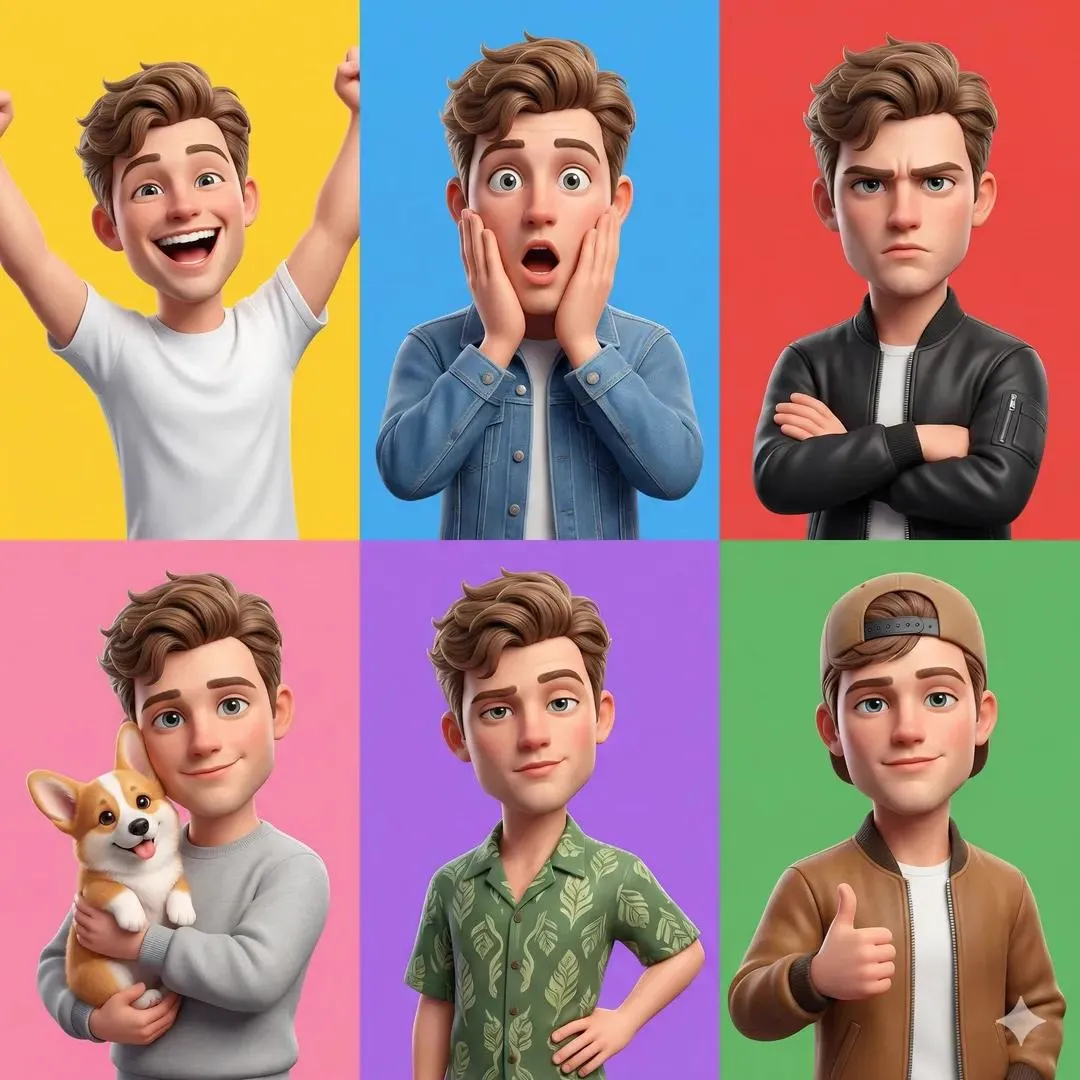
The biggest technical challenge remains character consistency: making sure a character looks the same from different angles, under changing light, and in dynamic motion. Early models failed here constantly. The current generation tackles it with reference-image conditioning and multi-image fusion, where the creator supplies several views of a character and the model builds a stable identity from the combination.
The Catgirl Trend: A Cultural Signal, Not Just a Meme
No single style illustrates the state of AI anime generation better than the catgirl, or nekomimi, aesthetic. What began as a niche motif in Japanese popular culture has become a global visual language: cat ears, expressive tails, and hybrid human-feline design appear across games, VTubers, fan art, and now AI-generated content.
The catgirl trend matters for several reasons. First, it demands precise character features: ear shape, tail behavior, eye color, and costume details all need to stay consistent for the character to read correctly. Second, it is a high-volume style, which means it has generated enormous amounts of training data and community feedback. Third, it is a stress test for style preservation: the gap between a good catgirl and a wrong one is immediately visible to the audience, so the quality bar is unforgiving.
For creators, the takeaway is that niche aesthetics are no longer a barrier to entry. If a model can hold a catgirl consistent across scenes, it can hold any designed character consistent. The style that once seemed like trivia has become a benchmark for the entire category of stylized character generation.
How Modern Models Achieve Character Consistency
Reference Conditioning and Identity Locking
The most reliable technique is feeding the model explicit reference images. Instead of asking for "the same character" purely through text, you provide a character sheet: front view, side view, and key expressions. The model extracts the identity and applies it to the requested action or scene. This shifts the burden from prompt engineering to asset preparation, which is a much more controllable workflow.
Multi-Image Fusion Across Scenes
Single-reference conditioning works for one shot, but long-form content needs the character to survive scene changes. Multi-image fusion extends the idea by combining several references into a unified identity that the model carries across the whole sequence. The result is a character who keeps their face, outfit, and color scheme whether they are standing in daylight, running through rain, or turning toward the camera.
Style Embedding and Directional Control
Beyond the character, the model must hold the art style constant: line weight, shading approach, background treatment. Modern tools let creators embed a style reference alongside the character reference, so the entire frame stays within the intended aesthetic. This is what separates a clip that looks like one artist's work from a clip that looks like a collage of several.
The Model Landscape for Anime Generation
No single model dominates anime generation, and the right choice depends on what you are making.
Photorealistic Powerhouses: Flux, Runway, and Sora
The highest-fidelity models are general-purpose rather than anime-specific. The Flux series is known for exceptional image quality and prompt fidelity, making it a strong base for detailed character art that is then animated. Runway's Gen-4 line adds strong motion control and scene consistency, which helps when anime characters move through complex environments. Sora, from OpenAI, remains the reference point for long, physically plausible sequences, though its anime-specific styling is not its primary strength.
These models shine when you want anime-inspired content with cinematic production values, or when you are blending anime characters with realistic environments and effects.
Chinese Labs: Kling, Hailuo, and Hunyuan
The Chinese model ecosystem has been extremely aggressive in the video generation space, and several models are favorites for anime content. Kling is celebrated for dynamic motion and stylized output, making it a go-to for action-heavy anime. Hailuo has built a reputation for smooth, realistic motion at competitive prices, which makes it popular for both anime and live-action content. Hunyuan, from Tencent, offers strong open-source options, which matters for creators who want local generation and customization.
The practical effect of this competition has been a dramatic drop in the cost of high-quality generation and a steady rise in baseline quality.
Speed and Niche Specialists: Luma, Pika, and Vidu
For social media creators, speed often matters more than absolute fidelity. Luma and Pika both prioritize fast iteration and playful creative control, which fits the quick-turnaround rhythm of short-form platforms. Vidu focuses on efficiency and volume, useful for batch work and testing many variations quickly.
Building an Anime Video Workflow
Step 1: Design the Character Sheet
Before generating anything, create a solid reference set. Generate or commission a character sheet with clear front, side, and three-quarter views, plus a palette swatch. The more consistent your references, the more consistent your video.
Step 2: Test Consistency Early
Run a small test: generate the character in three different scenes from the same reference set. Compare faces, outfits, and colors. If the identity drifts in the test, fix the references or switch models before you invest in a full sequence.
Step 3: Direct the Action
Anime is about attitude as much as motion. Use prompts that describe emotion and intent: "she turns to face the camera, ears twitching, suspicious" generates a different result than "she looks at camera". Pair character references with clear action language.
Step 4: Review Frame by Frame
Watch generated clips with a critical eye for the classic failure modes: ear shape changes, tail physics breaking, eye color shifting, outfit details morphing. Catch these early; fixing a shot is far cheaper than fixing an entire episode.
Step 5: Combine with Traditional Tools
The best workflows use AI for what it does well and conventional tools for the rest. Generate key shots with AI, assemble them in a video editor, and use cleanup, grading, and sound design to unify the result.
The Creative and Legal Landscape
AI anime generation opens creative doors, but it comes with responsibilities. Style imitation of living artists is a genuine ethical concern; using a model to copy a specific artist's distinctive style without permission is increasingly viewed as unacceptable in the community. Fictional character consistency is one thing; reproducing existing intellectual property is another. Check the terms of the models you use and the laws in your jurisdiction, especially for commercial work.
On the positive side, the technology is democratizing animation. Independent creators can now produce animated content at a fraction of the traditional cost, and small teams can explore visual styles that would previously have required specialized talent. The medium is expanding faster than the industry can fully absorb.
Prompt Patterns That Work for Anime
Anime generation rewards a specific prompting style. Describe the character's design traits first, then the action, then the camera. Start with the stable elements: hair color and style, eye color, outfit, accessories. These are the identity markers the model must preserve, so they belong at the front of the prompt where they get the most weight.
Action language for anime should include emotion and attitude, not just motion. "She flicks her tail and narrows her eyes, wary" generates a different performance than "she moves her tail". Anime characters are defined by exaggerated expression, so push the emotional register in your prompts: "shocked", "smug", "daydreaming" are the vocabulary of the medium.
Style modifiers go at the end: "clean lineart, soft cel shading, detailed background, 2D anime style". Keep the style block consistent across all shots in a project so the whole sequence reads as one work. If you use reference images, pair them with short prompts; the references carry the design, and the prompt carries the action.
Common failure patterns are worth knowing in advance. Eyes changing color usually means the reference set lacks a close-up of the eyes. Hair becoming simpler often means the model was under-specified on hairstyle. Costume details vanishing means the outfit needs its own reference detail shot. Diagnose by failure class, not by random prompt tweaks, and you will converge much faster.
FAQ
Which AI model is best for anime? It depends on your priorities. For maximum quality and style fidelity, start with the Flux series or Runway Gen-4. For dynamic action, try Kling. For budget-friendly volume work, Hailuo and Vidu are strong options. Test two or three against your own character sheet.
How do I keep a character consistent across scenes? Build a strong reference set, use multi-image fusion or reference conditioning if your tool supports it, and run consistency tests before committing to full sequences.
Can AI generate a full anime episode? Not yet reliably. Current tools excel at short clips and key shots, but long-form narrative coherence, lip-sync, and consistent episodic quality still require significant human assembly and editing.
Is the catgirl trend just a meme? It started as a niche aesthetic but has become a serious benchmark for stylized character generation and a large content category in its own right.
Are AI-generated anime videos monetizable? Yes, on most platforms, but you must comply with each platform's disclosure rules and ensure you are not infringing on existing IP or copying a living artist's style without permission.
Do I need a powerful GPU? Not necessarily. Many of the best anime models run in the cloud. Local generation is an option for those with capable hardware and privacy needs.
Final Thoughts
AI anime generation has reached the point where the technology is no longer the bottleneck. Consistency is solvable with good references and the right model, and the creative possibilities have expanded far beyond what was imaginable a few years ago. The catgirl trend, far from being a footnote, turned out to be the perfect stress test for the whole category: it demanded precise features, punished inconsistency, and rewarded creators who treated character design seriously. The creators who will lead this space are the ones who treat character design as seriously as the tools themselves: build strong references, test relentlessly, and let the model handle the labor while you handle the vision.
