
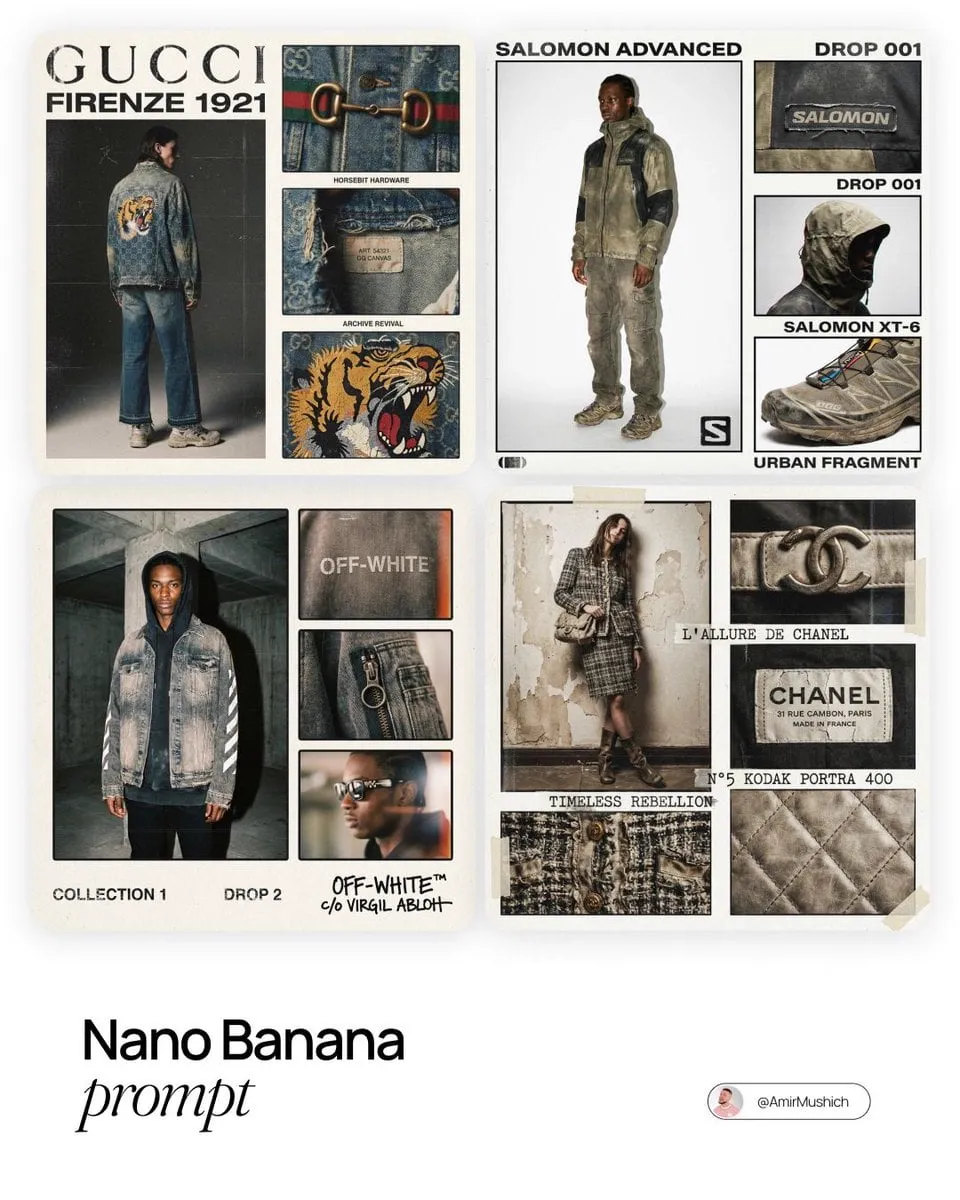
Every brand is now a media company, but most are producing content that does not look like the same company made it. A product video shot on a phone, a social graphic built from a template, and a hero image generated in a random style might each be good on their own. Together, they fragment the brand. This is where artificial intelligence changes the game, not by making content prettier, but by making it consistent at scale. AI tools now let small teams lock a visual identity across hundreds of assets, keep characters recognizable across episodes, and turn a style guide into repeatable, measurable output. The brands that win the next decade will not be the ones with the biggest budget. They will be the ones with the most disciplined visual signature, enforced by systems rather than by luck.
Why Visual Consistency Decides Brand Trust
Attention spans are short, and the feed is a blur. A consumer scrolling past dozens of videos in a minute cannot consciously process every detail, so the brain falls back on pattern recognition. When a brand's colors, typography, framing, and character design stay stable, the brain registers the pattern before the conscious mind catches up. That recognition is trust. Studies of consumer behavior consistently show that repeated exposure to a consistent visual identity increases familiarity, recall, and eventually preference. Inconsistent brands are not merely forgettable; they are subtly unsettling. A viewer who sees a character look different in every scene, or a logo rendered in a new color palette each week, starts to doubt the credibility of everything the brand says.
The commercial stakes have grown with the shift to video. Marketing teams are expected to produce more assets, in more formats, on more platforms, with fewer resources. The old approach of hiring a design studio to produce a one-time brand book no longer works, because the brand book described a static world while the business now lives in a dynamic content engine. What matters is not the document that defines the identity but the system that reproduces it across thousands of outputs. AI is the only practical way to do this at volume, and it is the reason that visual consistency has moved from a design concern to a strategic one.
The Real Problem: Generative AI Is Stochastic by Design
Before you can fix inconsistency, you have to understand why AI creates it in the first place. Generative models are stochastic. Every time you feed a prompt, the model samples from a probability distribution, so the output is different on each run. Two prompts that are identical in wording can produce faces, wardrobes, and lighting that are clearly not the same character or scene. When this happens across a video series, it is destructive: the protagonist appears to change actors between cuts, and the brand's visual signature dissolves.
This randomness is not a bug in the sense of a defect; it is the nature of the technology. But it is a problem for anyone who needs reproducibility. Fortunately, the same models that create the randomness can be steered toward determinism. The core idea is to give the model more constraints than a single line of text. Instead of asking for "a woman in a red jacket," you supply reference images of the exact character, lock a seed where the tool allows it, choose a model that supports multi-image input, and repeat the same style tokens across every prompt. Each constraint removes a degree of freedom, and with enough constraints, the output range narrows until the character becomes recognizable as the same person.
A Practical Framework: From Brand Guidelines to AI Parameters
Most teams start with a style guide and end with AI outputs that ignore it. The fix is to translate the guide into parameters the model can actually follow.
Define the Identity Core
Before generating anything, decide what is non-negotiable. For most brands this is: the main character or mascot, the color palette, the typography style, the lighting mood, and the composition rules. Write these down in a single reference document. Do not try to encode twenty attributes; the model will dilute them. Five to eight stable attributes are enough to create a signature.
Convert Guidelines into Machine-Readable Tokens
A human designer reads "warm, optimistic, premium" and imagines golden hour light and soft gradients. A model needs concrete tokens: "golden hour lighting, shallow depth of field, warm orange and cream palette, 35mm lens, cinematic soft focus." Build a vocabulary of tokens for each identity attribute, then reuse the exact same phrasing in every prompt. Consistency in language produces consistency in output. Keep the token list in a shared prompt template so everyone on the team generates from the same vocabulary.
Create the Reference Set
The single most powerful lever is a small set of reference images. Collect five to ten images that define the character from multiple angles and the brand's visual world: one front-facing portrait, one side profile, one full body, one close-up of a distinctive prop, and one establishing scene. These images become the anchor. Tools that accept multiple reference images can fuse them into a stable identity, so the model understands not just what the character looks like, but how the character moves, dresses, and appears under different lighting.
Techniques That Keep Characters and Style Stable
Once the framework exists, the next question is tactical: which techniques actually deliver consistency in day-to-day production?
Multi-Image Reference Inputs
Single-image reference is fragile. If the model gets one photo, it may copy the pose and composition instead of the identity. Multi-image reference changes the mechanism: the system extracts identity features from several images, separates "who this person is" from "what this particular shot looks like," and then regenerates the person in new scenes. This is the difference between a copy machine and a portrait artist. For video series, this technique is the difference between a character that survives an episode and one that survives an entire season.
Seed Discipline and Deterministic Settings
Where the tool exposes a seed value, use it deliberately. A fixed seed with a fixed prompt gives you a stable base; changing the seed is what you do when you want variation. For brand work, decide whether a given asset needs to match an existing piece exactly. If it does, keep the seed. If it needs to feel like a new take on the same identity, change the seed but keep every other constraint identical. This gives you controlled variation instead of random drift.
Style Locking Through Prompts and Model Choice
Some models are better than others at following style instructions. Test your candidate models with the same prompt and compare how tightly the outputs cluster. The model that produces the most consistent results for your particular identity should become your default, not the model with the flashiest demos. Consistency performance is a feature you can evaluate, so evaluate it.
Turning Brand Guidelines into Repeatable AI Workflows
A single good output is a nice demo. A repeatable workflow is a business asset. Design the production pipeline around templates and checkpoints. Start with a master prompt file that contains the brand tokens, the reference image paths, and the fixed settings. Every new asset begins by copying the master file and changing only the scene-specific parts. This sounds simple, but it is the discipline that most teams skip, and it is the reason their output drifts.
Next, build a review gate between generation and publication. No asset goes live without passing the same checklist: does the character match the reference set? Do the colors fall inside the approved palette? Does the typography follow the brand font rules? Is the composition consistent with previous pieces? The checklist does not have to be automated, but it has to be applied every single time. Over a few weeks, the checklist trains the team to spot drift early, and the number of rejected assets drops sharply.
Finally, treat the workflow as versioned software. When you discover a better prompt pattern or a better model, update the master file and note the change. If the new setting produces better consistency, the improvement propagates to every future asset. If it breaks something, you can revert. This versioning turns brand identity into a living system instead of a static document.
Measuring Consistency: Metrics, Reviews, and Quality Gates
What gets measured gets managed, and visual consistency is measurable. The simplest metric is a manual scoring system: a reviewer rates each asset on a scale of one to five for character match, color fidelity, and composition fit. Track the average score per week and per campaign. When the score dips, something in the workflow changed, usually a new team member using their own prompt style, or a model update that altered behavior. The metric makes the drift visible instead of a vague feeling.
Teams with more engineering capacity can go further. Automated comparison of generated frames against the reference set, using perceptual similarity or face-embedding distances, catches obvious mismatches before a human ever looks. This does not replace the human reviewer; it removes the boring 80 percent so the reviewer can focus on taste. For a brand team, the combination of automated pre-screening and human scoring produces a quality gate that scales with volume.
Building the Operating System: Roles, Tools, and Iteration
Consistency fails most often at the handoff point. The person writing prompts is not the person reviewing output, and neither is the person who owns the brand. Assign explicit ownership: one person owns the master prompt file and approves changes to it; one person runs the review gate; the brand owner makes final calls on taste. This is not bureaucracy; it is the same structure every design studio already uses, adapted for AI speed.
Tooling matters less than discipline, but choose tools that support your needs: multi-image reference, seed control, batch generation, and versioned prompt templates. Standardize on one primary tool for brand-critical assets and keep experiments in a separate space. When a new tool or model appears, test it in the sandbox, measure its consistency score on your reference set, and only promote it to production when it beats the incumbent.
Common Mistakes and How to Fix Them
The first mistake is over-prompting. Listing thirty adjectives sounds thorough but actually gives the model conflicting signals. Cut the list to what defines the identity and let the reference images carry the rest. The second mistake is ignoring the reference set after creating it. A reference set is not a deliverable; it is a living asset. Update it when the character's design evolves, and retire images that no longer represent the brand. The third mistake is treating every asset as a one-off. If you generate a hero image with a unique prompt and never reuse the settings, you have created an orphan. Always start from the master file. The fourth mistake is skipping the review gate during busy periods, which is exactly when drift happens. Busy is when the gate matters most.
FAQ
How many reference images do I need? Five to ten well-chosen images beat fifty random ones. Focus on angles and expressions that cover how the character appears across your content.
Does consistency require a high-end model? Not necessarily. Some mid-range models are more deterministic than flagship models. Test on your own reference set before choosing.
Can I keep a character consistent across different tools? Only if you share the same reference set and token vocabulary. Export your master prompt file and reference images, and port them to the new tool.
How do I handle seasonal campaigns without breaking identity? Keep the identity core fixed and change only scene-specific attributes, such as background, wardrobe accents, or lighting mood. The pattern stays, the context changes.
Is automated consistency checking worth the effort? If you publish more than a few dozen assets per month, yes. It catches the obvious mismatches and frees reviewers for taste-level decisions.
The brands that look effortless on the feed are usually the ones doing the most boring work behind the scenes: fixed reference sets, locked prompts, and a review gate that never sleeps. AI did not remove that discipline. It made the discipline scale, which is exactly what consistency-hungry brands need.
