

Every long-form AI project eventually hits the same wall: the character who looked perfect in scene one looks like a distant cousin by scene three. This is the consistency problem, and it is the difference between AI content that feels like a story and AI content that feels like a slideshow of unrelated images. Building a cohesive visual identity is a discipline, not a feature. It starts with references, continues through generation, and ends with quality checks that catch drift before it reaches the audience. This guide covers the full pipeline: how to build a character reference set, how to keep identity stable across styles and scenes, and how to manage the process at production scale.
Why character drift kills stories
The human brain is extremely sensitive to faces. When a character's face changes between scenes, the viewer does not consciously say "the model drifted." They say "something feels off," and the story loses its grip. In narrative work, consistency is not a technical detail; it is the foundation of suspension of disbelief.
Drift also has a practical cost. Every regenerated scene burns time and budget, and every drift that slips through means a reshoot or an awkward edit. Teams that solve consistency early spend their production hours on creativity; teams that do not spend them fighting the tools.
Consistency is also a trust signal. Audiences are learning to spot AI content, and one of the first tells they notice is a character who changes appearance between shots. A project that holds the identity across every scene reads as intentional and professional; a project that does not reads as careless, no matter how beautiful the individual frames are.
The multi-image reference method
The core technique is to define the character with several images instead of one. A text prompt cannot carry a face, and a single image carries too little information. A set of images carries the identity: the shape of the face, the proportions of the body, the details of the wardrobe, and the range of expressions.
Building a character reference sheet
Start with a reference sheet that covers the essentials. Front view, side view, and three-quarter view of the face. A full-body shot that locks the proportions and the costume. A close-up that captures the texture of the skin and hair. One or two expression shots if the character needs emotional range. Generate these first, review them as a set, and treat the set as the canonical asset for the project.
What to include in the set
The reference sheet should answer the questions a director would ask about the character. What is the face shape? What is the build? What does the character wear in every scene, and what can change between scenes? What is the default expression, and what is the emotional range? What is the color palette of the character's world? Each question maps to at least one reference image. If a question cannot be answered from the set, the set is incomplete, and the model will answer the question itself — usually wrong.
The role of negative references
A useful addition to the set is the negative reference: one or two images that show what the character is not. If the character should never be bearded, or never wear red, an explicit negative example reduces the chance of the model drifting in that direction. Not every tool supports negative references, but when it does, it is one of the cheapest insurance policies in the workflow.
Angles, expressions, and wardrobe lock
The set also protects you from incidental variation. If the character wears a distinctive jacket, the full-body shot locks it. If the lighting in the story changes, the reference set reminds the model what the character actually looks like under neutral light. Wardrobe changes should be deliberate, not accidental: when the character changes clothes, generate a new reference image and swap it into the set rather than hoping the model figures it out.
Guiding generation with an agent director
Some production setups use an agent layer between the creator and the models: a piece of software that reads the scene description, checks it against the project's references, and routes the generation with the right settings. Think of it as a director's assistant that never forgets the reference set. It handles the boring but critical work of keeping prompts consistent, locking seeds where possible, and flagging scenes that violate the identity before they are rendered in full quality.
The practical benefit is speed. Without an agent layer, a creator manually re-specifies the character in every prompt and still makes mistakes. With one, the consistency rules are applied automatically, and the creator reviews the output instead of babysitting the input.
A well-designed agent layer also keeps a log: which reference set was used, which model, which seed, and which settings produced each scene. The log is the production memory of the project. When a scene needs to be regenerated months later, the log makes it reproducible instead of a mystery.
Style transfer across different looks
A harder version of the problem is keeping identity while changing the rendering style. The character needs to be the same person in a photorealistic scene and an anime scene. This is where reference sets prove their value: the identity is carried by the images, and the style is carried by the model or the style prompt. In practice, it helps to generate a style-transfer test early in the project: take one reference image and render it in each target style, so you can confirm the identity survives before committing to the full production.
Expect to iterate on this test. Some styles flatten features or exaggerate proportions, and the model will faithfully apply those changes to your character. Decide in advance how much of the style's natural distortion you accept, and document the decision so the whole team judges scenes by the same standard.
Model libraries and custom training
No single model is best at everything, so production teams mix them. The risk is that each model interprets the reference differently. The solution is to standardize: define the reference set once, test it across the models you plan to use, and document which models preserve the identity best. For characters that appear across many projects, custom fine-tuning of a model on the character's reference set is the most reliable option. It costs more upfront, but it pays for itself if the character is a long-term asset.
The documentation matters as much as the testing. Keep a simple scorecard per model: fidelity, speed, style range, and failure modes. The scorecard turns model choice from tribal knowledge into a decision you can repeat and improve. When a new model appears, the scorecard gives you a structured way to evaluate it against the current best.
Image editing in the workflow
Consistency is not only about generation. The final look is shaped by editing: removing a stray artifact, correcting a color shift, sharpening a face. The best workflows treat editing as part of the consistency system, applying the same grade and the same cleanup passes to every scene. A shared editing preset is the visual glue that makes scenes generated by different models feel like one film.
Editing is also the last line of defense against drift. A small inconsistency in an otherwise excellent scene — a slightly wrong eye color, a missing accessory — can often be corrected in the edit faster than it can be regenerated. The discipline is knowing which fixes are cheaper in the edit and which require a new generation. Faces are almost always cheaper to regenerate; small props are often cheaper to paint in the edit.
Quality assurance: checking consistency at scale
When a project has dozens or hundreds of shots, manual review is not enough. Build a checklist and apply it to every scene: Does the face match the reference set? Is the wardrobe correct? Are the proportions right? Is the lighting consistent with the scene's intent? Then spot-check the output in sequence, because some problems only appear when scenes are viewed together.
A concrete QA checklist
For each scene, verify identity first: face, build, and skin tone against the reference sheet. Then verify wardrobe and props: every item that should be present is present, and nothing extra appeared. Then verify the world: colors, lighting, and scale are consistent with the scene's intent. Finally, verify motion: the subject moves like the same person, not like a new interpretation of the person.
Automation helps here. A simple script can compare each generated scene against the reference set and flag scenes with high visual difference, so the human reviewer focuses on the flagged scenes instead of scanning everything. This turns quality assurance from a slog into a targeted review pass.
Review in sequence as well. Two scenes that each pass individually can still clash when played back to back, because the eye compares them directly. The sequence review is where pacing, color continuity, and motion consistency are finally judged.
Budgeting and cost control
Consistency workflows cost more per scene than one-off generation, because they require reference generation, test renders, and re-renders. The budget discipline is to spend on the reference set and the test renders, then minimize re-renders by reviewing every output before it goes to full quality. Most drift is visible in a low-quality preview, so catching it early is nearly free.
A useful allocation is to treat the reference set and the style tests as a fixed cost, roughly ten to fifteen percent of the total budget, and the scene generation as the variable cost. If the variable cost is exploding, the fix is usually upstream: the reference set is weak, the models were not tested, or the review habit is missing. Spending more on the fixed cost almost always reduces the variable cost by more than the increase.
One more consideration: budget for the pipeline's own improvement. Reserve a small portion of every project for upgrading the reference set, testing a new model, or refining the QA script. These upgrades compound across projects, and a five percent investment in the pipeline typically saves more than five percent of the next project's variable cost. The goal is not to perfect the pipeline once, but to make it measurably better with every production.
A repeatable pipeline
The full pipeline, in order: define the character and world, build the reference set, test the identity across styles and models, generate scenes scene by scene with locked references, apply QA checks, and finish with a shared grade. Run the pipeline on a short test piece first — one minute is enough — and fix the process before scaling to the full project. The test piece will reveal every weakness in your reference set and your review habit, and fixing it on a small scale is a fraction of the cost of fixing it in production.
FAQ
How many reference images do I need? Three to six per character, covering face, body, wardrobe, and expression. More is not always better; what matters is coverage and consistency.
Can I keep a character consistent across completely different art styles? Yes, with testing. The identity lives in the reference set, and the style lives in the model and prompt. Verify early that the identity survives the style change.
What if the model ignores my references? First check the reference set for internal consistency. Conflicting references produce unstable output. Then check whether the model actually supports the reference input you are using. Some models need the reference at higher resolution or in a specific aspect ratio.
Is custom training worth it? For a one-off project, no. For a recurring character, a brand mascot, or a series, yes. Treat it as an investment in a reusable asset.
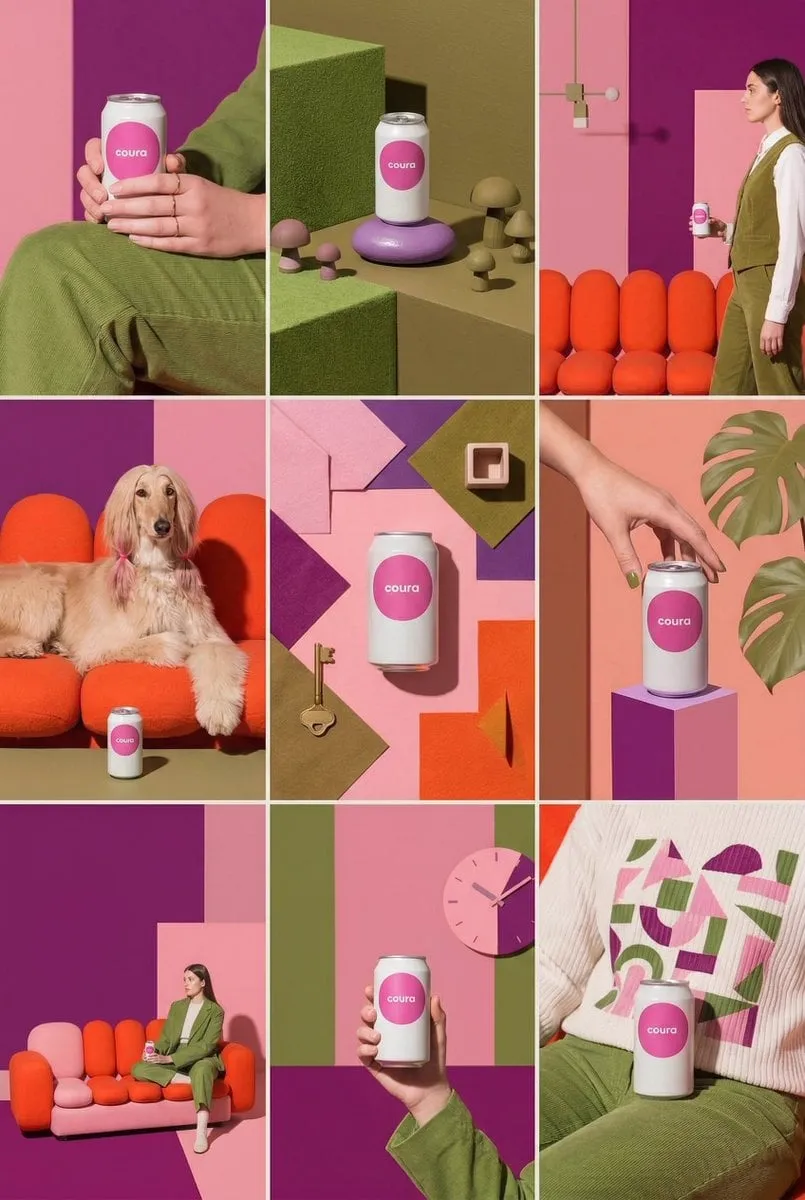
Do these techniques apply to non-character content? Yes. Products, environments, and even color palettes benefit from the same discipline. A product shot set is just a reference set with different subjects.
Who should own the reference set on a team? One person. If everyone edits the set, it drifts like the scenes do. The owner version it, approves changes, and enforces the rule that scenes are generated only against the current version.
