
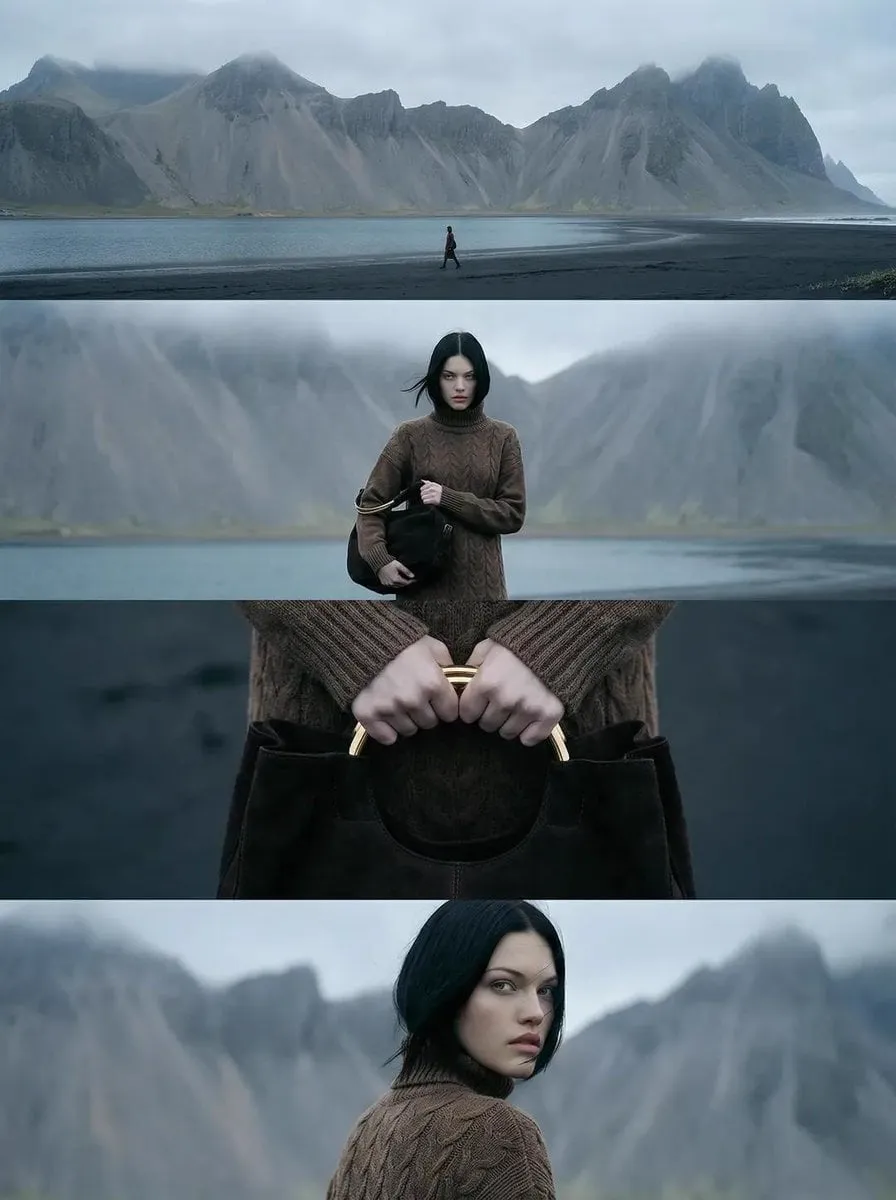
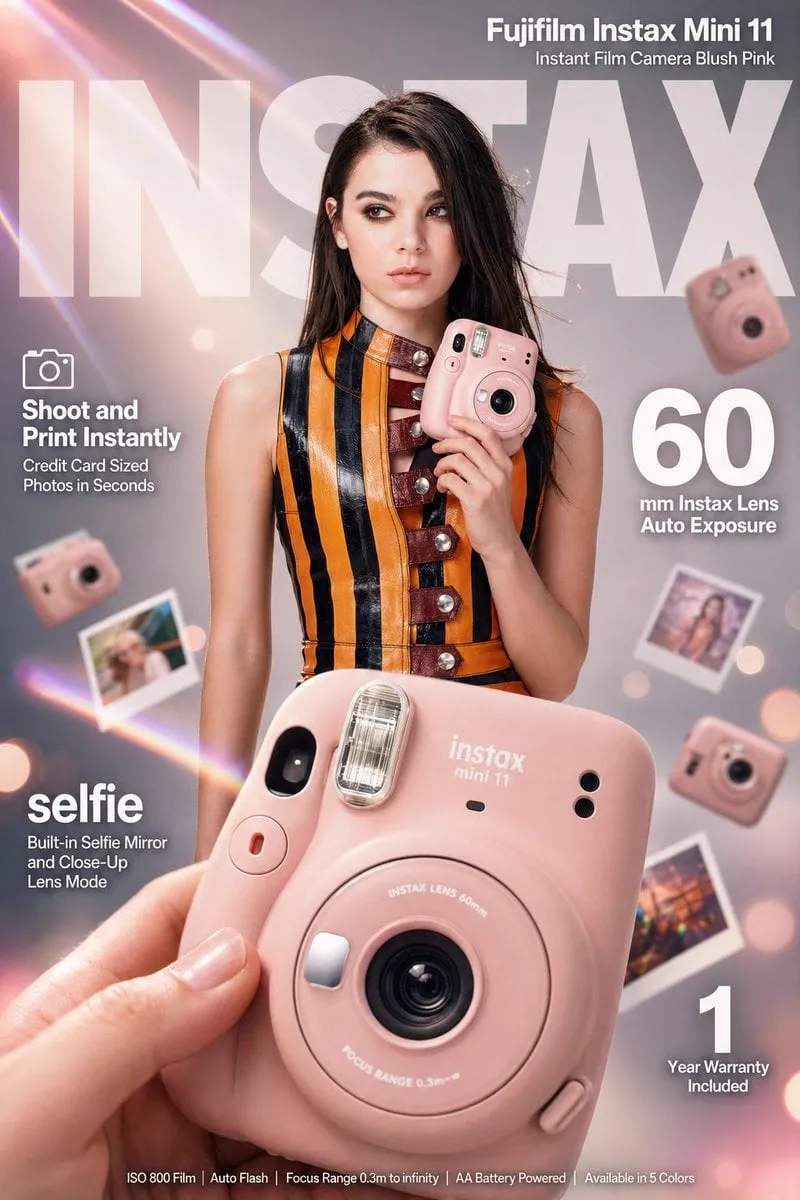
Every business produces presentation videos: product demos, investor pitches, internal training, launch announcements. Almost every business produces them badly. The reason is rarely a lack of effort. It is a lack of direction. A presentation video needs someone thinking like a director: which shots tell the story, what the script must say so the visuals can follow, and how every scene stays recognizable as part of the same brand. Most teams do not have a director on staff, so the video becomes a sequence of talking-head clips and generic stock footage.
AI director assistants were built for this gap. They take the kind of planning a director would do, turn it into concrete shot lists and scene-based scripts, and prepare the technical specifications that video generation tools need. This guide explains how they work, how to use them for professional presentation videos, and the workflow that gets the best results.
The problem: presentations without a director
A presentation video has a business goal: persuade, explain, or train. Achieving that goal requires a visual plan, not just a script. Which moments deserve a close-up? When does the viewer need to see the product in action? How do you keep attention during the inevitable parts that are less exciting?
Without a director's plan, teams improvise. They record a screen or a speaker, add some slides, and call it a video. The result is functional but forgettable, and forgettable is expensive when the video is your sales pitch. The difference between a forgettable and a memorable presentation video is rarely budget. It is the quality of the shot planning.
This is where AI director assistants change the game. They bring the structure of professional cinematography to teams that could never afford a real director, and they do it quickly enough to fit into a normal production schedule.
How an AI director assistant works
An AI director assistant is a planning engine for video production. You describe the scene and the purpose of the presentation, and it proposes a shot list: the sequence of shots that tells the scene effectively. It applies cinematography principles automatically, deciding between establishing shots, close-ups, and detail shots based on what the moment needs.
The key idea is that the tool translates business language into visual language. A request like "show that our platform handles high traffic" becomes a plan: an establishing shot of a dashboard, a close-up of the metrics climbing, a detail shot of the alert system. The assistant does not just produce text; it produces a plan that a video generation tool can execute.
This planning layer is what separates a directed video from a generated one. Generation tools produce images from prompts; the director assistant decides what the prompts should be and in what order. It is the difference between handing a camera to someone and handing it to a cinematographer with a shot list.
From business goal to shot list
The first step in any presentation video is to define the business goal in one sentence. "Convince a CFO that this tool pays for itself in six months" is a goal. "Make a video about our platform" is not. Every shot decision should serve the goal.
Once the goal is clear, break the video into sections. A typical structure is: problem, solution, proof, call to action. For each section, define the message and the emotional register. Then, for each section, plan the shots that deliver the message.
Here is a concrete example. For the problem section, you want the viewer to feel the pain. That suggests close-ups of frustrated users or a slow, tense visual of data piling up. For the solution section, you want clarity and relief: clean establishing shots of the product, smooth transitions, bright and confident colors. For the proof section, you want credibility: dashboard shots, numbers, testimonial clips. The shot list emerges naturally from these decisions.
Scripts that think in scenes
A script for a presentation video is not a document to be read aloud. It is a scene breakdown: each scene has a visual intent, a spoken line, and a purpose. Writing this way keeps the script and the visuals aligned, which is the most common failure point in presentation videos.
The scene-based approach forces you to ask, for every line: what does the viewer see while hearing this? If the line says "our platform scales automatically," the viewer should see scaling, not a talking head. The script becomes a blueprint where text and image are designed together.
This also makes AI generation dramatically easier. When the script is broken into scenes with clear visual intents, each scene becomes a well-defined prompt. Instead of trying to generate a five-minute video in one shot, you generate a series of short scenes that match the script. Each scene is easier to control, easier to evaluate, and easier to fix.
A practical template for a scene entry looks like this: scene number, duration, location, visual intent, spoken line, camera movement, and the emotion the scene should produce. Filling in this template for every scene takes an hour and saves days of rework.
Keeping brand visuals consistent
For businesses, visual consistency is not a luxury. A presentation video that does not look like the brand damages the brand. The colors, the typeface, the photographic style, the energy: all of it should match the rest of your communication.
Consistency starts with references. Build a small library of brand references: approved images, color palettes, and style examples. Every scene in every presentation video should be generated from or matched against these references. This is where multi-image fusion helps: you can combine a brand reference with a new scene and keep the brand identity intact.
Consistency also means defining it once. Before production, write down the visual rules for the video: the palette, the lighting mood, the model to use, the resolution. Share those rules with everyone involved. A project that starts with clear visual rules produces coherent material; one that improvises produces a mess.
Choosing the right models for corporate video
Corporate presentation videos have specific needs: faces must look trustworthy, products must look real, text must render correctly. Generic models that produce beautiful but unreliable results are a liability. Choose models based on the shots you need.
For talking-head and testimonial scenes, prioritize models with strong face consistency and natural motion. For product scenes, prioritize realism and detail. For conceptual or data-driven scenes, stylized models can make numbers and concepts more engaging than raw footage. Keep a shortlist and document which model you trust for each type of shot.
Cost and speed matter too. Presentation videos often have tight deadlines, and iteration is part of the process. Balance the quality of the final render with the ability to iterate quickly during the early stages. A fast model for drafts and a high-quality model for finals is a sensible split.
Integrating into a production workflow
AI director tools fit best inside a structured workflow rather than as a magic box. A reliable pattern is: define the goal, write the scene breakdown, generate the shot list, produce references, generate the scenes, edit, review against the goal, and export.
Each step has a clear input and output, which makes the process debuggable. If the video fails to persuade, you can trace the problem: was it the goal, the script, the shots, or the edit? Without structure, every problem looks like a rendering problem, and you waste time regenerating instead of fixing the real issue.
Task queues and batching make this workflow practical. Generate scenes in batches while the script is being refined. Review scenes against references before assembling the edit. The goal is to keep the pipeline moving so that a two-week production becomes a two-day production.
Example: a product launch video from start to finish
Let us walk through a realistic example. A software company is launching a new analytics feature and wants a ninety-second presentation video for its sales team and website.
The goal: make a sales prospect understand the feature's value in ninety seconds and request a demo. The structure: problem (how teams lose time in spreadsheets), solution (the new feature automates reporting), proof (a live-looking dashboard), call to action (request a demo).
The script breaks into twelve scenes. Scene one is an establishing shot of a tired analyst at a cluttered desk. Scene four is a close-up of the analyst discovering the automated report. Scene seven shows the dashboard in action. Scene eleven shows the team celebrating. Scene twelve ends on the call to action with the brand mark.
Each scene gets a prompt with the visual intent, the spoken line, and the brand references. The scenes are generated in a batch, reviewed against the references, and edited into a sequence with a single voiceover and a consistent color grade. The result is a video that looks directed, because it was.
The same approach works for investor updates, onboarding videos, and launch trailers: the goal changes, but the discipline stays the same.
Best practices and common mistakes
The first mistake is starting with the script and ignoring the visuals. A script written without scenes produces a talking head, no matter how good the words are.
The second mistake is generating scenes without a shot list. Each scene is a decision, and decisions need a plan. Without a shot list, the scenes do not connect.
The third mistake is changing style mid-project. The brand rules must be locked before the first scene is generated, and they must survive until the last render.
The fourth mistake is treating sound as an afterthought. A presentation video is judged on clarity, and clarity is mostly audio. Record or generate the voiceover early, and let the edit follow its rhythm.
The fifth mistake is skipping the final review against the goal. Watch the finished video and ask the one-sentence question again: does it achieve the goal? If not, fix the plan, not just the last scene.
Best practices for professional presentation videos
Start with the sound. A presentation video with excellent images and muddy audio is unwatchable; one with good audio and decent images is professional. Record or generate clean voiceover, add music at the right level, and use sound effects sparingly but deliberately.
Keep the script tight. Presentation videos fail when they try to say everything. Cut every sentence that does not serve the goal, and every scene that does not serve the script.
Respect the viewer's time. If the video can be ninety seconds, do not make it four minutes. Short, clear, and confident beats long, complete, and rambling.
Finally, test the video with someone who has never seen the product. If they can summarize the message and feel the intended emotion, the direction worked. If they cannot, the problem is upstream: fix the plan, not the render.
Frequently asked questions
Do AI director assistants replace human directors?
They replace the planning function for standard projects, but they do not replace creative judgment. For ambitious or unusual work, a human director with AI tools is still the strongest combination.
How much does shot planning improve the final video?
Enormously. The shot list determines what the generation tools produce, and the quality of the raw material limits the quality of the edit. A good plan is the highest-leverage part of the process.
Can these tools work with footage I already have?
Yes. The planning and script functions are useful even if you shoot or record the scenes yourself. The shot list tells you what to record, which is half the battle.
What is the fastest way to start?
Pick one presentation video, write a one-sentence goal, and create a scene breakdown with three to five sections. Then build the shot list for each section. Do this once and you will see the difference immediately.
How do I keep all my videos consistent over time?
Maintain a brand reference library and a documented playbook of model choices and visual rules. Reuse them in every project. Consistency is a system, not a feeling.
