
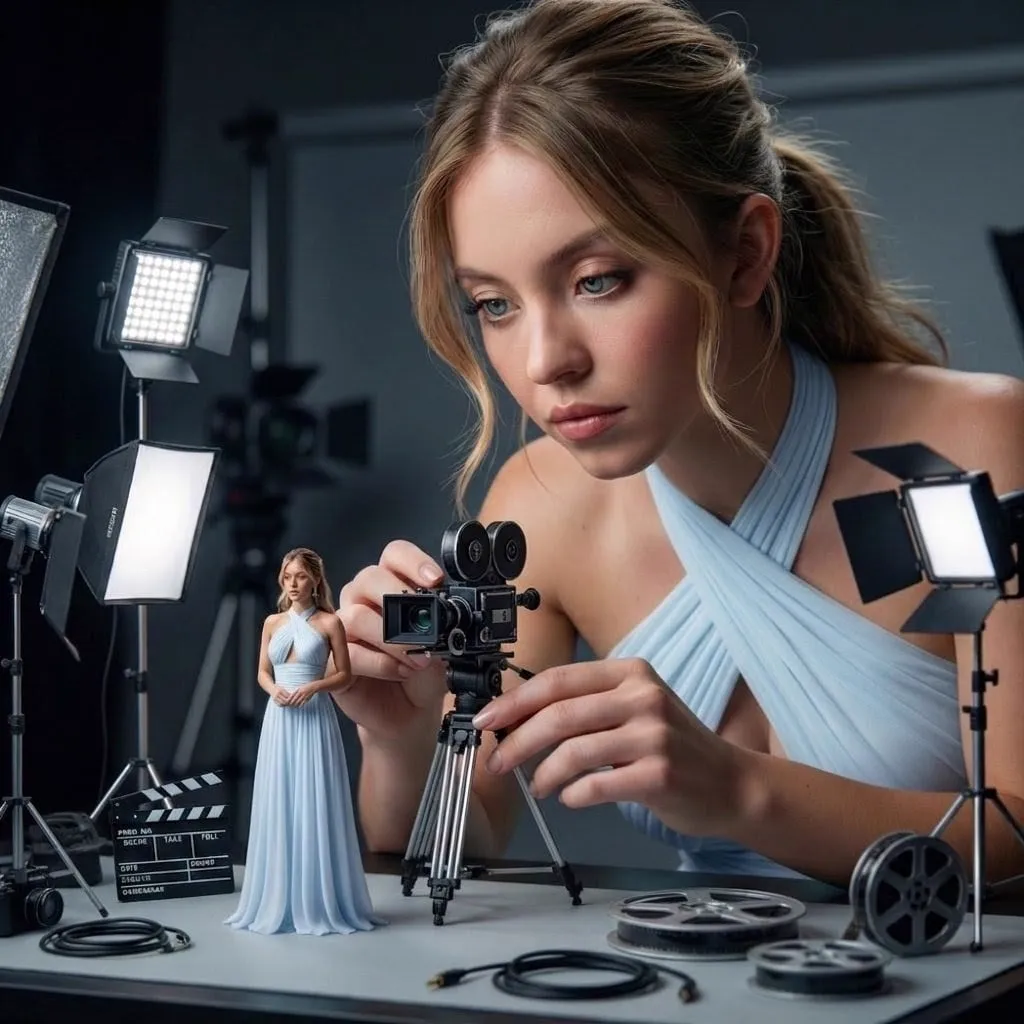
The most expensive mistake in AI video is not a bad generation; it is a generation that never should have been made. When creators skip planning and jump straight to prompting, they burn hours producing clips that do not fit the story, do not match each other, and cannot be assembled into anything watchable. The fix is not more skill at prompting. It is a planning layer that behaves like a director.
This guide shows you how to build that layer into your workflow: how to turn an idea into a shot list, how to keep characters and mood consistent, how to translate feelings into model parameters, and how to pace a story so the finished video holds attention.
The Pre-Production Revolution
In traditional filmmaking, pre-production is where movies are won or lost. The script gets broken into shots, locations are scouted, and every department aligns on a visual plan before a single frame is captured. AI video workflows often skip this phase entirely, and the results show it.
An AI director layer restores pre-production to the generative workflow. Instead of describing a shot in isolation, you brief the director on the scene's goal, and it returns a structured plan: the beats, the shots, the camera moves, the model recommendations, and the references needed. You approve the plan before generation starts.
This shift has a compounding effect. Every generation now serves the story, so the number of wasted takes drops. Every shot now carries the same style anchors, so consistency improves automatically. And the plan itself becomes a reusable asset: the same director layer can plan ten scenes in the time it used to take to hand-write one.
Scene Composition and Framing Guidance
The first thing a director does with a beat is decide how to frame it. Composition is the visual grammar of storytelling, and it is entirely describable to AI tools.
The rule of thirds is the foundation. Placing the subject on a third line rather than dead center creates tension and energy. For a portrait beat, a left-third placement with the subject looking right leaves room for the narrative to move; for a landscape beat, the horizon belongs on the upper or lower third, not the middle.
Leading lines are the next tool. Roads, windows, fences, and shadows can all direct the eye to the subject. A prompt that says the railway leads the eye toward the character standing at the far end will produce a stronger composition than a prompt that simply places a character near a railway.
Negative space is the emotional lever. A character small in a vast room says isolation; a character filling the frame says confrontation. When you want the audience to feel a character's solitude, describe the empty space around them as part of the shot.
The director layer's value here is that it applies these rules without being told each time. You describe the emotion; it proposes the framing that expresses it. That is the difference between knowing composition rules and being able to use them at production speed.
Narrative and Character Consistency Through Shot Sequencing
The hardest problem in multi-shot storytelling is continuity. A character must remain recognizable across shots, and a world must remain the same world, no matter how the camera moves or the light changes.
The director layer approaches this through sequencing. It plans shots so that the references carry over: the character reference set, the location set, and the style sheet are attached to every generation in the scene. It also sequences the camera so that each shot's framing is a variation on the previous one rather than a random choice. A scene that opens wide, moves to a medium, and finishes on a close-up reads as intentional; three unrelated framings read as an accident.
You can reinforce this with your own discipline. Keep the reference set stable for the whole project. Generate all shots of a character in one session when you can. And when a shot must break the pattern, such as a sudden extreme close-up for an emotional beat, make that break deliberate and support it with the prompt.
Audio and Music Direction With Visual Cues
A director thinks about sound from the first planning meeting, not after the picture is locked. The same principle applies to AI video, and it is one of the fastest quality upgrades available.
When you plan a scene, decide where the music should breathe, where it should push, and where it should disappear. A chase beat needs rhythmic drive; a discovery beat needs a moment of near-silence before the reveal. Describe those intentions in the scene plan so the sound generation step has a target.
Voice is a character too. If the scene includes narration, decide its emotional register: measured, urgent, warm, detached. Modern voice synthesis can express those registers, but only if you specify them. The director layer can align the voice placement with the visual beats, so the narration lands where the audience needs information, not where the voiceover happened to fit.
Selecting the Right Models for Each Narrative Need
Different beats make different demands on the generator, and a director chooses the tool for the job.
For emotional performance, choose a model known for natural human motion and facial nuance; the scene lives or dies on the performer. For physical spectacle, choose a model with strong physics and material handling; water, debris, and fabric are the test. For controlled camera work, choose a model with explicit motion control. For drafts and timing tests, choose the fastest option even if it sacrifices some polish.
The decision criteria should come from the story, not from the leaderboard. A scene about a quiet conversation does not need the best explosion model. Write the beat's demand into the shot list, then match the model to it. This is how professional teams get consistent quality across varied scenes without owning a single perfect model.
Translating Emotional Intent Into Parameters
Directors communicate intent through a vocabulary that performers and cinematographers understand. With AI, that vocabulary becomes parameters and prompt language.
Emotional intent maps to a few controllable dimensions: pacing, camera distance, color temperature, and motion. Tension lives in slow, deliberate moves and tighter framing. Joy lives in wider framing and brighter, warmer light. Melancholy lives in cooler tones, softer contrast, and longer takes. Describe the emotion first, then translate it into those concrete dimensions in the prompt.
Keep a personal lexicon: a short document that maps emotions to prompts you have tested. When a warm reunion scene worked because of a specific lighting description, save that description. Over a few projects, your lexicon becomes a style asset worth more than any single tool.
Resource Planning: Making the Queue Work for You
AI video generation is GPU work, and generation queues are part of the workflow. A director plans for them.
Batch the work: generate all drafts in the morning, review them, then launch the refined takes in one pass rather than one at a time. Set realistic expectations for queue times on heavy models, and use the waiting time for planning the next batch. Keep an eye on your consumption across models; fast models burn less per iteration, which matters when you are iterating heavily on a sequence.
The goal is to make waiting a planning tool instead of a frustration. A project with a clear shot list can always be producing something: drafts for scene three can render while hero shots for scene one are approved.
Pacing and the Emotional Arc
A video is not a collection of shots; it is a sequence that builds. Pacing is the invisible structure that decides whether the sequence holds attention.
Think in terms of an arc. Open with a beat that earns attention, build through beats that raise stakes or deepen understanding, and land on a beat that delivers the emotional payoff. Each shot has a duration that serves its function: a shot that establishes place can run longer; a shot that delivers a punchline should be tight.
The director layer helps here by proposing durations and ordering. But the final judgment is yours, and it is the most important judgment in the project. Watch the cut and ask whether each shot earns its place. If a shot does not move the emotion forward, it does not belong, no matter how beautiful it is.
Bringing It All Together: Idea to Finished Video
Here is the complete workflow in one pass. Write the emotional core of the video. Brief the director layer, which returns a shot list with framing, camera, and model recommendations. Lock the references: characters, locations, style sheet. Generate keyframes for each beat and approve them. Generate the moving shots in batches, logging what works. Edit the approved takes to the arc, add the grade, and lay in music and voice per the scene plan. Review for story and technical consistency, then export.
The pattern is the same at every scale. Whether the video is a fifteen-second social clip or a three-minute brand film, the plan protects the story, the references protect the consistency, and the pacing protects the attention.
A Worked Example: The Three-Shot Scene
To see the whole system in action, design a simple scene: a character discovering a letter on a desk, in about twelve seconds of screen time.
The emotional core is quiet surprise, so the plan avoids fast cuts and loud moves. The director layer proposes three shots. Shot one is a wide establishing frame: the room at dusk, the desk in the lower third, warm window light from the left, a slow push-in toward the desk. The shot list notes a realism-focused model with good environment handling.
Shot two is a medium shot of the character entering the frame and noticing the letter. The camera holds nearly still with a subtle handheld sway, so the discovery feels observed rather than staged. The reference set for the character is attached, and the lighting matches shot one.
Shot three is a close-up of the character's hand lifting the letter, a soft focus shift as the camera inches closer. This is the payoff beat, so it gets the premium model and the most iteration. The emotion lands through the stillness, the lighting, and the micro-movement, not through spectacle.
The three shots assemble into a scene that reads as intentional because every decision, framing, move, model, and light, was made against the same emotional core. That is the whole method, scaled up or down, for any scene you will ever design.
Frequently Asked Questions
Is an AI director layer really necessary, or can I just prompt well?
Prompting well gets you a good shot; a director layer gets you a good video. If your output is single clips, prompting may be enough. The moment you assemble multiple shots into a story, planning becomes the bottleneck and a director layer pays for itself.
How do I know which model to choose for a shot?
Define the beat's demand first: performance, physics, camera control, or speed. Then match the model to the demand. Keep a shortlist of two or three models per demand type and test them against your own footage.
What if my characters still drift between shots?
Strengthen the references. Generate a full reference set per character, keep it stable, and attach it to every generation. Drift is almost always a reference problem, not a model problem.
How much should I plan before generating?
Enough to write a shot list you can defend. If you cannot explain why a shot exists, it should not be generated. Most projects benefit from one planning session per scene.
How do I make my AI videos feel less generic?
Build a personal lexicon of prompts, references, and styles, and apply a consistent grade. Generic output is the default; specificity is a collection of deliberate choices accumulated over time.
The director is the difference between generating video and telling a story with video. Put the planning layer in front of the generation layer, protect your references, and treat pacing as a first-class citizen. The tools will produce the footage; you will produce the meaning.
