

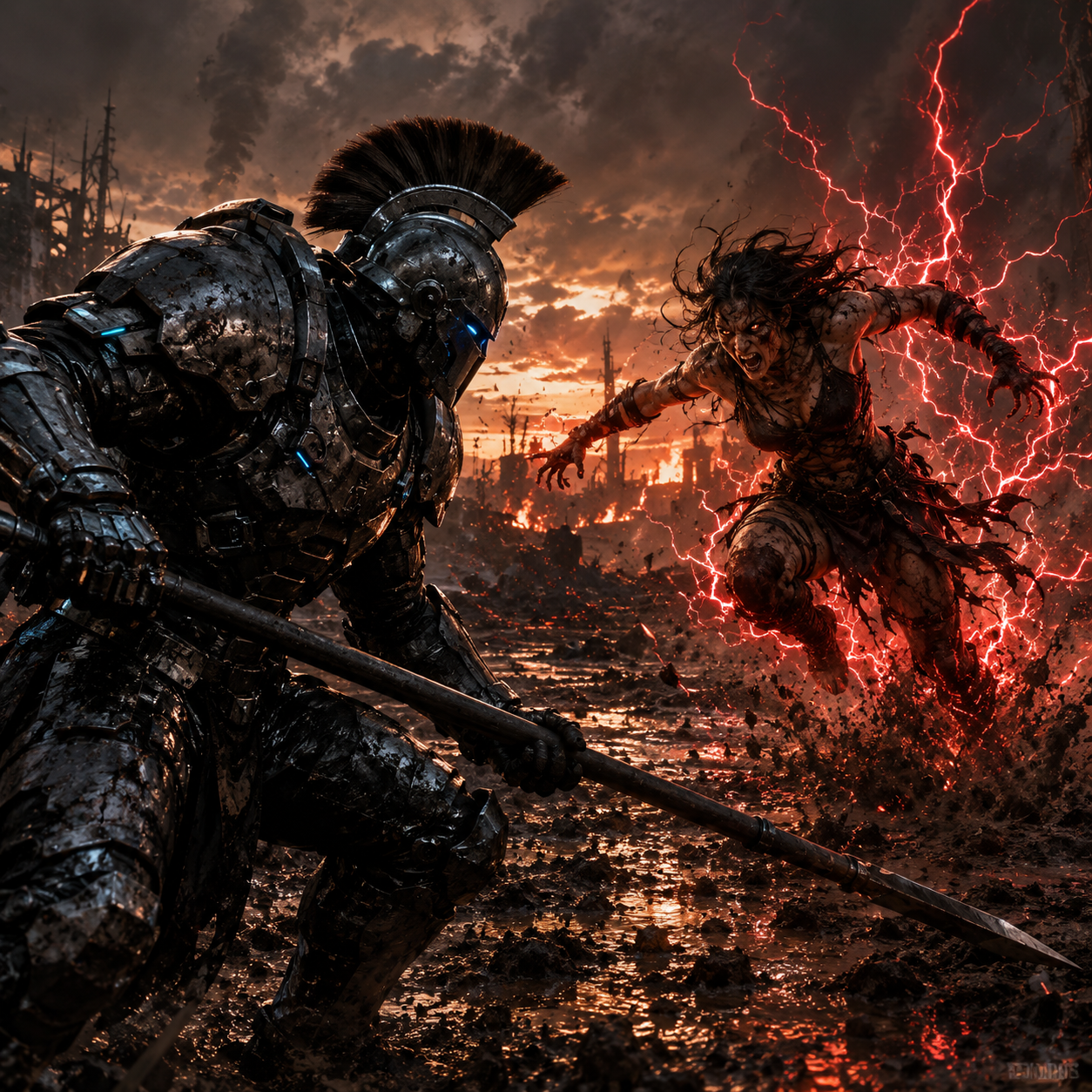
Why Game Audio Is Uniquely Hard
Game music is not background music. A film score plays the same way every time; a game soundtrack must react to a player who could go anywhere, fight anyone, or stand still for ten minutes. It needs to be modular, seamless, and emotionally responsive, and it needs to do all of that without repeating itself into annoyance.
That complexity has traditionally demanded experienced composers, middleware specialists, and large budgets. Indie developers often treat music as an afterthought, shipping with loops that do not fit the game's emotional arc. AI composition changes this balance. It does not replace the composer, but it gives small teams the ability to prototype, iterate, and fill gaps that would otherwise remain silent.
This guide covers how AI music tools work in a game audio pipeline, how to approach different genres, how to integrate the results into an engine, and where the real risks and limits are.
How AI Composition Works for Interactive Soundtracks
What generative music models do
Modern generative music models learn from large catalogs of music and can produce instrumental tracks, stems, or short motifs from a text description or a style reference. Describe "tense orchestral underscore, slow build, no vocals," and the model returns a plausible starting point.
That starting point is rarely a final master. It is raw material: a sketch that a human can arrange, edit, and adapt. Thinking of AI as a co-writer rather than a replacement keeps expectations realistic and results professional.
Modularity is the key concept
Interactive music is built from layers and loops that the engine switches between as the game state changes. A typical adaptive setup has:
- A base layer: the default mood
- Intensity layers: added as combat or tension rises
- Stingers and transitions: short hits that smooth the switch between states
AI tools are especially useful for generating many variations of a layer quickly, so the engine never plays the exact same combination twice. Variety is what keeps adaptive music from becoming wallpaper.
Stems versus full mixes
One of the first decisions is whether to generate full mixes or separated stems. Full mixes sound good immediately but are hard to adapt, because you cannot isolate the strings from the percussion when the gameplay changes. Stems give you flexibility: you can raise the tension layer, drop the percussion bed, or add a sting without touching the rest. For interactive work, prefer tools and workflows that produce stems, even if it means a little more assembly on your side. The flexibility is worth the extra step.
Composing for Different Game Genres
RPG and epic scenes: focus on the emotional arc
RPGs need themes that can carry quests, party banter, and boss fights. Start with a strong motif for the main character or the world, then generate variations of that motif for different emotional states: exploration, tension, loss, triumph. The motif is your anchor; the AI provides the variations, and you curate the ones that serve the story.
Shooters and action games: speed and rhythm
Action music is about pulse. It needs clear rhythmic layers that can intensify without becoming chaotic, and it must stay out of the way of gameplay audio like gunfire and footsteps. Generate percussion beds and bass layers at a fixed tempo, then build intensity by adding layers rather than by changing the core loop. This keeps mixing clean and the player oriented.
Simulators and meditative games: the background canvas
Calm games have their own challenge: music must be present enough to shape mood but quiet enough to never demand attention. AI excels at generating long, slowly evolving pads and ambient textures. The practical trick is generating several variations and checking them at low volume, in context, for an extended period. What sounds fine in a solo listen often becomes repetitive in hour thirty.
Puzzle and exploration games: the musical question mark
Puzzle games benefit from music that hints without answering: a motif that repeats in slightly different forms as the player gets closer to a solution. Generate short motivic phrases and let the engine layer them by progress state. Exploration games, by contrast, want music that shifts with the environment, so generate separate beds for different biomes and keep them in the same key to allow smooth crossfades.
Multiplayer and party games: energy without words
Party games need music that carries energy without competing with voices. Keep the bed simple, keep the tempo steady, and reserve the big moments for stingers triggered by wins or surprises. Because players may stay on one screen for hours, generate several loop variations and let the engine rotate them; repetition in a party game is felt faster than anywhere else.
A Practical Workflow: From Brief to Implementation
Step one: write the audio brief
Describe the game's mood, setting, and pace in writing before generating anything. Specify tempo ranges, instrumentation, and the emotional arc of each scene. A good brief makes the difference between directed exploration and random generation.
Step two: generate and audition
Generate a batch of candidates per layer. Listen critically, tag what works, and discard the rest. Keep the brief nearby; it is your filter. If you cannot articulate why a track fails, you will not be able to articulate what to generate next.
Step three: edit and arrange
Bring the selected material into a DAW. Trim, loop, layer, and mix. This is where the track stops being "AI music" and becomes your game's music. Automation, fade curves, and EQ are the difference between a demo and a soundtrack.
Step four: build the adaptive structure
Cut the music into layers and stems that your audio middleware can switch between. Export at consistent key and tempo so transitions are seamless. Name everything clearly; adaptive systems fail through disorganization more often than through bad music. A naming convention like scene_state_layer_variation saves hours when you wire the audio into the engine. Export stems with headroom and keep the session organized in folders per state and layer. A clean session is not bureaucracy; it is what allows you to revisit the soundtrack after a month without re-learning your own project.
Audio-Visual Sync and Adaptive Systems
Game engines do not play music; they play back audio events triggered by game state. The integration layer is where the soundtrack actually becomes interactive.
- FMOD and Wwise are the standard middleware choices. Both support layered, state-driven music
- Unity and Unreal integrate with both, so the same music assets can be wired into either engine
- Stingers and transitions should be triggered by specific game events: a boss appears, a chase starts, a player is spotted
The practical rule: design the music in layers from day one. If you compose a single monolithic track, adaptive systems cannot use it. If you compose layers, the engine can recombine them into an infinite number of arrangements.
A simple state machine to start
Begin with three states: exploration, combat, and victory, plus a sting for each transition. Wire those states to simple gameplay flags and test the switches in the engine. This minimal setup teaches you the pipeline, and most games can be served well by expanding this pattern with a few more states, such as stealth, boss, and low-health. Start small, prove the system, then grow it.
Licensing, Ownership, and Quality Control
Know what you actually get
AI music tools have different licensing terms. Some grant full commercial rights; others restrict distribution, streaming, or game use. Before committing to a tool for a shipped title, read the license carefully and keep a record of what the tool allowed. Keep a licensing ledger: for every track that ships, record the tool, the prompt, the date, and the license terms. This is unglamorous work, but it is the difference between a clean release and a discovery in the middle of a store launch. A spreadsheet is enough; the point is that the information exists when someone asks.
Ownership questions
Depending on the tool and jurisdiction, the question of who owns AI-generated music can be murky. For commercial games, use tools with clear, auditable licensing, and prefer workflows where a human makes the final creative decisions. The more original arrangement and production work you do, the cleaner your ownership position becomes.
Quality control
AI output can have subtle problems: muddled low end, synthetic timbres, abrupt endings. Test everything in the game engine at realistic volumes, not just in a DAW. A track that sounds great in isolation can clash with dialogue, effects, and the mix. Also check loop points carefully: a seamless loop is harder than it looks, and a click at the seam will be noticed by players long before you hear it in a busy office.
Tools and Models Worth Trying
The landscape changes quickly, but the categories are stable:
- Text-to-music tools for sketches and full tracks, useful for rapid prototyping
- Stem and loop generators for adaptive layers and percussion beds
- Voice and foley generators for non-musical audio
- Traditional DAWs and middleware for the arrangement and integration work
Choose based on your workflow, not on hype. The best tool is the one that produces material you can actually edit and that licenses the way you need.
Building your audio toolchain
A practical chain for an indie project looks like this: a text-to-music tool for sketches and variations, a DAW for editing and arrangement, middleware for the adaptive logic, and a small set of licensed sound effects for stingers. You do not need every tool in every category; you need one tool per job that you actually understand. Mastery of a simple chain beats ownership of a complicated one, and a chain you understand is faster to repair when something breaks.
Common Pitfalls and How to Avoid Them
- Generating endlessly without a brief: set criteria before you press generate
- Shipping unedited output: treat AI output as a sketch, never as a final master
- Ignoring key and tempo: mismatched layers make transitions audible and amateur
- Forgetting the mix: music that fights dialogue or effects ruins the experience
- Skipping license checks: a hit game with uncleared audio is a legal disaster
- Overbuilding the adaptive tree: too many states and transitions collapse under their own complexity; grow the system only after the basics work
FAQ
Can AI compose a full game soundtrack by itself? It can produce starting material and variations, but a full adaptive soundtrack needs arrangement, layering, and integration. The human role shifts from playing every note to directing and curating.
Do I need music theory knowledge? Basic theory helps: key, tempo, and structure are the language you use to keep layers consistent. You can learn the essentials in days.
What about copyright? Read the tool's license. For commercial titles, use tools with clear rights and keep your arrangement work substantial.
Will the music sound "AI-ish"? With good editing, mixing, and arrangement, most listeners will not be able to tell. The giveaway is usually generic arrangement, which is exactly what a human editor fixes.
How do I start if I have no audio budget? Start free or low-cost: generate sketches, learn the middleware basics, and build one small adaptive scene. The skills transfer directly to larger projects.
Is AI music good enough for a commercial release? Yes, when edited and mixed properly. The risk is not quality but rights; choose tools with clear commercial licensing and document everything.
Conclusion
AI composition does not shrink the role of the composer; it shrinks the distance between an idea and a prototype. For indie teams, that means music can be part of the design conversation from the start instead of a last-minute add-on.
Start with a brief, generate layers, edit them with intent, and wire them into an adaptive system. The result is a soundtrack that reacts to your players, and a workflow that lets you iterate on music as fast as you iterate on gameplay.
