

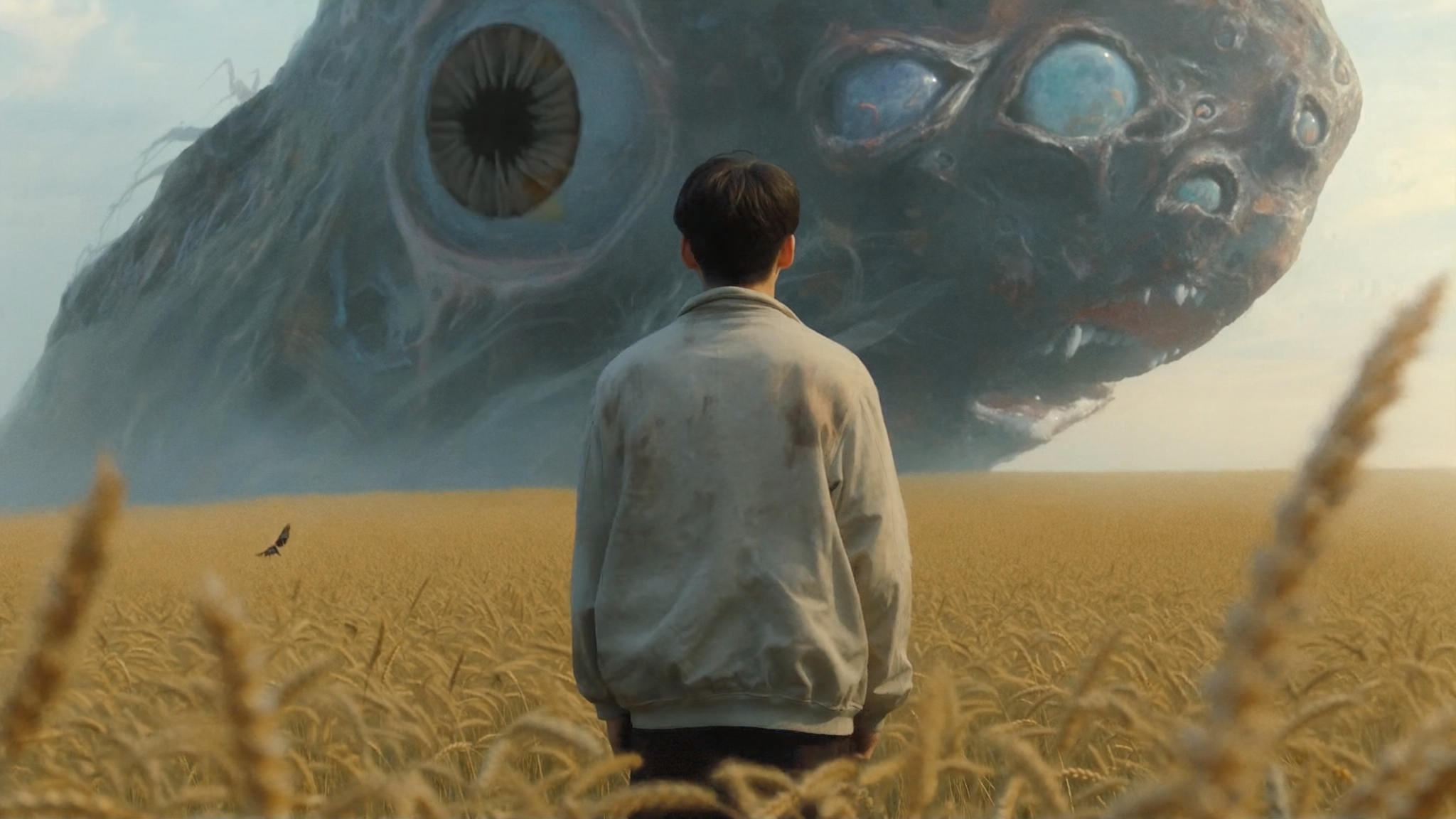
Introduction
Every content creator who has worked with generative AI has a story. The video where the hero's jacket changes color between two shots. The product shot with an extra finger on the model's hand. The script that confidently quotes a study that does not exist. These moments are called AI hallucinations — outputs that are inaccurate, fabricated, or inconsistent, produced with complete confidence by the model. Some are harmless and genuinely funny; others cost brands money, trust, and time.
In 2025, generative AI has moved from novelty to default tooling across content production, especially in short-form video. The same models that can produce cinematic footage can also produce nonsense with equal fluency. This guide breaks down why hallucinations happen, the most common funny failures in video workflows, and — more importantly — how to build a system that catches them before your audience does.
What Exactly Is an AI Hallucination?
A hallucination is any model output that deviates from the real world, from the source material, or from physical logic. In text models, it looks like invented facts, fake citations, or confidently wrong answers. In image and video models, it looks like distorted anatomy, floating objects, inconsistent lighting, and characters whose identities change from frame to frame.
The uncomfortable truth is that hallucinations are not bugs that will be fully fixed; they are a structural property of how generative models work. Models predict plausible continuations of patterns, and plausibility is not the same as truth. The practical question for creators is not "how do I make hallucinations impossible" but "how do I make them rare, visible, and cheap to fix."
Why Hallucinations Matter More in 2025
Two forces make hallucination management critical this year. First, the market has matured: audiences no longer forgive visible AI artifacts just because the content is AI-generated. A consumer who spots a six-fingered hand in a product ad stops trusting the brand, not the tool. Second, the models themselves have become more capable, which paradoxically makes errors harder to spot — a photorealistic video with one wrong detail looks more convincing than a stylized cartoon with the same error.
Quality is now the new competitive filter. When everyone can generate video, the teams that win are the ones whose output is reliably correct. That reliability comes from process, not from hoping the model behaves.
Anatomy of Funny (and Expensive) Hallucinations
Visual Hallucinations in Video Generation
Visual hallucinations are the most common and the most entertaining. They occur when a model fails to maintain coherent object geometry or detail across a sequence of frames. Classic examples include:
- Hands with six or seven fingers, or fingers that merge and separate as the character moves.
- Text in the background that starts legible and dissolves into gibberish.
- Objects that change size, color, or material between cuts.
- People walking through walls or chairs, because the model never fully resolved the 3D layout.
In short-form video, where the viewer watches the same loop repeatedly, these errors get noticed fast. A 7-second Reels loop with a morphing hand becomes a comment section full of people pointing it out — engagement, technically, but not the kind you want.
Textual Hallucinations: When the Model Invents Facts
Text hallucinations are less visually funny but more damaging. A model asked to write a script about a historical figure may invent dates, quotes, or events. Asked to describe a product's features, it may fabricate specifications. In content marketing, a confidently wrong statistic in an article can destroy months of authority building.
The dangerous part is tone. Hallucinated facts are delivered with the same certainty as true ones. There is no visual cue, no wobble in the confidence, that flags the error. The only defense is external verification: check claims against sources you trust, and treat any number, date, or quotation as suspect until confirmed.
Character Consistency: The Identity Drift Problem
In multi-shot productions, the most expensive hallucination is identity drift. The hero character in shot one has brown hair and a scar; in shot three, the hair is blonde and the scar is gone. For a brand film with a recurring spokesperson, this is fatal — the audience reads it as two different people and the narrative collapses.
Identity drift is not one model failing; it is the accumulation of small stochastic differences across every generation step. Even with detailed prompts, each render samples slightly differently. This is why single-shot generation of characters is relatively easy, but multi-shot storytelling with a consistent cast is genuinely hard, and why teams need explicit consistency tooling rather than luck.
What Causes Hallucinations in the First Place?
Understanding the causes helps you predict where failures will appear. The main contributors are:
Training Data Gaps
Models are trained on large but finite datasets. Rare objects, niche professions, unusual anatomy angles, and uncommon cultural specifics are underrepresented, so the model has to improvise. A prompt about a rare piece of industrial equipment is more likely to hallucinate than a prompt about a chair.
Ambiguous Prompts
When a prompt is underspecified, the model fills the gaps with its own priors. "A man in a suit walking down a street" leaves the number of fingers, the street style, and the time of day to chance. The more ambiguity you leave, the more the model improvises — and improvisation is where hallucinations live.
Length and Complexity
Longer generations accumulate more opportunities for drift. A 10-second clip has more chances for an object to morph than a 3-second clip. Similarly, prompts that combine many conflicting requirements force the model to compromise, and the compromises often violate physics or identity.
Model Architecture Limits
Every model has a ceiling on spatial reasoning, temporal memory, and text fidelity. A model optimized for speed may trade away anatomical precision. A model optimized for stylization may struggle with real-world lighting. Knowing each model's weak spots lets you route work to the right tool.
Practical Strategies to Reduce Hallucinations
Write Prompts Like a Director, Not a Fan
Precision is your first line of defense. Specify the important details explicitly: number of people, clothing, setting, lighting direction, camera angle, and — crucially — what must NOT change between shots. State physical constraints such as "both hands visible, five fingers each" or "text must remain exactly: Welcome 2025." Models follow explicit constraints much more reliably than implicit expectations.
A useful trick is negative prompting. Instead of only describing what you want, describe what you do not want: "no extra fingers, no warped text, no changing colors." Many tools support negative prompts natively, and they measurably reduce common artifact classes.
Use Reference Images and Keyframe Control
For consistency-critical work, do not rely on text alone. Feed the model a reference image of the character, product, or environment and use keyframe control to anchor the identity across shots. Reference-based generation is dramatically more stable than pure text-to-video, because the model has a concrete target to match instead of a vague description.
In practice, build a reference set per production: one hero character sheet, one product catalog image, one environment still. Reuse the same references for every related generation, and keep them in a fixed folder so nothing gets swapped accidentally.
Generate in Small, Verifiable Chunks
Break long productions into short segments and verify each one before moving on. A 30-second video generated as six 5-second clips is easier to inspect and correct than one 30-second generation with an error buried in the middle. Each segment gets its own consistency check against the references, and a failed segment costs a small regeneration instead of a full restart.
Build a Multi-Stage Review Pipeline
Never let a model output go straight to publishing. Design a review funnel with at least three stages:
- Automated checks: resolution, aspect ratio, duration, banned-text scan, obvious artifact detection.
- Reference comparison: does the character still look like the character sheet? Does the product match the catalog image?
- Human review: a person watches the final cut with fresh eyes, looking specifically for physical impossibilities.
The automated stages catch the boring, predictable errors; the human stage catches the weird, delightful ones. Document every failure with its cause, so the same mistake does not repeat in the next production.
Case Studies: Real Failures and How to Fix Them
The Hands Problem
A creator generating a cooking tutorial kept getting close-up shots where the chef's hands had six fingers or fingers that blurred into the spatula. The fix had three parts: adding "five fingers, anatomically correct hands" to every prompt, using negative prompting against "extra fingers, fused fingers," and switching to a model with stronger anatomical training for close-ups. Error rate dropped from roughly one in three clips to about one in twenty.
The Lighting Drift
A brand film needed consistent warm interior lighting across three scenes. The first pass produced scene one at golden-hour warmth, scene two in cold daylight, and scene three in near-darkness. The fix was to define a lighting style block in the prompt — "consistent warm tungsten interior lighting, same light temperature across all scenes" — and to use the same environment reference image for every scene. Drift disappeared because the model had a fixed visual anchor.
The Narrative Amnesia
A scripted series had a character who was supposed to be holding a red umbrella throughout a chase. In shot four, the umbrella vanished; in shot six, it turned blue. The root cause was that the prompt for each shot described the action but not the persistent prop. The fix was a character-props block repeated in every shot prompt: "character A always holds a red umbrella in the right hand." This is a reminder that consistency is not just visual — it is also narrative and functional.
Building a Hallucination-Proof Content System
Choose Models Strategically
Different models have different failure profiles. A photorealistic model may excel at skin texture but struggle with text rendering. A fast generation model may produce softer details but fewer anatomical errors. Maintain a small catalog of models you trust for specific tasks, and route work accordingly: character close-ups to the anatomy-strong model, text-heavy shots to the text-fidelity model, background plates to the speed model.
Track Failure Modes Over Time
Keep a simple log of hallucinations: what went wrong, in which model, under which prompt style. After a few dozen entries, patterns emerge — this model always breaks hands, that prompt structure always causes lighting drift. The log turns hallucination management from a guessing game into an engineering discipline.
Balance Cost Against Risk
High-precision work costs more in time and compute, so budget your verification effort by risk. A brand's hero product shot justifies reference images, keyframe control, and three review stages. A throwaway background clip for a social post may only need a quick glance. Allocating your quality budget by the importance of the asset keeps costs sane without inviting disasters.
Keep a Human in the Loop
No automation replaces the final human judgment about whether a piece of content is right. The human role changes, though: instead of doing the labor of generation, the human does the labor of direction and verification. In a hallucination-prone medium, the director's eye is the last and most valuable filter.
FAQ
Are AI hallucinations ever fully eliminated?
Not in the foreseeable future. Hallucinations are structural to generative models, so the goal is management, not elimination. Better models reduce frequency; better process reduces impact.
Which content types are most at risk?
Content that must be factually or physically accurate — product ads, tutorials with steps, educational content, brand films with recurring characters — is highest risk. Pure aesthetic or abstract content is lower risk because there is less to get wrong.
Is it worth regenerating a failed clip?
Often, yes. Regenerating with a tightened prompt and the same reference images frequently fixes the issue at lower cost than manual retouching. Keep the failed output as a negative example to guide the new prompt.
How do I spot hallucinations in my own content?
Build a checklist: count fingers and limbs, check text legibility, verify lighting consistency across cuts, compare each shot to the reference images, and check every factual claim against an external source. Then have someone else do the same pass — fresh eyes catch what familiarity hides.
Does better prompting really reduce hallucinations?
Meaningfully, yes. Explicit constraints, negative prompts, and persistent identity blocks reduce drift and artifact frequency. Prompting does not make hallucinations impossible, but it makes them rarer and easier to fix, which is what matters in a production schedule.
Conclusion
AI hallucinations are the price of admission for the most powerful content production capability in history. They are sometimes funny — the six-fingered hand, the morphing umbrella, the invented citation — and sometimes expensive. The difference between a creator who suffers from hallucinations and one who manages them is not luck; it is a system. Precise prompts, reference anchors, segmented generation, multi-stage review, and strategic model selection together form a pipeline where errors are caught early, fixed cheaply, and prevented from compounding. Build that system, and the occasional funny failure becomes a story you tell — not a problem you ship.
