
The AI Image Editing Revolution
Image editing used to mean two things: fixing flaws and adjusting colors. AI image editors have blown past both. Today the same tool can remove a tourist from a vacation photo, change the lighting of a product shot, generate an entirely new background, transform a portrait into a painting, or extend an image beyond its original frame. Editing has become creation.
The market is growing accordingly. AI-driven graphics and image processing are projected to exceed tens of billions of dollars in annual value by the end of the decade, driven by demand from social media creators, e-commerce sellers, marketers, and designers. The pattern is consistent across industries: whoever can produce better visuals faster wins attention, and AI image editors are the fastest route to better visuals.
This guide explains how AI image editors work under the hood, how to choose the right tools, and how to build practical workflows for real projects — from social content to product photography.
How AI Image Editors Actually Work
Diffusion Models
Most modern AI image editors are built on diffusion models. The idea is counterintuitive: the model learns to generate images by learning to remove noise. During training, it sees countless images progressively corrupted with noise, and it learns to reverse the process. At generation time, it starts from pure noise and iteratively refines it into a coherent image.
Diffusion is why modern editors are so flexible. Because the model has learned the statistical structure of images, it can fill in missing regions, replace objects, and blend styles in ways that older, rule-based tools could not. When you ask an editor to remove a person from a photo, the model does not just crop them out — it reconstructs the background as if the person had never been there.
Text Prompts as Creative Control
Text prompts are the interface between human intent and model capability. A well-written prompt tells the model what to keep, what to change, and how the result should feel. "Convert this portrait into a watercolor painting, soft edges, pastel palette" produces a different result from "make this photo look like a cinematic film still."
The quality of prompt engineering determines the quality of output. Specificity beats length: "golden hour lighting, shallow depth of field" is more useful than "make it look nice." Learn the vocabulary of your chosen tool — styles, lighting terms, composition terms — and your results will improve immediately.
Choosing the Right Model for the Job
No single model is best at everything. Professional workflows typically use several tools, selecting by task.
Photorealism
For product shots, portraits, and marketing imagery, photorealism matters. Models in the Flux and Stable Diffusion families excel here, producing images with believable textures, correct anatomy, and natural light. Photorealistic editing is unforgiving: viewers can spot an artificial hand or a smudged face instantly. Generate multiple variants and inspect details at full resolution.
Stylized and Artistic Output
For illustrations, concept art, and brand aesthetics, stylized models or style-transfer features shine. You can take a plain photo and reimagine it as anime, oil painting, 3D render, or retro poster. Style transfer is also a fast way to build a consistent visual identity across a campaign: one source photo, one style, many outputs.
Character and Style Consistency
Consistency is the hardest problem in generative image work. If a character appears in ten images, their face, clothing, and proportions must match. Modern tools approach this with reference images and consistency controls: you provide a canonical image of the character, and the model uses it as an anchor. For brand work, build a library of canonical assets — logo, mascot, product shots — and reference them consistently.
Creative Assistance: AI Agents in the Workflow
Beyond single edits, AI agents are beginning to orchestrate entire creative workflows. An agent can take a brief — "generate a hero image for a summer sale, warm tones, product-focused" — and propose several directions, refine selected options, and prepare final files in the right sizes.
These agents do not replace the human creative director. They remove mechanical work: generating alternatives, resizing, iterating on feedback. The human decides what is good; the agent handles the volume. Teams that adopt this pattern report that their bottleneck shifts from production time to taste and judgment.
Non-Destructive Editing and Style Transfer
Professional editors work non-destructively: the original file is never destroyed, and every change is reversible. AI editing tools increasingly respect this principle. You can apply a generative change on a copy or a layer, compare versions, and revert if the result misses the mark.
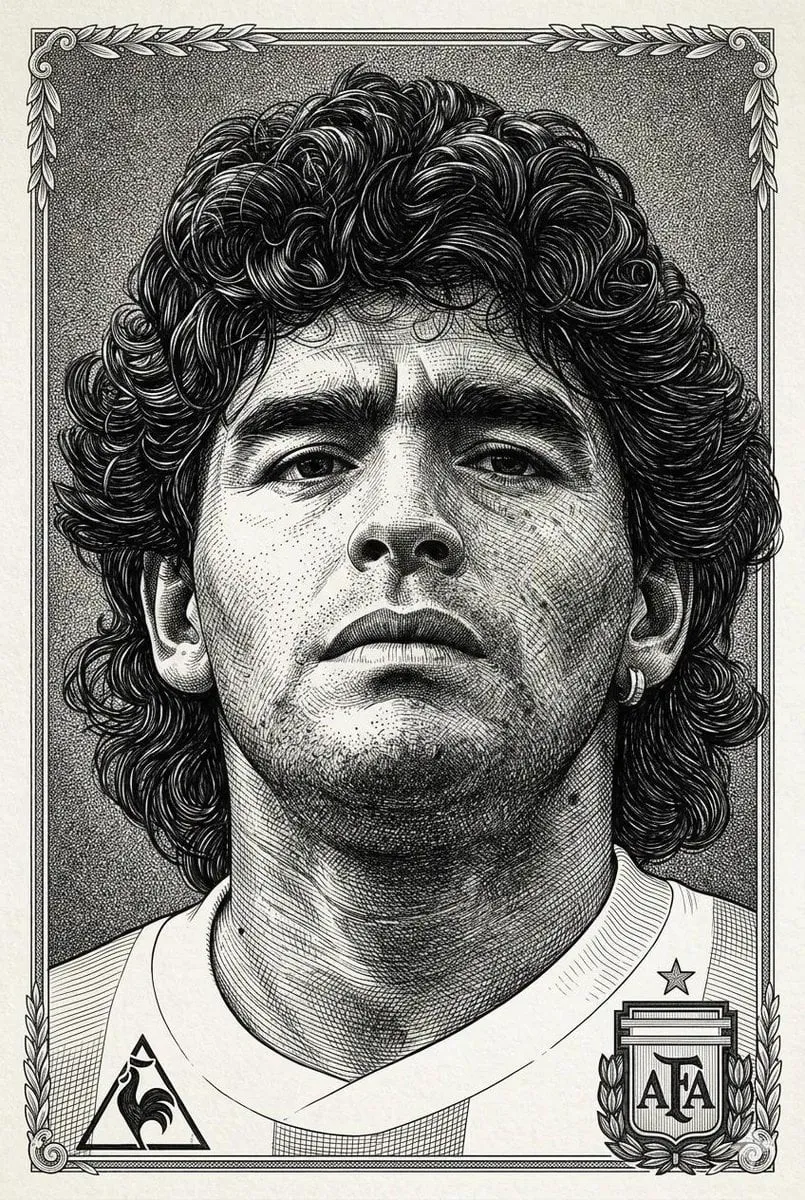
Style transfer deserves special attention. It is more than a filter: the model understands the content of your image and re-renders it in a new visual language. A photo of a building becomes a line drawing; a portrait becomes a classic painting. The key to good style transfer is matching style to subject — a corporate headshot restyled as anime may be fun internally, but it is probably not the brand asset you need.
Generating Backgrounds and Extending Images
Two of the most practical AI editing features are background replacement and outpainting.
Background replacement lets you keep the subject and change the environment. E-commerce sellers use it constantly: the same product photographed once can be placed in dozens of contexts — studio white, outdoor scene, lifestyle setting — without a reshoot. The quality depends on clean subject separation; a well-lit product on a simple background will composite far better than a cluttered one.
Outpainting extends an image beyond its original boundaries. A landscape photo becomes a panorama; a portrait becomes a wider scene. The model invents plausible content that matches the existing image's style and lighting. Outpainting is invaluable for adapting assets to different aspect ratios — a square image becomes a vertical story format or a wide banner.
Sound and Motion: From Still to Video
The line between image and video tools is blurring. Many platforms now let you take a still image and animate it: subtle camera motion, moving clouds, flowing fabric. Some image editors integrate audio generation, adding background music or sound effects to a scene.
This convergence matters strategically. An asset created as an image can become the first frame of a video, keeping visual identity consistent across formats. When planning a campaign, think in terms of assets that can be reused across still and motion: generate once, adapt everywhere.
Practical Workflows for Creators
Social Media Content
Social feeds reward volume and consistency. Build a template-driven workflow: define your visual style once, then generate variations for each post. AI editors handle the grunt work — background cleanup, consistent styling, format resizing — so you can publish daily without a design team.
Product Visuals for E-Commerce
For sellers, AI editing cuts photography costs dramatically. Shoot products once on a simple background, then use AI to generate clean cutouts, lifestyle scenes, and seasonal variants. Consistency across your catalog builds trust: buyers expect every product image to look equally professional.
Brand Campaigns
For campaigns, use AI to explore directions cheaply before committing. Generate concept images across several styles, test them with your audience, then produce the winner at full fidelity. This de-risks creative decisions: you see the options before spending production budget.
Behind the Scenes: How Platforms Manage the Load
Task Queues and Resource Optimization
Generative image editing is compute-heavy. Platforms process requests through task queues, allocating GPU resources as they become available. When a tool says "your image is processing," a queue is working. Understanding this helps you plan: batch non-urgent edits for off-peak times and expect iteration cycles rather than instant perfection.
Content Management
For teams, managing hundreds of generated assets is a real problem. Use consistent file naming, store prompts alongside outputs, and keep version history. The prompt that produced a great image is an asset in itself — losing it means losing the ability to reproduce the result.
Prompt Engineering Tips
- Start with the subject: what is in the image, what is changing.
- Add style and mood: lighting, palette, medium, atmosphere.
- Specify what to avoid: "no text," "no watermark," "no distortion."
- Iterate: adjust one element at a time and compare results.
- Keep a library of prompts that worked, organized by use case.
Common Mistakes
- Expecting perfection on the first generation. Iterate.
- Overloading prompts with contradictory requirements.
- Ignoring the source image quality. Garbage in, garbage out.
- Using one model for everything. Match the tool to the task.
- Skipping asset management. Unnamed files and lost prompts create chaos.
FAQ
Are AI-edited images usable commercially?
Yes, with caveats. Check the license of the tool you use and the rights to any input images. For products and people, make sure you have the necessary permissions.
Will AI editors replace designers?
They replace repetitive production work, not creative judgment. Designers who use AI as a multiplier become more valuable; those who ignore it face increasing competition.
How do I keep a character consistent across many images?
Use canonical reference images, consistent prompts, and consistency controls in your chosen tool. Build a small library of approved character assets.
What is the fastest way to improve my results?
Learn prompt vocabulary and iterate deliberately. Compare outputs, note what changed, and build a personal library of effective prompts.
Can I edit photos taken years ago?
Usually yes. AI tools can upscale, restore, and colorize old photos, and diffusion models can repair damage that older tools could not touch.
Batch Workflows and Scaling
AI image editing rewards batching. Instead of editing one image interactively, prepare a batch: collect all the images that need the same treatment — background cleanup, style transfer, format resizing — and run them through the same pipeline.
Batching improves consistency as well as speed. The same prompt and settings applied to twenty images produce a visually uniform set, which is exactly what a catalog, a campaign, or a social grid needs. Uniformity is often more valuable than per-image perfection.
Design your batch pipeline around templates: a prompt template with placeholders for the variable elements, a preset for the tool settings, and a fixed naming convention for outputs. Over time, your templates become a library of repeatable recipes. Onboarding a new asset — or a new team member — becomes a matter of following the recipe.
Ethics, Rights, and Authenticity
Generative editing raises real questions about rights and authenticity, and the responsible approach is practical, not preachy. Three rules cover most situations.
First, know your licenses. Every tool has terms of service, and every input image has a rights holder. For commercial work, use tools with clear commercial licenses and inputs you own or have permission to use. Second, label appropriately. When an image is materially generated or altered, transparency about the process builds trust with audiences and clients — and increasingly, regulations require it. Third, respect people. Do not generate realistic images of real individuals without consent, and do not use editing to deceive in contexts where accuracy matters — news, documentation, evidence.
None of this blocks creative work. It is the same discipline professionals already apply to photography and design, applied to a new medium.
Measuring Results and Iterating
Good AI workflows include a measurement loop. Track which prompts, models, and styles produce the outputs that actually perform — in sales, engagement, or client satisfaction — not just the ones that look nice on screen.
Keep a simple scorecard per project: input image quality, prompt, model, iterations, time spent, and the outcome metric. Patterns emerge quickly. You may find that one style consistently lifts conversion on product pages, or that a certain editing approach cuts iteration time in half without quality loss.
Iterate deliberately: change one variable at a time and compare. The tools change fast, but the habit of measuring and refining is the durable skill. Build the loop into your workflow early, and every project will make the next one faster.
AI image editors have turned editing into a creative act. The tools are powerful, the workflows are proven, and the only real barrier is practice. Start with one practical project — clean up a product photo, restyle a social post, build a consistent character set — and let the results show you what is possible.
