
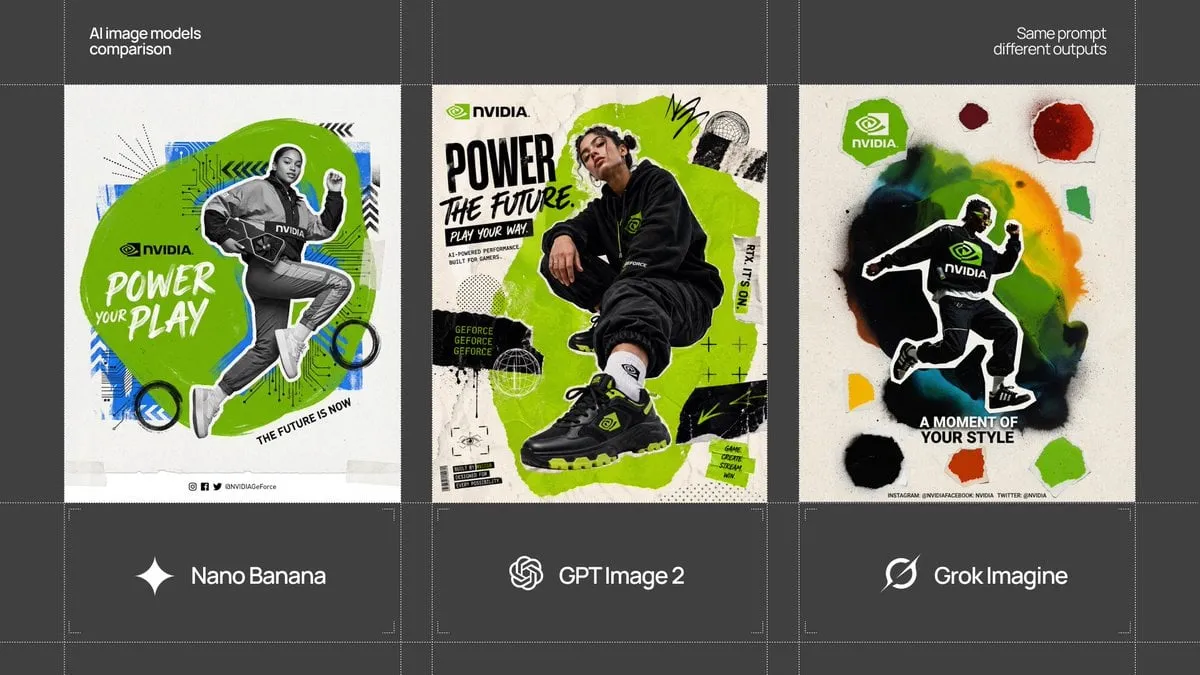
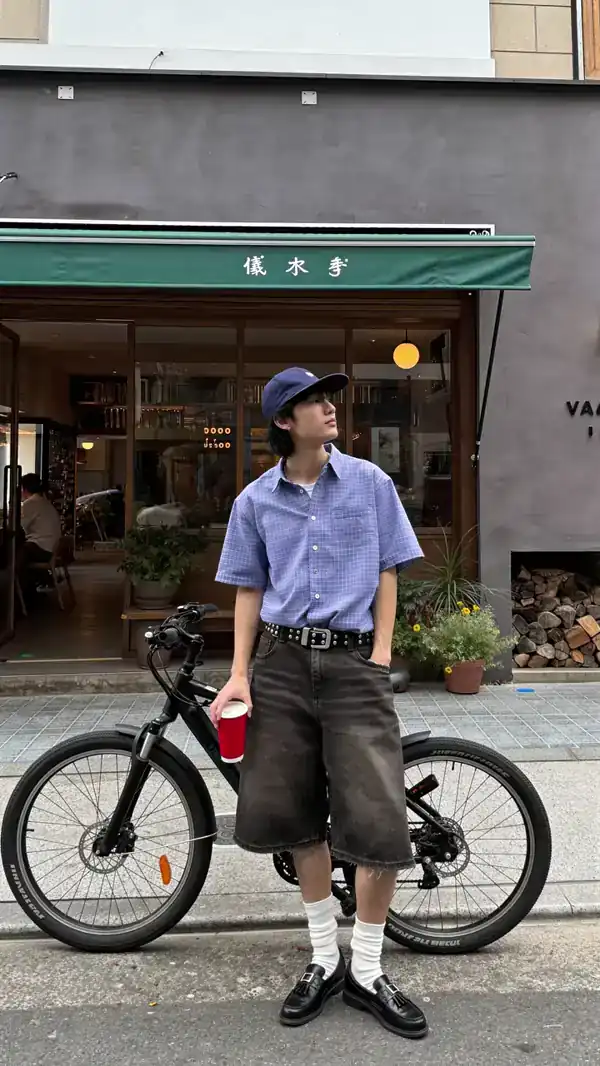
Somewhere in the last few years, AI content creation crossed a line. It stopped being a curiosity you tried once and became a production pipeline you rely on daily. The reason is not any single breakthrough. It is the sheer number of options that now exist — models that generate photorealistic video, models that understand physical motion, models that respect a character's face across dozens of shots, models that handle anime, architecture, product shots, and cinematic lighting.
The problem creators now face is not scarcity. It is selection. With so many capable engines available, the difference between an average result and a stunning result is almost always a matter of choosing the right model for the job. This guide is a practical map of that landscape: how to think about model categories, how to pick the right engine for a specific task, and how to build a repeatable workflow that turns a prompt into a finished image or video.
Why Model Choice Matters More Than You Think
Beginners assume that "AI video" is one thing, like a camera. You press a button and you get a video. The reality is closer to a professional camera bag: every lens has a personality, a strength, and a weakness, and the best photographers choose lenses deliberately.
The same logic applies to generative models. A model trained primarily on cinematic footage will produce dramatic lighting and smooth camera moves, but it may struggle with small text or precise physics. A model optimized for prompt adherence will follow your instructions closely but may lack the artistic flair of a larger model. A model fine-tuned on anime will produce beautiful anime but unconvincing humans.
Choosing the wrong model is not a neutral mistake. It costs you iterations, time, and budget, and it trains you to accept mediocre output. Choosing the right model, by contrast, is the cheapest quality upgrade available to a creator — it costs nothing extra and changes the result immediately.
The other reason selection matters is workflow speed. When you know which model to reach for, you stop experimenting and start producing. A creator with a fixed model playbook can generate a finished asset in minutes; a creator who tries random engines can burn an afternoon chasing a result that was available from the start.
The Four Families of Video Models
It helps to organize the landscape into families, because models within a family share a philosophy about what matters most.
The photorealistic family is the most visible. These are the engines behind the viral clips that look like real footage — Flux, Runway, and the Sora line. They excel at natural light, skin texture, and believable motion. If your goal is "footage that could pass for shot on a camera," this family is your home base.
The prompt-adherence family is where Asian models have made a name for themselves. Kling, Hailuo, and Vidu are known for following instructions precisely — if you say "a red umbrella in the rain at night," you get a red umbrella in the rain at night. This makes them ideal for commercial work where the client has specific requirements.
The control family focuses on consistency and technical precision. These models handle multi-image input, character reference, and keyframe control, so you can keep the same face across shots or lock the beginning and end of a movement. They are the workhorses of series production and character-driven storytelling.
The specialized family covers everything else: anime generators, physics simulators, architectural renderers, and experimental prototypes. These models sacrifice generality for depth in one domain, and they are often the difference between "good enough" and "exactly what the client asked for."
Your model playbook should draw from all four families. The goal is not to find one perfect engine, but to build a mental directory: "this task → this family → this specific model."
Premium Photorealism: When You Need to Believe It
The premium tier exists for one reason: maximum visual fidelity. When a brand needs a product shot that looks expensive, or a filmmaker needs a background plate that survives 4K scrutiny, generic models are not enough.
Flux has set the standard for image generation that crosses into photorealism, with versions tuned for different priorities — raw realism, speed, and creative interpretation. Runway's video models brought cinematic language to AI generation: camera moves, depth of field, and editorial rhythm that feel like a director was involved. The Sora line, from OpenAI, pushed the boundary of physical believability — water that flows correctly, fabric that drapes naturally, interactions that respect the laws of the world.
The practical advice for this tier is to reserve it for hero assets. Use premium models when the output is the centerpiece of the work: the main product shot, the key cinematic moment, the visual that represents the entire project. For exploratory drafts and internal comps, use faster and cheaper models, then switch to the premium engine only for the final pass. This keeps quality high without burning your budget on experiments.
Another habit worth building is prompt discipline at this tier. Premium models are sensitive to lighting, lens, and mood words. A prompt that says "cinematic, shallow depth of field, warm golden hour, 35mm lens, subtle film grain" will produce a radically different image than a bare description. Learn the vocabulary of cinematography — it is the single highest-leverage skill for photorealistic generation.
Prompt Adherence and Cultural Context: The Asian Models
The second family deserves special attention because it solves a problem Western models often ignore: doing exactly what you say. Kling, Hailuo, and Vidu have built their reputations on prompt adherence — the model actually listens.
For commercial creators, this is gold. When a client says "the logo must be visible, the product on the left, the text exactly this," a prompt-adherent model will honor those constraints far more reliably than a model optimized for artistic freedom. This dramatically reduces the iteration count and makes AI generation viable for client work with hard requirements.
These models also bring cultural fluency. Trained heavily on Asian content, they understand visual conventions — architecture, fashion, food, and aesthetics — that global models sometimes render as generic or subtly wrong. For any project targeting Asian markets, or any project that needs authentic representation, this is a significant advantage.
The trade-off is that these models can be more conservative stylistically. They produce exactly what you asked for, which means you, the creator, must supply the vision. You cannot rely on the model to surprise you with genius; you have to know what you want and say it precisely.
Consistency and Control: Keeping Faces and Worlds Stable
The hardest problem in generative video is not making one great shot. It is making ten shots that feel like the same film. Faces drift, costumes change, lighting shifts — the classic "uncanny valley" of character inconsistency.
The control family attacks this with technical features. Multi-image fusion lets you feed several reference images so the model understands the character from multiple angles. Keyframe control lets you define the start and end of a movement, with the model interpolating the middle. Some engines support character reference models that lock a face across an entire session.
The workflow implication is significant: plan for consistency before you generate. Create a character sheet — front view, side view, close-up, full body — before you start a series. Feed the same reference images into every generation. Document the lighting and style keywords you use so each shot matches.
Consistency is not only a character concern. It applies to the whole world: the color grade, the time of day, the lens choice. If shot one is golden hour and shot three is midday, the sequence will feel broken no matter how good each shot is individually. Build a style bible, even a short one, and follow it across every generation.
Building Your Personal Model Playbook
All this theory is useful only if it becomes a practical system. Here is a simple process for building your own playbook.
Start by inventorying your recurring tasks. Do you make product videos? Character animations? Landscape b-roll? Explainer clips? List the five tasks you do most often.
For each task, run a comparison test. Generate the same prompt with three different models from the relevant families, and score the results on the criteria that matter for that task: realism, adherence, consistency, speed, and cost. Do this once, carefully, and write down the winner.
Then write the playbook as a table: task, recommended model, backup model, key prompt patterns, and common pitfalls. Keep it in a document you can update. Every time you discover a better setting or a new model, update the table.
This playbook becomes your default. When a task arrives, you do not deliberate — you reach for the recommended model and the proven prompt pattern. You only experiment when the playbook fails. Over time, this converts AI generation from a creative gamble into a reliable production system.
A Production Workflow: From Prompt to Finished Video
Let us combine the pieces into one workflow you can reuse. The example is a 15-second product video for a fictional coffee brand, but the shape works for any project.
Start with the brief: what is the product, what feeling should the video evoke, what platform will it run on, what is the aspect ratio? Write this down before touching any tool.
Next, generate the hero image with a photorealistic model. Treat this image as the film's establishing shot — it defines the lighting, the mood, and the color palette. Spend the iterations here; everything downstream inherits this quality.
Then animate the hero. Use a video model from the photorealistic family, with a prompt that describes a subtle, believable motion: steam rising, a slow push-in, light shifting across the cup. Resist dramatic movements — subtlety reads as "expensive" in AI video.
If the video needs additional shots, generate them with the same reference image and the same style keywords. Check every shot against the first one for color and lighting before you assemble the edit.
Finally, bring it into your editor: trim the clips, add a voiceover and music (AI audio tools make this fast), and export at the target platform's specifications. The whole pipeline — brief to finished video — should take well under an hour once your playbook exists.
Common Mistakes and How to Avoid Them
The first mistake is using one model for everything. Even the best engine has blind spots. If you standardize on a single model, you will hit those blind spots daily. Use your playbook.
The second mistake is prompting like a search engine. Bare keywords produce generic output. Write like a cinematographer: subject, action, lighting, lens, mood. The difference is dramatic and immediate.
The third mistake is skipping the reference image. Text-only generation is the hardest mode of AI creation. A single reference image anchors the style and content, and consistency tools can then do their job. Feed the model images whenever you can.
The fourth mistake is judging output on a phone screen. AI artifacts — warped hands, flickering textures — are invisible at small sizes and obvious at full resolution. Always review the final export at full size before publishing.
The fifth mistake is ignoring the model's update cycle. The AI landscape changes monthly. A model that was mid-tier three months ago may now be the best in its class. Schedule a monthly re-test of your playbook, even a quick one, to keep your workflow current.
Frequently Asked Questions
Do I need to learn prompting deeply? Basic prompting gets you basic results. Learning lighting, camera, and composition vocabulary is the fastest way to improve output. Ten minutes of study per day will compound quickly.
Which model should a beginner start with? Start with one photorealistic model and one prompt-adherent model. Learn their personalities. Add specialized models only when a specific task demands them.
Are AI-generated images and videos safe for commercial use? It depends on the tool's terms and the jurisdiction. Check the commercial-use clause of each service, and for sensitive use cases, review the specific model's license.
How long does a typical generation take? It ranges from seconds for small images to several minutes for high-resolution video, depending on the model and its load. Plan your batch work accordingly.
Will these tools replace human creators? They replace the mechanical parts of production — the rendering, the cleanup, the repetitive edits. They amplify the creative parts — the concept, the direction, the taste. The creators who thrive will be the ones who treat AI as an instrument, not a replacement.
The Bottom Line
The era of "is this AI-generated?" is ending. The question that matters now is "which model should I use for this job?" The creators who answer that question well will produce better work, faster, and with more consistency than those who treat AI as a single black box.
Build the playbook. Learn the families. Write prompts like a cinematographer. And let the models do what they do best — turning your direction into pixels, quickly and at scale. That is the workflow that turns AI from a toy into a serious production advantage.
