
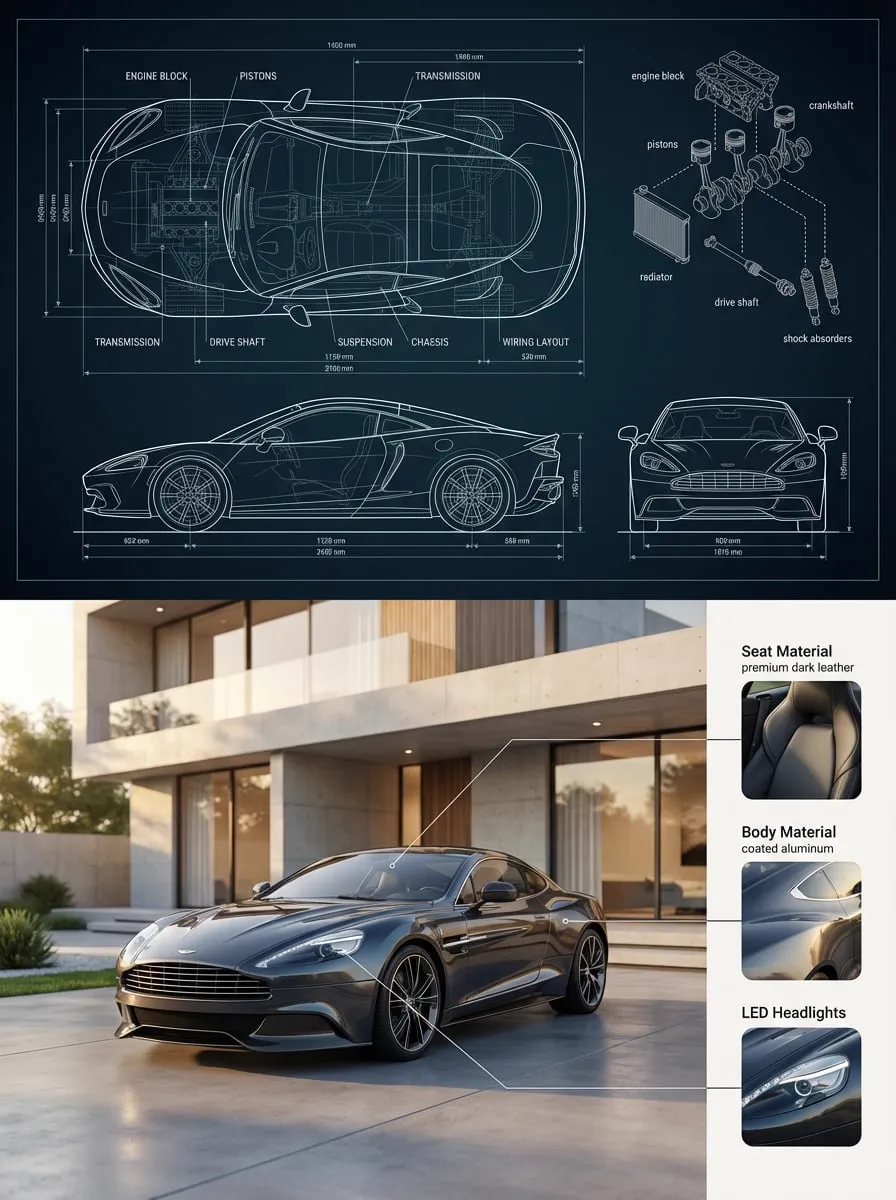

Cinema has always been a laboratory for technology. From the first projected images to computer-generated effects, every leap forward has changed what directors can put on screen and what audiences expect from a good story. The current chapter of that story is written by artificial intelligence, and it is arguably the most transformative yet.
For decades, realism on screen was a costly and labor-intensive pursuit. Every convincing explosion, every seamless transition between reality and impossible imagery, demanded specialized teams, powerful render farms, and enormous budgets. The tools that produced cinematic realism were confined to a handful of studios. That era is ending. This article explores how AI is reshaping the creation of realistic visual content, what capabilities exist today, and how creators can put them to work.
The shift from spectacle to accessible realism
The global market for AI-driven visual content has grown into a multi-billion-dollar industry, and it continues to expand rapidly. More importantly, the practical meaning of that growth has changed the way content is made, distributed, and consumed. Realistic imagery is no longer a distant dream of science fiction. It is an operational reality embedded in daily production work.
What makes this moment significant is not just the improving quality, but the broad acceptance of these tools in mainstream production. Studios of all sizes, independent filmmakers, marketing teams, and individual creators are adopting generative technology as a routine part of their workflow. Realism, which once signaled a high budget, has become accessible to anyone with a clear idea and the willingness to learn.
The meaning of realism in the age of generation
When we talk about realistic content today, we are not describing a single aesthetic. Realism spans several concerns: the accuracy of physical motion, the believability of lighting and materials, the stability of a character's identity, and the coherence of an entire scene. Each of these contributes to whether an audience accepts what they are watching as plausible.
The challenge for creators is that these aspects pull in different directions. A scene with stunning physics might lose character consistency. A beautifully lit environment might not hold together across multiple shots. The value of modern AI tools lies largely in how well they help you manage these competing requirements without sacrificing one for another.
The new generation of video models
The capabilities available today come from a diverse set of generative models, each with its own personality and strengths. Understanding this variety is the first step toward using it well.
Models that prioritize quality and control
Several leading models are prized for giving creators fine control over their output. They respond precisely to detailed instructions and produce clean, polished results. This makes them attractive for professional work where consistency and reliability matter, such as brand content, product visualization, and scenes that must match a specific vision.
The emphasis on control appeals to directors and art directors who want to steer the result closely. Instead of accepting whatever the model produces, they can iterate toward an exact outcome, refining details until the image matches their intention.
Models that lead in narrative realism
Other models excel at something slightly different: the ability to tell a story through realistic motion and coherent long sequences. They understand how characters move through space, how scenes connect, and how a moment carries emotional weight. For filmmakers working on cinematic content, these narrative strengths are often more valuable than pixel-level control.
The distinction between control and narrative realism is useful to keep in mind. A model that is excellent at generating a single beautiful frame may struggle to maintain a character across a longer sequence, while a model built for narrative coherence excels precisely in that domain.
Models focused on efficiency and cinematic direction
A third category of models emphasizes efficiency and practical cinematic control. They balance quality with speed and provide direct tools for directing a scene, such as managing camera movement and timing. These are valuable for creators who produce a high volume of work and need reliable results on a schedule.
The rise of an intelligent directing agent
Beyond individual models, one of the most interesting developments is the emergence of an intelligent directing agent: a system that coordinates the creative process in a way that resembles a human director. Instead of leaving every decision to the creator, this agent helps plan the structure of the narrative, maintain the look of the characters, and choose the right tools for each part of the story.
Scene composition and narrative guidance
A directing agent can analyze a story outline and suggest how to break it into scenes, what each scene needs to communicate, and how to guide the visual structure toward the intended emotion. For creators who feel overwhelmed by the many decisions involved in a project, this guidance provides a valuable scaffolding.
The agent does not replace the human director's vision. Rather, it handles the technical coordination and offers suggestions, leaving the creative intent in the hands of the person steering the project.
Character consistency and keyframe control
One of the hardest persistent problems in generative production is keeping a character consistent from frame to frame and scene to scene. Techniques such as multi-image fusion and keyframe control address this by anchoring a character's appearance as a stable reference. The directing agent orchestrates these techniques so that consistency is maintained automatically throughout the project.
For any project with a recurring character, this capability is transformative. It removes the anxiety that each new scene might produce a different-looking person, and it frees the director to focus on performance and story rather than on fixing identity drift.
Coordination through dependency injection
Under the hood, these capabilities are wired together through a modular architecture that connects different models. This architectural approach lets the system hand off tasks to the most appropriate tool for each job, maintaining a seamless pipeline from idea to finished sequence. For the user, the complexity of model orchestration is abstracted away, leaving a clean and coherent experience.
Building a realistic content workflow
Understanding the pieces is one thing; assembling them into a practical workflow is another. Here is a process that works across project types.
Define the vision and references
Start by establishing the look, the characters, and the emotional arc. Capture reference material for characters and settings, and articulate the direction you want. This foundation supports every subsequent decision and keeps the project coherent.
Choose the right models for the right tasks
Rather than relying on one model, select the tool best suited to each portion of your project. Use control-oriented models for scenes that need precise results, narrative models for longer sequences that must stay coherent, and efficient models for high-volume work. This deliberate selection is where much of the creative leverage lies.
Direct and refine iteratively
Use the directing agent to coordinate the pipeline, then review each result critically. Regenerate and adjust until the output matches your intention. The iterative loop of generate, review, and refine is central to producing high-quality work, and it replaces the older practice of one-shot generation.
Assemble and verify coherence
Combine the scenes, verify that characters and settings remain consistent, and check that the whole feels like a single world rather than a series of disconnected clips. This final verification is what separates professional output from a collection of beautiful fragments.
Realistic scenarios across fields
The technology serves different fields in different ways, and each highlights a distinct benefit.
Independent film and short content
For independent filmmakers, AI lowers the barrier to ambitious visuals. Scenes that would have required a VFX budget can now be produced by a small team. The directing agent helps maintain cohesion across a short film, and narrative models keep characters believable throughout.
Marketing and brand storytelling
In marketing, the priority is often consistency. A brand message, a product, or a spokesperson figure must appear identical across a campaign. Control-oriented models and consistency techniques shine here, producing unified visuals that reinforce brand identity.
Education and scalable content
For educational creators, AI enables the production of consistent, realistic instructional content at scale. Explainer sequences, demonstrative scenarios, and stylized examples can be generated efficiently, keeping a uniform look while covering a wide range of topics.
Common challenges and how to address them
Working with generative realism brings its own set of hurdles, and anticipating them saves considerable frustration.
The most common challenge is inconsistency, especially with characters or environments that fluctuate between shots. The solution is to rely on consistency systems and to define your references rigorously before generating the bulk of the content.
Another challenge is over-reliance on the first output. Generative tools propose possibilities, but the best results come from directed iteration. Treat each generation as a draft to be evaluated and refined rather than as a final answer.
A third issue is losing narrative clarity in pursuit of impressive visuals. Beautiful but disconnected shots do not make a story. Keep the narrative structure at the center of every technical decision, and let the visuals serve the story rather than overwhelm it.
Frequently asked questions
Does AI filmmaking replace directors and cinematographers?
No. AI automates technical execution and supports coordination, but the vision, the artistic judgment, and the storytelling remain human. The role of the director evolves from manually controlling every element to guiding and selecting among the possibilities presented.
How do I keep a character consistent across many scenes?
Use consistency techniques such as multi-image fusion and keyframe control, and let a directing agent orchestrate them. Define your character reference clearly at the start and verify consistency in context throughout the assembly phase.
Is realistic AI content suitable for serious productions?
Increasingly, yes. The quality has reached a level where AI-generated content is used in professional film, advertising, and educational production. The key is combining the right models with a disciplined creative workflow.
Are these tools affordable for small teams?
The cost model varies, but options exist across price points. Many creators start with free or low-cost tiers and scale up as their volume grows. Efficiency-focused models help manage costs on high-volume projects.
The future of the filmmaking craft
The arrival of accessible realism does not diminish the craft of filmmaking; it redefines it. The means of production are changing, but the ends remain the same: to tell compelling stories that move an audience. As the tools become more powerful, the premium shifts to the human elements that machines cannot replicate: vision, instinct, empathy, and the ability to make choices that serve the story.
Creators who embrace this evolution will find their reach expanded. Ideas that once required a studio-sized team can now be realized by a dedicated individual or a small collective. The limitation is no longer resources, but imagination and discipline.
A broader picture
The trend toward accessible realism is part of a larger democratization of creative production. The gap between what large studios and independent creators can achieve has narrowed dramatically, and it will continue to narrow. This benefits audiences, who gain access to a wider variety of stories and visual languages, and it benefits creators, who are freed from the constraints of budget to focus on what matters most: the quality of the idea.
The tools will keep improving, but the principles that produce great work will remain constant. A clear vision, rigorous references, coherent characters, and disciplined iteration will always be the foundation of compelling visual storytelling, regardless of the technology that helps you build it.
Conclusion
AI has transformed realistic visual content from an expensive specialization into an accessible craft. The market has grown into a major industry, and the tools have matured to the point where independent creators can produce what once required entire studios. The key is understanding the variety of models, using a directing agent to coordinate the process, and maintaining a disciplined creative workflow built on clear references and iteration.
The cinematic craft is not being replaced; it is being re-empowered. With the right approach, you can tell more ambitious stories, render them with convincing realism, and bring characters and worlds to life in ways that were previously out of reach. The tools are at hand, and the creative possibilities are only as limited as your imagination.
