
Why K-Pop Is the Hardest Test for AI Video
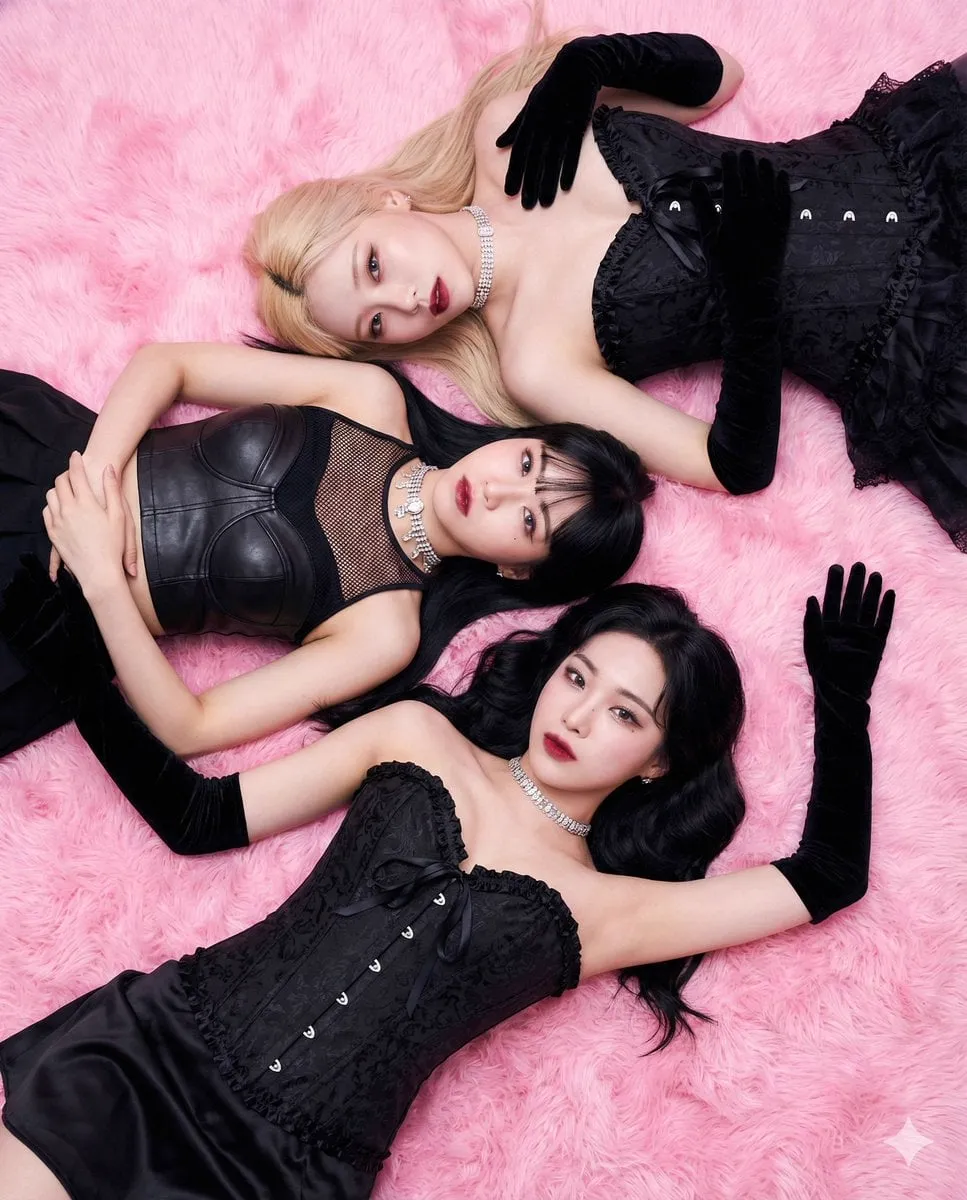
K-pop music videos sit at the extreme end of visual production. They demand perfect styling, synchronized group choreography, dramatic lighting, fast cuts, and a hyper-polished aesthetic where every frame looks intentional. That combination makes K-pop the hardest realistic test for AI video generation, and also the most rewarding. If you can make a convincing K-pop-style clip, you can make almost anything. This tutorial walks through a complete production workflow: defining the visual identity, choosing the right model, writing prompts in the K-pop visual language, directing the camera, syncing motion and lip-sync to a track, and fixing the failures that show up over and over again.
Step 1: Define the Visual Identity Before You Prompt
Every K-pop video starts with a concept. The concept determines the color palette, the styling, the lighting, and the mood. AI generation amplifies whatever direction you give it, so a vague concept produces a generic result that looks like every other AI music video. Before opening any generation tool, write down four things.
The member or character concept: name, age range, hair color and style, outfit, and signature expression. The more specific, the better. "Female idol with long silver hair, dark smokey eye makeup, black leather jacket over a white shirt" generates a completely different result from "a girl." Keep this description in a separate file and reuse it verbatim in every prompt, because even small wording changes cause the character to drift between shots.
The set and lighting concept: indoor stage with neon panels, rainy rooftop at night, pastel bedroom, or abandoned warehouse. Lighting is the strongest mood signal in K-pop: pink and purple washes for dreamy scenes, harsh white and cyan for intense dance breaks, warm golden light for emotional moments.
The color grade: pick two or three dominant colors and name them in the prompt. K-pop videos are famous for tight palettes, and naming the palette tells the model to unify the frames.
The motion energy: how much movement, and what kind. A ballad is mostly close-ups and slow camera moves. A dance track is wide shots, fast cuts, and big choreography. Decide this before you generate so every shot supports the same energy.
Reference frames and character locks
The most reliable way to keep a character consistent across scenes is to use reference images. Most modern video models accept one or more reference frames, and multi-reference support has become a standard feature in the best tools. Generate or source a clean front-facing portrait of the character first, then use it as the anchor for every subsequent shot. Treat the reference image as the canonical identity. If the model supports multiple references, include a full-body shot as well, so the outfit and proportions are locked. When you switch scenes, keep the same references and only change the environment and action.
Step 2: Choose Models That Respect Style and Motion
Not all video models handle the K-pop aesthetic equally. Models with strong cinematic control, such as PixVerse's V4.5 line, are well suited because they expose detailed lens and camera parameters and preserve stylized aesthetics well. Models that excel at realistic physics, such as OpenAI Sora or the latest Runway generations, are better for scenes that need convincing natural motion, like hair blowing in the wind or fabric moving during a dance. Kling models offer a good balance for quick iteration.
The practical approach is to test your canonical character description across two or three models with the same prompt, then compare three things: how well the character's face stays recognizable, how well the outfit and styling hold up, and how natural the motion looks. Pick the model that scores best on all three for the majority of your shots, and only switch models when a specific scene demands a specific strength. If you do switch, keep the reference images identical so the model has the best possible chance of preserving identity.
Style-preserving models vs motion-first models
A style-preserving model keeps the glossy, exaggerated K-pop look: perfect skin, dramatic makeup, saturated colors. A motion-first model produces more realistic movement but may flatten the styling into something more ordinary. For most K-pop work, you want a style-preserving model as the primary tool and a motion-first model as a secondary tool for complex choreography or physics-heavy shots. Decide which scenes need which, and write that decision into your shot list before rendering.
Step 3: Write Prompts in the K-Pop Visual Language
The prompt for a K-pop scene is a layered description, not a sentence. Put the character first, then the styling details, then the environment and lighting, then the action, then the camera. Here is a working example for a dance break shot:
"Female idol, long silver hair, dark smokey eye makeup, black leather jacket over white shirt, confident expression. Neon pink and purple stage lighting, haze in the air. She performs a sharp, powerful dance move, hair whipping across her face. Camera: medium shot, slight low angle, quick push-in on the beat."
Every element earns its place. The character description locks identity. The lighting names the palette. The action names a single, concrete movement. The camera names the framing and the motion. Compare that with "a girl dancing on a stage," and you can see why one produces a usable clip and the other produces a lottery ticket.
Lighting, makeup, costume and sets
Spell out the details that define the K-pop look. Lighting: neon wash, backlight rim, spotlight cone, softbox glow, harsh flash. Makeup: smokey eye, glossy lip, glitter, natural look. Costume: leather, denim, sequins, school uniform, oversized hoodie. Sets: stage, rooftop, hallway with mirrors, street at night, pastel bedroom. The model cannot read your mind, and it will default to generic choices if you do not name them. When in doubt, write one more concrete detail instead of one more adjective.
Choreography-specific prompts
Group choreography is the hardest thing to generate, because the model must track multiple bodies doing synchronized moves without merging them or drifting into mush. Break the choreography into small chunks. Generate one move per clip instead of a full eight-count sequence. Keep the group small: three to five dancers reads better than ten. Name the formation ("diagonal line," "circle," "two rows") and the signature move ("a synchronized arm wave," "a leg kick on the downbeat"). If a group shot fails repeatedly, fall back to a solo shot of the lead dancer with the group blurred in the background, which preserves the energy without the synchronization problem.
Step 4: Work the Camera Like a Music Video Director
K-pop camera language is aggressive and rhythmic. The camera moves on the beat, cuts on the beat, and changes angle constantly. Translate that into your prompts.
Use a slow push-in for emotional close-ups and a fast push-in for dance hits. Use tracking shots for the lead dancer moving through a set. Use low angles to make performers look powerful, high angles for the "doll" aesthetic, and overhead shots for formation reveals. Name the shot size explicitly: close-up for faces, medium for dance moves, wide for the full group, establishing for the set. If you want a whip pan or a quick zoom, say so.
The rhythm of cuts matters as much as the angles. A music video alternates between tight and wide, static and moving, bright and dark. When you build the shot list, write the camera for each shot and check that no two consecutive shots are the same size from the same angle. That alternation is what makes AI footage feel edited instead of generated.
Step 5: Sync Movement and Lip-Sync to the Track
Sound is where most AI music video projects fall apart. The video looks right but the motion has no relationship to the beat, or the singer's mouth moves independently of the lyrics.
Start with the audio. Decide which section of the track your clip covers, and match the clip duration to the musical phrase. A four-count dance move needs a four-second clip; a chorus hit needs a clip that lands on the downbeat. Write the beat structure into your planning document so every prompt includes a duration that fits the music.
For singing shots, use the lyric line as part of the prompt: describe the emotion of the line ("she sings the chorus with a defiant expression") and let the model approximate the mouth movement. Tools that support audio conditioning, where you supply the actual vocal track and the model tries to match lip movement, are worth using for close-up singing scenes. For everything else, cut away from the mouth on the hard beats: a close-up of the eyes, a hand gesture, or a wide shot of the group. Cuts hide lip-sync imperfections better than any model fix.
Beat-matching without editing software
If you do not want to hand-place every cut, generate the clip, import it into any editing tool with a beat grid, and cut the existing footage to the track. You do not need to regenerate anything. A clip of a dancer moving through a sequence can be cut into three or four shorter shots that land on the beat, and the result looks far more intentional than the original single take.
Step 6: Fix the Common K-Pop Generation Failures
Every K-pop AI project hits the same failures. Here is what to do about each one.
Face drift between shots: the character looks different in every clip. Fix by using the same reference images everywhere, reusing the exact same character description, and rendering alternate takes of important shots so you can pick the best match.
Mushy group choreography: dancers merge or limbs multiply. Fix by reducing the group size, splitting the move into smaller chunks, and switching to a model with stronger motion handling for those shots.
Over-the-top makeup mutation: the face becomes uncanny or the makeup bleeds. Fix by simplifying the makeup description, or by using a closer reference image that shows the exact look.
Hair physics failures: hair moves like liquid or freezes. Fix by using a motion-first model for those shots, or by framing so the hair is not the center of attention.
Generic output: the clip looks like default AI footage, not K-pop. Fix by adding the palette, the set details, and the camera language. Specificity is the entire game.
Putting It Together: A Sample Production Run
Here is a complete mini-workflow for a thirty-second dance-focused clip.
Write the concept: one member, silver hair and leather styling, neon pink and purple stage, high-energy dance track. Create the canonical character description and a reference portrait. Break the thirty seconds into six shots of about five seconds each: a close-up intro, a wide establishing shot of the stage, a medium dance shot, a fast push-in on a signature move, a low-angle tracking shot, and a close-up outro. Assign a model: style-preserving for the intro, outro, and wide shots; motion-first for the dance and tracking shots. Write each prompt with the shared character block plus the shot-specific action, environment, and camera. Render all six, review against the shot list, re-render the two weakest. Import into an editor, cut to the beat grid, add the track, and export.
The whole run takes an afternoon, and the result is a coherent, styled music-video clip rather than six unrelated generations.
FAQ
Can AI really generate group choreography?
Yes, but in small chunks. Generate one synchronized move per clip, keep groups to three to five dancers, and use motion-first models for the hardest shots.
Which model should I use for K-pop?
Start with a style-preserving model for the look and test one motion-first model for choreography. Match the scene to the model instead of committing to one tool.
How do I keep the same idol across all clips?
Lock the identity with reference images and a verbatim character description. Never paraphrase the character between prompts.
Is lip-sync worth trying?
For close-up singing shots, yes, especially with audio-conditioned tools. For everything else, cut away from the mouth on the beat and let editing do the work.
How long should each generation be?
Match the clip to the musical phrase, usually two to six seconds. Short clips are easier to control and easier to cut to the beat.
What is the one habit that improves results fastest?
Writing the character block once and reusing it unchanged in every prompt. Consistency flows from identical input.
