
Video production used to be a walled garden. You needed a camera crew, a studio, a license for every asset, and a pipeline of specialized software. Generative AI tore down most of that wall, and the newest layer of the industry is the model marketplace: a place where models are not just tools you use, but products you can buy, sell, and build a business around.
This guide explains what an AI model marketplace actually is, how to evaluate models for your projects, how the training and publishing process works for creators, and where the real money is for people who want to earn from video tools rather than just use them.
What an AI Model Marketplace Is
Think of a model marketplace as an app store for generative AI. Instead of downloading software, you access trained models over the platform: text-to-video, image-to-video, image generation, voice synthesis, music generation, and specialized variants of each. The marketplace handles the infrastructure, the billing, and often the discovery, while the models themselves come from a mix of big labs and independent creators.
The most powerful feature of a marketplace is that it decouples the model from the hardware. You do not need to know how to deploy a diffusion model or manage a GPU cluster. You pick a model, describe what you want, and the platform runs the heavy computation for you. This is what makes advanced video generation accessible to a freelance editor or a small agency that could never build the infrastructure themselves.
For creators, the marketplace is also a distribution channel. If you train a model, you can publish it to an audience that is already paying for video generation. That is a fundamentally different situation from the early days of AI, where a trained model was a private asset with no obvious route to market.
How the Marketplace Model Changes Video Work
The biggest change is experimentation. When models are cheap to access and the marketplace carries dozens of families, you can test multiple approaches on the same project. Try a photorealistic model for the product shot, a stylized model for the transition sequence, and a fast model for the draft cut. The cost of trying is low, and the learning compounds.
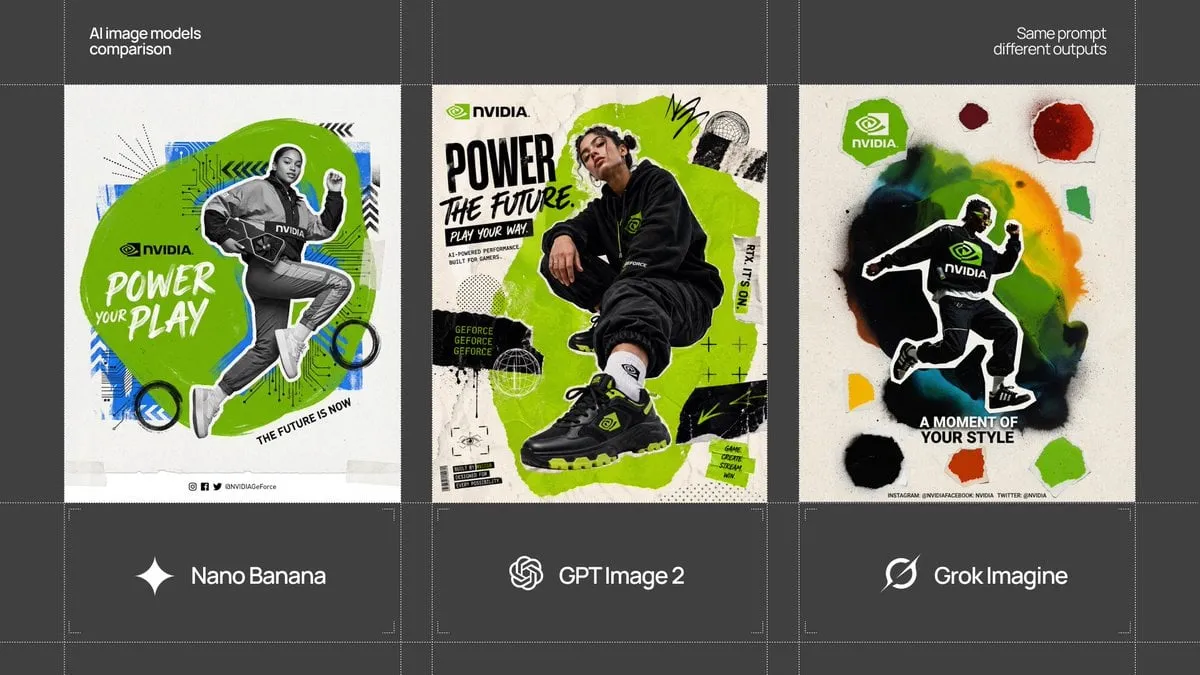
The second change is specialization. Instead of one universal tool, you pick the model with the right bias for the job. Some models are known for prompt adherence, others for motion quality, others for character consistency, others for speed. A marketplace rewards people who learn these differences, because the same prompt on two models produces two different videos.
The third change is the supply side. Because anyone can publish a model, the marketplace becomes a living catalog of the community's best ideas. A creator who notices a recurring need, say, a reliable cartoon-style converter for a specific market, can train a model that fills that gap. That is the beginning of a product.
Choosing the Right Model for Your Project
Model selection is a skill, and it starts with defining your constraints. Answer four questions before you open any catalog.
What is the output used for? A draft for internal review has different requirements than a client deliverable. For drafts, speed and cost matter most. For deliverables, quality and consistency matter most.
What is the dominant visual need? Realism, style, motion, or control. A cinematic brand film needs realism and control. A social media series might need a distinctive style and fast turnaround. Match the model family to the need, not to its marketing.
What is your consistency requirement? Single clips tolerate drift; multi-shot narratives do not. If your project has recurring characters or locations, prioritize models with strong reference and consistency support.
What is your budget? Models are priced by usage, and the premium families cost more per generation. Plan your shot list before you start, so you can allocate budget to the scenes that matter and use cheaper models for the rest.
Once you have answers, run a controlled test: the same prompt on three candidate models, compared side by side. Keep a simple scorecard with the criteria that matter to your project. Over time, your scorecard becomes a personal knowledge base that makes every future selection faster and better.
Training and Publishing Your Own Model
The creator side of the marketplace is where the real opportunity lives. Training a model for publication follows a clear sequence.
Define the product. What exactly will your model do, and for whom? The best models answer a specific need: "turn product photos into animated ads," "generate a consistent anime mascot," "produce lo-fi background music for vlogs." A focused model beats a generic one every time.
Build the dataset. Collect examples that represent the target output. The dataset is the model's teacher, so quality and consistency matter more than volume. If your model is about a style, every example should show that style clearly. If it is about a character, every example should show the same character.
Train and iterate. Run a small training job, generate test outputs, compare with your references, and refine. The gap between an okay model and a good one is almost always iteration time, not raw compute. Be patient; this is where the craft lives.
Package it well. Write a clear description, show example outputs, list what the model is good at and where it struggles. Buyers decide in seconds, so your first impression should be excellent examples, not jargon.
Set the terms and price. Choose between usage-based, access-based, or private licensing, and set a price that reflects value rather than cost. Remember that users pay for the result they get, not for how hard it was to train.
Monetization Patterns That Actually Work
The straightforward pattern is selling access to your model on the marketplace. It works, but the real money comes from layering value on top.
Private commissions are the highest-margin pattern. Brands and studios need custom models for their specific assets: their product line, their mascot, their voice. They will pay well for a private model that their team can use without licensing worries. One commission can equal months of marketplace sales.
Combination packages are the second pattern. A character model alone is useful; a character model plus matching voice, plus a style guide, is a complete solution. Find complementary creators and bundle. The combined offer is worth more than the sum of its parts.
Education is the third pattern. As marketplaces grow, so does demand for people who can navigate them. Courses, templates, prompt packs, and consulting all benefit from the credibility of having published models yourself.
The through-line is ownership. Every pattern depends on models you trained and assets you control. The marketplace is the storefront, but the asset is yours, which means you are not starting from zero every time the platform changes.
Integrating Marketplace Tools Into a Professional Workflow
Marketplace tools are most valuable when they fit into a repeatable process rather than a one-off experiment. Here is a workflow that scales.
Plan first. Write a shot list with the model and budget for each shot. This prevents the two most common failures: running out of budget mid-project, and mixing incompatible styles across scenes.
Generate in batches. Group shots with similar requirements and generate them together, so you can compare variations and keep the style consistent.
Review against the brief. Do not judge shots in isolation. Place them in sequence, check the style anchor, and verify that each shot serves the story.
Automate the routine. For recurring formats, save your best prompts, reference sets, and settings as templates. The next project should start from your templates, not from a blank prompt box.
Keep a portfolio of what works. Every successful project adds evidence to your portfolio, which feeds both your client work and your model sales. The two reinforce each other.
Common Mistakes to Avoid
Marketplaces reward deliberate work and punish sloppy habits. These are the mistakes that cost people the most.
The first mistake is model hopping. Jumping between models with every new release means you never learn any tool deeply. Pick a shortlist, test them properly, and only change when a model genuinely outperforms your current choice on your actual projects.
The second mistake is ignoring the brief. A beautiful shot that does not serve the story is a failed shot. Every generation should be measured against the project brief, not against how impressive it looks in isolation.
The third mistake is mixing styles by accident. Because marketplaces make it easy to switch models, projects drift visually when different shots come from different stylistic biases. Lock the style anchor for the whole project and resist the temptation to experiment mid-production.
The fourth mistake is treating generation as the deliverable. The client is not buying clips; they are buying a finished piece. Budget time for selection, editing, and polish. The best model in the world cannot save a project that stops at raw output.
The fifth mistake is neglecting the business side. The creators who earn from marketplaces track their costs, maintain a portfolio, and nurture client relationships. Treat it like a business from day one, and it will behave like one.
FAQ
Do I need a technical background to use a model marketplace?
No. The marketplace abstracts the infrastructure. You need creative judgment and prompt discipline, not engineering skills.
How much does it cost to try different models?
Most platforms charge per generation, and costs vary by model. Testing is affordable if you are deliberate: one prompt, three models, compare. Avoid aimless generation, which burns budget without teaching you anything.
Can I really make money by publishing models?
Yes, but like any business, it rewards quality and consistency. Start with one focused model, build a reputation, and expand. Marketplace income is rarely instant, but it compounds.
What stops someone from copying my trained model?
Hosting on the platform makes casual copying difficult, and licensing terms protect you. For high-value work, private contracts with clients provide the strongest protection.
Are models on marketplaces safe for commercial client work?
Most marketplaces permit commercial use, but check the specific model's license before delivering client work. When in doubt, use a model with explicit commercial rights.
How do I keep my skills current when models change constantly?
Build systems instead of memorizing prompts. Save templates, reference sets, and style anchors that survive model changes. The models will keep evolving, but your workflow, taste, and client relationships are the durable assets.
Should I publish every model I train?
No. Publish only models that meet a quality bar and fill a real need. A weak model damages your reputation faster than no model. Keep private experiments private, and publish when you would be proud to put your name on the result.
Remember that a marketplace is a community before it is a store. The creators who succeed are the ones who answer questions, share honest comparisons, and help newcomers choose well. That generosity comes back as trust, and trust is what converts a first sale into a repeat client.
The same principle applies to your own learning: study what sells, but also study why it sells. Packaging, examples, and positioning often matter more than the underlying training. A well-described model with excellent examples will outsell a technically superior one that is hard to evaluate. Treat every listing in the catalog as a case study in communication, and your own listings will improve with each project you ship.
Start this week, not next month. The market is young, the bar is still low, and every month of practice puts you ahead of the crowd that is still deciding whether to begin.
Conclusion
AI model marketplaces are the distribution layer of the new video economy. They make advanced generation accessible, they reward experimentation, and they give creators a way to turn skills into assets.
The practical path is clear: learn to select models well, train one focused model, publish it, and build a reputation through quality and responsiveness. Every step compounds. The creators who treat marketplaces as a craft rather than a lottery will be the ones with durable income when the hype settles.
