
Photorealism used to be the most expensive thing a brand could buy. A single hero product shot meant a studio, a photographer, retouchers, and a week of production. In 2025, the gap between AI-generated images and photographed reality has become nearly invisible, and that changes the economics of marketing and entertainment at the same time. This guide explains how next-generation photorealistic image generation works, what the current models can and cannot do, and how to build a production workflow that actually uses it well.
Why Photorealism in AI Images Matters Now
The market for generative visual content is growing at a dramatic pace, driven by demand for personalized campaigns and fast production cycles. Brands no longer have to choose between speed and quality. Photorealistic AI generation lets a small team produce what used to require a full agency: campaign visuals, product shots in any environment, concept art, and even entire lookbooks. In entertainment, it compresses preproduction from months to days. Concept artists, storyboard artists, and art directors can explore dozens of directions in a morning instead of a week.
The real shift is not the technology itself, it is who gets to use it. Photorealism is no longer gated by budget. That is the strategic change every marketer and producer needs to understand.
The Technology Behind the Illusion
Modern photorealistic generation is powered by diffusion models, sometimes combined with transformer architectures for stronger narrative and spatial coherence. Diffusion models learn to reverse the process of adding noise to images: start from pure static and gradually denoise toward a picture that matches your description. The result is a system that can render skin texture, fabric weave, reflections, and subtle lighting falloff with startling accuracy.
The newest models go further with temporal coherence for video, so the same realism extends into motion. They also understand prompts better, which means you can describe not just a subject but a lighting setup, a lens, a mood, and a composition, and the model will honor most of it.
Efficiency is the hidden engineering story. Rendering photorealism is GPU-intensive, so serious platforms run task queues that allocate compute fairly across users. That infrastructure is why you can type a prompt and get a 4K image in seconds; the queue, not the model, is what makes the experience feel instant. Understanding this helps you plan production: batch your heavy jobs, run them in off-peak hours, and treat the queue as a scheduling resource rather than a mystery.
The Model Landscape: Premium, Specialist, and Efficient
Model choice is the single biggest quality lever. The landscape divides into three tiers, and each has a job.
Premium models such as the top Flux versions, Runway's latest generation, and the leading video-first models represent the quality ceiling. They handle complex lighting, physics, and detail that cheaper models fumble. Use them for hero assets: the product shot in the campaign, the key art, the shot that carries the emotional weight of the piece. Their cost is justified because they produce a high hit rate on the first or second attempt.
Specialist models trade raw ceiling for consistency and cultural nuance. Some are trained for character consistency, keeping the same face and costume across many frames. Others are tuned for specific aesthetics, anime, watercolor, architectural visualization, or regional beauty standards. If your project needs a recurring character or a culturally specific look, a specialist model will outperform a general premium one, even if its standalone realism scores slightly lower.
Efficient models deliver surprising quality at a fraction of the cost. The current crop of mid-range generators produces genuinely useful images for social content, internal mockups, and iteration. Their weaknesses show up in complex scenes, hands, text rendering, and fine physics, so keep them for speed and volume, not for the final hero asset.
Practical Applications in Marketing
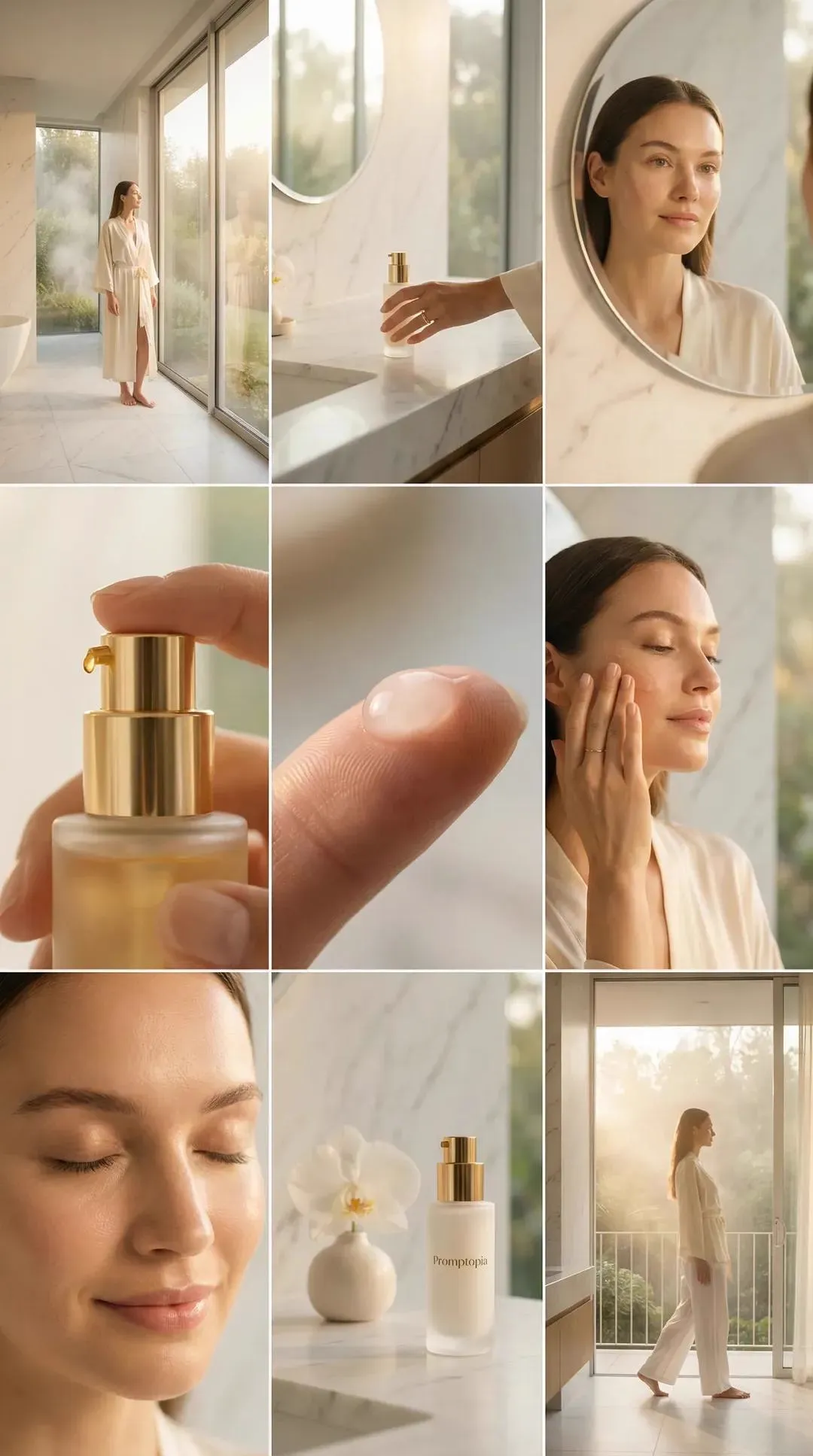
Marketing is where photorealistic AI generation pays back fastest. Product photography is the obvious win: generate the same product in any environment, any season, any angle, without a shoot. Need a sunscreen bottle on a tropical beach, a snowy mountain, and a city rooftop? One reference image of the product plus three prompts, and the whole set is ready in minutes.
Campaign personalization is the bigger opportunity. Instead of one static creative, generate regional variants: different backgrounds, different models, different copy contexts, all consistent with the brand's visual identity. Dynamic creative testing becomes cheap, so you can test ten variations and let the data pick the winner.
E-commerce gets a workflow upgrade too. Consistent product images across a catalog, lifestyle shots for social, and seasonal refreshes all become on-demand tasks. The discipline that matters is consistency: lock the product reference, lock the lighting language, and lock the color palette, then vary only what you intend to vary.
Practical Applications in Entertainment
Entertainment production uses photorealistic generation across the entire pipeline. Preproduction benefits first: concept art that used to take days now takes hours, and directors can compare visual directions side by side before committing. Storyboards become animated animatics faster, which helps pitch and planning. Set designers and costume designers generate reference boards that align the whole crew before a single physical asset is built.
In visual effects, AI generation accelerates previz and shot planning. Background plates, environment extensions, and texture references can be generated to match a locked camera angle, saving hours of on-set decision-making. Independent filmmakers and game studios get the same leverage that used to require a large VFX house.
The entertainment-specific challenge is consistency at scale. A feature film has one character appearing in a hundred shots. Build a reference kit early: multiple angles, multiple lighting conditions, the full costume. Use multi-reference generation to fuse those into a stable identity, and require every department to test against the same kit. Consistency is a workflow discipline, not a model feature.
Building the Production Workflow
A reliable photorealistic workflow has five stages. Brief: write the creative intent, mood, audience, and deliverables before touching a tool. Reference: collect and lock references for subject, style, lighting, and color. Generate: run prompt batches, organized by shot or asset type, with consistent vocabulary. Curate: review the batch quickly, mark keepers, regenerate the weak ones with targeted prompt fixes. Post: retouch, color, composite, and export in the editor. Most failures trace back to skipping the brief or the reference stage, so treat those as non-negotiable.
Writing Prompts That Produce Photorealism
Photorealism lives in the details of the prompt. Specify the camera: focal length, aperture, and lens character, "85mm portrait lens, f/1.8," produce a different image than "24mm wide angle." Specify the light: quality, direction, color, "soft window light from the left with warm tones." Specify the surface details: skin texture, fabric weave, reflections, imperfections. Photorealism dies when everything is too perfect; real photos have noise, blemishes, and asymmetry. Add "natural skin texture," "slight film grain," or "imperfect, candid" to push past the uncanny clean look.
Negative prompting helps: tell the model what to avoid, plastic skin, oversharpening, warped geometry, extra fingers. Every model handles negative prompts differently, so test on your own assets.
Ethics, Rights, and Disclosure
Photorealism brings responsibilities. If your output looks like a real person, you need consent for identifiable individuals, and deepfake-style uses are both unethical and increasingly illegal. Train your team on disclosure: many platforms and markets now require labels on AI-generated content, and hiding the use of AI destroys trust when discovered. Use your own product references and licensed assets rather than copying existing photographs. A photorealistic workflow is sustainable only if it is built on consent and honesty.
Measuring What Matters
Track more than image count. Measure hit rate, the percentage of generations that make it into the final asset, because it drives real cost. Measure iteration speed, how long from brief to approved asset. Measure consistency failure rate, how often your character or product drifts. And measure rework, how often a generated asset fails in the next stage. These numbers tell you whether your workflow is healthy better than any aesthetic review.
Industry Playbooks: Retail, Fashion, Real Estate, Games
Photorealistic generation is not one workflow; it is several, and the industry changes the playbook. Retail and e-commerce use it for catalog automation: generate consistent product shots across colors, angles, and seasonal backgrounds, then regenerate the set whenever the catalog changes. The discipline is product reference locking, because a catalog that shows three different versions of the same bag destroys trust.
Fashion uses it for model-less lookbooks and campaign testing. Teams generate garments on diverse, licensed model references, test silhouettes and colorways before production, and reserve physical shoots for the final hero assets. The ethical line matters here: only use model references you have the right to use, and disclose AI generation where required.
Real estate uses it for virtual staging and renovation previews. An empty room becomes a furnished living room; a dated kitchen becomes a modern one, all from the same architectural photo. The output must respect the actual dimensions and lighting of the space, so verification against the source photo is part of the workflow, not an afterthought.
Games and entertainment use it for concept art, marketing key art, and previsualization. Art directors generate dozens of directions in a morning, lock a style with reference images, and brief the production artists from a much stronger foundation. The payoff is speed in the exploration phase and alignment across the team.
Troubleshooting Common Generation Failures
Photorealism fails in predictable ways, and each failure has a known fix. Hands and fingers warp: simplify the pose, crop tighter, or specify the hand position explicitly; most models render a visible, relaxed hand better than a hidden, contorted one. Text renders as gibberish: keep text out of the image or specify it very clearly and expect to fix it in post. Faces look plastic: add "natural skin texture," "pores," and "slight imperfections," and reduce the gloss words that trigger the CGI look. The image is too perfect to believe: real photos have noise, motion blur, and asymmetric details, so add realism cues instead of purity cues. Lighting contradicts the scene: state the light source and its direction, and keep the palette consistent with the environment.
The fastest debugging move is to isolate variables. Change one element of the prompt at a time, keep everything else identical, and compare outputs. If a scene fails repeatedly, simplify it: shorter description, fewer subjects, one strong light. Many failures are the model trying to do too much, and the fix is a narrower ask.
Building a Style Guide for Your Team
Photorealistic workflows fail inside teams when every person prompts differently. The fix is a style guide: a living document that defines the brand's visual rules for AI generation. It covers the reference kit for products and characters, the approved palette, the lighting language, the lens vocabulary, and the do-not-do list of common failures. Every prompt written for the brand should pass the style guide before generation.
The guide should also encode judgment, not just keywords. Include examples: three approved images that represent the brand look, three rejected ones with explanations of why they fail. New team members can then match the examples instead of guessing at the intent. Review the guide monthly, because as models improve, the possibilities expand and the rules should evolve. A style guide turns a fragile personal skill into a repeatable team capability, and it is the difference between a brand that looks accidental and one that looks directed.
Frequently Asked Questions
Is AI-generated photorealism good enough for professional campaigns? Yes, for a growing list of use cases, especially when combined with human art direction and retouching. The limit is usually consistency and control, not raw realism.
Will AI generation replace photographers and artists? It replaces specific tasks, not the craft. Photographers and artists who direct, concept, and art-direct AI workflows are more valuable, not less.
How do I keep a product consistent across many generated images? Lock a product reference set and reuse it in every prompt. Multi-reference generation helps, and a consistent lighting and palette language finishes the job.
What about copyright on AI-generated images? Rules vary by jurisdiction and platform. Use licensed inputs, document your workflow, and check the terms of the tools you use.
How much does photorealism cost in practice? Less than traditional production for most asset types, but the cost is concentrated in premium models and iteration. Budget for the hero assets and use efficient models for volume.
Final Word
Next-generation photorealism is a production tool, not a magic wand. The teams that win with it treat it as a craft: clear briefs, locked references, disciplined prompts, and honest review. Build that workflow, and photorealistic AI generation becomes one of the highest-leverage tools in your marketing or entertainment stack.
