
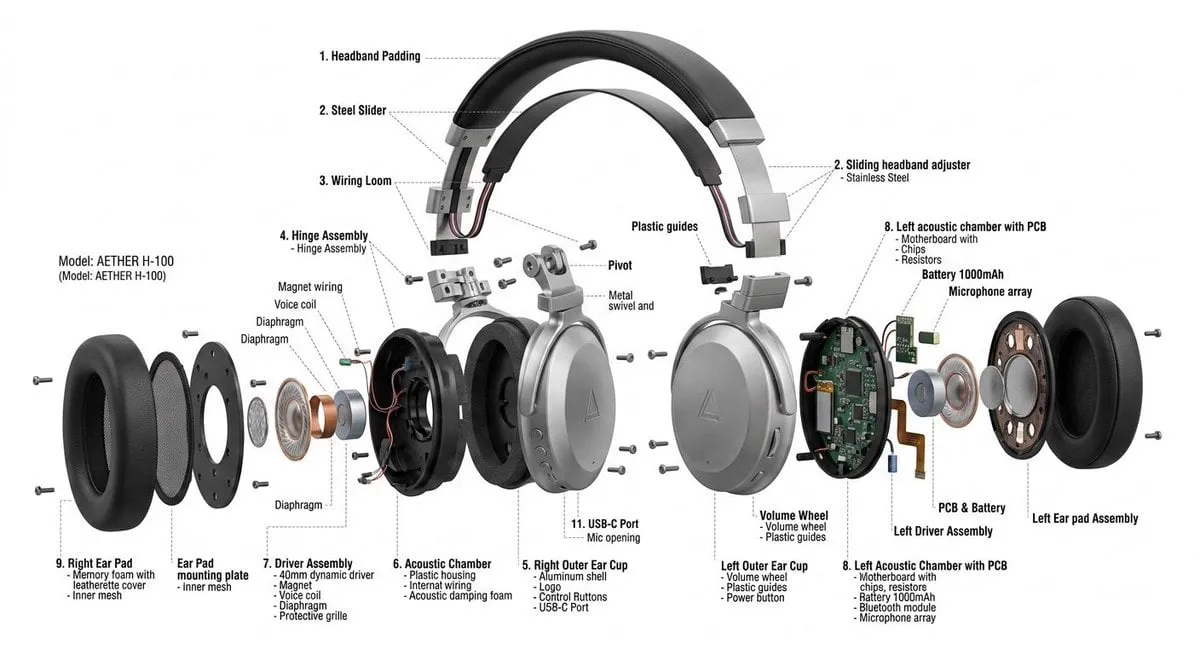
Photorealistic rendering used to be a slow, expensive discipline reserved for studios with render farms and specialized artists. In the last few years, that boundary has shifted. AI video models can now generate moving images that are difficult to distinguish from live footage, and they do it in minutes instead of weeks. The result is a flood of new creative possibilities — and a new set of practical challenges for anyone producing video professionally.
This guide explains how photorealistic AI rendering actually works, what separates convincing output from uncanny output, and how creators can build a workflow that produces consistent, high-quality renders at scale.
Why photorealistic rendering matters now
The demand for realistic AI video has exploded across film, advertising, and digital art. Commercial productions that once required expensive location shoots or CGI pipelines can now prototype entire scenes with a text prompt. Market reports consistently show the realistic AI video segment growing faster than the broader generative media market, driven by advertising budgets, game cinematics, and independent filmmakers.
But demand alone does not explain the shift. The real driver is technical maturity. Modern video models understand prompts with far more nuance, maintain temporal coherence across longer sequences, and render detail — skin texture, fabric weave, reflections, and motion blur — at a level that early text-to-video models could not approach.
What photorealistic rendering means in practice
Photorealism is not a single quality. It is a combination of factors that together convince the eye:
- Lighting that follows physical logic, including soft shadows and realistic reflections
- Material detail: skin pores, cloth fibers, surface roughness, and subsurface scattering
- Motion that respects physics, including camera shake, inertia, and blur
- Consistent characters and environments from shot to shot
- Audio that matches the visual energy of the scene
A render fails when any of these factors breaks. The most common failure is inconsistency: a character's face changes between cuts, or a prop shifts position. That is why the most important technical work in AI rendering is not generation itself but control.
The model landscape: what to use for realism
No single model wins every scenario. The realistic video space has settled into a few categories, and choosing correctly matters more than chasing the newest release.
Premium closed models such as the Sora series from OpenAI, Runway's Gen series, and Google's Veo family are known for strong prompt adherence and cinematic quality. They excel at complex scenes, camera movement, and physical plausibility, and they are the safest choice when a client needs a polished, commercial-grade result quickly.
Asian frontier models, including Kling and Hailuo from the Chinese ecosystem and the Hunyuan video series, have earned a reputation for efficiency and strong realism, especially in human motion and dynamic scenes. They are often cheaper per generation and have driven much of the recent price-performance improvement in the market.
Open-weight and specialized models remain valuable for specific tasks, such as stylized looks, character consistency, or local processing where data cannot leave the premises. Many production teams combine models: open or budget engines for iteration and rough cuts, premium engines for the final hero shots.
Consistency: the technical core of realism
The single biggest lever for photorealistic output is reference control. Instead of generating every scene from nothing, creators supply reference images — a character in multiple angles, a location, a color palette — and the model uses them as anchors.
Modern platforms implement this with multi-image fusion and keyframe control. The workflow looks like this:
- Generate or capture key frames for the important moments of the scene
- Feed those frames to the video model as references
- Generate the motion between and around the anchors
- Check consistency across cuts before committing to a full render
This approach changes the creative process. The director's real job becomes designing strong key frames, because the model will faithfully preserve whatever is locked into those references — including mistakes. A blurry reference produces blurry results; an inconsistent wardrobe reference produces wardrobe inconsistencies.
A practical workflow for cinematic realism
A repeatable workflow separates professionals from hobbyists. The following pipeline works for short films, ad spots, and social content alike.
Define the look before generating
Write a lookbook before you touch a generator. Collect references for lighting, color grading, lens choice, and mood. Decide whether the piece should feel like anamorphic film, documentary footage, or a commercial spot. Every subsequent decision — model choice, prompt language, reference framing — should serve that look.
Build a reference library
For any recurring character or location, assemble a reference set: front and profile views, different lighting conditions, and close-ups of distinctive details. Test the references by generating a few still frames first. Fix problems at the still-image stage, where iteration is cheap, instead of discovering them after expensive video renders.
Iterate with budget models, finish with premium ones
Rough cuts and layout passes do not need the most expensive engine. Use faster, cheaper models to test composition, timing, and narrative beats. Once the cut is locked, re-render the hero shots with the premium model at full quality. This keeps cost under control without sacrificing the final result.
Lock audio early
Music and voice shape the timing of a cut. Choose the track and record the voiceover before final rendering, then use the audio waveform as a timing reference. It is much harder to fix pacing after all shots are rendered than before.
Keep a version log
Save prompts, reference sets, model names, and settings for every shot. When a client asks for a small change, you will need to reproduce the exact conditions. A version log turns a frustrating search into a ten-second lookup.
Matching render quality to the project
Photorealism is not always the right target. A hyper-realistic render of a fantastical creature can look wrong because the physics of the imagined world conflict with the realism of the render. Consider what the project needs:
- Product commercials benefit from photorealistic hero shots with a clean, controlled look
- Narrative films use realism selectively, often mixing real footage with AI-generated plates
- Social content rewards speed and consistency more than absolute fidelity
- Stylized projects should intentionally break realism with color, texture, or motion choices
The most common mistake is treating realism as the default answer. The right question is: what does this audience need to believe?
Building a production pipeline that scales
Individual shots are easy. A pipeline is hard. To scale from one video to a regular production schedule, you need systems around the generator.
- Standardized naming and folder structures for shots, versions, and references
- Prompt templates that encode the lookbook, so any team member can generate in the same style
- A review process with clear checkpoints: still frame approval before video generation, rough cut approval before final render
- Automated quality checks, such as frame-by-frame consistency scans, where possible
These systems are unglamorous, but they are what allow a solo creator to behave like a small studio. The generator is the creative core; the pipeline is the business.
Audio: the underestimated half of realism
Visual realism fails without audio realism. A photorealistic scene with a flat, synthetic voice or mismatched room tone reads instantly as artificial. Modern platforms increasingly include voice synthesis, sound design, and music generation, which closes that gap.
Practical advice: record or generate the voiceover with attention to the acoustic environment of the scene, and use foley and ambience to sell the space. Silence or generic music undermines an otherwise convincing render.
Common pitfalls and how to avoid them
- Over-prompting: cramming too many instructions into one prompt produces average results. Split complex scenes into simpler shots.
- Ignoring the uncanny valley: extremely close shots of faces magnify small errors. Mix shot scales and use motion to hide imperfections.
- Skipping reference validation: test still frames before committing to video renders.
- Rendering everything at top quality: budget engines for iteration, premium engines for hero shots.
- Forgetting aspect ratio and delivery specs: decide where the video will be published before rendering, not after.
Working with clients: setting expectations for AI renders
AI rendering changes the client relationship. Some clients expect instant perfection; others are skeptical of anything machine-generated. Both reactions come from not understanding the workflow, so a little education goes a long way.
Start every project by agreeing on what the deliverable will be. Show reference frames early, explain that iteration is part of the process, and set realistic timelines that include multiple review rounds. Most importantly, be honest about what the tool can and cannot do: if the client needs an actor's real likeness or a legally sensitive environment, say so before you promise a render.
Clients who understand the pipeline become repeat customers. They learn that the value is not the generator itself but the system around it — the lookbook, the references, the quality control, and the judgment about which shots need premium treatment. Package that system, and the tool becomes invisible.
The next frontier: real-time rendering and interactive video
The current generation of tools renders in minutes. The next generation is moving toward real-time and interactive output. Early experiments already allow creators to adjust lighting, camera, or character expression after generation, and some platforms support live parameter changes during playback.
For creators, this shift matters for two reasons. First, it compresses the iteration cycle even further: instead of re-rendering a scene to test a small change, you will adjust a slider. Second, it opens interactive formats — product configurators, branching narratives, and personalized ads that adapt to the viewer.
You do not need to chase every new capability. But the direction is clear: the workflow you build today, with disciplined references and version control, will transfer directly to the interactive tools of tomorrow. The skills that matter — defining a look, controlling consistency, testing and iterating — do not change with the interface.
Licensing and rights: know what you can do with renders
Before delivering renders to clients or publishing them commercially, understand the rights attached to the output. Terms vary by model and platform: some allow unrestricted commercial use, others restrict specific applications, and some require attribution.
The safe workflow is simple. Read the terms of each engine you use, and keep a note of which model generated which shot. If a project has sensitive licensing requirements, check the terms before you commit to an engine, not after the renders are done. When in doubt, ask the platform or consult a professional.
For creators, rights clarity is also a selling point. Clients increasingly ask whether AI-generated assets are safe to use commercially. Being able to answer confidently, with documentation, is a competitive advantage.
Frequently asked questions (FAQ)
How long does a photorealistic AI render take?
It depends on the model, resolution, and scene complexity. A short clip can take minutes on a fast engine and longer on premium models. Budget multiple iterations in your timeline.
Can AI rendering replace real footage?
For some use cases, yes. For others, no. Real footage still wins for authentic human performance, unpredictable environments, and legal or editorial needs. The strongest productions combine both.
Do I need a powerful computer?
Not necessarily. Cloud-based platforms handle the heavy computation, so creators can work from a laptop. Local open-weight models are an option but require capable hardware.
Is photorealistic AI video ethical to use?
Ethics depend on consent and disclosure. Do not generate realistic depictions of real people without permission, and be transparent about AI-generated content where audiences expect it.
Final thoughts
Photorealistic rendering has moved from research demo to production tool. The models are capable, the costs are falling, and the creative possibilities are expanding faster than most studios can adapt. The creators who will benefit most are not necessarily the ones with the newest hardware or the flashiest prompts — they are the ones who build disciplined workflows around consistency, reference control, and iteration.
Start small: pick one character, one location, and one short scene. Build the reference library, lock the look, iterate with a budget engine, and finish with a premium render. That single project will teach you more about the medium than a month of scattered experiments, and it will give you a template you can scale into a full production pipeline.
