
Pixel art is having a renaissance, and artificial intelligence is the reason. What used to require hours of meticulous manual work, placing each pixel on a grid, can now be generated from a text prompt in minutes. The same technology that produces photorealistic images can produce authentic pixel art, Minecraft-style textures, and anime illustrations with a consistent visual language. This guide explains how AI generation works for these stylized formats, what separates good results from bad ones, and how to build a workflow that produces usable assets for games, videos, and social content.
Why Pixel Art Is a Special Case for AI
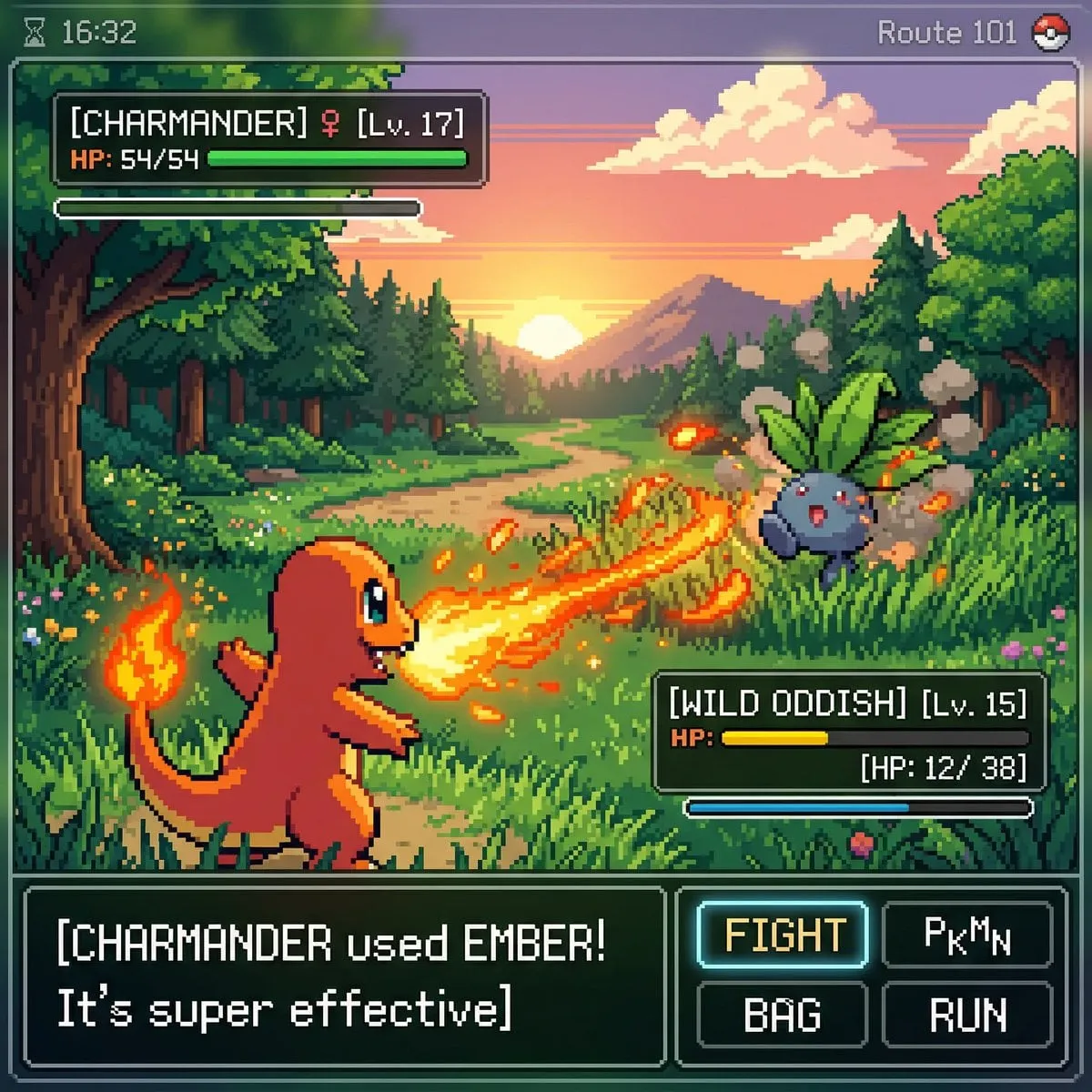
Most people assume that generating pixel art is easier than photorealistic images, because the resolution is lower. The opposite is true. Photorealistic models are trained on natural images, where smooth gradients and fine detail are the norm. Pixel art lives on a hard grid, with limited colors and deliberate chunky shapes, and models trained on photography tend to produce blurry approximations of pixels rather than the real thing.
The quality bar is also different. In pixel art, every pixel is a decision. A single misplaced pixel changes the silhouette of a character or the readability of a sprite. This means AI results need more curation and post-processing than photorealistic outputs, where small errors hide in the noise. Understanding this from the start saves frustration: the AI is a fast sketch artist, and you are the art director who cleans up the final asset.
How Diffusion Models Handle Pixel Grids
Modern image generation relies on diffusion models, which learn to remove noise from random images until a recognizable picture emerges. These models are trained on massive datasets of images and text descriptions, and their output is shaped by both the training data and the prompt.
For pixel art, the key is prompting for the style explicitly. Terms like "pixel art", "16-bit", "retro game sprite", "limited color palette", and "hand-drawn pixel style" push the model toward the right output distribution. The more specific the style vocabulary, the more reliably the model lands on an authentic look instead of a soft imitation.
Resolution matters too. Generating at native pixel-art scale, then upscaling, produces cleaner results than generating at high resolution and downscaling. Several tools now offer pixel-art-specific modes and upscalers that preserve the chunky aesthetic while increasing usable size. If your tool does not have these, a simple workflow is to generate at low resolution, inspect the silhouette, and upscale with a dedicated pixel-art upscaler.
Getting Anime Style Consistency
Anime generation faces a different problem: consistency across many images. A single anime illustration is easy to generate, but a series of images featuring the same character, same outfit, same color scheme, is hard. Faces drift, hairstyles change, and clothing details mutate between generations.
The solution is reference-driven generation. Feed the model several images of the character, ideally different angles and expressions, and let it lock the visual identity. Multi-reference models are built exactly for this, and they have become the standard tool for creators producing anime-style series content, game character sets, and illustrated videos.
Style consistency goes beyond the character. Backgrounds, lighting, and line quality should match across a project. Collect reference images for the environment and the overall art direction, and describe the style in the prompt with the same terms every time. Building a style sheet, the visual equivalent of a brand guideline, is what separates professional anime production from random-looking collections of images.
From Still Images to Animated Clips
Static pixel art is useful, but animated content is where the real demand is. Image-to-video models can take a still sprite or illustration and bring it to life: a character walking, a monster attacking, a scene with drifting clouds and flickering light.
The workflow is straightforward. Generate or prepare the key art, then use an image-to-video model to animate it. For pixel art, keep the motion simple and readable, because complex physics looks wrong at low resolution. Small movements, looped cycles, and subtle environmental animation work far better than ambitious action sequences.
For game assets, this opens a fast path from concept to prototype. A character concept, an idle animation, and a walk cycle can be produced in hours instead of weeks, giving small teams and solo developers the ability to test ideas before committing to full manual production. The AI does not replace the final hand-polished animation, but it dramatically improves the speed of iteration.
Prompt Recipes for Minecraft Pixel Art
Minecraft-style pixel art has its own visual rules: blocky forms, simple textures, muted natural colors, and a recognizable block grid. Effective prompts describe the subject, the style, and the constraints explicitly.
A strong example: "Minecraft-style pixel art of a village blacksmith at his forge, 16-bit texture, blocky voxel aesthetic, warm torchlight, simple color palette, game texture style". The prompt names the style, the subject, the lighting, and the format, and each element guides the model.
For texture packs, describe the surface and the mood: "pixel art grass block texture, top-down view, rich green with subtle noise, 16x16 game texture, no text". Texture work benefits from a consistent palette across the whole set, so define the palette once and reference it in every prompt.
For character sprites, add the framing and the pose: "pixel art hero character sprite, front view, full body, ready-to-animate pose, limited palette, clean outlines". Keeping the framing consistent across characters makes the set usable in engines and editors.
Anime-Specific Prompt Recipes
Anime style has a distinct visual grammar, and prompts that respect it produce dramatically better results. Start by naming the era and the genre: "90s retro anime style", "modern shonen anime", "soft watercolor anime background", "mecha anime concept art". These labels activate different visual patterns in the model, so choosing the right one matters more than adding generic terms like "anime" alone.
For characters, describe the face, the hair, and the outfit with concrete details: "short silver hair, sharp violet eyes, black school uniform with a red scarf". Add the emotional state: "determined expression, slight smile". The combination of physical detail and emotion gives the model enough to draw a specific person rather than a generic anime face.
For scenes and backgrounds, focus on atmosphere: "sakura petals drifting across a quiet street at sunset, warm light, detailed background". Anime is famous for the gap between simple characters and rich backgrounds, and models reproduce this contrast well when the prompt separates the two.
For crossover work, where you blend pixel art with anime, describe the dominant style first and the secondary style second: "anime-style character rendered as pixel art sprite, 16-bit palette". Models handle one dominant style reliably; they handle a fifty-fifty blend less predictably, so decide which style carries the piece.
Building a Repeatable Workflow
A repeatable workflow turns occasional success into reliable production. Start with a project sheet that defines the style, the palette, and the reference images, and reuse it for every asset in the project. Then batch the generation: write all prompts in advance, generate in groups, and review the results together.
The review pass is where the craft lives. For each asset, check the silhouette, the color palette, the readability, and the style match. Reject anything that does not fit, revise the prompt, and regenerate. Keep the accepted assets organized by category, with the prompt that produced them, so you can reproduce or adapt them later.
Post-processing is part of the workflow, not an afterthought. Clean up stray pixels, correct the palette, and normalize the sizes. Many creators run accepted assets through a pixel-art editor to tighten the grid before they go into a game or a video. This final manual pass is short, but it is what makes the assets look intentional.
Publishing and Selling Your Assets
AI-generated pixel art and anime assets have a real market: game developers, streamers, video editors, and social media creators all need original visuals. Before selling anything, check the licensing terms of the tools you used, because some models restrict commercial use or require disclosure.
If you sell assets, package them professionally. A single sprite is worth less than a complete set: a character sheet with idle, walk, and attack animations, or a texture pack with a consistent palette and multiple variations. Consistent sets are what buyers actually use, and they justify higher prices.
For game development, the smartest move is prototyping. Use AI assets to build a playable demo, test the concept with real players, and invest in hand-polished art only after the gameplay proves itself. This workflow reduces risk and lets small teams compete with much larger ones.
Upscaling and Post-Processing
Upscaling is the most common post-processing task, and the wrong approach ruins pixel art. Standard upscalers produce smooth, blurry edges that destroy the chunky aesthetic. Dedicated pixel-art upscalers use algorithms that preserve hard edges and maintain the original color palette, multiplying the resolution without changing the look.
When you upscale, work in stages and check the result at each size. Double the resolution, inspect, then double again if needed. If the upscaler introduces artifacts, try a different algorithm or upscale from the original instead of from an already-upscaled image, because repeated upscaling compounds errors.
For video, the same principle applies. Keep generated clips at their native resolution, and upscale only at the final step of the pipeline. The goal is to keep the pixel aesthetic intact from generation to delivery, and every processing step is a chance to lose it.
Common Problems and Fixes
The most common problem is blurry output that looks like a low-quality photo rather than pixel art. Fix it by adding stronger style terms to the prompt, generating at native resolution, and using a pixel-art upscaler instead of a generic one.
The second problem is inconsistent characters across a set. Fix it by using the same reference images and the same style terms for every asset, and by keeping the character sheet visible during the review pass.
The third problem is unwanted text or watermarks appearing in the image. Address it with negative prompts that explicitly exclude text and logos, and inspect the output at full resolution before accepting it.
The fourth problem is palette drift, where colors vary between assets that should match. Fix it by post-processing every accepted asset to the project palette, and by limiting the color count in the prompt.
FAQ
Is AI pixel art good enough for commercial games?
For prototypes, pre-production, and asset exploration, yes, and it is a huge time saver. For final shipped assets, most teams still hand-polish the work, but the AI-generated version provides a strong starting point that dramatically reduces production cost.
Which models are best for pixel art?
Text-to-image models with strong style understanding work well, and several have dedicated pixel-art modes. For animation, image-to-video models that preserve the input style are the practical choice. Test a few with your own prompts, because style handling varies.
Can I use AI for anime-style videos?
Yes. Generate consistent character sheets with reference-driven models, animate them with image-to-video tools, and keep the style terms identical across the project. The main investment is building the character and style references first.
How do I keep the pixel look after upscaling?
Use pixel-art-specific upscalers, upscale in stages, and never smooth the edges with generic filters. Keep the original palette intact, and check every step at full resolution.
Do I need to disclose AI use?
It depends on the platform and the context. Game asset stores and video platforms have different policies on AI-generated content. Check the rules of each marketplace, and be transparent with clients and audiences when required.
How do I start if I have never made pixel art?
Start with the prompt recipes above and generate a small batch of character concepts. Pick the strongest, clean it up in a pixel editor, and try animating it with an image-to-video model. The fastest learning path is producing ten usable sprites in a week, then reviewing which prompts produced the best foundations.
Conclusion
AI tools have made pixel art, Minecraft-style textures, and anime illustration accessible to anyone, but the craft has moved to prompt design, reference management, and curation. Define your style, build reference libraries, generate in batches, review like an art director, and finish with careful upscaling. The creators who treat AI as a fast collaborator rather than a magic button will produce consistent, usable, and commercially valuable assets, while the technology itself keeps improving the quality of what is possible with a single prompt.
