
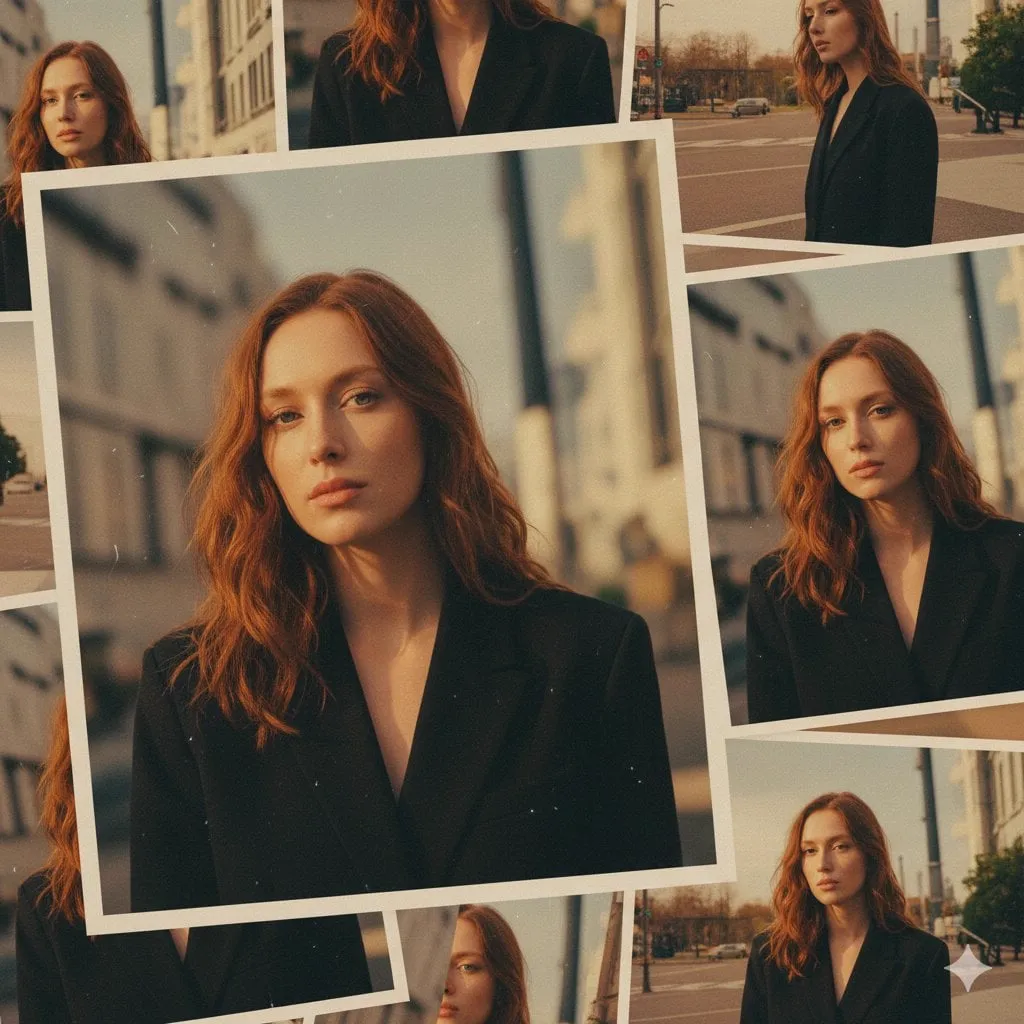
Why Prompting Became a Core Creative Skill
There was a time when the prompt was an afterthought. You typed a few words into a generator, waited, and hoped for something usable. That era is over. In 2025, generative models have moved from producing curiosities to producing cinema-grade footage, and the quality of the output depends directly on the quality of the input. Two creators using the same model can get radically different results: one generates blurry, generic clips, and the other generates shots that look lit, cast, and directed.
The difference is prompt engineering. Not the kind that pastes a list of keywords into a box, but the kind that treats the prompt as a creative brief for a machine that takes everything literally. This guide covers the structure of effective prompts for images and video, the specific language that controls lighting, camera, and mood, and the techniques that keep characters and scenes consistent across a whole project.
The Structure of a High-Performance Prompt
A good prompt is not a sentence. It is a small document with a clear hierarchy: what is happening, who or what is in the frame, how it looks, and what should be avoided. Models reward structure because structure reduces ambiguity.
Subject, Action, and Setting
Open with the subject and the action. Name the character or object, what they are doing, and where they are. "A detective walking through a rainy street at night" is a complete unit of meaning. From there you add detail in layers: the detective's coat, the color of the rain, the glow of a distant sign.
The order matters. Models weight earlier tokens more heavily in many architectures, so the core of the scene belongs at the beginning. If you bury the subject in the middle of a long sentence, the model may emphasize the wrong element.
Style, Lighting, and Composition
The second layer controls the look. State the visual style explicitly: photorealistic, cinematic, anime, watercolor, 3D render. Then describe lighting with the same vocabulary a photographer would use: golden hour, soft diffused light, harsh neon, rim light, low-key. Finally, describe composition: close-up, wide shot, Dutch angle, shallow depth of field, rule of thirds.
This layer is where most prompts fail. "Beautiful image" tells the model nothing. "Cinematic still, 35mm lens, shallow depth of field, warm rim light on the subject's face, moody teal background" tells it exactly what to render.
Negative Prompts and Weighting
The third layer is negative space: what the output must not contain. Negative prompts remove noise, distortion, extra fingers, watermark artifacts, and unwanted text. They are especially useful for video models, where a bad generation wastes minutes of compute and a whole render budget.
Weighting lets you emphasize or de-emphasize specific tokens. Many platforms support weight syntax, so you can tell the model that the character's red jacket matters twice as much as the background. Used sparingly, weighting is the fine-tuning knob between generic and intentional.
Writing Cinematic Prompts That Look Professional
The fastest way to upgrade your output is to borrow the vocabulary of filmmaking. Professional-looking generations are almost always the ones that describe the shot the way a director would.
Camera Language
Learn the terms and use them precisely. A "tracking shot" moves with the subject; a "dolly zoom" creates that vertigo effect; a "crane shot" rises above the scene; a "handheld shot" feels unstable and intimate. Mentioning lens behavior, such as "shot on 85mm," signals the model to produce flatter, more flattering portraits, while "wide-angle 24mm" produces more environmental shots.
Camera movement is one of the highest-leverage details in video prompts. Static prompts produce static footage. If you want dynamic results, describe the movement of the camera as well as the movement of the subject.
Lighting and Atmosphere
Lighting sets the emotional temperature of a scene. A bright, flat, evenly lit scene reads as commercial and safe. A low-key scene with deep shadows reads as tense. Practical lights, such as a lamp or a neon sign visible in the frame, add realism that soft global light cannot.
Match the light to the mood you want the audience to feel. Horror wants shadows and hard edges. Romance wants soft, warm sources. Action wants contrast and motion blur. Describe the atmosphere in one or two words as well: "oppressive," "hopeful," "dreamlike," "gritty." Models understand mood words and translate them into color and texture choices.
Texture and Detail
The difference between "nice" and "photorealistic" is usually texture. Mention the surfaces in the frame: wet asphalt, weathered leather, brushed metal, fog on glass. Micro-detail sells realism because it gives the eye something to linger on. When generating close-ups, be specific about skin texture, fabric weave, and the reflections in eyes. These details separate a generated image from a generated-looking image.
Choosing the Right Model for the Job
No single model is the best at everything, and insisting on one is the most common productivity mistake in this field. A realistic workflow matches the model to the task.
For still images, models in the Flux family are widely praised for prompt adherence and typography. For short video clips, Kling models offer a strong balance of quality and speed. For longer, physically coherent sequences, Sora-class models shine when the scene depends on real-world behavior like water, cloth, or crowds. For stylized and anime content, specialized models consistently beat generalists.
The practical advice is to keep a shortlist of three models, one for stills, one for fast video iteration, and one for high-fidelity final shots, and to test the same prompt across all of them. The model that reads your intent best is the one you should standardize on for that project.
Keeping Characters and Scenes Consistent Across Shots
Consistency is the difference between a collection of clips and a story. The tools are reference images, keyframes, and disciplined prompting.
Build a reference set for every recurring character, as described in the multi-image fusion approach: several images of the same design from different angles and lighting. Attach that set to every generation involving the character. Write the character's appearance into the prompt in the same order every time, using the same descriptive phrases. Changing the wording, even slightly, invites the model to reinterpret the design.
For scene-level consistency, generate a keyframe first, review it, and then prompt the follow-up shots to match that keyframe. Describe the setting in identical terms across shots: same time of day, same weather, same color palette. A small inconsistency in the prompt becomes a visible inconsistency on screen.
Structuring Prompts for Longer Narratives
When you move from single shots to scenes and episodes, the prompt stops being a description and becomes a storyboard. Work in sequence: write the establishing shot, then the action shot, then the close-up. For each one, keep the shared context identical and change only the elements that should change.
Long-form prompting works best when you externalize the constant parts. Keep a project brief that records the character description, the setting, and the style words, and reuse those exact strings in every prompt. The brain of the project is not the model; it is the brief. The model merely executes it.
When a platform supports an agent-style workflow, where a planning layer turns a narrative description into a sequence of shots, use it for the skeleton and then override individual shots with your own prompts. Automation handles the repetitive structure; your judgment handles the creative choices.
Advanced Techniques: Weighting, Seeds, and Iteration
Once the basics are solid, three techniques separate the hobbyist from the professional.
Weighting fine-tunes emphasis within a prompt. If the model keeps losing the character's accessory, boost the weight of that token instead of adding more words. More words dilute attention; targeted weight preserves it.
Seeds control randomness. The same prompt with the same seed produces the same result, which makes seeds the best tool for iteration. When you find a generation you almost like, lock the seed and adjust one detail at a time. You get a controlled search through variations instead of rolling dice.
Iteration is the discipline around all of it. Professionals do not expect the first pass to be right. They generate a batch, pick the closest candidate, refine the prompt or seed, and repeat. Each cycle is fast, so ten short cycles beat one desperate attempt to nail everything in a single prompt.
Common Prompting Mistakes and How to Fix Them
Even experienced creators repeat the same mistakes, and each one costs iterations. Recognizing them early is the fastest way to improve.
The first mistake is prompt bloat. Adding more words feels productive, but attention is a limited resource in every model. When a prompt runs past a hundred words, the model starts ignoring the middle. Trim ruthlessly: keep the subject, action, style, and the one or two details that matter, and move everything else into a reference image or a follow-up edit.
The second mistake is mixing incompatible styles. Asking for "photorealistic cinematic" and "anime watercolor" in the same prompt forces the model to average two aesthetics into something neither. Choose one dominant style and let supporting words reinforce it. If you genuinely want a hybrid, say so explicitly, like "photorealistic character rendered in anime lighting," rather than stacking style keywords.
The third mistake is describing instead of directing. "A beautiful woman standing in a beautiful place" is a wish, not an instruction. The model cannot know which beauty you mean. Replace adjectives with nouns and verbs: "A woman in a long coat standing at a rainy intersection, looking over her shoulder, neon reflections on the wet street."
The fourth mistake is ignoring the model's weaknesses. Every model has known failure modes: hands, text, fast motion, crowd scenes. Design around them instead of fighting them. Keep hands out of frame or hidden in pockets, avoid scenes with lots of readable text, and slow the action when the model tends to smear.
The fifth mistake is abandoning iteration too early. People take the first acceptable result instead of the best available result. The difference between acceptable and great is usually two or three more cycles with a locked seed and one changed parameter. Iteration is not waste; it is the process that produces the final version.
FAQ
How long should a prompt be?
Long enough to be specific, short enough to stay focused. Most strong prompts run between thirty and eighty words. Beyond that, the model starts losing attention, so put the most important elements first and cut anything that does not affect the result.
Why does my video ignore half the prompt?
Video models compress and reinterpret prompts aggressively. Keep the prompt shorter than an image prompt, put the subject and action first, and use reference images for anything that must not change. Also remember that movement itself consumes attention, so do not overload a moving shot with too many details.
Do I need negative prompts for every generation?
Not always, but they are cheap insurance. Add three to five negative terms that target your model's known weaknesses, such as distorted hands, blur, watermark, or extra limbs. If your model rarely produces those artifacts, you can drop the negative prompt and save the tokens.
How do I get the same character in two different scenes?
Use the same reference images and the same descriptive phrase for the character in both prompts. Change only the scene-specific elements. Consistency is a habit, not a single trick.
Is there a best model for everything?
No. The strongest workflows use a shortlist of models, each chosen for a specific job, and a consistent prompting style across all of them. The tool changes; the craft stays.
Conclusion
Prompt engineering in 2025 is a real skill with real leverage. It determines whether your generations look thrown together or directed, whether your characters hold across a series, and whether you spend an afternoon or a week producing a finished piece. The fundamentals are simple: structure the prompt like a brief, borrow the language of cinema, match the model to the task, and iterate with seeds and weight instead of hoping for luck.
None of this requires a technical background. It requires attention to language and a willingness to treat the model as a literal-minded collaborator. Give it clear instructions, give it reference material, and give it feedback, and it will give you images and videos that look like they were made on purpose.
