
Why Prompt Quality Decides Video Quality
Most people assume that buying access to a better video model automatically means better clips. In practice, the gap between an average result and a standout one usually comes from the prompt, not the engine. Two creators using the exact same model can produce completely different footage: one gets a flat, generic clip, and the other gets something that looks art-directed, lit, and timed like a real production.
The reason is that text-to-video models are literal readers, not mind readers. They take your words, break them into semantic units, and reconstruct a scene from statistical patterns learned during training. If your instructions are vague, the model fills the gaps with its most average guess. If your instructions are specific about subject, action, environment, lighting, and camera behavior, the model has far less room to improvise, and the output converges toward what you actually imagined.
This is the core of prompt engineering for video: reducing ambiguity at every stage of the description. It is a skill, not a trick. It can be learned, practiced, and systematized, and it pays off across every model you will ever use.
How Video Models Actually Interpret Prompts
Not all models work the same way, and understanding the differences prevents a lot of frustration. The current generation of video models can be roughly divided into three families.
The first family emphasizes prompt adherence through detailed style and reference tags. These models perform best when you describe the visual language precisely: lens, grain, color grade, texture, and composition. They respond well to structured prompts with clear sections and to reference images that anchor the look.
The second family is built around narrative and temporal understanding. These models are better at following a sequence of events, maintaining the logic of a scene over several seconds, and respecting cause-and-effect. They are a good fit when your clip needs a mini-story, such as a character walking into a room, reacting to something, and then acting.
The third family focuses on physical realism and motion quality. Their strengths are believable movement, weight, gravity, and light behavior. They are less sensitive to elaborate style tags but more sensitive to clear action verbs and spatial descriptions.
A practical implication: you should not write one style of prompt for every tool. A prompt that works beautifully on a narrative model may feel underwhelming on a realism-focused model, and vice versa. Part of the craft is knowing which kind of prompt each model rewards and adapting your language accordingly.
The Five Building Blocks of a Strong Video Prompt
Almost every effective video prompt can be decomposed into five components. Getting all five right produces dramatically better results than focusing on any single one.
Subject. Who or what is the center of the shot? Be concrete. Instead of "a man," write "a man in his sixties wearing a navy wool coat and round glasses." Instead of "a car," write "a matte black electric sedan with tinted windows." Specificity here is the highest-leverage change you can make, because every downstream detail is interpreted relative to the subject.
Action. What happens? Use precise, physical verbs. "Walks" is weaker than "strides across wet pavement, glancing over his shoulder." If there is a sequence, describe the order: "first he opens the door, then he pauses, then he steps inside." Temporal clarity matters more in video than in image prompts.
Environment. Where does the scene take place, and what is the atmosphere? Mention the setting, the time of day, and the mood. "A narrow Tokyo alley at dusk, neon reflections on wet asphalt, light rain falling" gives the model a coherent world to place your subject inside.
Style and art direction. This is the layer that separates amateur footage from cinematic footage. Specify the visual language: "shot on 35mm film, shallow depth of field, teal and orange grade, subtle grain," or "clean 3D render, soft studio lighting, pastel palette, gentle camera float." The more precisely you define the look, the less the model will drift into its default aesthetic.
Camera and motion. Tell the model how the shot is framed and how the camera behaves. "Slow dolly-in from a wide shot to a medium close-up," "handheld tracking shot following the subject from behind," or "locked-off tripod shot with a slight push toward the end." Camera language is one of the fastest ways to make AI footage feel intentional.
A useful habit is to write these five sections in a consistent order, then refine them one at a time during testing. That makes it easy to see which change caused which improvement.
Model-Specific Prompting Strategies
Every serious video model has its own personality, and adapting your prompt style to it is where intermediate users pull ahead.
Flux-based video tools respond strongly to style tags and reference images. If you want a consistent brand look across multiple clips, anchor every prompt with the same style descriptors and reference frames. Their outputs are known for clean quality, and they tolerate long, detailed prompts well, so do not be afraid to write a full paragraph of art direction.
Sora-style models reward narrative structure. Describe the scene as a mini-storyboard: what is happening, in what order, and what the emotional beat is. The model uses its understanding of story logic to keep actions coherent across the clip, so give it a clear beginning, middle, and end rather than a static description.
Kling models are strong at prompt adherence and offer professional controls such as camera movement presets. They respond well to explicit camera directions and action sequences. When using them, state the shot type early in the prompt, then layer the environment and style on top.
Luma's Dream Machine line is known for smooth, organic motion. It tends to interpret prompts literally, so clarity of subject and action matters more than ornate style language. If your clip looks too plain, add one strong visual anchor, such as an unusual light source or a distinctive prop, rather than piling on adjectives.
Alibaba's Wan series emphasizes first-to-last-frame control. Describe both the opening frame and the final frame explicitly if you want the clip to begin and end in specific states. This is particularly useful for product shots and looping content.
None of these observations are permanent truths; models update quickly. The real skill is testing each model with a small set of probe prompts, noting how it responds, and building a personal reference sheet for the tools you use most.
Structuring Prompts for Long and Consistent Clips
Longer clips fail more often than short ones, usually because consistency breaks down. A character's face changes, a logo distorts, or the lighting shifts mid-scene. You can mitigate this through structure.
First, define the non-negotiable elements in a stable block that repeats across all your prompts for a project: character appearance, wardrobe, location, and overall color grade. Treat this block like a brand bible and paste it into every prompt.
Second, break the clip into logical beats. Instead of one giant prompt, generate a sequence of shorter clips and plan to stitch them together. Each short clip has a better chance of staying consistent internally, and you control the edit.
Third, use reference images as anchors. Most platforms let you upload a first frame, a character sheet, or a style reference. Supplying these does more for consistency than any amount of descriptive text, because the model can copy the visual identity directly instead of guessing from words.
Finally, accept that long single-shot generations are an advanced technique. Start with 5-10 second clips, master those, and only then attempt extended sequences with clear temporal instructions and reference anchors.
A Repeatable Prompt-Writing Workflow
Treat prompt writing like a creative iteration loop rather than a one-shot event.
Start with a one-line intent: "I need a 10-second cinematic shot of a barista pouring latte art in a rainy café." This sentence forces you to decide the core of the clip.
Expand it into the five building blocks described above. Write the subject, action, environment, style, and camera sections in full. Do not skip the camera section; it is the most commonly omitted and the most impactful for video.
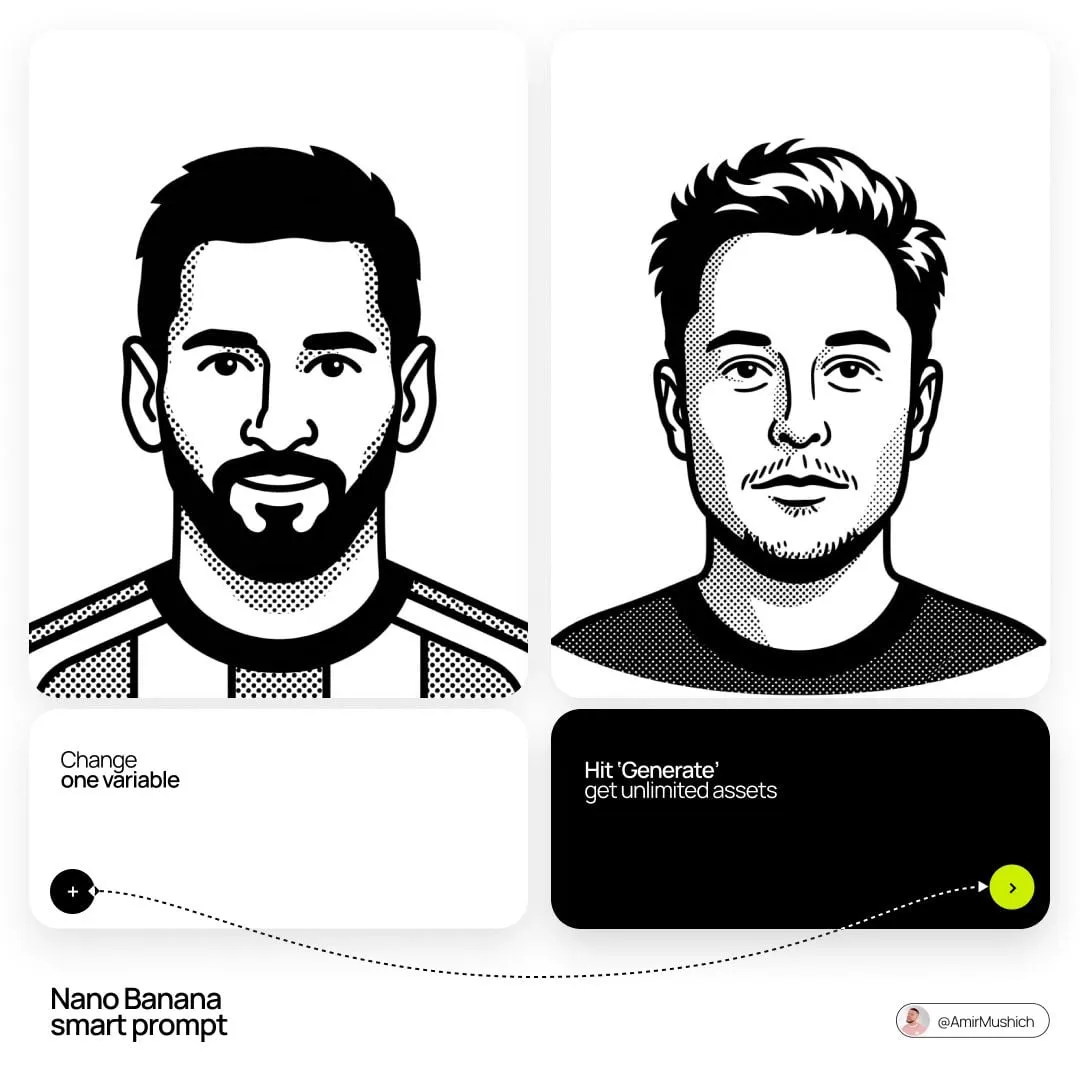
Generate a first draft and evaluate it against three criteria: does it match the subject, does the motion feel natural, and does the style hold? Change one variable at a time. If the motion is wrong, edit the action and camera lines before touching the style. If the style drifts, strengthen the art direction block or add a reference image.
Keep a log of what worked. A simple spreadsheet with columns for model, prompt sections, reference images used, and notes on the output will compound into a personal playbook within a few weeks. That playbook is worth more than any generic template list you can find online.
When you land on a winning prompt, save it in a reusable form with placeholders: subject, action, setting, style. That turns a one-off success into a repeatable asset.
Building a Personal Prompt Library
After a few weeks of iteration, you will notice that some prompts work repeatedly. The professional move is to capture them before they disappear into chat history. A prompt library is simply a structured collection of your best prompts, organized so you can find and adapt them quickly.
Start with a spreadsheet or a simple text file with one section per use case: product shots, character scenes, travel footage, abstract transitions, and so on. For each saved prompt, include the model it was tested on, the reference images used, and a one-line note on what made the output good. The note is the part most people skip and the part that makes the library actually useful.
Design your saved prompts as templates with placeholders. Instead of saving "a red vintage bicycle leaning against a brick wall in Amsterdam at golden hour," save the structure and keep the color, object, and location as variables. A template survives changes in subject matter; a fixed prompt does not.
Review the library monthly. Delete prompts that no longer work, update model notes as models change, and merge duplicates. A maintained library of fifty quality prompts beats an unmaintained archive of five hundred.
How to Evaluate Output Quality Objectively
Subjective taste is necessary, but it is a poor sole judge when you are iterating. Build a small checklist and score every serious output against it.
First, subject fidelity: does the main subject match the description, including details like clothing, proportions, and identity? Second, motion quality: is the movement physically plausible, with natural weight and timing? Third, style consistency: does the clip hold the art direction from start to finish, without drifting into the model's default look? Fourth, camera intent: does the framing and movement match what you asked for, or did the model choose its own? Fifth, technical cleanliness: are there obvious artifacts, warping, or texture meltdowns in problem areas like hands, faces, and edges?
Score each criterion pass or fail, and only regenerate when a specific criterion fails. This turns vague dissatisfaction into actionable fixes and prevents the common trap of endlessly regenerating without learning why outputs vary.
Common Prompt Mistakes and How to Fix Them
Several mistakes show up constantly in AI video work.
Overloading the prompt. Writing three paragraphs of unrelated details confuses the model. Keep each building block focused. If a prompt feels crowded, cut the least important detail from each section.
Neglecting motion and camera. An image-style prompt that describes only the scene will produce a clip that looks like a static photo with slight movement. Add explicit action verbs and a camera instruction.
Mixing incompatible styles. "Cyberpunk noir with soft pastel anime lighting" forces the model to reconcile contradictions, usually by compromising on both. Pick one coherent art direction.
Using vague quantities. "Some people" and "a few trees" leave too much room. Use specific numbers: "three people at a table," "five palm trees along the road."
Ignoring the first and last frames. If you care about how a clip starts or ends, say so. Especially with first-to-last-frame capable models, describe the opening and closing states explicitly.
Not testing on the final platform. A clip can look great in the generator and terrible on a phone screen because of crop, compression, or small text. Always review the output in the format you intend to ship.
When to Use Text, Image, or Video Models Together
The best workflows rarely stay inside one tool type. A strong pipeline often starts with a text model to develop ideas and structure, moves to an image model to lock down the look, and only then enters the video model with a reference image in hand.
The image step is the most underrated. Generating a still frame first lets you validate composition, lighting, and style for a fraction of the cost of a video generation. Once the still looks right, animate it with an image-to-video model, which inherits the approved visual foundation and only has to solve motion.
This layered approach also isolates problems. If the final video fails, you know whether the issue is the still (style and composition) or the motion layer, because you have already validated the first half. Debugging becomes linear instead of searching across every variable at once.
FAQ
How long should a video prompt be? Long enough to cover the five building blocks, usually 80 to 200 words, and no longer. Beyond that, the marginal benefit drops quickly and the risk of contradictions rises.
Do I need reference images? Not always, but they dramatically improve consistency for characters, products, and brand styles. Use them whenever you need the same subject to appear across multiple clips.
Should I write prompts in English? Most models were trained primarily on English data, so English usually gives the best adherence. If your source material is in another language, translate the key visual terms carefully rather than relying on the model to interpret them.
Why do my results vary between runs with the same prompt? Generation is stochastic. Run multiple takes with the same prompt and pick the best one. This is normal and expected.
Can I use the same prompt for every model? You can, but you will leave quality on the table. Each model has strengths, and adapting your prompt style to them produces better results for the same effort.
How long does it take to get good at this? Most people see major improvement within a week of deliberate practice, especially if they keep a log and iterate systematically. The skill is not talent; it is a repeatable process.
