

The racing game market is crowded, and in 2025 the competition is no longer decided by graphics alone. Players judge a game by its trailer before they ever touch the wheel. A compelling promo video can be the difference between a million downloads and a forgotten launch, which is why developers and publishers are turning to generative AI to produce marketing assets faster, cheaper, and in greater volume than traditional production allows.
Creating a racing game trailer with AI is different from creating any other kind of AI video. You are working with high-speed motion, motion blur, dynamic lighting, and the constant risk that the hero car will change appearance from one shot to the next. This guide covers the practical side of that challenge: choosing models, keeping cars and characters consistent, adding sound and direction, and building a repeatable production workflow.
Why Racing Game Video Marketing Matters in 2025
Short-form video is the primary discovery channel for mobile and indie games. Players scroll through trailers, gameplay clips, and teasers on social platforms, and they make download decisions in seconds. Surveys consistently show that a strong trailer significantly influences whether a player tries a game, especially in genres like racing where spectacle is the whole point.
The implication for developers is uncomfortable but clear: you are competing on video production quality as much as on game quality. Studios that can produce polished, exciting trailers quickly have a structural advantage. Generative AI levels the playing field because it lets small teams produce assets that would previously have required a motion graphics department.
At the same time, the bar keeps rising. Model quality has improved to the point where audiences expect cinematic lighting, believable motion, and consistent hero vehicles. A trailer that looks cheap signals a cheap game, fair or not. The goal of this workflow is to produce assets that look intentional and premium, reliably and at scale.
What Makes High-Speed Action Hard for AI
Racing scenes stress every weakness of generative video models. Fast motion produces motion blur that models must render believably, not as smeared noise. Dynamic lighting means reflections on car bodies, track surfaces, and sponsorships change from frame to frame. And high speed magnifies any inconsistency: a wheel that changes design mid-shot, a livery that shifts color, or a car that visibly morphs between cuts is instantly noticeable.
The practical takeaway is that you should not ask one model to do everything. Plan your shots so that each generation has a manageable challenge: a close-up of the car with controlled motion, a sweeping environment shot, a dramatic overtake with a clear focal point. Small, well-defined shots compose into a trailer far more reliably than one ambitious mega-generation.
Choosing Models for Speed, Realism, and Budget
Different shots in a racing trailer benefit from different model strengths. A smart pipeline uses several models rather than forcing one model to cover every case.
Photorealistic Leaders
For hero shots, product-style reveals, and anything that will be seen in high fidelity, start with a model known for photorealism and detail. These models handle reflections, materials, and lighting convincingly, which matters enormously for cars. They also tend to be slower and more expensive per generation, so use them selectively for the shots that carry the trailer.
Cost-Effective Workhorses
For environment shots, transitions, and the dozens of filler clips that make a trailer feel complete, use faster, cheaper models. The quality bar is lower for these shots, and the volume is higher, so the trade-off is correct. You can generate ten background options for the price of one hero shot and pick the best.
Specialized and Control Models
For shots that demand precision, such as a consistent car across multiple angles, use models with strong control features: reference images, keyframe input, and seed control. Control is worth more than raw quality when your problem is consistency rather than beauty.
Keeping Cars and Characters Consistent
The defining challenge of AI racing trailers is consistency. The player's car must look like the same car in every shot. The driver's helmet, the livery, the sponsor logos, the wheel design: all of it has to survive across generations.
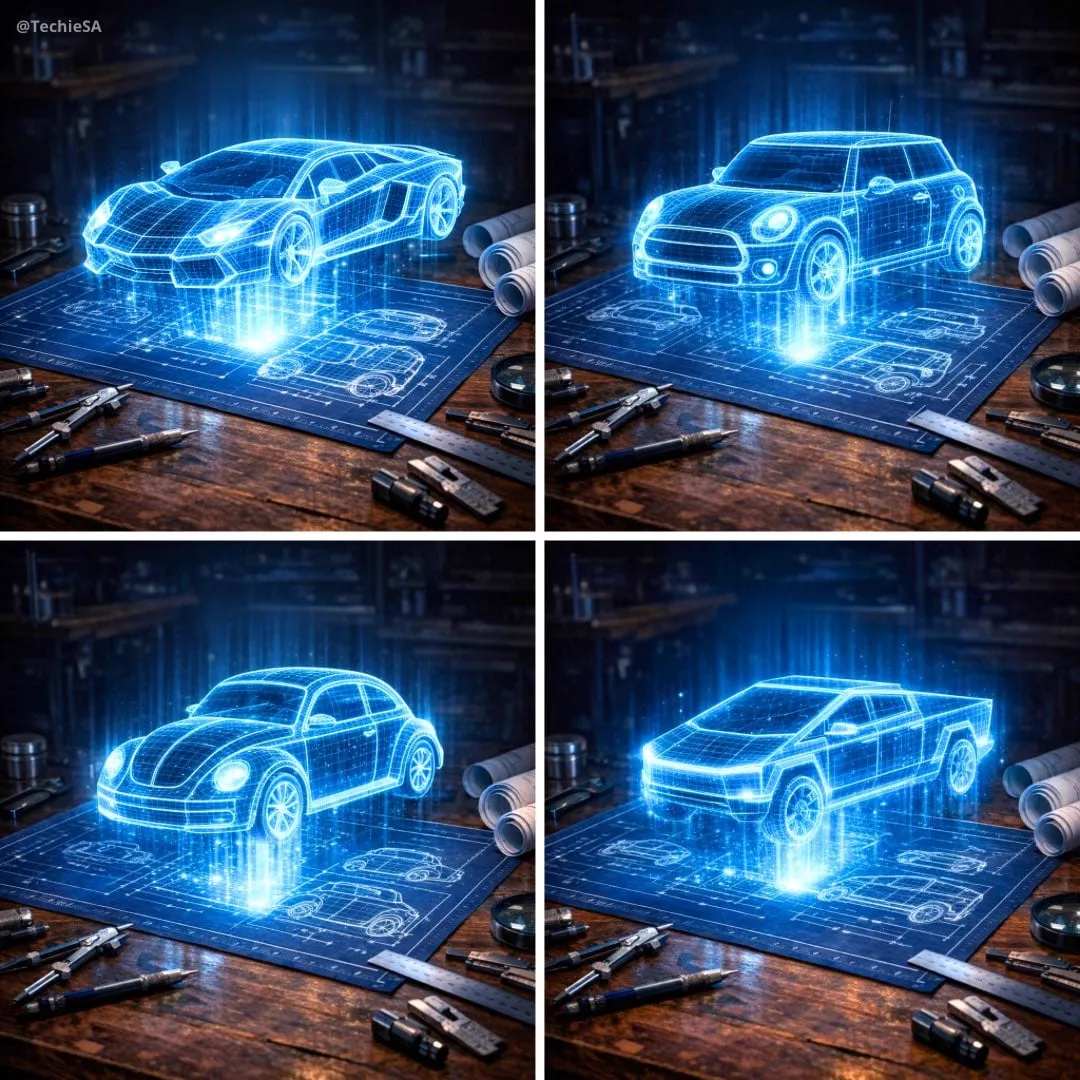
The most reliable technique is reference-based generation. Provide the model with a clear reference image of the hero car, and where the tool supports multi-image input, provide several angles. Describe the car's distinguishing features in every prompt, and lock the same seed when the tool allows it. Treat consistency as a deliberate engineering task, not something you hope the model remembers.
When you cannot achieve perfect consistency in a single generation, cheat intelligently in the edit. Use the consistent shots as your hero moments, and cut away to speed, motion blur, or environment detail at the moments where a model is struggling. The audience will remember the confident shots, not the transitions you hid.
Building a Shot List First
A trailer is a sequence of shots, and every shot should have a job. Before generating anything, write the shot list: the establishing environment shot, the hero car reveal, the speed sequence, the character moment, and the hook. For each shot, note the aspect ratio, the camera movement, the duration, and the model you plan to use. This document becomes your production brief, and it keeps the AI work aligned with the trailer's narrative.
The shot list also protects your budget. You know exactly how many hero shots need the premium model and how many environment shots can use a faster option. Without a shot list, teams generate aimlessly, overspend on the wrong shots, and end up with a pile of beautiful clips that do not fit together. Planning is not bureaucracy; it is the cheapest quality improvement available.
Sound, Music, and Direction
A trailer is half audio. Engine sounds, tire squeals, impact effects, and a driving music track are what make a racing video feel fast. Generative video tools increasingly produce audio or integrate with sound design features, but a professional trailer still benefits from dedicated audio work. Layer engine loops, add whooshes for cuts, and let the music dictate the pacing of the edit.
Direction matters just as much. Before generating anything, define the arc of the trailer: establish the world, introduce the car, show the speed, and end with a hook such as a release date or a download prompt. Each shot you generate should have a role in that arc. Generating randomly and assembling later produces generic results; generating with a shot list produces a trailer that feels designed.
Building a Production Pipeline
Racing games produce a lot of marketing content: announcement teasers, feature spotlights, seasonal updates, esports highlights. A pipeline makes that sustainable instead of exhausting.
Start with a shot library organized by category: hero car shots, environment shots, action sequences, UI and feature shots. Generate new assets against the same reference set, so the car and world stay consistent across campaigns. Store your prompts alongside your assets, because the prompt is the recipe that lets you recreate or vary a shot later. And automate the repetitive parts: exporting variants for different aspect ratios, applying watermarks, and generating platform-specific versions.
From Clips to a Full Trailer: A Workflow
Here is a workflow that works for a two-week trailer sprint. Day one, define the concept, the arc, and the shot list, and assemble reference images for the car and environment. Days two through six, generate hero shots with the quality-first model, iterating on consistency and lighting. Days seven through ten, fill in environment shots and transitions with the workhorse model, then start the first edit. Days eleven and twelve, add sound, music, and color grading, and cut the trailer to length. Days thirteen and fourteen, export variants for every platform, test them on real devices, and ship.
The exact timeline matters less than the structure: concept before generation, iteration before editing, and verification before publishing.
Common Production Mistakes
Three mistakes account for most disappointing racing trailers. The first is generating without references, which guarantees the car drifts between shots. The second is overloading the prompt with simultaneous motions, which produces muddled, unreadable action. The third is skipping the audio until the end, which forces the edit to fight the music instead of flowing with it. All three are avoidable with process: references first, one motion per shot, and audio planned from day one.
A fourth mistake is less visible but just as damaging: not reviewing output on a real screen. A clip that looks fine in a small preview can look soft, over-sharpened, or badly graded on a phone or a large monitor. Review every hero shot on the devices your audience will actually use, and set a clear quality bar before the trailer is assembled. It is much cheaper to regenerate a clip during production than to reshoot a trailer after launch.
Distribution and Promotion
A great trailer only helps if it reaches players. Export vertical versions for TikTok, Instagram Reels, and YouTube Shorts, and horizontal versions for YouTube and store pages. Consider silent versions with subtitles, because many players watch on mute. And plan a release sequence: a teaser, the main trailer, and follow-up feature clips that keep the game visible after launch.
Measuring Trailer Performance
A trailer is a marketing asset, and marketing assets should be measured. Track views, watch time, click-through to the store page, and download or install conversions. Compare the performance of different trailer versions: a vertical cut versus a horizontal cut, a short teaser versus the full trailer. The data will tell you which shots resonate and which moments lose the audience, and that information should feed back into your next shot list.
Small studios often skip this step because it feels like overhead, but it is the cheapest research you will ever do. A trailer that converts at twice the rate is worth more than a trailer that looks slightly better in a still frame. Treat every launch as an experiment, record what you learn, and let your next trailer start from evidence instead of instinct.
FAQ
How long should an AI-generated racing trailer be?
Thirty to sixty seconds is the sweet spot for store pages and social platforms. Short teasers of ten to fifteen seconds work well for announcement moments. Long cinematic trailers are best reserved for major launches with a bigger budget.
How many shots should a trailer have?
Twelve to twenty shots is a realistic range for a thirty-second trailer. More shots create pace; fewer shots give each moment room to breathe. Let the shot list, not a fixed number, decide.
What aspect ratios should I export?
Export both vertical 9:16 for short-form platforms and horizontal 16:9 for YouTube and store pages. If the game's key art is square, a 1:1 version is useful for feeds and announcements.
Can AI generate the game's actual car model?
AI generates images and video from prompts and references; it does not render your 3D model directly. Use high-quality renders or screenshots of your real car as reference images, and the AI will stay much closer to the actual design.
How do I avoid the car changing between shots?
Use the same reference image set for every generation, describe the car's unique features in every prompt, lock seeds where possible, and favor tools with multi-image fusion and keyframe control.
Is AI video good enough for professional game marketing?
Yes, when used as part of a real production process. The best results combine AI generation with deliberate shot planning, editing, sound design, and color grading. Raw AI output is a raw material, not a finished trailer.
Do I still need gameplay footage?
Yes, and you should mix it in. Real gameplay footage grounds the trailer in reality and shows the actual product. AI excels at cinematic interpretation, environment spectacle, and concept visualization; gameplay proves the game is real.
Conclusion
Racing games live and die by spectacle, and in 2025 spectacle is increasingly produced with generative AI. The winning approach is not to replace production with prompts, but to combine the two: reference-based consistency for the hero car, model selection by shot type, deliberate direction and sound design, and a pipeline that lets you iterate across campaigns. Small studios now have access to trailer-level production that was once reserved for major publishers. The teams that treat AI video as a real production discipline, with shot lists, references, and quality checks, are the ones whose trailers will stand out in a crowded feed.
