


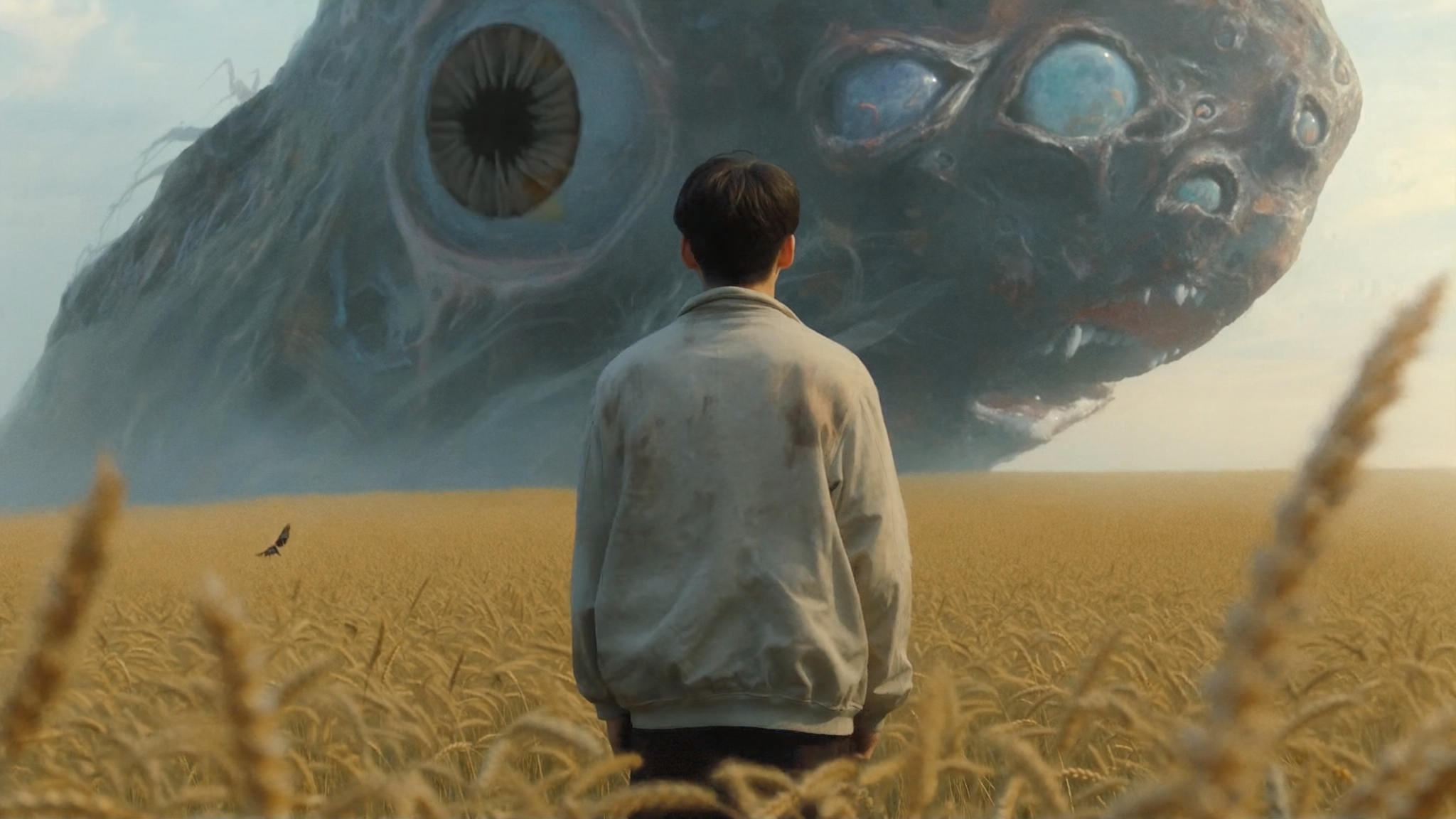
Why AI Short Film Production Has Become Real
For most of the history of cinema, making a short film meant assembling a large crew, renting expensive camera packages, scheduling actors, and spending weeks in post-production. That barrier is what kept filmmaking in the hands of studios and well-funded graduate programs. The idea that one person with a laptop could generate a coherent, emotionally readable short film would have sounded like science fiction only a few years ago.
That has changed. The emergence of powerful text-to-image and text-to-video models has made it possible to produce film-like footage without a physical set, a camera, or a permitting office. Short-form storytelling has always thrived on constraint and control, and AI generation pushes both in new directions. The practical question is no longer whether AI can produce moving images, but how a serious creator turns those images into a short film that people actually finish watching.
This guide is not a hype piece. It is a working method for turning a one-line premise into a complete short film using the tools available today. It walks through the whole pipeline: developing an idea, writing a tight script, planning shots, keeping a character consistent, generating footage, assembling sound and music, editing for rhythm, and publishing a finished piece. It also covers the common failure modes and how to avoid them.
What the Current AI Filmmaking Landscape Looks Like
To use these tools well you need to understand the shape of the market. Today there are several families of models, and each one is best at something slightly different.
Image-first models like the Flux family are built around still image generation with strong control over composition and style. They are excellent for establishing character designs, location concepts, and a consistent look before anything moves. Video models then take a still image (or a set of images) and animate it. This two-stage approach gives you far more control than asking one model to invent everything from a text prompt.
Dedicated video models such as the Runway Gen series and the OpenAI Sora class are trained to synthesize temporally coherent clips. They handle motion, camera movement, and physical behavior better than a generic model, but they consume more compute and can be expensive to iterate on. Understanding this cost structure matters when you are producing a story with many shots.
Finally, there is a layer of orchestration and prompt tuning. The same underlying model can produce wildly different results depending on how the prompt, the reference image, and the seed are managed. The skill of a modern AI filmmaker is less about knowing a single model than about knowing how to sequence many small generated pieces into a larger whole.
Building the Idea and a Tight Script
A short film collapses a story into its most essential beats. There is no room for sprawling exposition. The strongest shorts tend to rest on a single change: something happens, and the character's situation is not the same afterward. Start there.
Write a premise in a single sentence. Example: a night-shift security guard sees a figure appear on a live feed of an empty parking garage and realizes the figure is checking the angles of the cameras. That is enough to hang a film on. Now write a short outline of three or four beats: setup, escalation, turning point, and resolution.
Keep the runtime realistic. A two-minute film may need only five to eight shots. A five-minute piece can afford a fuller arc, but every additional shot multiplies your generation and editing time. Aim to tell a story you can fully resolve rather than one you are forced to abandon at the halfway point.
As you write, mark scenes that depend on physical dialog, complex interactions, or recognizable faces. These are the hardest things for current models to get right. The easiest material to generate is atmospheric, low-dialog, and composition-driven. Design the story around what the tools do well, and reserve dialog for a small number of shots where you control the output carefully.
Planning Shots and Sticking to a Look
Shot planning is where you separate a film from a slideshow. Before generating anything, decide the aspect ratio, the color palette, the lens feel, and the lighting direction you want for the whole piece. Write all of this down as a reference that you reuse in every prompt.
Create style anchor images first. Generate one excellent still that defines your protagonist, and one that defines the key location. These are not throwaway concept drawings; they are the canonical references you will fuse into every scene. Most video models let you pass one or more reference images along with your text prompt, and the difference in consistency between using a reference and not using one is enormous.
Then break the film into individual shots. For each shot, note the action, the camera movement (static, pan, tilt, dolly-in, push-in), and the subject position. Feed the same character reference and the same style prompt to each shot. If you change any words in the style prompt, the look drifts. Treat the style prompt as a locked template and change only the action portion.
Keeping Characters Consistent Across Shots
Character consistency is the single biggest technical obstacle in AI short films. A character who changes face between cuts breaks the illusion instantly. The reliable solution is multi-image fusion: you combine the canonical character image with a per-scene reference showing the pose, lighting, or costume you need, then describe the action in text.
This is a two-image workflow. Image one is the locked hero image with the face, hair, and wardrobe defined. Image two is the specific scene setup you want the model to match, perhaps a rough framing of the body position or the environment. The model blends these to produce a shot that keeps the identity of the hero image while obeying the composition of the scene reference.
Keep a small library of reusable elements: the hero face, a neutral body pose, the main environment, and a few wardrobe variants. Build a naming convention so you actually reuse the same files. Consistency is not something you fix later in editing; it is something you enforce from the very first image you generate.
Writing Prompts That Give You Control
Most weak AI footage comes from weak prompts. A prompt that says "a man walks through a city" leaves almost everything to chance. A useful prompt specifies the visual grammar: exact subject, location, time of day, camera angle, lens length, mood, and the specific action in the shot.
A strong shot prompt has four parts. The subject, described once and always matched to the reference. The setting, consistent with your style anchor. The camera, described with concrete terms such as low angle, slow push-in, 50mm, or handheld. And the action, stated as a single clear verb phrase with a defined start and end.
Negative prompting matters too. Most tools let you exclude concepts. Tell the model what you do not want, such as excessive lens flares, deformed hands, or style drift toward cartoon rendering, and you reduce the number of wasted generations. Then generate a small batch of versions for each shot, pick the best one, and move on rather than perfecting a single output forever.
Generating Footage in Batches
Generate footage shot by shot, not scene by scene. Clean up each shot before moving forward, because a bad shot that survives to editing will drag down every scene it touches. For each shot, run several seeds, review them, and keep only the strongest take plus one backup.
Keep your aspect ratio and frame rate locked for the entire film. If you intend to finish in 24 frames per second at 16:9, every animated clip should be delivered on that spec. Mixing standards is a fast route to a messy timeline.
As you work, log what you generate: the shot number, the prompt, the reference images, and the seed. This log is what lets you regenerate a shot later if the first take does not fit the edit. Trying to rebuild a lost shot from memory is impractical, because the model will not reproduce an exact result without the same inputs.
Assembling Sound, Music, and Voice
Silence exposes every flaw in generated footage, and good sound covers an enormous number of small visual weaknesses. Almost any AI short benefits from three layers of audio: ambient bed, music, and any dialog or foley you need.
For ambient sound, record real room tone or use an atmospheric library track. For music, generative music tools can produce a score matched to your mood, but even a simple licensed loop cut to length will outperform dead air. For dialog, decide early whether to use a text-to-speech voice, a human recording, or no dialog at all. For a small project, a single well-placed human voice called in as voice-over is often stronger than badly synthesized character dialog.
Sync sound to the edit last. Cut the picture first, then place the ambient bed, then the music, then any voice or foley. Treat each beat where the picture changes as a possible sync point, and let the score respond to those moments.
Editing for Rhythm and Emotion
Editing is where a collection of clips becomes a short film. The task is to find a rhythm that matches the emotional shape of the story. Tension scenes call for quicker cuts that conceal information and build unease. Release scenes call for longer takes that let the audience breathe.
Apply the rule of three in the cut. Show a shot, let it read, then cut on a moment of meaningful motion rather than mid-action. Cut on the action so the motion carries the viewer across the edit point. This makes transitions feel motivated instead of random.
Pacing is about restraint, not speed. Because every clip is generated, you can afford to hold onto a strong static composition while a subtle element moves. Use reaction shots, insert shots, and short pauses to give the audience time to process what they just saw. A short film that never stops moving feels hollow; a short film that breathes feels staged.
Common Pitfalls and How to Avoid Them
The most frequent failure in AI films is visual inconsistency across cuts. The fix is prevention: lock your style prompt, anchor your characters, and rebuild any shot that drifts rather than hoping it passes unnoticed.
The second most common problem is runtime creep. You plan a two-minute film and end with eight minutes of footage you cannot bear to cut. Hold the edit to your original plan, and treat every shot that lands on the cutting-room floor as time well spent.
The third is over-generation. It is tempting to generate hundreds of variations in search of a perfect take. Set a cutoff: three to five seeds per shot, then commit. Production discipline beats infinite iteration every time.
Finally, watch out for copyright and ethical questions. Do not use a real person's likeness without permission, and be careful about how close a generated character comes to a recognizable actor. Keep your own records of what you generated and what tools you used.
Building a Repeatable Workflow
The fastest way to get better at AI filmmaking is to stop treating each film as a fresh improvisation and instead build a repeatable pipeline. Your reference-image library, your locked style prompts, your shot log template, and your edit presets all carry over from project to project.
Start with a project template: a folder structure, a naming scheme, and a duplicate of your style prompts. Then run every film through the same phases: premise to one-line logline, outline to storyboard images, reference anchors to per-shot generation, and finally the edit with the audio bed. Within a few projects the mechanical parts become routine, and the creative energy goes where it belongs, into the story.
Frequently Asked Questions
How long does an AI short film take to make? A two-minute atmospheric film can go from idea to finished edit in a few focused days. A five-minute dialog-driven piece can take several weeks because dialog shots need far more iteration to look convincing.
Do I need a powerful computer? Many video generation tools run in the cloud, so a modest laptop is enough for most of the pipeline. Local image generation requires a capable GPU, but you can use cloud-based image tools as well.
How do I make my film look less like a generic AI clip? The trick is control: locked style prompts, consistent character anchors, deliberate camera language, and real sound design. Generic footage is a symptom of generic prompts and no plan.
Can I use closed captions and subtitles in my film? Yes, and for many shorts they are essential, especially if dialog model output is imperfect. Burned-in captions keep the story readable.
What should I do with the finished film? Publish it whole on a video platform, and also cut an 15-second vertical teaser for social feeds. Show the final film, describe the workflow, and share the process. The tools change quickly, but a disciplined production method holds its value.
