
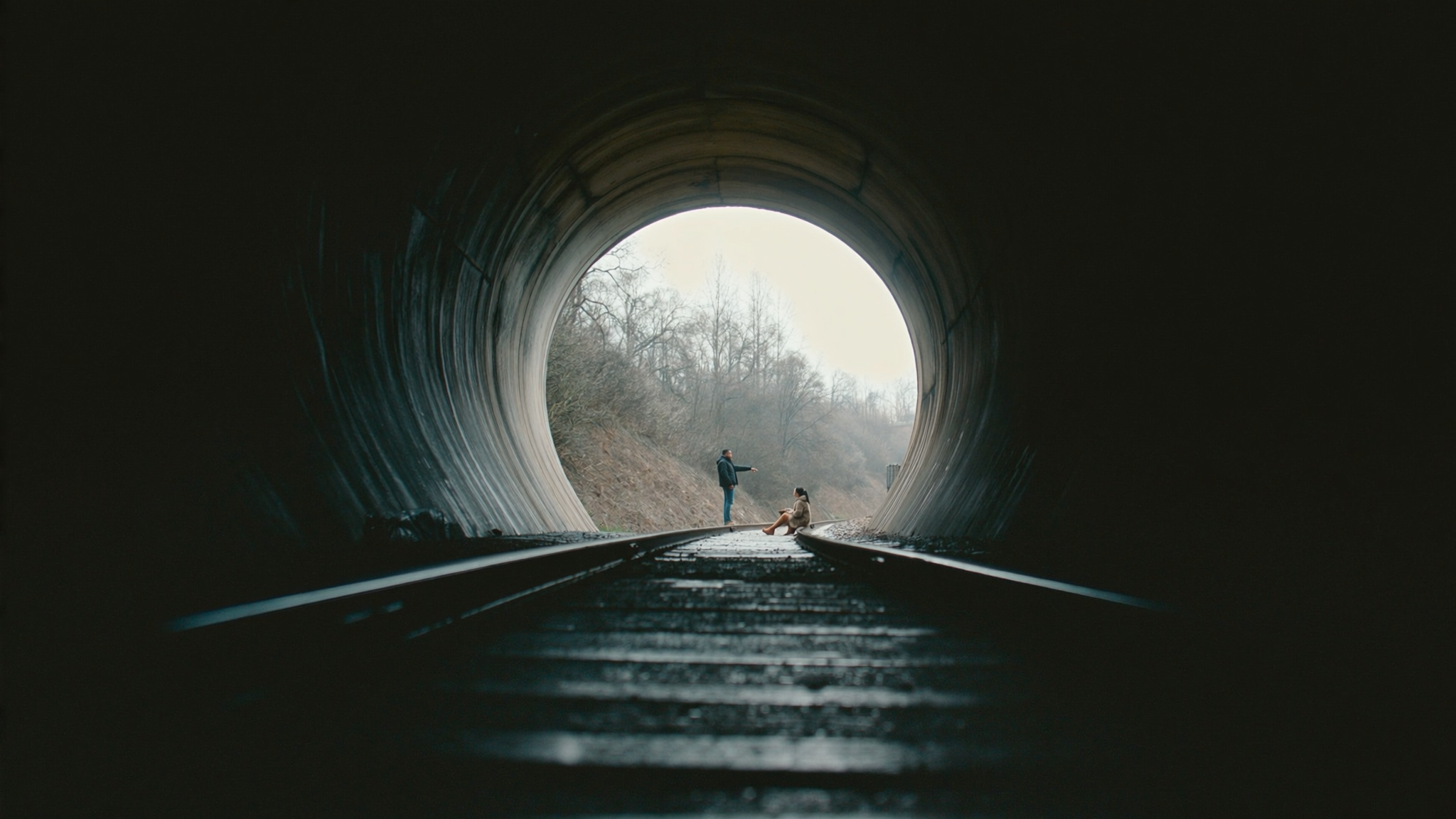
Shot Design Is Storytelling
Most people think a shot is just "what the camera sees." Filmmakers know better: a shot is a decision. Where the camera sits, what it includes, what it excludes, how it moves — every choice shapes what the audience feels and understands. Shot design is not the decoration on top of a story; it is the story, told one frame at a time.
For decades, this craft belonged to people who went to film school or spent years on sets. The arrival of AI video flipped the economics. Anyone can now generate moving images, which means the differentiator is no longer access to technology — it is the quality of visual decisions. This is why shot design has become the most valuable skill for AI creators, and why the newest AI direction tools treat it as a core feature rather than an afterthought.
This guide walks through the essential elements of shot design — camera angles, lighting, color, and movement — and shows how an AI director agent can translate your storytelling intent into those elements automatically, so you can think like a cinematographer without spending a decade learning to be one.
The Grammar of Camera Angles
Camera angles are the grammar of visual language. Every angle changes the emotional meaning of the same subject, and the audience reads these signals instinctively.
Eye level is the neutral default. It puts the audience on equal footing with the character, which makes it the workhorse of conversational and documentary-style scenes. It is not flashy, and that is exactly its strength: it disappears so the content can lead.
Low angles make subjects look powerful, dominant, or threatening. A hero shot of a character standing over the frame, shot from below, instantly communicates authority. Use it for villains, leaders, and moments of triumph — but use it sparingly, because constant low angles exhaust the effect.
High angles do the opposite: they shrink subjects, suggest vulnerability, weakness, or being watched. A character alone in a large room, shot from above, reads as isolated. High angles are also the classic tool for establishing scale — a city seen from above makes people look small, which is often precisely the point.
Over-the-shoulder shots build connection between characters in dialogue, and point-of-view shots put the audience inside a character's head. Dutch angles tilt the frame to create unease, commonly used in thrillers and disorientation sequences.
The practical rule for AI creators: pick the angle that serves the scene's emotional goal, then describe it explicitly in your generation. A character who must feel powerful and a character who must feel trapped need two very different camera setups — and if you do not specify, the model will default to eye level, which serves neither.
Lighting and Color as Emotional Tools
If angles set the grammar, lighting and color set the mood. The same shot, lit differently, tells a different story.
High-key lighting — bright, even, with soft shadows — reads as optimistic, clean, and commercial. It is the default for product content, corporate videos, and upbeat social clips. Low-key lighting, with deep shadows and strong contrast, reads as dramatic, mysterious, or dangerous. It is the language of film noir, thrillers, and premium brand films.
Color takes this further. A warm palette (ambers, oranges, reds) feels intimate and energetic; a cool palette (blues, teals, grays) feels distant, calm, or melancholic. Color grading in post-production is where AI-generated video comes together visually, because different models and shots rarely match out of the box — a unified grade makes them feel like one production.
The professional move is to decide the palette before generating, not after. Write the lighting and color intent into the scene description: "golden hour, warm highlights, long soft shadows" tells the model what to render, and your final grade reinforces it. When a sequence spans scenes, keep the palette logic consistent per story block — cold for tension, warm for resolution — so the color itself becomes part of the narrative arc.
Camera Movement and Sequence Rhythm
A static camera observes; a moving camera involves. Movement is the difference between watching a scene and being pulled through it.
The basic moves form a small vocabulary. A push-in (dolly forward) increases intimacy and pressure — it is the classic move for a character realizing something important. A pull-back (dolly backward) reveals context and often signals a shift in scale or an emotional release. A pan scans the space; a tilt reveals vertically; a tracking shot follows a subject through the world, creating momentum.
For AI generation, movement descriptions need to be explicit and modest. Models are improving, but extreme moves still risk distortion. Describe the move simply: "slow push-in," "lateral tracking shot," "subtle handheld drift." Save dramatic moves for shots where they carry meaning, not for every scene.
Sequence rhythm is where individual shots become a story. The pacing of cuts — short shots for tension, long takes for contemplation — controls the audience's pulse. A common mistake in AI projects is assembling every shot at the same length, which flattens the rhythm. Vary shot duration deliberately: rapid cuts during action or urgency, longer holds for emotional beats.
The AI director's contribution here is structural. It can propose a shot list with varied angles, moves, and durations that fit your story beats, then execute each shot with the model parameters that match the plan. You review the rhythm as a sequence, not as individual clips, and adjust where the flow stalls.
How an AI Director Translates Intent into Shots
The promise of an AI director is that you describe intent and receive a shot plan. The mechanism is worth understanding so you can use it well.
First, the agent analyzes your script or outline for beats: moments of conflict, discovery, resolution, and the emotional state of the character at each point. It then assigns a shot design to each beat using cinematic conventions — the close-up lands on the emotional revelation, the wide shot establishes the new location, the low angle arrives when a character seizes control.
Second, it converts each shot design into generation parameters: camera angle, framing, lighting, movement, and the model best suited to that shot type. This is the part that would take a human hours of prompt engineering. The agent does it in seconds, consistently.
Third, it enforces continuity across the sequence. The character references, color logic, and environment anchors defined at project start stay active through every shot. When you request a scene change, the agent re-plans the shot list and regenerates only what changed, preserving everything else.
Your role in this loop is taste. The agent proposes; you direct. Approve what serves the story, reject what does not, and give feedback in intent terms — "this scene should feel more isolated" — which the agent translates into concrete shot changes.
Model Selection for Different Shot Types
Not all shots demand the same model. Matching model strengths to shot types is a quiet way to raise overall quality.
Wide establishing shots and environment reveals benefit from models with strong scene understanding and physical realism — architecture, landscapes, and large-scale motion stay coherent. Character close-ups benefit from models with precise control over facial detail and style, where small deformations are most visible and most damaging. Action shots need models with reliable motion physics; a poorly rendered hand or foot destroys a fight scene instantly.
Fast draft shots are a category of their own. For testing pacing and sequence flow, use the fastest available model regardless of polish. Draft quality only needs to communicate the plan; final quality comes later.
Let the AI director track which model produced which shot, and set a cost policy: draft with the cheap and fast, finalize with the premium. The result is a production that looks expensive without spending like one.
Keeping Consistency Across Shots with Reference Fusion
Consistency is the make-or-break constraint in any multi-shot AI project, and reference fusion is the technique that enforces it.
The idea is simple: instead of describing a character or environment from scratch in every prompt, you anchor it with reference images once. The system extracts the stable identity — face, wardrobe, palette, distinctive features — and applies it across every generation that references the anchor.
Build your anchor set with care. For a character, provide a clear frontal view, a profile or three-quarter view, and a full-body view with the same outfit. Add a version under different lighting if you plan scenes across day and night. The consistency of the set matters more than its size: conflicting references produce a blurred identity.
Then trust the anchor. In prompts, reference the character by name and describe the action and scene, not the appearance. The anchor supplies the look; the prompt supplies the moment. If a generated shot drifts anyway, regenerate with the anchor reinforced rather than patching the image — patching propagates errors into the sequence.
A Sample Workflow: From Script to Storyboard to Shots
Put it together with a practical example. Suppose your brief is: "A courier discovers a locked door in a building that should be empty."
The AI director analyzes the beats: curiosity, suspicion, discovery, tension. It proposes a storyboard: a wide tracking shot of the empty lobby (establishes the space), a medium shot of the courier checking the clock (sets the mundane routine), a close-up on the door handle (plants the mystery), a low-angle shot of the corridor (shifts to unease), and a slow push-in on the door as the sound cue lands (the discovery moment).
You review: the rhythm feels right, but you want the corridor shot to feel more isolated, so you change the intent and the agent adjusts the angle and lighting accordingly.
Drafts render fast. Watching the sequence end to end, you notice the handle close-up drifts from the character's established color logic — you flag it, the agent regenerates with the anchor reinforced. Once the draft sequence works, you upgrade each shot with premium models, unify the grade, add the sound design, and export.
That entire cycle — brief, plan, feedback, draft, final — is the difference between "generate clips" and "direct a video."
Common Mistakes and How to Fix Them
Every shot is the same angle. Variety is not decoration; it is what guides attention. Review your shot list for angle diversity and add explicit angle descriptions to scenes that lack them.
Movement everywhere. Constant camera motion is exhausting and reads as amateur. Let most shots be calm, and reserve movement for moments that earn it.
Lighting that does not match the mood. A thriller lit like a shampoo ad fails before the plot does. Set lighting intent per story block and keep it consistent.
Characters that change appearance. This is the most common failure in AI sequences. Fix it at the anchor level: stronger reference sets, fewer conflicting details, and regeneration with anchors reinforced.
No rhythm in the cut. If every shot is three seconds, the sequence is flat. Edit against the music or narration and vary shot lengths deliberately.
FAQ
Do I need to learn cinematography terms to use AI direction tools? A working vocabulary of a dozen terms — eye level, low angle, high angle, push-in, tracking, close-up, wide shot — covers most practical needs. The agent suggests the terms; you learn them by seeing their effects.
Can AI-generated shots match real footage in the same edit? With consistent grading and lighting intent, yes, close enough for most projects. Match the AI shots' lighting to the real footage's direction and temperature first, then unify color in post.
How do I keep a character consistent in very different scenes? Strong anchors plus explicit scene lighting. The anchor holds identity; the scene description controls the environment. Change one at a time when something goes wrong.
Are dramatic camera moves safe with current models? Risky. Fast or extreme moves still cause distortion in many models. Prefer slow, simple moves and reserve complex moves for shots you can afford to regenerate.
What is the fastest way to improve my shot design? Review professional work with a shot-by-shot eye. Pause films and ask what angle, lighting, and movement each shot uses and why. Then practice the same analysis on your own generated sequences.
Shot design is the highest-leverage skill in AI video production. The technology has removed the barrier to generating images; direction is what separates clips from stories. Learn the grammar, let the agent handle the execution, and keep your eye on what the sequence makes the audience feel.
