


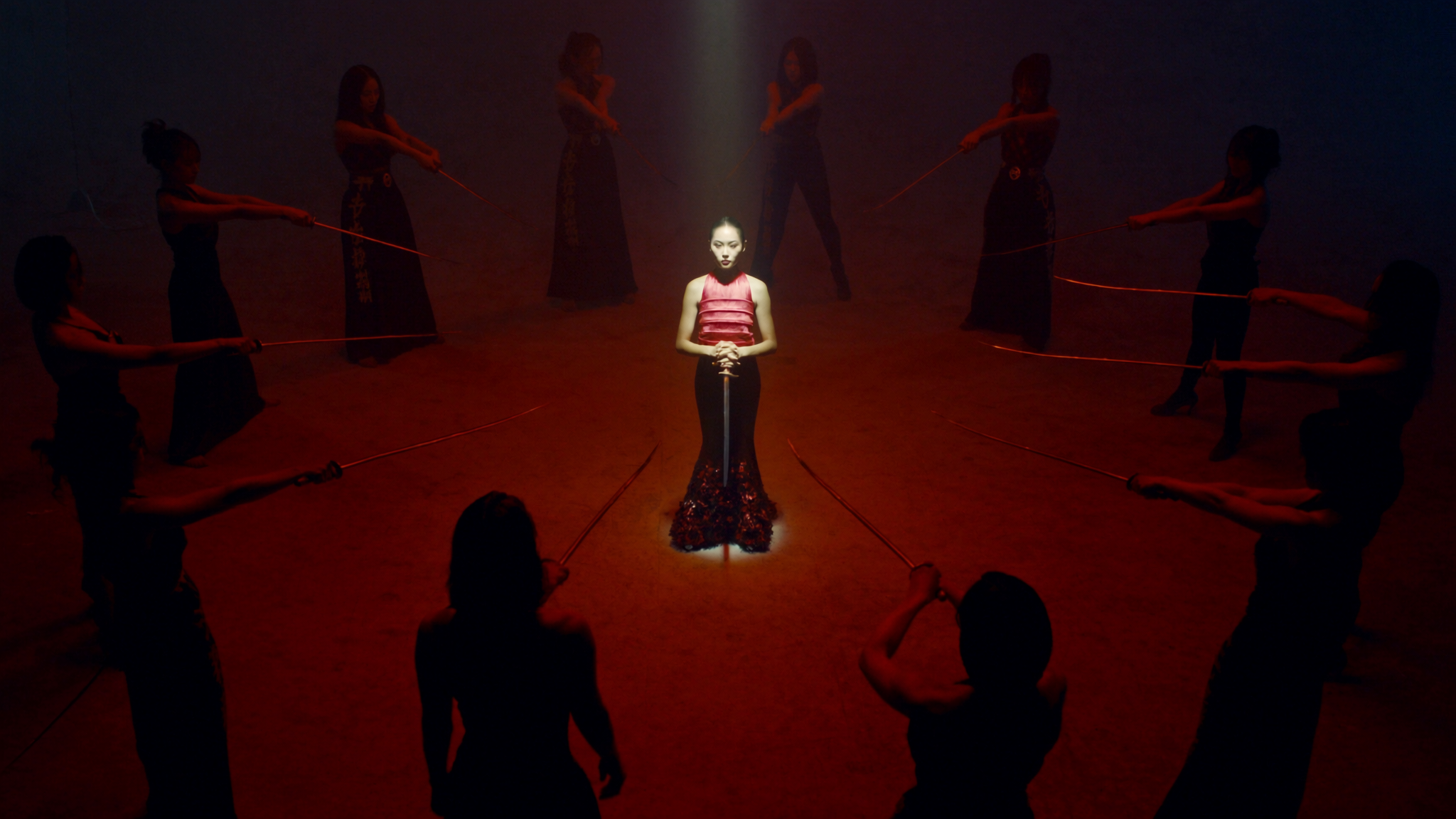
Mastering AI Storytelling: A Cinematography Guide for Viral Content
The video landscape of 2025 has a strange paradox: there is more content than ever, and almost none of it is memorable. Anyone can generate a flashy clip with an AI tool, but very few creators can tell a story that keeps viewers watching to the end, makes them feel something, and pushes them to share. The difference is not the tool. The difference is storytelling, executed with the precision of a cinematographer.
This guide is about mastering that craft with AI. You will learn how to think like a director, how to choose the right model for each narrative moment, how to keep characters consistent across a story, and how to structure a video that hooks viewers in the first three seconds and holds them until the payoff.
The New Rules of the Creator Economy
Short-form platforms reward speed, but they reward retention even more. Algorithms push content that keeps people watching, and the most reliable way to keep people watching is a well-structured story with emotional stakes. In 2025, AI video generation has collapsed the production cost of that story: what used to require a crew, a location, and a week of editing can now be produced by one person in an afternoon.
The catch is that the barrier to entry dropped for everyone. When every creator has access to the same models, the output of the tools becomes a commodity. The competitive advantage returns to the fundamentals: knowing what to say, how to sequence it, and how to make it look intentional. That is cinematography, and it is more valuable now than ever.
Understanding the AI Cinematography Toolbox
Before directing, you need to know your instruments. The modern AI video toolbox has four layers: base models, reference and fusion features, keyframe control, and director-level assistants that tie everything together.
Base models define the visual language. Some are optimized for photorealism, others for anime, others for stylized motion. Each has a personality, and a good director learns to cast the model like an actor: the photorealism specialist for emotional close-ups, the action model for the chase, the stylized model for the dream sequence.
Reference and fusion features solve identity. Multi-image fusion lets you feed several photos of a character and get a stable identity across every generation. This is the tool that makes serialized storytelling possible.
Keyframe control gives you choreography. By defining the poses that matter, you tell the model exactly how the scene moves at critical moments. The model fills the gaps, but the dramatic beats are yours.
Director-level assistants, increasingly common in serious platforms, apply cinematographic principles automatically: they break a script into shots, recommend camera moves, and keep the visual language consistent. You remain the author; the assistant handles the technical execution.
Choosing the Right Model for the Narrative Moment
The single most common mistake in AI storytelling is using one model for everything. It is like shooting an entire film with one lens: technically possible, artistically limited. Different scenes make different demands, and the best results come from matching the model to the moment.
For dialogue and emotional beats, prioritize a model with strong character fidelity and natural micro-motion: subtle blinking, breathing, and expression changes. Photorealistic models with robust fusion support are usually the best choice, because the audience is looking at faces and will notice any drift.
For action and movement, choose a model with proven physics. Running, jumping, and object interactions need believable motion, and the fastest way to ruin a story is a character who floats or a punch that misses its weight. Test the action capabilities of a model before you build a sequence around it.
For atmosphere and style, consider specialized models. A dream sequence, a flashback, or a fantasy world benefits from a model tuned for stylized output. The contrast between the stylized world and the realistic one becomes a storytelling device in itself.
For speed and iteration, keep a fast, cheap model in the rotation. Early drafts, thumbnail variations, and exploration benefit from velocity. Lock the expensive models for final renders.
Building a Character Who Stays the Same
Storytelling dies when characters change appearance between shots. The audience may not name the problem, but they feel it: the person on screen is not the person from the previous scene, and the story loses its grip.
The solution is discipline with references. Define each character once, with multiple good images: front, side, three-quarter, different outfits, different lighting. Feed them all to the fusion system so it builds a complete identity model. Then use that identity for every generation involving the character.
Treat the character's wardrobe and props as part of the identity. If a character carries a distinctive bag or wears a signature jacket, include it in the reference set. Small details anchor the character in the viewer's mind, and consistency on details reads as intentional design.
Finally, respect the limits of the tools. If a scene demands an angle or a pose that the identity model struggles with, generate it in parts: establish the character with a reference frame, then add the motion. Do not fight the tool; design around its strengths.
From Script to Cinematic Direction
The transition from "I have an idea" to "I have a shot list" is where most creators lose quality. The fix is a simple structured workflow.
First, write the story in beats. A beat is one meaningful change: the character receives bad news, the door opens, the reveal lands. If a beat does not change the emotional state or the information state of the story, cut it.
Second, assign each beat a shot type. Close-ups for emotional moments, wide shots for establishing context, tracking shots for movement and tension. This is the visual vocabulary of cinema, and AI generation responds well to explicit camera language.
Third, decide the motion of every shot. Does the camera push in as the tension rises? Does it pull back for the reveal? Camera movement is not decoration; it is meaning. A slow push-in tells the audience something important is coming.
Fourth, define the lighting mood per scene. Warm light for safety and comfort, hard light for conflict, low light for mystery. Consistency within a scene and intentional change between scenes creates the visual arc of the story.
The Structure of Viral Narrative
Viral videos are not accidents. They follow a structure that exploits how human attention works.
The hook is the first three seconds. You need a visual or narrative element that stops the scroll: an unusual image, a provocative question, a moment of high tension. The hook must promise value, and the rest of the video must deliver on that promise.
The escalation is the middle. Each beat should raise the stakes or deepen the emotion. This is where pacing matters most: too slow and viewers leave, too fast and the story feels rushed. Use rhythm variation, alternating intense moments with brief breathing room.
The payoff is the ending. The audience must feel that the story arrived somewhere. A reveal, a resolution, a lesson, or a strong emotional beat. Videos that end weakly kill their own shareability; videos that end strongly become the ones people send to friends.
The loop is the secret weapon. The best short videos are structured so the ending reframes the beginning. Viewers who rewatch feel clever for catching the detail, and rewatches are gold for the algorithm.
Show, Don't Tell, with Visual Control
The oldest rule of storytelling has a new technical dimension. In AI video, "telling" is a title card that explains what happens; "showing" is the image itself carrying the information.
Use the lens to show emotion. A close-up on eyes, a hand that hesitates, a character who turns away at the wrong moment: these micro-actions communicate more than any caption. Prompt them explicitly; AI models follow clear action descriptions well.
Use the environment to show context. A character in a messy room tells a story about their life. An empty street at night sets a tone. The background is not decoration; it is character development.
Use motion to show intent. A character who moves toward something is active and driven; a character who stays still is passive or trapped. Movement direction and speed are storytelling tools.
Working with Director-Level Assistants
The newest addition to the AI cinematography toolbox is the assistant that thinks like a director. It accepts your script or story outline and returns a production plan: the shot list, the model recommendations, the pacing guidance, and the visual constraints.
These assistants are powerful because they encode decades of cinematic craft. They know that a story needs a setup, a conflict, and a resolution; that close-ups build intimacy; that cutting on action hides transitions. When you are learning, they teach by example. When you are experienced, they save hours of repetitive planning.
Use them as collaborators, not replacements. Review their shot suggestions critically, adjust the ones that do not fit your vision, and keep the final creative authority. The best results come from a human who knows the story and an assistant who knows the craft.
Managing Resources Across a Story
A story is a portfolio of shots, and resources must be allocated like a budget. Expensive, high-quality generations should be reserved for the moments that define the story: the hook, the emotional climax, the reveal. Supporting shots can use faster, cheaper models.
Plan the shot list before generating. Know which shots are heroes and which are fillers. Generate the fillers first to establish the world, then spend the premium resources on the moments that will be remembered.
This discipline has a creative benefit too. When you know which moments matter, you stop polishing everything and start polishing the right things. The story gets sharper because your attention is focused where the audience will look.
A Simple Example: The Three-Beat Short
To make the structure concrete, consider a 30-second story built from three beats.
Beat one is the hook: a close-up of a character looking at something off-screen with a tense expression. The shot is a slow push-in, warm light, the character's face in sharp focus. The audience does not know what they are looking at, and they need to know.
Beat two is the escalation: a cut to the object, revealed as a closed door with light leaking underneath. The camera is static, the sound drops, the light is cold and hard. The audience understands the character is afraid of what is behind it.
Beat three is the payoff: the character reaches for the handle, the camera holds on their hand, and the frame cuts to black before the door opens. The story ends on anticipation, and the ambiguity invites a rewatch.
Notice what made this work: every beat changed the emotional state, every shot was chosen for its narrative job, and the character never changed appearance because their identity was locked by reference. No text explained anything; the images and motion carried the entire story. That is the craft of AI storytelling, and it is reproducible for any creator who plans before generating.
Frequently Asked Questions
How long does it take to produce a short AI video with good storytelling? Once the character references and style tokens are defined, a 30-second video can be storyboarded, generated, and assembled in a few hours. The first project takes longer because you are building the foundation.
Do I need a background in film to use these techniques? No. The concepts in this guide, hooks, pacing, shot types, show don't tell, are learnable. Start by studying videos you admire and noting what they do with shots and rhythm.
Can AI really understand complex narratives? Modern models understand detailed prompts, scene descriptions, and story beats well. They are not creative authors on their own, but they execute visual direction faithfully when given clear instructions.
What is the biggest mistake beginners make? Using one model for everything and generating without a plan. Define the story, choose models per scene, and lock character identity before generating.
How do I keep a story consistent across multiple videos? Maintain a project with the same character references, style tokens, and lighting rules. Reuse the foundation for every episode or part.
Is viral success guaranteed by good storytelling? No tool or technique guarantees virality. Storytelling maximizes the probability by making content engaging, memorable, and shareable. Distribution, timing, and luck still play a role.
Conclusion
AI has removed the production barriers that kept storytelling in the hands of the few. The craft that remains is the craft that always mattered: knowing what to say, how to sequence it, and how to make it look intentional. By choosing models for narrative moments, locking character identity with references, structuring hooks and payoffs, and using director-level assistance as a collaborator, any creator can produce video that does not just look generated but feels directed. Master the craft, and the tools will follow your vision.
