
In the hyper-competitive world of online video, attention has become the scarcest resource. Whether a video goes viral no longer depends only on content quality — it starts in the first moment a viewer sees the cover image, or thumbnail. The click-through rate of a thumbnail is often the deciding factor between a video that takes off and one that sinks. Studies consistently show that professionally designed thumbnails can lift click-through rates dramatically compared to amateur alternatives.
The good news is that you no longer need a graphic designer to produce high-performing thumbnails. AI image tools have made it possible for any creator to generate covers with strong composition, high sharpness, and artistic polish in minutes. This guide explains the psychology behind thumbnails that work, the AI tools and techniques to create them, and a practical workflow you can apply to your next video.
Why thumbnails decide virality
Viewers scroll through feeds at high speed, and their brains make snap judgments in a fraction of a second. The thumbnail must "stop" the scroll. That single decision — to pause or to keep scrolling — is the gate through which all your content must pass.
Attention is shaped by perception psychology. The concept of salience is the heart of it: the use of high contrast and the placement of key elements in the focal points where the human eye looks automatically. A thumbnail that maximizes salience wins more clicks, which feeds the platform's algorithm, which shows the video to more people. In short: better thumbnails compound into more reach.
The psychology of a high-CTR thumbnail
Before touching any tool, learn the design principles that drive clicks.
Contrast and color
High contrast between the subject and the background makes the thumbnail readable at small sizes — which is how most viewers see it on mobile. Complementary colors (blue and orange, for example) create natural tension that draws the eye. Avoid low-contrast palettes that blend together; they vanish in a busy feed.
Faces and emotion
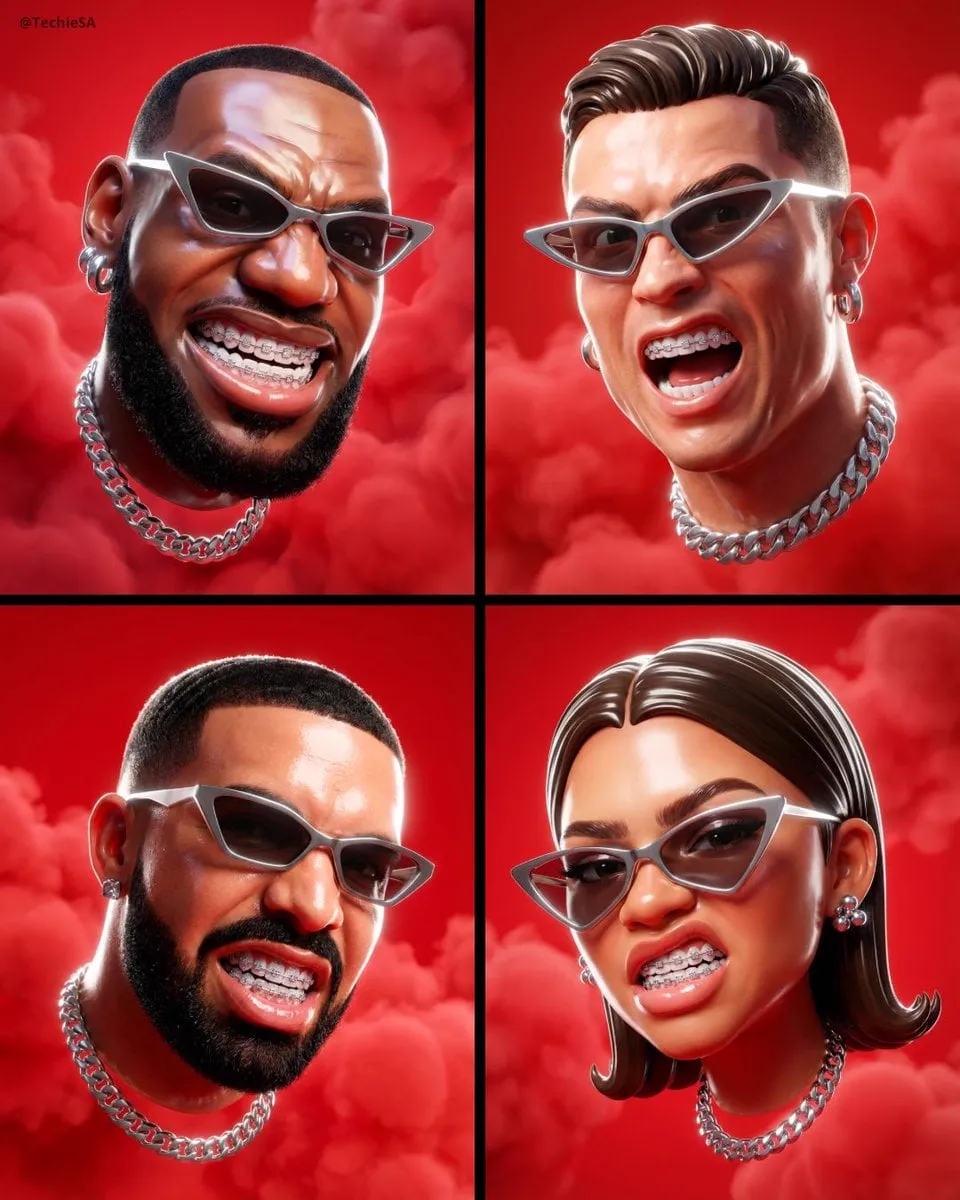
Human brains are wired to notice faces, especially eyes. A close-up of a face showing strong emotion — surprise, excitement, curiosity — outperforms almost any other thumbnail element. If your video features a person, make the face large and expressive. If not, consider adding a reaction face or an illustrated character.
Text that complements, not duplicates
A few short words on the thumbnail can add context and curiosity: "I was wrong," "24 hours," "The truth about." Keep it to 2-4 words, large and legible. Avoid repeating the title verbatim; the thumbnail text should add a new layer, not duplicate what the viewer already read.
The rule of thirds and focal placement
Place the subject at a focal intersection of the frame. Eye-tracking research shows viewers land on these points first. Leave breathing room around the subject, and keep the most important element — the face, the product, the text — away from the edges where platform UI elements (timestamps, icons) may cover it.
Clarity at small size
Most thumbnails are viewed at less than 10% of their full resolution. Test yours at a small size before publishing: if you cannot read the text or identify the subject at thumbnail scale, simplify.
Why use AI for thumbnails
AI tools bring three advantages to thumbnail production: speed, consistency, and iteration.
- Speed: a good AI thumbnail takes minutes, not hours. You can produce 10 concepts in an afternoon and test them all.
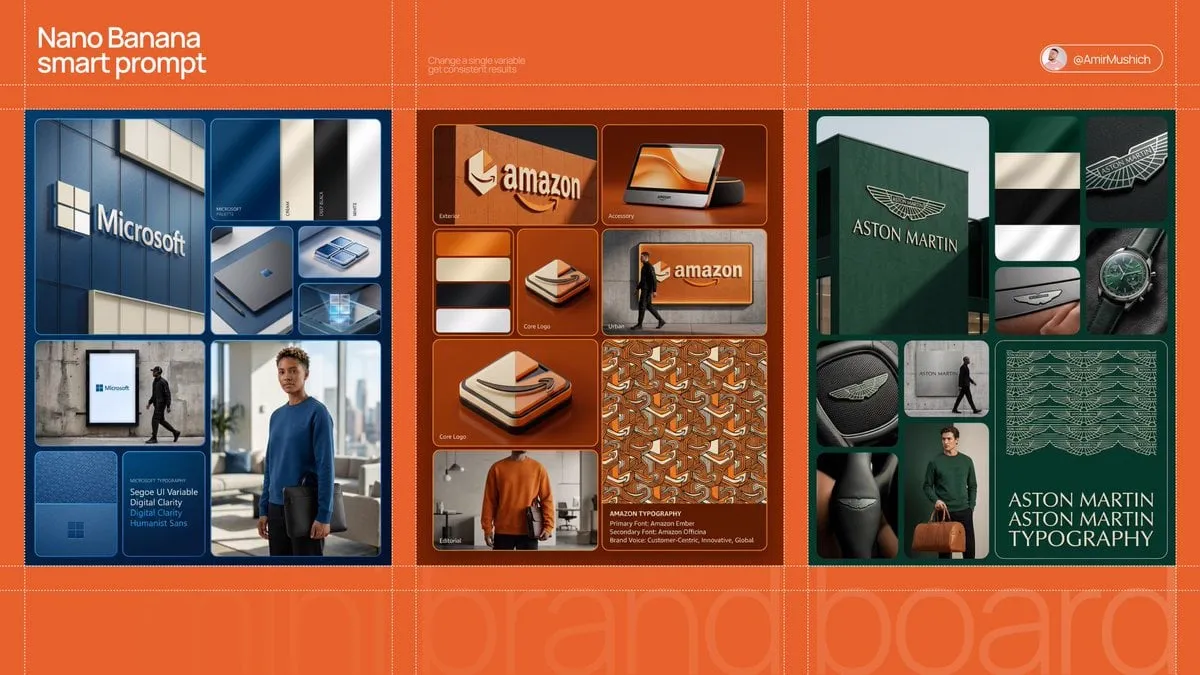
- Consistency: AI with reference images keeps your brand style uniform across videos — the same color grade, the same character, the same typography feel. Viewers learn to recognize your channel.
- Iteration: AI makes it cheap to try variations. Change the emotion, the background, the lighting, and compare options without starting from scratch.
The AI workflow for thumbnails, step by step
Here is a practical workflow that combines AI generation with quick manual polish.
Step 1: Define the concept
Answer three questions: What is the video's promise? Who is the target viewer? What emotion should the thumbnail trigger? Write a one-line concept, for example: "A shocked reaction to a surprising discovery, in a neon-lit studio."
Step 2: Generate base images
Use an AI image generator with a detailed prompt. Structure it like this:
- Subject: who or what is in the frame, with expressions and pose.
- Environment: the setting and its mood.
- Style: photorealistic, 3D render, illustration, cinematic.
- Lighting: dramatic, soft, neon, golden hour.
- Composition: close-up, medium shot, rule of thirds, face at focal point.
- Quality markers: high detail, sharp focus, 4K.
Example prompt: "Close-up of a young man with a surprised, excited expression looking slightly off-camera, neon purple and orange lighting, cinematic photorealistic style, shallow depth of field, face at upper third focal point, extremely detailed, sharp."
Step 3: Lock your brand consistency
If you create thumbnails regularly, establish a reference set: a character image, a color palette, a background style. Use reference images with your generator so every thumbnail shares the same visual DNA. Consistency across thumbnails makes your content instantly recognizable and builds trust with subscribers.
Step 4: Generate variations
Produce several versions — different emotions, backgrounds, or compositions. Keep the ones that feel strongest and show them to a friend or a test group. Objective feedback beats your own bias every time.
Step 5: Add text and final polish
Overlay your 2-4 word hook using an image editor or a design tool. Choose a bold font, high contrast against the background, and a subtle outline or shadow for legibility. Apply a final contrast and saturation boost, then export at high resolution in the platform's recommended format.
Step 6: Test and learn
Upload your video with your best thumbnail, but track performance. If a video underperforms, swap the thumbnail after a day or two and measure again. Over time, you will learn what your specific audience responds to — and that data is more valuable than any generic advice.
Advanced techniques
Once you master the basics, these advanced moves will push your thumbnails further.
Video-to-image and image-to-image workflows
You do not have to generate everything from scratch. Extract a strong frame from your video and use image-to-image tools to enhance it: improve lighting, add a dramatic background, upscale quality. This keeps the thumbnail honest — it reflects the actual video — while boosting its polish.
Multi-reference fusion
For series or recurring formats, use multi-reference fusion: supply the generator with your character image and a style reference, and it maintains both across all thumbnails. This is how channels with animated or illustrated personas keep a consistent look without redrawing everything each time.
A/B testing at scale
Platforms with thumbnail testing features let you upload multiple thumbnails and let the algorithm show different viewers different versions. Prepare 2-3 genuinely different concepts — not just color swaps — and let data decide.
Seasonal and trend-aware design
Align thumbnails with cultural moments: holidays, memes, trending topics. A thumbnail that connects to what people are already talking about has a head start. AI makes it easy to adapt a base design to new trends quickly.
A complete example: thumbnail for a travel vlog
Let us walk through one complete thumbnail project so you can see the full workflow in action.
The video
A travel channel is publishing "24 hours in Lisbon" — a fast-paced city guide. The video's promise is density: many places, little time, maximum experience. The target viewer is a young traveler deciding whether to watch.
Step 1: concept
The thumbnail needs to communicate energy and a famous landmark instantly. Concept: the host standing on a viewpoint at sunset, the city sprawling behind him, one hand pointing at the horizon, expression of excitement. The hook text: "24 HOURS" — short, intriguing, and honest about the video's format.
Step 2: generation prompt
Subject: a young man with short dark hair, wearing a light jacket, standing on a rooftop viewpoint, excited expression, pointing forward. Environment: Lisbon skyline at sunset, warm golden light, slight haze. Style: cinematic photorealistic, high contrast, saturated warm tones. Composition: medium shot, subject on the left third, city filling the right side, face clearly visible. Quality: sharp, detailed, 4K.
Generate three variations: one with the sunset palette, one slightly cooler with more blue hour tones, one with the subject larger in frame.
Step 3: brand consistency
The channel uses a consistent color grade — warm, golden, slightly filmic — and always places the host on the left third with the hook text on the right. The reference image from a previous thumbnail is used as a style reference so the new thumbnail matches the channel's look. Regular viewers recognize the style before reading the title.
Step 4: text and polish
Overlay "24 HOURS" in the right third in a bold condensed font, white with a dark outline for contrast against the sunset. Add a subtle vignette to draw the eye to the subject. Export at the platform's recommended resolution, then generate a mobile-size preview to verify legibility.
Step 5: testing
The channel uploads with the sunset variation but prepares the blue-hour version as a backup. If the click-through rate after two days is below the channel's baseline, the thumbnail is swapped and measured again. The data feeds back into next week's concept: which emotion, which composition, which text style worked.
What the example teaches
Notice how few steps actually involve AI generation. The craft is in the concept, the prompt structure, the consistency system, and the testing loop. AI is the accelerator, not the brain. That is the mindset that separates creators who get results from creators who just generate images.
Common mistakes and how to fix them
- Text overload: too many words kill readability. Cut to 2-4 words.
- Low contrast: if the thumbnail blends into the feed, it is invisible. Push contrast aggressively.
- Tiny faces: if the face is not readable at small size, the emotional hook fails. Zoom in.
- Clickbait disconnect: a thumbnail that promises something the video does not deliver burns trust and hurts long-term growth. Keep the promise honest.
- Inconsistent branding: random styles across videos confuse the audience. Build a recognizable system.
- Ignoring mobile: most views come from phones. Always check the thumbnail at mobile scale.
FAQ
What is a good click-through rate for thumbnails?
It varies by niche and platform, but as a rule of thumb, a CTR above 4-5% is decent and above 8-10% is strong for organic content. Compare against your own channel's baseline rather than absolute numbers.
Which AI tool is best for thumbnails?
The best tool is the one you will actually use. Image generators with strong prompt adherence and style control work well; pairing them with a simple editor for text overlay covers the full workflow. Many creators use one generator for images and one design tool for text.
Should thumbnails show the creator's face?
For personality-driven channels, yes — faces build recognition and connection. For topic-driven channels, a strong subject image with a clear hook works better. Test both.
Can I use AI thumbnails for monetized content?
Yes, generally. Check the terms of the AI tool you use, especially for commercial use. There is no rule against AI thumbnails in most monetization programs, but misleading thumbnails that violate platform policies remain a risk.
How many thumbnail versions should I test?
For a standard upload, prepare 2-3 distinct concepts. For high-stakes videos (a launch, a major review), prepare up to 5. Beyond that, the effort-to-benefit ratio drops.
Conclusion
Thumbnails are the front door of your content, and AI has made professional-quality doors accessible to everyone. The winning formula combines psychology — contrast, faces, focal placement, honest hooks — with a disciplined AI workflow: define the concept, generate with strong prompts, lock brand consistency, iterate cheaply, and test relentlessly. The creators who treat thumbnails as a system rather than an afterthought build a compounding advantage: better CTR feeds better distribution, which funds more experiments, which produces better thumbnails still. Start with one video, apply this workflow, and let the data guide your next move.
