
Why Character Consistency Matters
An AI video can have stunning frames and still feel wrong. The reason is almost always the same: the character changed between shots. A face that is recognizable in scene one becomes a stranger in scene two. A jacket that started red turns orange in the next angle. Viewers rarely name the problem, but they feel it instantly, and the video loses the trust that storytelling depends on.
Character consistency is what separates a demo reel from a finished story. In commercial work it is even more important: a brand character or product spokesperson that drifts across scenes damages credibility. For creators building a series, consistency is the difference between an audience that recognizes the world and one that just watches clips.
The good news is that the tools for solving this have matured. Multi-image fusion, reference-based generation, and keyframe control now let creators lock a character's identity the way a casting director locks an actor. This guide explains how those techniques work and how to build a workflow around them.
What Multi-Image Fusion Actually Does
Multi-image fusion is not overlaying two pictures. It is a technique that lets a generation model learn from a small set of input images and merge their visual information into a single, coherent identity. The model uses semantic understanding and attention mechanisms to figure out which features matter: the shape of the face, the color of the eyes, the texture of the hair, the details of the costume.
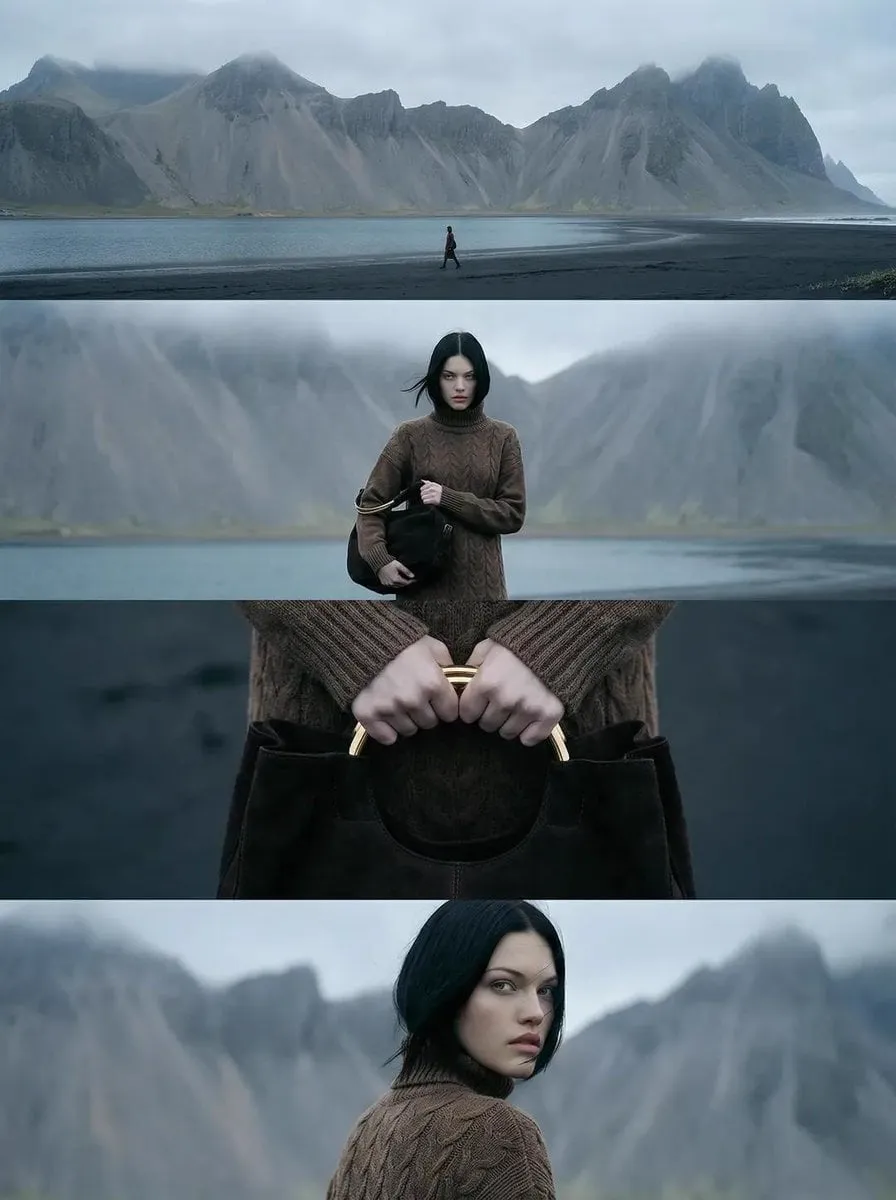
Think of it as building a character sheet. One image gives you the face, another the wardrobe, another the general body language. The model does not copy any single image; it extracts the stable traits and carries them into every new scene.
This is a structural advantage over text-only prompting. When you describe a character in words, the model has to invent the visual details, and it will invent them differently every time. When you give it reference images, the invention is constrained to a consistent identity.
Building a Reference Set That Works
The quality of your reference set decides the quality of your consistency. A good set is not a random collection of images. It is a controlled portrait session.
Start with these basics:
- One clear front-facing portrait with even lighting;
- One three-quarter or side view to capture the face's volume;
- One full-body shot showing the complete outfit;
- One close-up showing distinctive details: eye color, scars, jewelry, fabric texture;
- Optional: action shots if the character moves in a specific way.
Keep the lighting consistent across the set. A face lit from the left in one reference and from the right in another confuses the model about the face's actual shadows. Avoid watermarks, heavy filters, and text overlays. If the character is based on a real person, make sure you have the rights to use their likeness.
Anchoring Identity with Keyframes
Reference sets define who the character is, but keyframes control how that identity travels through the story. A keyframe is a frame you generate deliberately and then ask the model to build around.
The practical approach is to create anchor frames for the important moments: the character's first appearance, a dramatic close-up, the final shot. Generate these carefully, with the full reference set, until they look right. Then generate the scenes between the anchors using the anchors as context. The result is a chain of frames that keeps the identity stable even when the motion between them is complex.
This is especially useful for dialogue scenes, where the same character needs to appear in many angles. Generate the master anchor once, then derive the close-ups and over-the-shoulder shots from it.
Controlling Style Across Scenes
Characters do not exist in a vacuum. Their world has a style, and that style has to stay consistent too. A character who looks right but moves through wildly different color grades feels like a cut-and-paste job.
Apply the same logic you used for the character to the environment. Collect style references for each location: lighting direction, color palette, time of day. If scene one is a warm dusk and scene two is a cold dawn, the transition should be intentional, not accidental.
For series content, write a short style guide: the character's palette, the world's palette, the lighting rules. Use it as the shared input for every generation session. This is the difference between a video and a coherent story.
Choosing Models for Consistency
Not every model handles multi-image input equally well. When consistency is your priority, evaluate models on three things:
- How many reference images they accept, and whether they use them all or ignore some;
- How they handle identity under motion, since faces deform when characters turn and move;
- How they handle style transfer, since you often want the same identity in different looks.
Some models are excellent at cinematic realism but weak at identity locking. Others are built specifically for multi-reference work and are the safer choice for character-driven projects. Test the same reference set on two or three candidates before committing to a series.
Also consider the cost side. Consistency work means regenerating shots until they pass. A model that gets it right in two tries is cheaper than one that needs ten, even if the per-generation price is higher. Measure efficiency, not just raw quality.
A Step-by-Step Workflow for Consistent Characters
Here is a workflow that works across most projects, from a single short to a full series.
- Write a character brief: name, age, role, personality, visual traits, wardrobe. Use it in every prompt.
- Build the reference set as described above. Generate or collect four to eight images.
- Test the set in a simple scene before starting the real project. Fix the set if the identity drifts.
- Create anchor keyframes for the story's important moments.
- Generate scene by scene, using references and anchors as context, not just text prompts.
- Check every new shot against the anchors. Flag any shot where the face, outfit, or lighting drifts.
- Regenerate failed shots immediately instead of trying to fix them in post.
- For series, save the reference set and style guide as the project's standard, so every future episode starts from the same place.
Troubleshooting Common Consistency Problems
The face changes between every shot. Your reference set is probably too small or too inconsistent. Add a front portrait and a side view with matching lighting. Reduce the number of models in the pipeline.
The outfit changes color or details. Lock the wardrobe in the reference images and mention it briefly in every prompt. Do not rely on description alone; the model will invent details it was never shown.
The character looks right but the world looks wrong. Build environment references, not just character references. Keep the palette and lighting rules consistent across scenes.
The identity drifts only during motion. Motion is the hardest case for any model. Split the motion into shorter segments, generate the endpoints as keyframes, and let the model fill the gap between stable anchors.
The character is fine in stills but unrecognizable in close-ups. Add close-up reference images with the same face but tighter framing. Models learn facial proportions better when they see the face at the scale they need to render.
The style drifts between episodes of a series. Treat the series like a long production: keep the reference set, the palette, and the lighting guide in one place, and load them at the start of every session. If you work with other people, make the style guide the shared contract, so everyone generates against the same targets. Consistency between episodes is not something you check at the end; it is something you set up before the first episode is made.
Consistency for Products and Brands
Character consistency is not only for fictional stories. Product content has the same problem: a product that changes color, shape, or label between shots loses credibility instantly. For e-commerce, advertising, and brand content, consistency is a commercial requirement, not an aesthetic preference.
Apply the same reference-based workflow to objects. Photograph or render the product from multiple angles with consistent lighting, then use those references as the identity anchors for every scene. Pay extra attention to details that customers notice: logo placement, color accuracy, packaging texture, and proportions.
The same logic extends to brand spokespeople and mascots. If your brand uses a recurring presenter or animated character, treat them like a film character: build the reference set once, write the style guide, and lock the identity across every campaign. The payoff is that audiences recognize the brand from a single frame, which is exactly what consistency is for.
How Consistency Works with Different Video Styles
Consistency means different things in different styles, and the technique changes accordingly. It helps to name the style you are working in before you choose your tools.
Photorealistic content demands the strictest identity discipline, because viewers compare faces against real-world expectations. Reference sets, anchors, and minimal model mixing are non-negotiable. Small drifts that would pass in animation are glaring in realism.
Stylized and animated content gives you more room. The same visual shorthand can carry across scenes, so identity can be defined by silhouette, color, and signature props rather than fine facial detail. Consistency here is more about the style language staying stable than about exact facial geometry.
Documentary-style and branded content sits in the middle. The subject should be consistent, but the environment can vary more, since real footage itself has natural variation. The goal is a believable continuity rather than pixel-level matching.
Comedy and meme content is the most forgiving. Identity can be loose, and part of the humor can come from the character shifting in absurd ways. Even here, though, deliberate shifts work better than accidental ones: decide what changes and why, so the audience reads the change as a choice.
Whatever the style, write the rule down. A one-paragraph style guide per project prevents the most common failure mode, which is inconsistency not because the tools failed, but because the decisions were never made.
A Quick Consistency Checklist
Before you call a project consistent, run it through a short checklist. The answers expose the weak points before your audience does.
- Does every character have a reference set with front, side, and full-body views?
- Do all references share the same lighting direction and color balance?
- Is there an anchor frame for every major story moment?
- Does every scene start from an anchor or from a frame that matches the previous scene?
- Is the palette and lighting language written down for the whole project?
- Are the model choices documented per scene type?
- Does a new shot get compared against the anchors before it is accepted?
- Is the style guide reused when a new episode or campaign starts?
A project that passes all eight points may still have minor flaws, but they will be flaws of execution, not of planning. The checklist is also the fastest way to onboard a collaborator, since it turns your consistency discipline into a shared process instead of a private habit.
FAQ
Can I use photos of an actor as references?
Yes, if you have the rights. For commercial projects, get a signed release. For personal projects, using your own likeness or a fictional composite is safest.
Do I need to write long prompts if I have reference images?
No. The images do the heavy lifting. Prompts should describe action, emotion, and environment, not re-describe the character.
How many reference images are enough?
Four to eight well-chosen images beat twenty random ones. Prioritize variety of angle and consistency of lighting over quantity.
Why does my character still change when I use the same prompt?
Because the model invents details not present in the prompt or references. Add references for the missing details, or accept minor variation and lock the important traits with keyframes.
Is consistency more expensive than normal generation?
It can be, because you regenerate more often. But the total cost is usually lower than trying to fix inconsistent footage in post-production, which often cannot be fixed at all.
