
Why Character Consistency Is the Hardest Problem in AI Video
AI video generation has moved from a technical curiosity to a serious production tool in an astonishingly short time. A few years ago, text-to-video models could produce clips that looked magical for a few seconds and then fell apart: faces warped, clothing changed color between frames, and a character who appeared in one shot looked completely different in the next. For filmmakers, advertisers, and series creators, that kind of failure is fatal. A mascot that changes face halfway through an ad is not an artistic choice; it is a production defect that destroys trust in the content.
The technical name for this failure mode is identity drift, and it has been the single biggest obstacle between AI video and professional work. Viewers are remarkably sensitive to facial geometry. They may not be able to articulate exactly what changed, but they feel it: something is off, the character is not the same person, the scene does not belong to the same story. That is why consistency is where production teams spend most of their time when they adopt AI video tools. Everything else, from resolution to motion quality, is easier to fix.
What Multi-Image Fusion Actually Does
Multi-image fusion is a technique that attacks identity drift at the source. Instead of giving the video model a single reference image or just a text description, the creator supplies several images of the same character: a front-facing portrait, a side profile, an expression sheet, maybe a full-body shot in the character's signature outfit. The model encodes all of these references into a shared representation, and that representation is used as a conditioning signal while every frame of the video is generated.
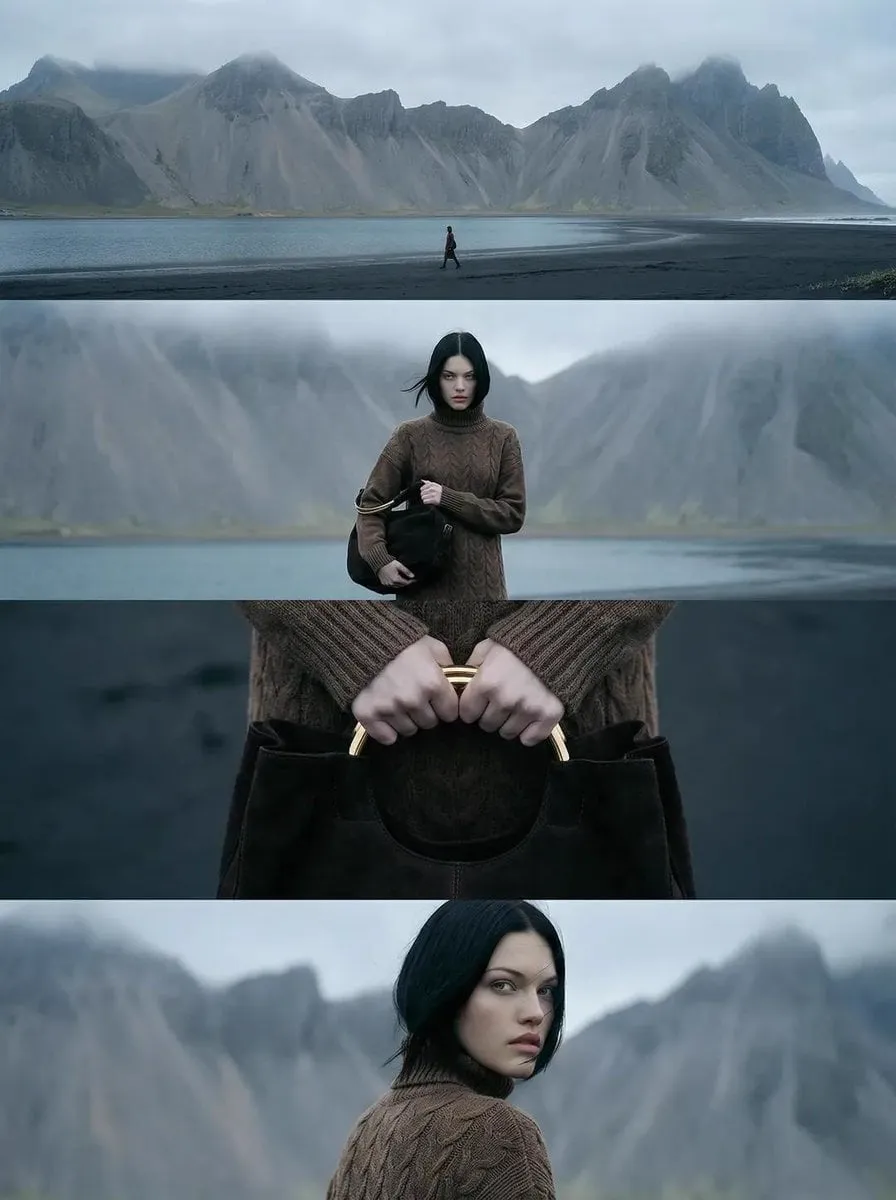
Think of it like a witness description in a police sketch. One sentence such as "tall man with a beard" produces a generic drawing. A list of details, seen from different angles and in different lighting, produces a drawing that people recognize. Multi-image fusion does something similar inside the model: it builds a character lock from multiple viewpoints so that the character's identity stays stable even when the camera moves, the lighting changes, or the character performs new actions.
The key insight is that consistency is not about making every frame identical. It is about making every frame recognizably the same person, object, or world. Single-image references can lock a face, but they often fail when the character turns around or when a new scene requires a different pose. Multiple references give the model enough information to generalize: what the character looks like from behind, how the hair falls, what the uniform looks like from the side.
From Character Sheets to Stable Identities
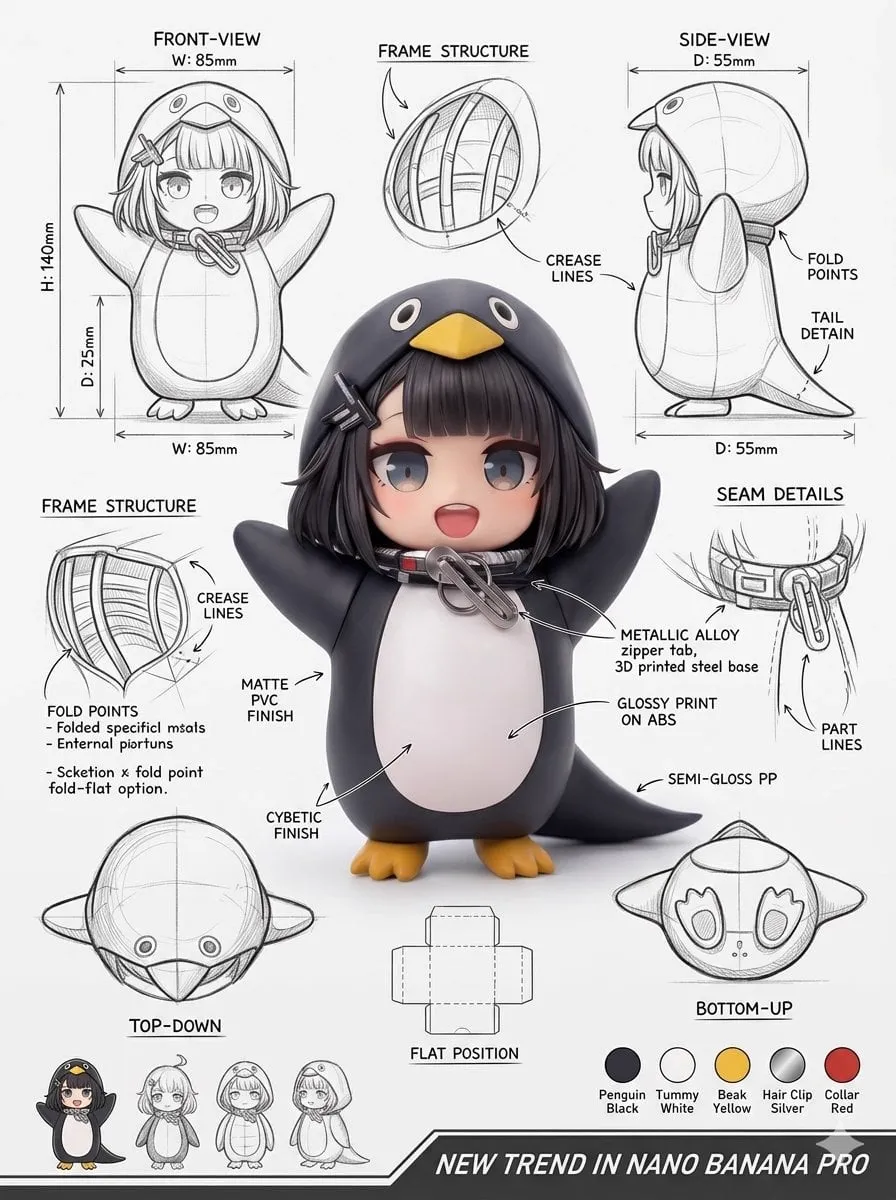
None of this is new in spirit. Traditional animation studios have used character model sheets for decades: drawings of the same character from multiple angles, with different expressions and key poses, so that every animator draws the same person. VFX pipelines do the same with turnaround reference photos, texture maps, and 3D scans. The difference is that those processes are slow, expensive, and require specialized artists.
AI tools are now bringing the model-sheet idea to everyone. In the past, an independent creator who wanted a consistent character had limited options: reuse the same seed values, lock styles with image-to-image techniques, or manually fix frames in post-production. These workarounds were brittle. A single seed could keep a face stable within one clip but not across ten clips. Style locks kept the aesthetic consistent but let the identity drift. Manual fixes were precise but destroyed the speed advantage that AI promised.
Multi-image fusion removes most of that manual work. Instead of fighting the model, the creator works with it: build a small library of reference images once, and reuse it across every scene in a project. The character stays stable not because someone painted over the frames, but because the model itself is conditioned to reproduce the same identity every time.
Building a Reference Set That Works
A good reference set is the difference between a character that holds up and a character that melts. Here is what matters.
What to Shoot or Generate
The best references are simple and consistent: neutral lighting, plain background, clear view of the face, and no heavy filters. If the character has distinctive features, hair, scars, or accessories, make sure those details are visible in at least two images. You are not looking for artistic shots; you are looking for identification shots, the kind of images you would use for a passport or a casting call.
How Many Images Do You Need
Three to five well-chosen images usually outperform twenty sloppy ones. A front portrait, a three-quarter view, a side profile, a full-body shot, and one image showing the character's key prop or outfit is a solid starting set. More images help when the character has complex costumes or appears in many different situations, but every extra image also increases the chance of conflicting information.
Avoiding Conflicting References
The most common mistake is feeding the model contradictory references: two images where the hair color is slightly different, or where the outfit has different details. The model will try to reconcile them and produce a blurry average of the identity. Keep the set consistent: same character design, same age, same outfit version. If the character changes costume between scenes, create separate reference sets for each costume rather than mixing them.
Choosing Models and Settings for Consistent Output
Not every video model handles references equally well. Some models are trained with strong character-consistency support and can hold identity across long clips; others are optimized for motion quality and will drift if you push them.
Diffusion Video Models
Most of the current generation of text-to-video models are diffusion-based. Their behavior with reference images varies, so test your character set in the actual model you plan to use before committing to a workflow. A character that holds perfectly in one model may drift in another, even with the same prompts.
Models with Identity Locks
Several models now offer explicit identity features: you upload a reference image or set, and the model keeps that identity across the whole generation. These features are worth learning, because they take the guesswork out of prompting. If your tool exposes a character or reference slot, use it instead of describing the character in the prompt.
When to Generate First, Then Refine
A practical pattern is to generate keyframes first. Ask the model to produce a still image or a short clip of the character in the target pose, check that the identity matches the references, and only then generate the full shot. Catching a drift at the keyframe stage costs seconds; catching it after a long render costs much more.
A Practical Workflow: From Idea to Consistent Scene
Here is a repeatable workflow that works across most AI video tools:
- Write a short character bible: name, age, key features, outfit, personality notes. This keeps your prompts consistent.
- Build the reference set: three to five images that clearly define the character.
- Test the set in your chosen model with a simple prompt before you start the real project.
- Generate keyframes for each new scene: the character in the right pose, right location, right mood.
- Generate the full clips using the keyframe and the reference set together.
- Review the first pass for drift: face, wardrobe, props, and background continuity.
- Regenerate only the failed shots, keeping the settings that worked.
- Assemble the clips and make minor adjustments in editing.
This sounds like extra steps, but it saves time overall. Most failed AI video shots fail because of consistency, not motion. Fixing the consistency problem early means fewer renders, less wasted compute, and a final edit that actually looks like one continuous story.
Troubleshooting Common Consistency Failures
Even with a good workflow, things go wrong. Here are the most common issues and how to address them.
Face Drift Between Shots
If the face changes between shots that were generated separately, go back to the reference set and make sure the lighting and angle in your prompt match the references. If the drift persists, generate the second shot from the first shot's keyframe instead of from scratch.
Wardrobe and Prop Changes
When a jacket changes color or a prop disappears between shots, the reference set probably lacks a clear image of that item. Add a dedicated reference image for the prop or costume piece and mention it explicitly in the prompt.
Style Bleeding Between Characters
In scenes with two characters, their identities can blend. Generate each character's shots separately with their own reference set, then composite them. Avoid describing both characters in a single prompt unless the model supports multi-character references well.
Motion Artifacts
Sometimes the identity is stable but the motion is wobbly. This is usually a model limitation rather than a reference problem. Try a slower motion prompt, reduce the camera movement, or render the shot at a higher resolution and downscale.
Prompt Engineering for Consistent Characters
References carry the look; prompts carry the action. The discipline of writing consistent prompts is what ties a project together, because even with perfect references, sloppy language produces sloppy scenes.
Keep a Character Vocabulary
Decide on fixed words for the character's key traits and reuse them in every prompt: "silver-haired detective in a navy trench coat" should appear the same way in scene one and scene twenty. If you describe the coat as "blue" in one prompt and "navy" in another, the model has room to drift. Write the vocabulary once in your character bible and copy it into each prompt. It feels mechanical, but it is the cheapest consistency tool you own.
Separate Identity from Action
Structure prompts as two parts: who and what. The who part comes from your vocabulary; the what part describes the scene, motion, camera, and mood. Mixing them makes the model trade off identity against action, and identity usually loses. Clear separation keeps the character anchored while the scene does the work.
Lock the Camera Language
Camera moves change how the model interprets a scene. "Slow push-in", "handheld close-up", and "wide static shot" produce different results for the same character. Pick a consistent camera language for your project so the visual style stays uniform across shots, then vary it only where the story demands.
Keep Settings Stable
Most tools have settings for motion intensity, style strength, and seed. When a generation works, write down the exact settings that produced it. Consistency is not only about prompts; it is about reproducing the winning configuration until a scene genuinely needs something different.
FAQ
Why does my AI character keep changing face between scenes?
Most likely the model is not receiving a consistent reference set. Provide the same two or three images for every generation, and keep the lighting and camera descriptions consistent across prompts.
How many reference images should I use?
Three to five is a good default. Focus on quality and consistency, not quantity.
Can I use the same references in different AI video tools?
Often yes, but each tool processes references differently. Test the same set in each tool before relying on it.
Do I need to describe the character in the prompt if I provide references?
Yes, briefly. References define the look; the prompt defines the action, mood, and scene. Short character reminders help the model connect the two.
Does multi-image fusion work for objects and locations, or only characters?
It works for anything with a consistent identity: products, mascots, vehicles, even specific locations. The same principles apply.
Is there a way to fix drift in post-production?
You can regenerate from a keyframe or use restoration tools in editing, but fixing the references upstream is faster and more reliable.
Build a Reusable Character Library
The teams that get the most value from AI video treat characters as reusable assets, not one-off generations. When a character works, save the reference set, the prompts, and the settings that produced it. Over time, you build a library that lets you produce new episodes, new ads, or new social posts without redoing the hard part. That library is where the real leverage is: the first episode teaches you the character, and every episode after that is faster.
Consistency is not the most glamorous part of AI video, but it is the part that separates content that feels professional from content that feels like a tech demo. Multi-image fusion gives you the tool; a disciplined reference workflow gives you the result. Start with a small set, test early, and build your library shot by shot.
