
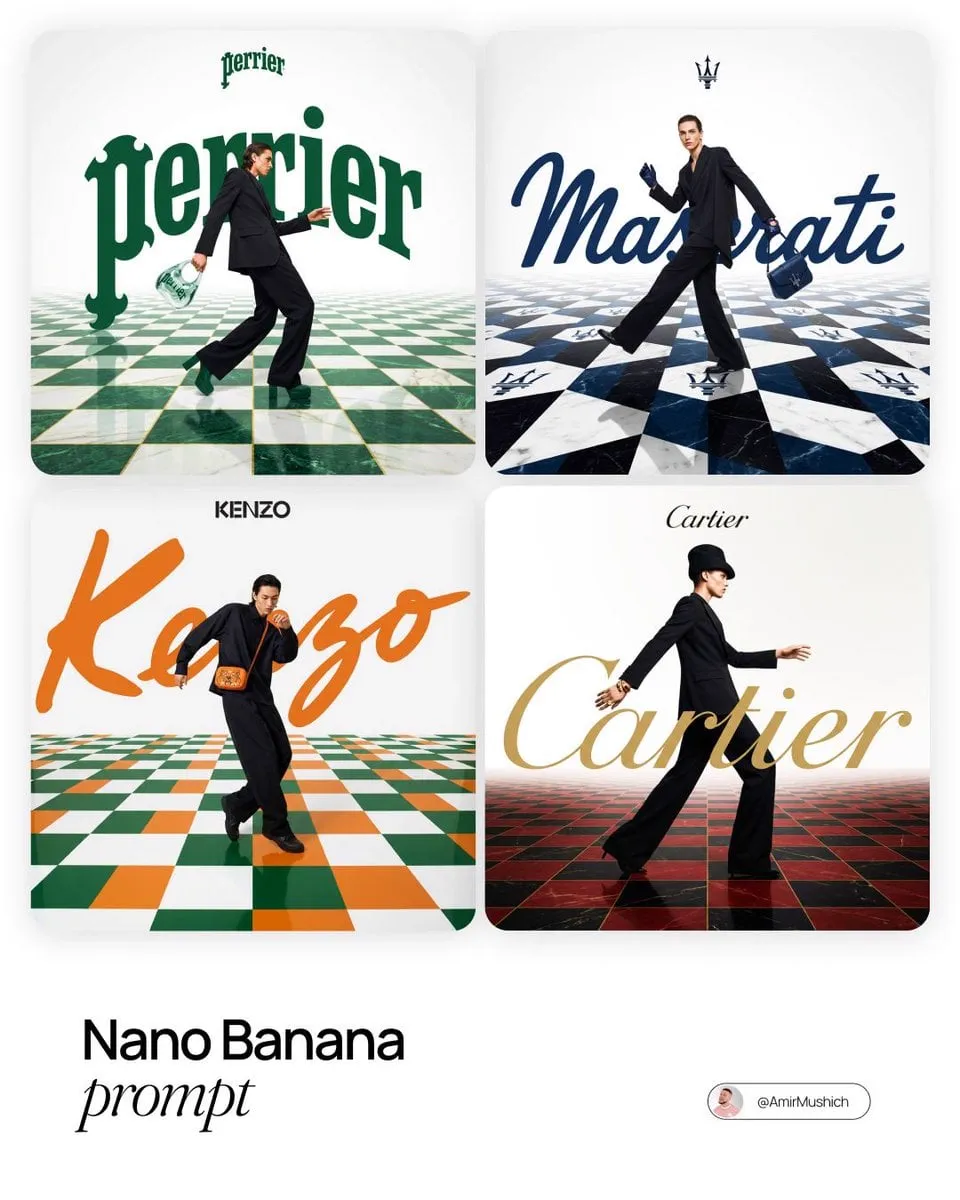
The first wave of AI video was about one thing: shock and awe. A single prompt produced a single stunning clip, and that was enough to impress everyone. Then the novelty faded, and creators discovered the real problem. You could generate one beautiful shot of a character, but the moment you tried to make a second shot of the same character, the face changed. The wardrobe changed. The lighting changed. What should have been a scene became a collection of unrelated images pretending to be one.
That problem has a name: cinematic consistency. And it is the difference between AI video as a toy and AI video as a production tool. This article explains why consistency is so hard, why prompt engineering alone cannot solve it, and how multi-image fusion techniques give creators real control over the look and identity of their characters across an entire project.
The consistency problem at the heart of AI video
Generative video models are trained to produce plausible images, not to remember characters. When you ask a model to generate a shot, it reconstructs a scene from statistical patterns. It has no memory of the character you generated ten minutes ago. It does not know that the hero you described in shot one is supposed to be the same person in shot twelve.
The result is what filmmakers call drift. The character's eyes shift slightly. The hairline moves. The jacket changes from a zipper to buttons. In a single clip, the effect is barely noticeable. Across a sequence of shots, it is devastating. Audiences may not articulate what is wrong, but they feel it. The project stops looking like a film and starts looking like a demo reel.
This matters more now than it did during the early days of AI video. The early models were judged on single clips, and single clips are easy. But the market has matured. Creators, agencies, and brands want serialized content: episodes, campaigns, multi-scene stories. Serialized content requires continuity, and continuity is exactly what the models were not built to provide.
Why prompt engineering cannot fix identity
The obvious response is to describe the character in extreme detail in every prompt. Hair color, eye shape, clothing, lighting, camera angle. The idea is that if the model knows exactly what you want, it will deliver exactly that, every time.
In practice, this approach fails for three reasons. First, language is lossy. The phrase "a woman in a red jacket" leaves enormous room for interpretation, and every interpretation is a different visual. Second, models weight prompt words differently, so the same words can produce different results depending on surrounding context. Third, the models themselves are stochastic. Even with an identical prompt, two generations will differ in subtle ways.
Prompt engineering is not useless. It is necessary but not sufficient. It gets you in the neighborhood of the character, but it cannot pin the character down. For that, you need a different mechanism: reference imagery that the model can anchor to.
What multi-image fusion actually means
Multi-image fusion is a technique where a generation is guided by multiple reference images instead of text alone. Instead of telling the model who the character is, you show it. You provide a reference image for the character's face, another for the outfit, maybe a third for the environment or the lighting style. The model fuses these visual anchors into the generated shot.
The power of this approach is that it bypasses the ambiguity of language. A reference image of the character's face is worth a thousand words of description, and it is unambiguous. The model does not have to imagine what "sharp cheekbones" means; it has pixels to look at.
Fusion also works at the scene level. You can feed the model an image of a specific location and ask it to generate a new shot in that location from a different angle. You can feed it a style reference and ask it to maintain that look across completely different scenes. The technique gives you the kind of control that was previously reserved for traditional filmmaking, where art departments, makeup, and continuity teams kept the world consistent.
Building the master keyframe set
The practical starting point for any consistent AI video project is a master keyframe set: a small collection of reference images that define the visual identity of the project. This is the AI equivalent of character concept art, and it is worth doing carefully.
For each main character, create a reference image that captures the face clearly, a second that shows the full body and outfit, and a third that shows the character in action or in a signature pose. Generate these carefully. The reference images are the foundation of everything that follows, so spend the extra iterations to get them right.
For the world, create reference images for the key locations and the lighting style. If your story takes place in a rain-soaked neon city, you want a reference that captures that atmosphere. If you want a specific color palette, create a reference that embodies it.
The final piece of the keyframe set is the style anchor: an image that defines the overall visual language, whether that is photorealism, 2D animation, painterly illustration, or something in between. Style anchors are especially useful when you are working across multiple models, because they help every model produce output that belongs to the same visual universe.
Orchestrating scenes with fusion
With the keyframe set in place, you can start generating scenes. The workflow is simple in principle: for each new shot, gather the relevant references from your keyframe set, add the scene-specific text prompt, and generate.
There are a few tricks that make this workflow dramatically more reliable. First, keep the references stable. Do not swap in a different reference image of the character halfway through the project; the model will notice, and your continuity will break. Use the same master reference every time.
Second, vary one thing at a time. If you want a new camera angle on the same character, change the angle and keep everything else constant. If you change the character's outfit, keep the face reference identical. Small controlled changes produce consistent results; big simultaneous changes produce drift.
Third, generate in sequences. Instead of generating all shots independently, generate them in story order and use each finished shot as an additional reference for the next one. This creates a chain of continuity that is much stronger than generating each shot in isolation.
Using an agent director for camera and coverage
Managing a fusion workflow by hand is doable for short projects, but it becomes laborious as the shot count grows. This is where AI agent directors come into play. An agent director is a system that interprets your project brief, selects the appropriate models and references, and orchestrates the generation process automatically.
The value of an agent director is not that it replaces your creative judgment. It is that it handles the mechanical parts of continuity: ensuring the right references are attached to the right shots, keeping camera coverage varied, checking that the output stays within the project's style parameters. Think of it as a continuity supervisor that never sleeps.
In practice, an agent director lets you describe the project at a higher level. You specify the story beats, the key scenes, and the visual language, and the system handles the grunt work of generating and checking each shot. This is what makes consistent long-form AI video production feasible for solo creators and small teams.
Pairing fusion with model strengths
No single model is best at everything, and fusion workflows work best when you exploit each model's strengths. Some models excel at photorealistic motion and physics; use them for the hero shots where movement matters most. Others are faster and cheaper; use them for coverage and establishing shots. Still others have distinctive styles; use them for the shots where the style carries the scene.
The key is to treat your models as a team rather than a single tool. Keep the keyframe set fixed, and let different models render different shots. Because the references anchor the visual identity, the output stays consistent even when the underlying model changes. This model-agnostic approach is one of the strongest arguments for building a disciplined keyframe workflow in the first place.
Practical workflow for a short film
Putting it all together, a realistic workflow for a consistent AI short film looks like this.
Start with the story: write a short treatment with the scenes, characters, and key moments. Then build the keyframe set: generate and refine the master references for characters, locations, lighting, and style. This phase deserves the most iterations, because every downstream shot inherits its quality.
Next, produce a style test. Generate one representative shot from each scene category and check that they look like they belong to the same project. Fix the keyframes before generating the full set; redoing keyframes after production is expensive.
Then generate the shots in story order, using fusion references and the controlled-variation rules described above. Track which prompts and references produce the best results in a production log, so you can reproduce successes and avoid repeating failures.
Finally, edit. The edit is where the project becomes a film. Cut the best takes, add transitions, layer in audio, and do a color pass that reinforces the unified look. If a shot drifts slightly, the edit can often cover it; if a shot drifts badly, regenerate it with tighter references.
Consistency as a competitive advantage
There is a business argument for consistency as well. As AI-generated content floods every platform, audiences are learning to recognize it, and what they recognize is the tell: inconsistent characters, wandering identities, scenes that do not quite belong together. Content that maintains visual trust stands out.
Visual trust is what makes branded content work. A brand character that looks the same across every campaign is an asset; a brand character that mutates between posts is a liability. The same logic applies to creators building an audience around a recurring cast. Consistency is not just a technical achievement; it is the difference between disposable content and content people follow.
This is why the fusion workflow is worth mastering. It is more work than typing a prompt and hoping, but it produces something that typing a prompt cannot: a body of work that holds together, that builds recognition, and that can be monetized and serialized. In the current landscape of AI video, that is the real competitive edge.
Frequently asked questions
How many reference images do I need?
Start with three per character (face, full body, signature pose) plus one per key location and one style anchor. Add more only when a specific continuity problem demands it.
Can multi-image fusion work across different models?
Yes, and this is one of its main advantages. As long as the references stay fixed, different models can render different shots while remaining visually consistent.
What if my tool does not support multiple reference images?
Fall back to the closest alternative: use a single strongest reference image per element, and rely on strict prompt discipline for the rest. The principle of anchoring still applies.
Does fusion slow down production?
The setup phase is slower, but the generation phase is faster because fewer shots get rejected for continuity problems. Net time saved is usually significant.
Is consistent AI video ready for client work?
For many briefs, yes. A disciplined fusion workflow produces output that holds up to professional scrutiny, especially when combined with careful editing and audio.
The bottom line
Cinematic consistency is the barrier between AI video as a novelty and AI video as a medium. Multi-image fusion is the most practical way to cross it. By anchoring generation to reference imagery, creators can control character identity, world design, and style across an entire project. It takes more discipline than prompt-only workflows, but it pays back in exactly the currency that matters: work that looks like it was made by one team, with one vision, telling one story.
