

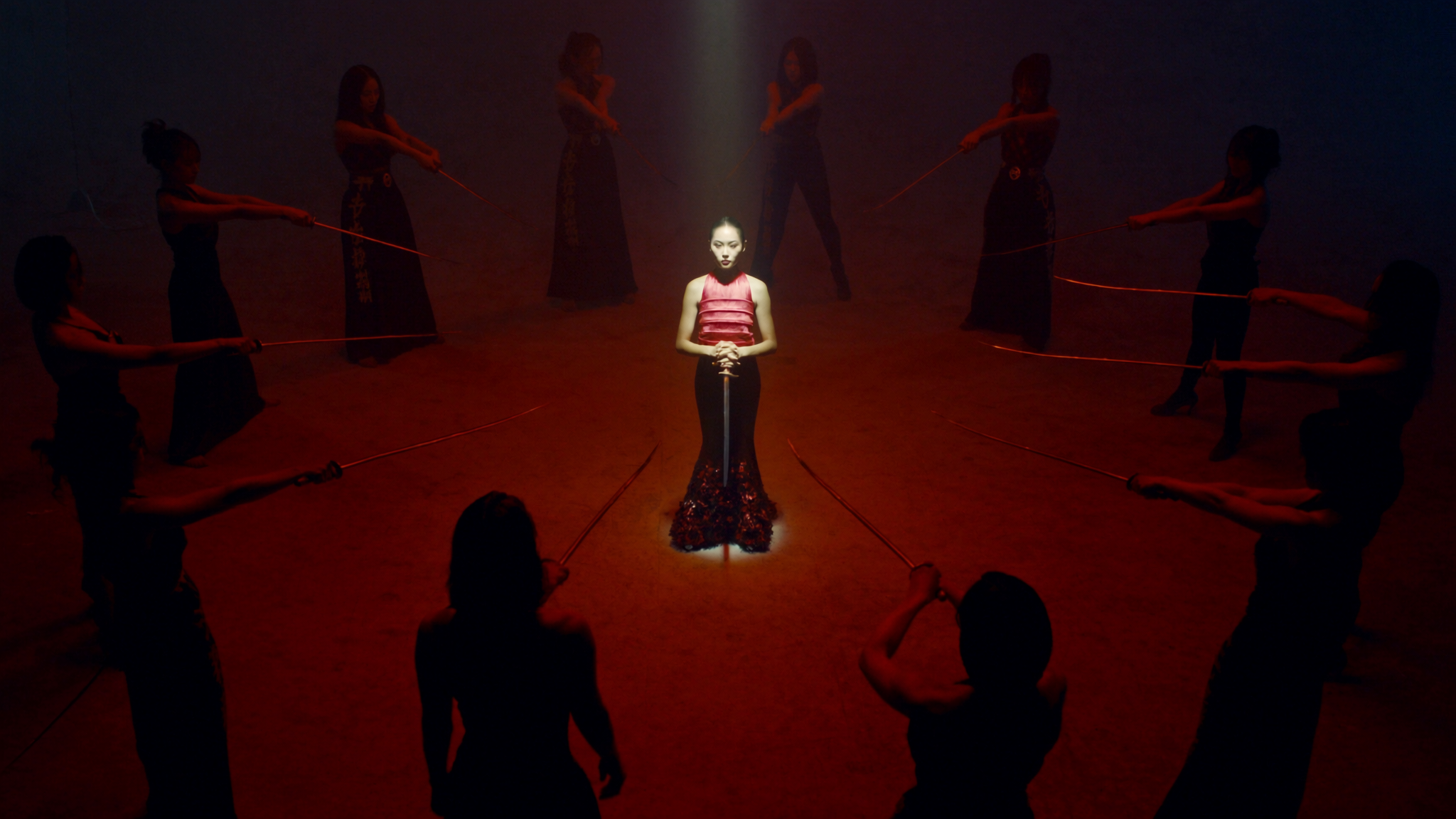
Video production used to be a decision between expensive and impossible. Either you hired a crew, rented a studio, and burned a week of post-production, or you accepted amateur quality. In the past few years a third option appeared: generate the video with AI. The results are genuinely impressive, but the conversation around them is usually one-sided. One camp declares traditional production dead; the other dismisses AI video as a toy. Both are wrong. The useful question is not which one is better, but which one is better for a specific job, and the honest answer requires looking at speed, cost, control, quality, and the ecosystem around each approach.
The Speed Gap Is Real and Decisive
The most obvious difference is time. A thirty-second commercial with multiple scenes, a voiceover, and product shots traditionally requires planning, shooting, editing, color grading, and rendering. With a small team, that is days or weeks. With a large agency, it is still days. AI generation collapses the first draft to minutes: you write a prompt, choose settings, and the system returns a clip you can review and iterate on immediately.
This speed changes the nature of the creative process. When iteration is cheap, teams experiment. A traditional shoot punishes a bad idea with a sunk budget, so teams play it safe. An AI pipeline makes the tenth version as affordable as the first, so teams explore wilder directions and discover things they would never have written in a treatment. For social media, where a trend can peak and die within days, this speed is not a convenience; it is the entire point. By the time a traditional production finishes a video about a trending topic, the topic is over.
The flip side is that speed is only valuable if the output is usable. A fast pipeline that produces clips you cannot publish is faster to failure, not faster to success. That is why the evaluation of any AI tool has to start with output quality on your specific use case, not with the demo reel.
Cost Structure: Paying for Iteration Instead of Production
Traditional video costs scale with production: crew, equipment, location, talent, and post-production labor all cost money whether the video works or not. AI video inverts this. The cost is concentrated in compute, and the dominant pricing model is per-generation: you spend a small amount for each attempt, and the total bill depends on how many attempts it takes to get a good result.
That inversion is a strategic advantage for experimentation. A team can generate a dozen variants of a scene for a fraction of the cost of a single reshoot. But the inversion also introduces a trap: per-attempt costs look tiny, and teams can burn through large budgets without noticing, regenerating the same scene thirty times chasing an impossible result. The discipline that used to happen in pre-production, deciding exactly what to shoot, now has to happen in prompt design and acceptance criteria. Decide in advance what "good enough" looks like, and stop iterating when you hit it.
For businesses producing high volumes of short content, AI is almost always cheaper per finished minute. For hero campaigns that need real actors, real locations, and a distinctive art direction, the traditional route still delivers value that AI cannot yet match, and the cost gap narrows accordingly.
Control: Where Traditional Tools Still Win
This is the area where the gap is widest. Traditional production is a control system. The director chooses the lens, the lighting rig is placed by hand, the actor's performance is directed take by take, and the editor assembles the cut with frame-level precision. Every element of the final video exists because a human decided it should exist.
AI generation is a negotiation. The model interprets your prompt, and the result is a sample from a probability distribution. You steer with words, reference images, seeds, and parameters, but you do not command. When the model ignores an instruction, the only recourse is to regenerate and hope, or to change the prompt and accept a different interpretation. For scenes that demand precision, such as a product with a specific logo, a historical setting with exact costumes, or a character whose face must match a contractual likeness, AI can waste hours producing near-misses.
The pragmatic answer is hybrid. Use AI for the elements where its strengths shine, and use traditional or manual techniques for the elements that must be exact. A commercial can have an AI-generated background plate, a real product shot composited on top, and a human editor handling the final assembly. The control problem is not solved by choosing one side; it is solved by choosing which side owns each part of the frame.
Consistency: The Character Problem
The most frustrating limitation of early AI video was character consistency. A character would look different from shot to shot, with a new face, a new outfit, or a new skin tone every cut. The technology has improved dramatically, mainly through multi-image reference techniques that let the system extract an identity from several images and preserve it across generations. A series can now keep its protagonist recognizable across episodes, and brands can keep a mascot stable across an entire campaign.
Still, consistency is not automatic. It requires deliberate setup: a curated reference set, a stable prompt vocabulary, and careful model choice. Teams that skip this setup get the old nightmare back. And even with good setup, long sequences remain harder than short clips, because errors accumulate and small deviations compound. If your project is a ten-minute narrative with the same characters throughout, budget serious time for consistency tuning, or consider whether parts of it should be produced with tools that give you frame-level control.
Quality Ceiling: What Still Needs a Human Crew
Let the results speak for themselves, and the results still favor humans in a few places. Genuine emotional performance, subtle facial micro-expressions that land in the eyes, real chemistry between actors, improvised moments that a script could never predict, all of these remain difficult for generated video. Commercial brands that sell trust, such as healthcare, finance, and premium goods, still lean on human faces and real environments because viewers can unconsciously detect the difference.
There is also the editing layer. AI produces clips; someone has to assemble them into a story with pacing, sound design, music, and motion graphics. The tools that automate this are improving, but a good edit is still a human craft, and it is often the difference between a viral clip and a forgettable one. The teams that produce the best AI-assisted work treat the model as a content generator inside a human-led production process, not as the production process itself.
The Ecosystem Question: One Platform or Many Specialists
Traditional editing is a mature ecosystem of specialized tools: cameras, capture, audio, color, effects, delivery. Each tool is best at one thing. AI video is consolidating into all-in-one platforms, which is convenient, but it concentrates risk. You become dependent on one provider's model roadmap, pricing changes, and reliability. If the platform changes its model, your carefully tuned prompts can break overnight.
A more resilient approach treats AI video as a modular stack: one tool for ideation, another for generation, another for editing and finishing. It costs more integration effort, but it protects you from provider lock-in and lets you swap out the weakest component without rebuilding everything. For teams producing content as a business function, not as a hobby, the modular approach is usually the right long-term bet.
When to Choose AI, When to Choose Traditional
Use AI video when speed matters more than precision, when you need volume and variation, when the subject is impossible to shoot (historical scenes, fantasy worlds, hazardous environments), when budget is constrained, or when you are prototyping ideas that may never see production. Use traditional video when you need real performances, exact brand control, legal or regulatory certainty about what appears on screen, or a premium look that only a crew can deliver.
The genuinely smart strategy is a portfolio. Keep a small traditional production capability for the assets that need it, and build an AI pipeline for the assets that benefit from it. The two are not competitors; they are different tools in the same toolbox, and the best teams use both.
Common Pitfalls and How to Avoid Them
The first pitfall is judging AI tools by their demos. Demos are cherry-picked; test on your own material. The second is skipping consistency setup and then complaining that characters drift. The third is treating per-attempt costs as irrelevant and blowing the budget on infinite regeneration; set a budget and a stop rule before you start. The fourth is expecting AI to replace editing. It replaces shooting and generation, not storytelling. The fifth is locking your entire workflow into a single platform and then being surprised when its model changes break everything.
The Creative Workflow: From Idea to Published Video
Understanding the trade-offs is one thing; running a real production is another. A practical AI-assisted video workflow has six stages. First, concept: write a one-paragraph brief that states the audience, the message, and the desired reaction. Second, storyboard: break the video into shots and describe each shot in concrete terms, including camera angle, action, and mood. Third, generation: for each shot, build a prompt from the storyboard description plus your style template, and generate several variants. Fourth, selection: review the variants against the brief and pick the strongest one per shot. Fifth, assembly: bring the selected clips into an editor, add pacing, transitions, music, and titles. Sixth, review: watch the whole piece with fresh eyes, check it against the brief, and revise the weakest shots.
This workflow looks similar to traditional production because it is similar. The difference is that stages three and four are compressed from weeks to hours, and the cost of revision is nearly zero. The teams that fail are usually the ones that skip stages one and two and go straight to generation. Without a brief and a shot list, the generated clips are technically impressive but narratively random. The discipline of pre-production is what makes AI speed usable.
Legal and Ethical Considerations
AI video is not only a technical decision; it is a legal and ethical one. Three questions come up in almost every commercial project. First, likeness: if the video shows a real person, whether a celebrity, an employee, or a customer, do you have the right to use their image? Generated likenesses of real people can create serious liability, and some jurisdictions treat them as protected. Second, disclosure: many platforms now require labeling for AI-generated content, and audiences increasingly expect honesty about whether what they are watching is real. Hiding the AI origin of a video that could be mistaken for real footage is a fast way to destroy trust and invite policy enforcement. Third, ownership: the terms of the tool you use define who owns the output and what you are allowed to do with it. Some tools claim broad rights to outputs; others grant full ownership. Read the terms before you build a business on someone else's tool.
None of these questions is a reason to avoid AI video. They are reasons to build the same diligence you already apply to traditional production: clear rights, clear disclosure, and clear contracts. The teams that treat AI as a normal production asset, subject to the same governance as any other asset, avoid the surprises that sink careless competitors.
FAQ
Is AI-generated video good enough for client work? For many briefs, yes, especially short-form social content and internal communications. For hero brand films, usually not yet. Match the tool to the brief.
How long does it take to learn AI video production? A competent first output can happen in a day. Predictable, on-brand output takes a few weeks of building reference sets and templates.
Can AI video handle real people and products? It can, but exact likenesses and branded products require careful setup and verification, and some use cases are restricted by policy or law. Always check the rules.
Will AI replace video editors? It replaces tedious generation tasks and some assembly work, but editors who add taste, pacing, and narrative will remain in demand.
The honest summary is that AI video is not a replacement for traditional production; it is a new production layer that sits beside it. The teams that understand both, and decide per-project which one owns each part of the pipeline, will consistently out-produce the teams that pick one side and defend it.
