
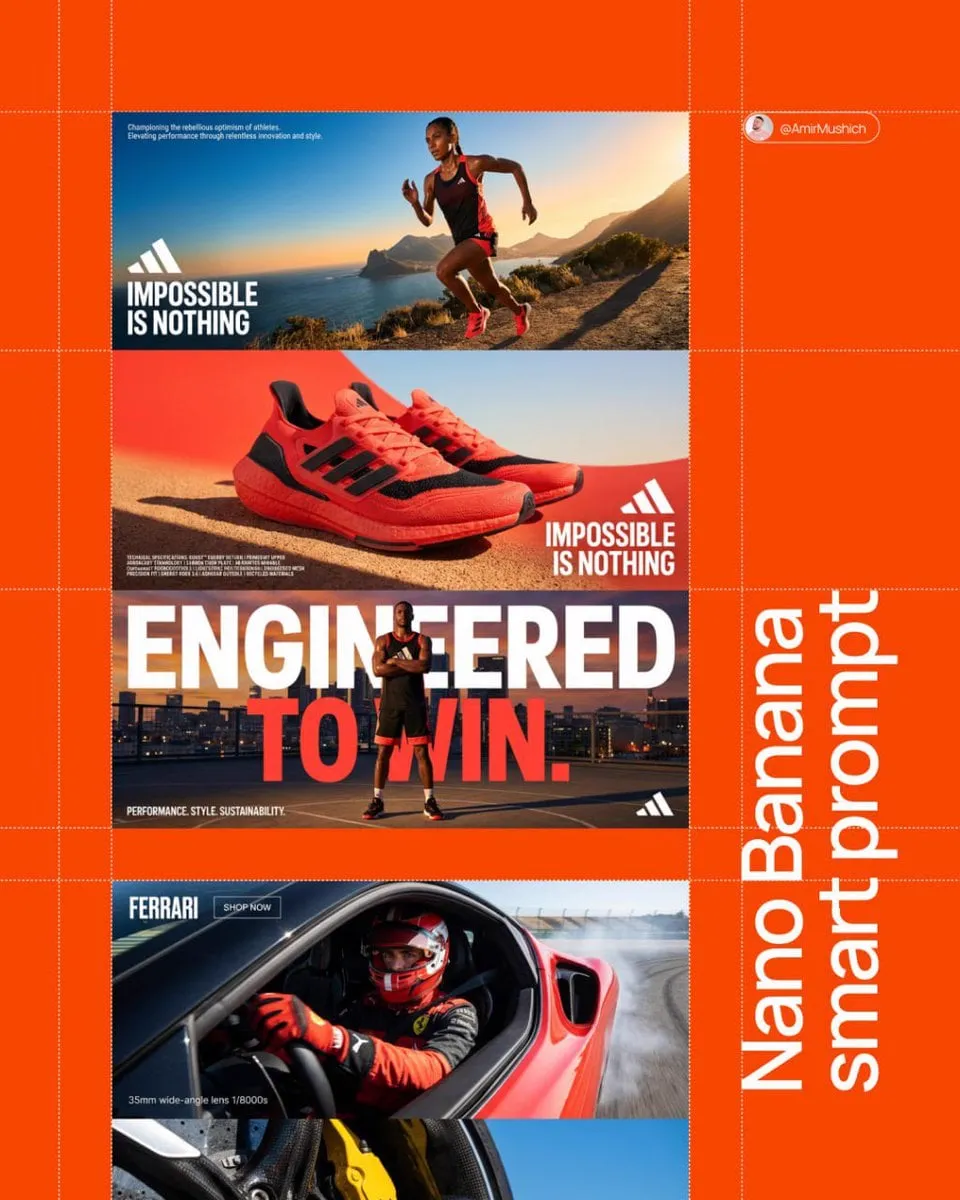

Short-form video has become the most direct route between a brand and its audience, which makes the call-to-action the single most important moment in any marketing video. A viewer can love your content, watch it to the end, and still walk away without clicking if the ask is weak, mistimed, or invisible. That is why smart teams are no longer treating CTAs as an afterthought to be tacked on during the final edit. They are treating them as a design problem that deserves the same analysis as the creative concept itself.
Artificial intelligence has changed what is possible here. Instead of guessing where to put a button or what words to use, you can study viewer behavior at scale, test dozens of variations automatically, and generate visuals and copy that match both the scene and the person watching it. This guide walks through a practical, step-by-step approach to building CTAs that actually convert, from audience analysis all the way to continuous testing.
Why the Call-to-Action Is the Hardest Part of Video Marketing
The CTA carries an unfair burden. Everything else in a video can be enjoyed passively, but the CTA asks the viewer to interrupt their scrolling, make a decision, and take an action. That is a psychological hurdle, and most videos fail at it for predictable reasons.
The first reason is timing. Viewers drop off at different points, and a CTA shown too early feels pushy while a CTA shown too late never gets seen. The second reason is relevance. A generic "click here" message means nothing to someone who is still trying to understand what the video is about. The third reason is visual integration. A CTA that clashes with the scene, breaks the pacing, or looks like an afterthought reads as low quality and gets ignored.
The deeper problem is that manual production makes it nearly impossible to solve these issues at scale. You produce one version of a video, make one decision about the CTA, and hope it works. If it does not, you start over. That workflow is slow, expensive, and built on intuition rather than evidence. AI flips the model: you can generate many variations, predict which one will perform, and iterate before you ever spend money on distribution.
How AI Changes CTA Strategy: From Guesswork to Prediction
The shift is best understood as a move from reactive testing to proactive prediction. Traditional A/B testing answers the question "which of these two options performed better?" after the fact. AI-powered optimization tries to answer "which option is most likely to perform for this audience, in this scene, at this moment?" before you publish.
This is possible because modern video platforms collect a staggering amount of behavioral data. Every watch, skip, rewatch, and pause is a signal. Machine learning systems can find patterns in that data that would be invisible to a human reviewing dashboards, such as the precise second when engagement peaks, the demographic groups that respond to urgency, or the visual styles that hold attention in a specific category.
None of this means the creative team is replaced. It means the team gets better information earlier. The writer still decides the message and the tone. The editor still decides the pacing. The difference is that those decisions are now informed by models trained on millions of viewing sessions instead of one person's best guess.
Step 1: Segment Your Audience Before You Write a Single Word
The most common CTA mistake is writing for an average viewer who does not exist. Different segments respond to different motivations, and the same video can carry multiple CTAs aimed at different groups.
AI-driven audience segmentation goes far beyond basic demographics. Instead of sorting viewers by age or location, it clusters them by behavior and intent: people who always watch tutorials to the end, people who click on product links but never buy, people who share content about a specific topic, people who engage most in the evening. Each cluster has a different psychological trigger.
A practical way to use this is to define two or three segments before production starts and design a CTA variant for each. For example, an educational software company might target "evaluators" with a free trial CTA, "learners" with a full course CTA, and "implementers" with a consultation CTA. The video stays the same; the ask changes based on what the system knows about the person watching.
The key is to make segmentation actionable rather than academic. A segment is only useful if it leads to a different CTA treatment, a different placement, or a different landing destination. If all your segments get the same button, you have not really segmented anything.
Step 2: Find the Right Moment to Ask
Placement is often more important than wording. A perfectly written CTA at the wrong second will underperform a mediocre one at the right second.
Predictive models solve this by learning from engagement curves. They analyze when viewers typically lose interest in a given type of content, when emotional peaks occur, and when a request feels natural rather than interruptive. For short-form content, the classic windows are the first three seconds for pattern-interrupting CTAs, the middle peak for context-dependent asks, and the final moments for a summary-driven call to action.
A useful framework is to think of the CTA moment as a handoff. The viewer has just received something of value: a tip, a demonstration, a story payoff. That is the moment their attention is highest and their guard is lowest. The CTA should arrive one beat after the value lands, not during it and not five minutes later.
You can test placement systematically by generating versions of the same video with the CTA at different timestamps and comparing completion and click-through rates. The model learns from each round, so the second generation of placements is usually sharper than the first.
Step 3: Design CTA Visuals That Fit the Scene
A jarring CTA destroys the immersion that good video content works hard to create. If the video is warm and cinematic, a harsh neon banner with a stock icon will feel like an advertisement, and the viewer will react accordingly.
The solution is to treat CTA visuals as part of the scene rather than an overlay. Generative models make this practical: you can render CTA elements with the same lighting, color grade, and motion language as the surrounding footage, so the button or text feels like a natural part of the world.
There are three design levers worth testing. The first is contrast: the CTA must stand out from its background, but in a way that matches the scene's palette rather than fighting it. The second is motion: subtle animated cues draw the eye more effectively than static text, but excessive motion reads as desperate. The third is placement in the frame: the lower third is conventional and safe, while center-frame or object-anchored CTAs are more intrusive but far more visible.
Modern image and video models can generate these elements with strong scene consistency, which means you are no longer limited to one awkward template. You can create a dozen CTA treatments that all look native to the footage, test them, and keep what works.
Step 4: Write CTA Copy That Feels Personal, Not Generic
Copywriting for CTAs has its own grammar. Short, concrete, and benefit-focused language consistently outperforms abstract promises. "Start your free trial" beats "Learn more" because it names the action and the outcome.
AI text generation adds two capabilities on top of this baseline. The first is personalization at scale: instead of one copy block, you generate variants tuned to different segments, urgency levels, and tone preferences. A price-sensitive segment might respond to "Check plans with no surprise fees," while a time-pressed segment might respond to "Set up in under ten minutes."
The second capability is urgency calibration. Urgency is a double-edged sword. Genuine, specific urgency ("This offer ends Friday") can lift conversion, while vague pressure ("Act now!") reads as spam and erodes trust. Language models can be steered to generate urgency that is specific and credible, and the testing loop will tell you which calibration works for your audience.
The discipline to keep is this: every CTA copy should be verifiable. If the video promises "setup in ten minutes," the landing page must deliver that experience. AI can generate persuasive copy faster than ever, which means the bottleneck moves from writing to honesty. The best long-term strategy is to use AI to find language that is both persuasive and true.
Step 5: Build a Testing Loop and Measure What Matters
The real advantage of AI-driven CTA optimization is speed, and speed only matters if you have a measurement system that can keep up. Set up your testing loop before you start generating variations, not after.
Start by defining the primary metric for each video. Click-through rate is the obvious candidate, but it is not always the right one. For a brand-awareness video, the goal might be completion rate or watch time, with the CTA serving as a secondary signal. For a direct-response video, the goal is clicks, and beyond that, the conversion rate of the landing page.
The testing loop has four stages: generate variations, distribute them across matched audience segments, measure performance with statistical confidence, and feed the winners back into the next round of generation. Each loop should take days, not weeks. Over several cycles, the system builds a profile of what works for your specific audience, and that profile becomes a strategic asset that compounds over time.
It is also worth tracking what fails and why. A CTA that consistently underperforms may be pointing at a bigger problem: the offer itself is weak, the landing page is broken, or the audience segment does not match the video's promise. In those cases, the right move is not a better CTA, but a better offer or a better-matched audience. Optimization should never be used to polish a product that the market has already rejected.
Common Mistakes and How to Avoid Them
The first common mistake is optimizing the CTA before the content earns the click. No button can rescue a video that loses its audience in the first five seconds. Fix the hook first, then tune the ask.
The second is changing too many variables at once. If you test a new placement, a new color, and new copy in the same version, you will not know which change caused the result. Test one variable per round until you have a stable baseline.
The third is ignoring the destination. A high click-through rate that lands on a slow, confusing, or mismatched page produces nothing but a wasted budget. Treat the landing page as part of the CTA system and measure the full funnel.
The fourth is treating AI output as final. Generated CTA copy and visuals are starting points. A human editor with taste will always be needed to catch tone issues, factual errors, and brand mismatches that models miss. The workflow that wins is human direction plus machine iteration, not either one alone.
Frequently Asked Questions
How many CTA variations should I test? Start with three to five per variable. More than that is rarely useful in the first round because you do not yet know which variable matters most for your audience.
Do AI-generated CTAs work for every industry? The technique is industry-agnostic, but the execution must be adapted. Regulated industries, medical content, and financial services need extra review for compliance and tone. The model is a starting point, not a final approval.
How long does it take to see meaningful results? With enough traffic, a single test cycle can produce a signal in days. If you have low traffic, focus on qualitative feedback and longer test windows instead of chasing statistical significance too early.
Should the CTA be the same across all platforms? No. Platform behavior differs: an in-feed video on one platform rewards early, simple CTAs, while a longer-form platform supports mid-roll context-based asks. Tailor the CTA to the platform's viewing pattern.
What if my video's purpose is brand building, not direct response? Then the CTA should be a soft, low-pressure next step like following the account or watching a related video. Measure brand metrics primarily and treat clicks as a secondary signal.
The takeaway is simple: effective CTAs are not written, they are engineered. Audience segmentation, predictive placement, scene-matched design, personalized copy, and a fast testing loop form a system that turns raw attention into measurable action. The tools to run that system are available to any team today, and the teams that build the habit of continuous CTA optimization will compound their advantage with every video they publish.
