
For decades, making a film meant assembling a crew, renting equipment, booking locations, and spending weeks in post-production. The cost and the skill requirements kept filmmaking out of reach for most people. That wall is now crumbling. Generative AI has turned video creation into something that can be learned in weeks rather than years, and the tools keep getting better with every release.
This guide is written for creators who want to understand how to make films with AI models today. We will look at what the current generation of models can actually do, how to choose the right model for a project, how to keep characters consistent across scenes, and how to build a repeatable workflow from script to finished video. Whether you are a complete beginner or an editor who wants to add AI to your toolkit, the goal here is practical knowledge you can use on your next project.
What the new generation of AI models can do
The current crop of video models has moved far beyond the early experiments. Text-to-video models such as the Sora series and Runway can generate scenes that hold together visually and follow a basic narrative. Image-to-video models like PixVerse and Kling can take a single still image and animate it with believable motion while preserving the details of the original.
The most important shift is in control. Early tools gave you a prompt box and a prayer. Today, you can specify camera movement, lighting, style, and duration with a reasonable degree of precision. Some models are tuned for photorealism, others for stylized animation, and a growing number support reference images that keep characters and environments consistent.
What has not changed is the need for good judgment. The model produces raw material; the creator decides what is good, what fits the story, and what needs to be done again. The best results come from people who treat AI as a collaborator with a distinct style, not as a magic button.
It is also worth understanding the limits. Current models still struggle with fine text, complex group scenes, and precise physics over long sequences. Planning around these limits, rather than fighting them, is what separates a smooth production from a frustrating one. The fastest way to learn the limits is to run small tests before you commit to a full script.
Choosing the right model for your film
There is no single best model, only models that fit different jobs. Learning to match a model to a task is one of the most useful skills in AI filmmaking.
If your film depends on realistic motion and physical plausibility, look for models known for strong physics and natural movement. If you are producing stylized animation or a specific art direction, a model with strong style adherence will save you hours of correction. If your project is built around a character that appears in many scenes, prioritize models with reliable reference-image support.
Practical factors matter too. Consider generation speed, resolution, and how much control the interface gives you over camera and motion. A model that produces beautiful footage but forces you through a slow, awkward workflow will hurt your productivity on longer projects.
Start by defining your film's core requirements: length, style, number of characters, and how much control you need. Then test two or three candidate models with a short scene from your actual script, not a generic demo prompt. The model that performs best on your material is the right one for your film.
Keep a record of your tests. Note which model produced which result, how long the generation took, and what you had to fix afterward. After a few projects, this log becomes a reliable decision guide: you will know instantly which model to reach for when a new brief arrives, instead of re-running experiments every time.
Keeping characters consistent across scenes
Character consistency is the problem that separates amateur AI films from professional-looking ones. The same person can change face, hair, or clothing between shots, and the effect is jarring.
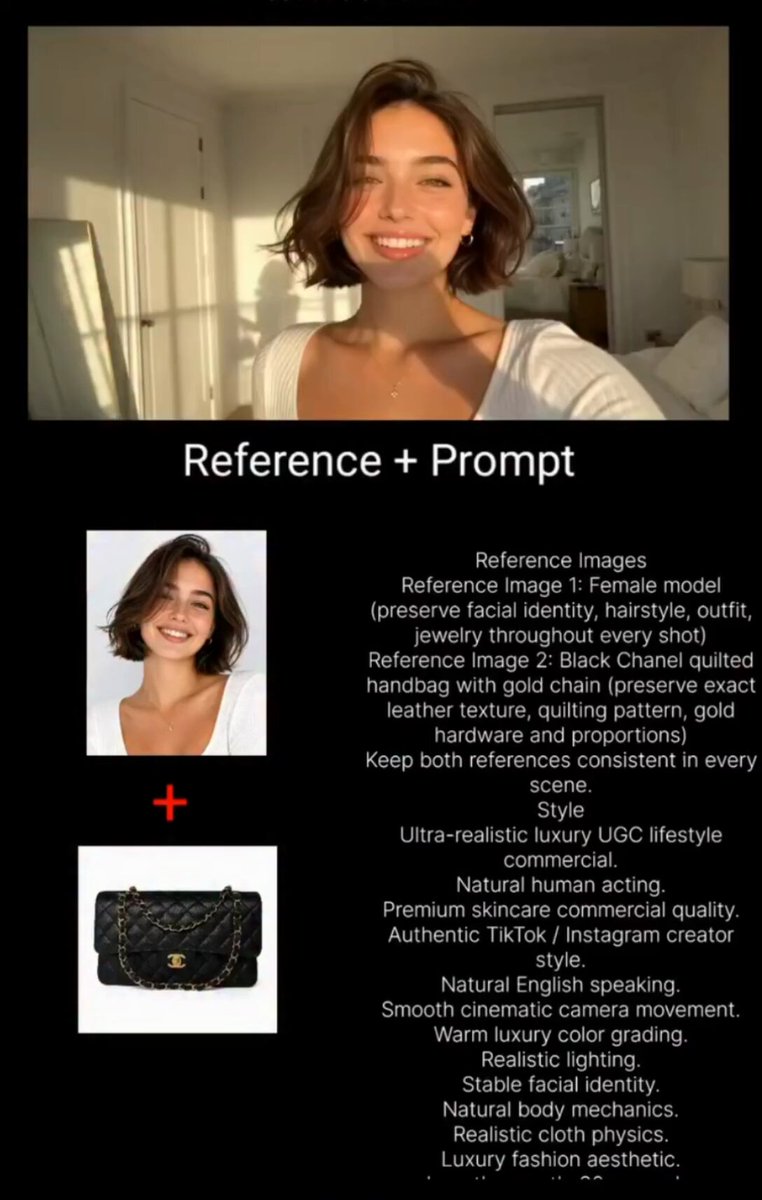
The most reliable method is a reference-based workflow. Create a definitive image of your character first: the face, the costume, the palette. Spend time getting this image right, because everything else depends on it. Then use that image as the anchor for every scene where the character appears.
When a tool supports multi-image reference, use it to lock more than one dimension of the character at once. Combine a facial reference with a costume reference and a lighting reference so that each generated shot inherits the same identity.
It also helps to write a fixed character description and reuse it word for word in every prompt. Describe the essentials: age range, hair, clothing, and the mood you want. Consistency in language reinforces consistency in the output. Finally, generate test shots of the character in different poses and expressions before committing to a full production, and fix drift while it is still cheap to fix.
From script to scenes: a practical workflow
A reliable AI film workflow moves through clear stages. First, write a script that is realistic about what the models can do. Describe actions, locations, and mood, but avoid asking for things that models consistently get wrong, such as legible text or complex group choreography.
Second, break the script into shots. For each shot, define the composition, the camera movement, and the key visual elements. This shot list is your production bible. The more specific it is, the fewer surprises you will have during generation.
Third, build your visual assets. Generate or design the key images: characters, locations, props. Validate them against each other for consistency before you start animating anything. Fourth, animate shot by shot, using your validated images as the starting points.
Finally, assemble the generated clips into a sequence. Resist the urge to polish individual shots before the edit is locked. Editing reveals which shots work together, and you will often discover that a shot you loved in isolation breaks the pacing of the film.
Editing, pacing, and visual polish with AI
Editing an AI film is not fundamentally different from editing any film, but there are a few AI-specific considerations. The first is volume. Generation produces many versions of every shot, and selecting from them is a real part of the editing job. Build a system for naming and tracking versions, or you will drown in files.
The second is pacing. AI-generated clips tend to be short, so a film is often an assembly of many small pieces. Use rhythm deliberately: fast cuts for energy, longer holds for atmosphere. A well-paced edit can make modest footage feel cinematic.
The third is consistency in the cut. Even with good references, color and lighting will vary between shots. A final pass to unify the look, whether through color grading or by regenerating outliers, makes a huge difference. Match cuts on motion and composition where you can; the eye forgives a lot when the flow feels intentional.
When you find a shot that does not fit, ask why before replacing it. Often the issue is not the shot itself but the way it enters or leaves the sequence. A one-frame adjustment at the cut point can fix a jarring transition without spending another generation. Small editorial skills like this multiply the value of your generated footage.
Sound, music, and the final mix
Sound is half of the film, and it is the half that beginners most often neglect. A silent AI video feels unfinished no matter how good the visuals are. Start by designing the sound: dialogue or narration, ambient room tone, effects, and music.
Modern AI tools can generate voice-overs in multiple languages and synthetic music that matches the mood of a scene. These tools are good enough for many projects, but they require the same judgment as the visuals. Choose a voice that fits the character, keep the music from fighting the dialogue, and use silence as a tool.
Synchronization matters. Align beats in the music with cuts, and make sure any narration matches the on-screen action. On platforms where most viewers watch without sound, plan for captions from the start rather than adding them as an afterthought.
Give your mix a final listen on headphones and on a phone speaker. The low end that sounds great on studio monitors will be missing on a phone, so check that dialogue stays clear in the middle frequencies.
If your film will be watched mostly on social platforms, export a version with burned-in captions and check how it reads at a glance. Captions are not a post-production afterthought anymore; they are part of the creative design. Well-styled captions can carry a scene's rhythm almost as much as the picture itself.
Beginner mistakes and how to avoid them
The first mistake is expecting perfection immediately. AI generation is iterative by nature; plan for multiple passes and treat failures as information.
The second is skipping the reference stage. Every inconsistency problem in the final film can usually be traced back to a decision made too quickly in pre-production.
The third is overloading prompts. Cramming twenty details into one prompt produces chaos. Prioritize the essentials and add complexity in later passes.
The fourth is editing without a plan. If you start assembling clips before you know the shape of the film, you will waste hours rearranging. Edit to a written structure first.
The fifth is neglecting sound. No amount of visual quality compensates for audio that was an afterthought.
The sixth is ignoring the legal side. Check the license terms of every tool and asset you use, especially for commercial projects. This is not exciting, but it protects your work.
Building a repeatable production pipeline
The real value of AI filmmaking appears when you move from one-off experiments to a repeatable pipeline. A pipeline is a set of steps that reliably produces a finished film from a brief.
Document everything: your prompts, your reference images, your model settings, your edit decisions. Build libraries of characters, locations, and styles that you can reuse across projects. Over time, these assets become more valuable than any single film, because they make each new project faster and more consistent.
A simple naming convention is enough to start: project, character, version, and date. Resist the urge to build a complex system in the beginning; the goal is that you can find last month's character in under a minute. When the library is easy to use, you will actually use it, and that is when the compounding begins.
Automate what you can. Batch generation, naming conventions, and preset project templates remove friction from the repetitive parts. Reserve your attention for the creative decisions, which are exactly the parts AI cannot make for you.
A good pipeline is boring in the best way. The drama happens on screen, not in your production chaos.
One more piece of advice: finish things. It is tempting to keep polishing a single shot or to start a new project before closing the current one. Completed projects, even imperfect ones, teach you more than abandoned ones. Each finished film adds a full loop to your pipeline, and the next film starts from a proven process.
FAQ
Do I need a powerful computer to make AI films? Not necessarily. Most modern tools run in the cloud, so a normal laptop is enough. The limiting factors are usually your internet connection and your subscription plan.
How long does it take to make a short AI film? For a simple one-minute film with a clear script, plan for a few days of part-time work. Complex projects with many characters can take several weeks.
Can AI films be used commercially? Yes, with caveats. Read the license terms of each tool. Some platforms restrict commercial use or require attribution. Confirm before you build a business around generated content.
What is the fastest way to learn? Pick one tool, make three complete short films, and study your own mistakes. Watching tutorials helps, but nothing teaches like finishing a project.
Will AI replace human editors? It will replace a lot of repetitive technical work, but editing is ultimately about storytelling decisions. Editors who embrace AI as a tool will produce more and better work than those who ignore it.
