
Some editing trends arrive as features. Others arrive as a shift in how an entire industry thinks about a role. AI video editing in this cycle is the second kind. For years, "AI editing" meant small conveniences: automatic captions, background cleanup, a one-click color grade. The tools being released now do something different. They generate the footage itself, they keep characters recognizable across scenes, and they make suggestions about pacing and structure that used to require a director's eye.
This article maps the trends that actually matter for creators, editors, and small production teams. It is not a list of hype. It is a practical picture of how the craft is changing, which problems are being solved, and how to build a workflow that stays useful as the tools keep moving.
Why This Cycle Feels Different From Earlier AI Hype
It helps to remember that this is not the first time AI has touched video. Three earlier waves set expectations, and each one quietly changed the tooling around editing.
The first wave was mobile effects: face filters, animated overlays, one-tap looks that made casual clips feel produced. The second wave was automation of boring work: speech-to-text captions, silence removal, background noise reduction, and auto-reframing for vertical formats. The third wave was enhancement: upscaling, frame interpolation, denoising, and color restoration that made old or low-quality footage usable again. All three waves were additive. They made existing tasks faster, but the footage itself was still shot by a human with a camera.
The current wave is structural rather than additive. Text-to-video and image-to-video generation produce the source material itself. Editing agents operate on narrative structure instead of individual clips. An AI assistant can read a rough script, propose a shot list, choose a visual style per scene, and queue the generation jobs in an order that keeps a graphics card busy. The editor's job is no longer just cutting footage; it is deciding what the footage should be in the first place.
That shift matters because the economics of attention have changed. Short-form video dominates digital content, and the pace of consumption means viewers make a judgment in the first second or two. If the first frame is weak, the edit does not get a chance to redeem it. At the same time, market analysts have repeatedly projected that the AI video market will keep compounding at a steep rate over the next several years, with annual growth estimates routinely cited above forty percent. Those numbers are worth treating with caution, but the direction is not in doubt: production teams of every size are being asked to make more video, faster, with fewer people.
The result is a strange combination of pressure and opportunity. The pressure is that baseline quality keeps rising, because audiences have seen what good AI-generated video looks like. The opportunity is that the gap between an idea and a finished cut has never been smaller. The rest of this article explains which trends matter most and how to turn them into a repeatable workflow.
Character Consistency Is the New Quality Bar
If there is one single change that separates serious AI video work from casual experimentation, it is character consistency. A few years ago, a character whose face changed between shots could still pass as experimental or artistic. That tolerance has collapsed. Audiences are visually trained now. They have watched thousands of AI-generated clips, and they notice instantly when a protagonist morphs between scenes, when clothing changes color for no reason, or when the lighting contradicts itself from one cut to the next.
Consistency is not just an aesthetic preference. For brands it is a business problem. A company that wants a recurring presenter, a mascot, or a product hero in its videos needs that character to look like the same entity in every frame, every episode, and every campaign. If the character shifts identity between scenes, trust erodes, and the production looks cheap no matter how beautiful individual shots are.
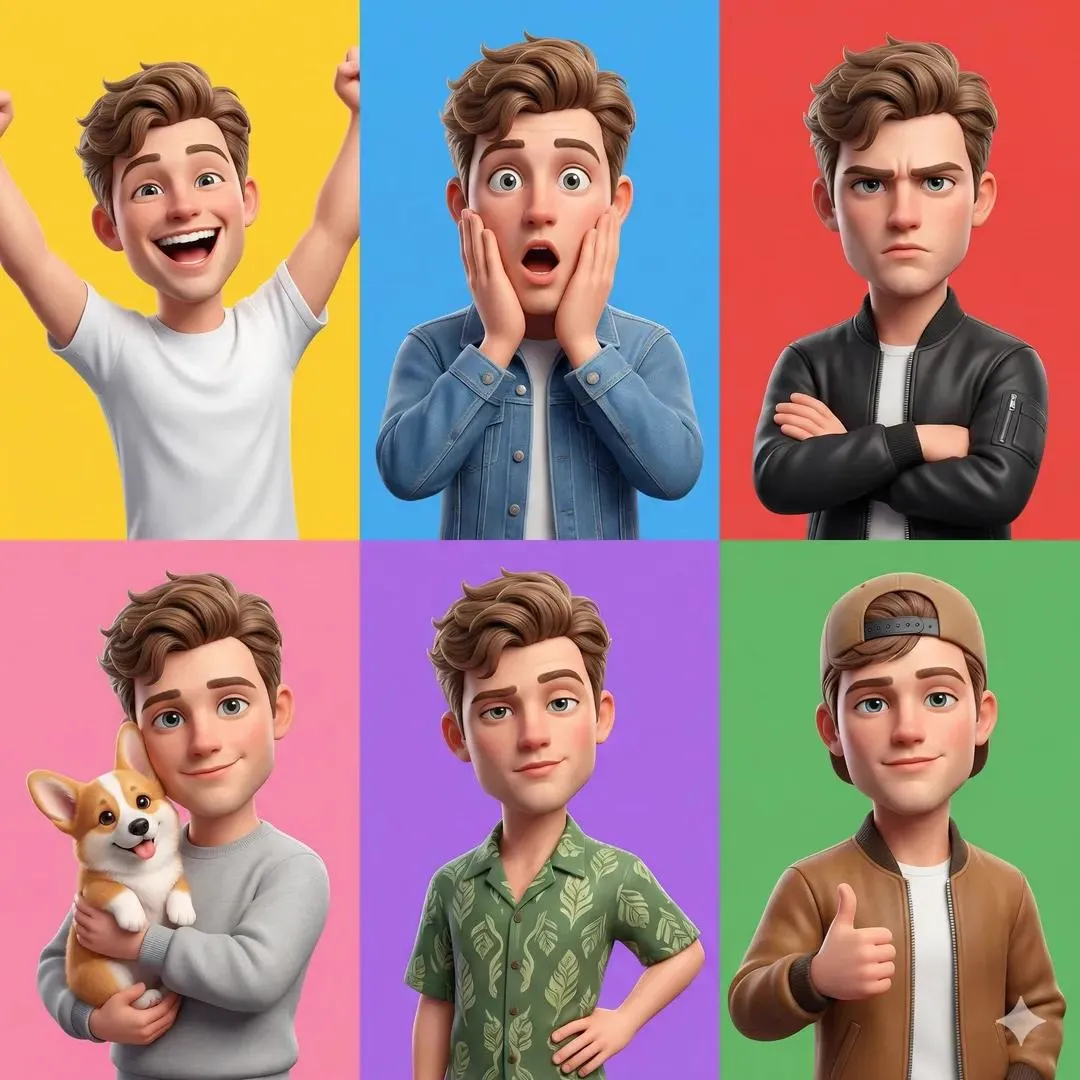
The technical toolkit for consistency has improved quickly. Reference keyframes are the foundation: instead of describing a character with words alone, the creator supplies one or more images that define the identity. Those images become the anchor for every generation. Multi-image fusion goes further, blending several references so the model can preserve the face, the costume, and the general body language at the same time. Conditioning techniques then carry that identity into each new scene, so the character can walk into a different location, wear the same jacket, and face the same direction without drifting.
A practical example makes this concrete. Imagine a small fitness brand that wants twelve short scenes of the same coach explaining different exercises. The old approach would generate each scene independently and hope for the best, producing a coach whose face changed every other shot. The modern approach defines the coach once with a set of reference images, generates each scene with the same identity anchor, and then runs a unification pass that matches color, contrast, and lighting across all twelve clips. The final cut looks like a single shoot day, because the identity was fixed before a single frame was generated.
One Model Is No Longer Enough
Early adopters of generative video often married themselves to a single engine. That worked while the choice was limited, but it is becoming a real limitation. Modern productions routinely mix engines because each one was trained on different data and excels at different jobs.
Kling is a strong choice when the goal is hyper-realistic action with physical plausibility. Vidu handles stylized and anime-heavy work with a distinct look. Flux produces photorealistic stills with fine detail control, which makes it ideal for establishing shots and product images. Runway offers deep integration with professional filmmaking workflows and strong tools for cinematic output. Luma is respected for natural camera motion, which matters when a scene needs a believable dolly or tracking move. PixVerse leans into expressive, style-driven results that work well for social-first content.
The insight is that there is no best model, only the right model for a specific scene. A polished short film might use one engine for the establishing shot, another for the character dialogue, and a third for the action sequence, then stitch them together. This is exactly how a professional film crew works: different lenses, different rigs, different departments for different shots. The model library is the new lens kit.
The cost of this diversity is orchestration. When footage comes from different engines, the editor must match color, framing, and motion so the scenes cut together cleanly. That is why platforms that aggregate many models under one interface are becoming the default production layer. The reason is not that any single output is magic; it is that switching engines without switching tools is painful, and a unified environment makes the mix feel like one workflow instead of five separate hobbies.
AI Agent Directors Change the Creative Loop
Prompt engineering was the first generation of AI direction. You typed a description, adjusted the wording, and hoped the model understood. The second generation is agents that understand film grammar. Feed an agent a script or even a rough idea, and it can propose a shot list, suggest which model suits each scene, flag pacing problems, and sequence the generation tasks so the GPU work stays busy.
This is a meaningful change in how ideas become video. A creator who wants a tense dialogue scene no longer needs to describe every camera angle in a prompt. The agent can translate the emotional intent into concrete direction: closer framing for tension, asymmetric composition to create unease, slower cuts for drama. It applies cinematic grammar the way an assistant director would, and it does so consistently across the whole project rather than scene by scene.
It is important to keep expectations realistic. Agent direction works best on structured content: advertisements, explainers, episodic social series, and branded storytelling where the narrative arc is clear. It struggles with genuinely open-ended experimentation, where the whole point is to not know what the result should look like. The human still owns the taste. The agent compresses the distance between the idea and the first cut, which is exactly where most productions lose time.
Audio, Image, and Video Are Converging
Editing used to be a video-only craft. The modern AI pipeline treats the whole production as one problem, and that changes the shape of the edit.
Voice synthesis means a narration track can be generated without booking a studio, and the same character voice can appear consistently across episodes. Sound design tools suggest audio that matches the energy of a scene, so a quiet reveal gets the right atmosphere instead of whatever stock music happens to be available. Image processing and style transfer let a brand apply one consistent look across stills and motion, which matters when the same visual identity has to appear on a website, a billboard, and a vertical video. Video fusion technology stitches separate generations into a continuous sequence with matched lighting and camera behavior, solving the classic problem of clips that do not belong together.
The practical effect is that a solo creator can deliver a complete spot, including script, voice, visuals, and sound, in a single afternoon. For small teams, that is the difference between saying no to a project and saying yes.
A Practical Workflow for Modern AI Editing
Trends are useful only if they become process. Here is a workflow that captures the best of the current tools without pretending the human is optional.
Lock the identity first. Define the character or brand look with reference images before generating anything. This single step prevents the most expensive mistake in AI video, which is generating ten scenes and then realizing the character does not match.
Plan scenes as beats. Write the emotional arc as a short script, then decide which beats need which style. This is where agent direction earns its keep, because the shot list falls out of the story instead of being improvised.
Generate scene by scene. Reuse the identity references on every generation, and keep prompt wording consistent across scenes that belong together. Change only the variables that should change.
Unify in post. Run a fusion pass to match lighting and color, add the sound design, and put captions on top. Treat this stage as the real edit, not an afterthought.
Review against a checklist. Check consistency, pacing, audio clarity, and visual glitches before anything ships. The checklist at the end of this article is a good starting point.
Teams that follow this loop find that the tool changes are absorbed quickly. The identity assets, style references, and prompt templates survive model updates, which is exactly the point.
Where These Trends Are Heading
Three technical directions are worth watching. Longer context windows will let models hold a story across more shots, which directly attacks the consistency problem. Multimodal input means a mood board, an audio track, or a rough sketch can steer generation, so the creative brief gets closer to the final output. Real-time iteration will shorten the loop from minutes to seconds, turning generation into a live conversation rather than a batch job.
For creators, the durable investment is not a specific tool. It is a reusable asset library: identity images, style references, brand voice guidelines, and prompt templates that survive the next round of model releases. Tools will change; assets compound.
A Quick Decision Checklist
Before you publish anything made with AI video tools, run through these checks:
- Is the character identical in every scene? If not, go back to reference keyframes and the fusion pass.
- Does the model match the job of the scene, or did you just use the default?
- Does the pacing serve the story, or is it decoration?
- Were audio and captions treated as part of the edit?
- Can this workflow be rerun when the tools update, or does it depend on one lucky prompt?
The teams that answer yes to all five are the ones that will treat AI video as a production system instead of a party trick. That is the real trend: not better models, but better processes built on top of them.
