

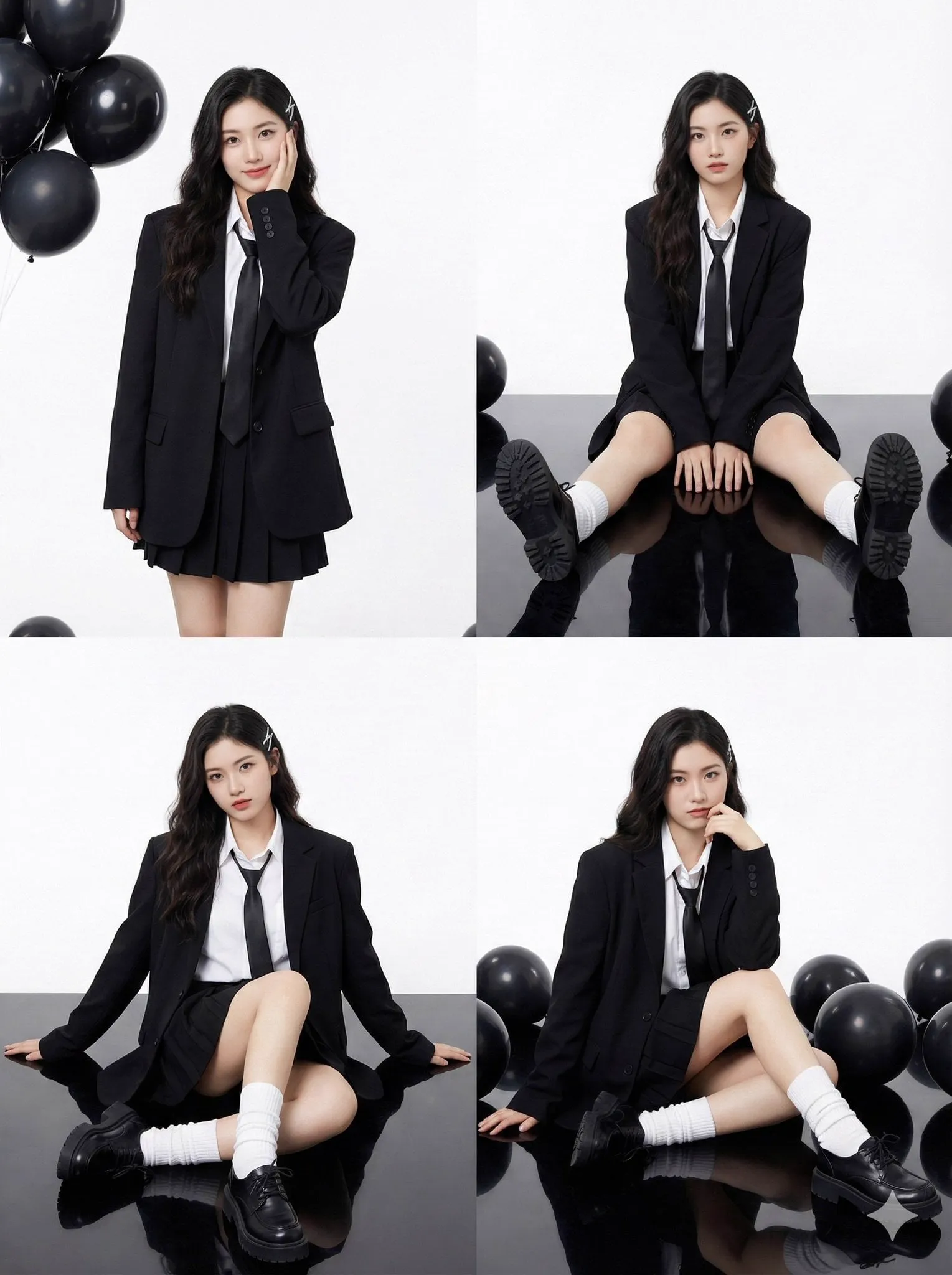
Short films and AI video tools are a natural match. Short formats need strong visual impact fast, and they reward creators who can iterate quickly. But there is one problem that has held AI-generated short films back more than any other: consistency. When a character's face changes between shots, or a location shifts style halfway through a scene, the story falls apart and the audience checks out.
The technology that finally addresses this is multi-image fusion. By anchoring generation to reference images, it lets filmmakers keep characters, costumes, and locations stable across multiple shots. Combined with the right model choices and a disciplined workflow, it turns AI video tools from a novelty into a genuine production system for short films.
This guide explains how to choose and use an AI video editor for short films, with a focus on consistency through multi-image fusion.
Why consistency is the real bottleneck
Early AI video generators impressed people by creating images from text. The bar in 2025 is much higher. Independent filmmakers and content creators need tools that can bridge the uncanny valley of inconsistent characters and styles. A short film is not a single impressive shot; it is a sequence of shots that must feel like one continuous world.
Without consistency, every cut reminds the viewer that they are watching generated fragments. The character who looked one way in the establishing shot looks different in the close-up. The jacket changes color between scenes. The city street becomes a different city street. These breaks destroy immersion faster than any technical flaw.
That is why consistency is the central design question for AI short film production. Multi-image fusion is currently the most practical answer: it locks the defining features of a subject across generations, so the director can focus on story, rhythm, and emotion instead of fighting the tools.
How multi-image fusion works
Multi-image fusion goes beyond simple image-to-video prompts. Instead of giving the system one reference and hoping for the best, you provide several images of the same subject: different angles, different lighting, different poses. The system extracts a stable representation of the subject's identity and applies it across every subsequent generation.
Think of it as building a character sheet. Three to five consistent reference images teach the model who the character is, what they wear, and how they look from different sides. From then on, every shot generated with those references stays on the same character, even when the camera angle, mood, or background changes completely.
In practice, the workflow is simple but requires discipline. Create the reference set before generating any scenes. Use the same set for every shot in the project. When a generation drifts, regenerate with stronger references instead of accepting the drift. This small ritual is what separates coherent short films from collections of nice-looking clips.
Choosing the right models for short film production
Not every AI model excels at the same thing. For short film production, the ability to switch between specialized models is crucial. Here is a practical map:
Realism and control – The Flux series is prized for photorealistic results and precise image control. It is ideal for establishing shots, character close-ups, and any moment where visual fidelity matters most. Its non-destructive training approach preserves detail and gives directors unusual control over the look.
Narrative and long-form coherence – Models in the Sora family understand complex scenarios and maintain coherence across longer sequences. They handle cause and effect well, which matters for scenes where a character's actions must follow a logical chain.
Motion and physics – Runway Gen-4 and similar models deliver strong movement quality. Gestures, interactions with the environment, and camera dynamics look natural. These models are the right choice for action beats and physical comedy.
Style and prompt adherence – Models like Kling and PixVerse offer strong prompt fidelity and specific visual aesthetics. They are useful when the film needs a distinctive look that matches a particular culture or visual language.
Speed and volume – Faster, more efficient models are perfect for iterating storyboards, testing scene ideas, and filling transition shots. Save the premium models for the shots that carry the film.
The strategic approach is to match the model to the shot, not to force one model to do everything. A short film might use four or five different models across its shots, held together by consistent references and a unified color mood.
The role of creative direction in shot sequencing
A short film is not just a series of impressive images; it is a sequence with rhythm, tension, and release. This is where creative direction layers add real value. A good AI video editor should help you think in shots, not just prompts.
The direction layer interprets your intention and proposes camera angles, shot sequences, and stylistic choices. Describe the emotional goal of a scene, and it suggests whether to open on a wide shot, cut to a close-up, or hold a slow push-in. This is the difference between generating clips and directing a film.
For short films, shot sequencing matters enormously. A two-minute film might contain forty or fifty shots, and each transition shapes the pacing. Plan the sequence before generating: storyboard the film, decide the rhythm, then generate each shot with its role in mind. This planning pays off in every frame.
From concept to consistent short film: a workflow
Here is a workflow that produces consistent short films with AI tools:
Step 1: Write a tight script. Short films live or die on their premise. Keep the story small enough to execute fully, with a clear beginning, middle, and end.
Step 2: Design characters and locations. Build reference sets for every recurring character and every important location. Three to five images each, captured from different angles and lighting conditions.
Step 3: Storyboard the film. Sketch the shot sequence, decide the rhythm, and mark which shots are hero shots deserving premium models and which are functional transitions.
Step 4: Generate shot by shot. Use the references consistently, iterate cheaply at low resolution, and upgrade to premium renders for the hero shots.
Step 5: Assemble and polish. Edit the shots together, adjust pacing, add music and sound effects, and do a final consistency pass across the whole film.
This workflow turns AI generation from a lottery into a production process. The result is a film that looks intentional, because every element was designed to hold together.
Training and publishing your own models
For creators who want to go further, some platforms allow you to train and publish custom models. This is a powerful option for short film production: instead of fighting a general model to reproduce a specific style or character, you train a model that already knows it.
A custom model trained on your character designs or your visual style gives you two advantages. First, consistency becomes almost automatic, because the model has internalized the subject. Second, you can build a recognizable signature that carries across projects.
Publishing trained models can also become a revenue stream. Other creators pay to use models that produce a specific aesthetic, and the community around model innovation grows. For independent filmmakers, this ecosystem offers both creative control and economic opportunity.
Community, knowledge sharing, and monetization
The AI filmmaking community is young but active. Sharing workflows, reference sets, and model experiments accelerates everyone's learning. A platform that supports community features, model trading, and knowledge sharing is more valuable than one that merely generates clips, because the ecosystem compounds over time.
For monetization, the paths are familiar but faster: client work, branded content, distribution on social platforms, and selling custom models or templates. The key is to treat AI filmmaking as a craft with a repeatable process, not as a series of lucky generations. Clients pay for reliability and quality, and both come from the workflow.
Evaluating an AI video editor for your short film
When choosing an AI video editor for short films, evaluate five things:
Consistency features. Does the tool support multi-image fusion and stable references? This is the most important capability for narrative work.
Model selection. Can you switch between specialized models? A single-model tool limits your range.
Iteration speed. How quickly can you generate test versions? Fast iteration is what makes experimentation affordable.
Cost structure. How does pricing scale with usage? Premium models cost more; the workflow should let you spend where it matters.
Export and integration. Can you get your shots into an editing tool easily? The final film is assembled somewhere, and friction here wastes time.
These five criteria matter more than flashy demo reels. A tool that handles consistency, offers model choice, and integrates cleanly with your editing workflow will serve a short film project far better than one that merely produces impressive single clips.
Troubleshooting consistency problems
Even with multi-image fusion, consistency problems happen. Here is how to diagnose and fix the most common ones.
The character drifts between shots. The face looks right in the close-up but different in the wide shot. Fix: strengthen the reference set. Add more images from more angles, especially the angles you actually use. Check that the reference images themselves are consistent; if they conflict, the system will average the differences and produce a bland or unstable result.
The costume changes color. A jacket that is navy in one shot and black in the next. Fix: lock the palette in the prompt and the references. Describe the garment explicitly ("dark blue denim jacket, silver zipper") and make sure the reference images agree. Color drift is usually a reference problem, not a model problem.
The style shifts between scenes. The first scene looks photorealistic, the second looks painterly. Fix: use the same style keywords in every prompt and keep the same reference set. If you switch models between shots, expect more style variation; compensate with stronger style anchors.
Hands and details break under motion. Fingers warp, text garbles, small objects melt. Fix: iterate at low resolution first, check the problem areas, and regenerate the shot before spending on the final render. Some shots are beyond the current models; restructure the framing or the action instead of fighting the tool.
The scene feels empty after assembly. Every shot looks fine alone, but the film lacks continuity. Fix: this is usually a planning problem, not a generation problem. Go back to the storyboard, check the transitions, and add establishing shots or cutaways to bridge the gaps.
Consistency troubleshooting follows the same rule as everything else in AI filmmaking: fix the input before blaming the output. Stronger references, clearer prompts, and better planning solve most problems that look like technical failures.
FAQ
Can AI really produce a complete short film? Yes, especially in the two-to-five-minute range. The limitation is not the technology but the discipline of consistency and the quality of the story.
How many reference images do I need for a character? Three to five is a practical range. They should be consistent with each other and captured from different angles and lighting conditions.
Which model should I use for most shots? It depends on the shot's role. Efficient models for transitions and tests, premium models for hero shots and key emotional moments.
Do I still need a traditional editing tool? Almost always yes. Editing tools handle assembly, pacing, audio, and color, which are essential for a finished film.
How much does it cost to make a short film with AI? Costs vary widely based on model choices, resolution, and iteration count. With careful planning, a short film is achievable on a modest budget.
What is the fastest way to improve results? Build better reference sets and plan the shot sequence before generating. Consistency and planning improve results more than any single model.
How long should a reference set stay valid? As long as the character or location does not change. If the story calls for a costume change, build a new reference set for the new look and switch at the right point in the film. For long projects, periodically regenerate a check shot to confirm the references are still producing consistent results.
Can multi-image fusion handle props and locations too? Yes. The technique is not limited to characters. You can build reference sets for locations, vehicles, costumes, and signature props, then keep them stable across shots. Directors often maintain a library of reference sets per project, one for each recurring element.
What if a shot needs two characters together? Provide reference sets for both characters and reference both in the prompt. Fusion systems can combine multiple subjects, but they are more demanding: test the pairing early, at low resolution, before committing to the full sequence.
