
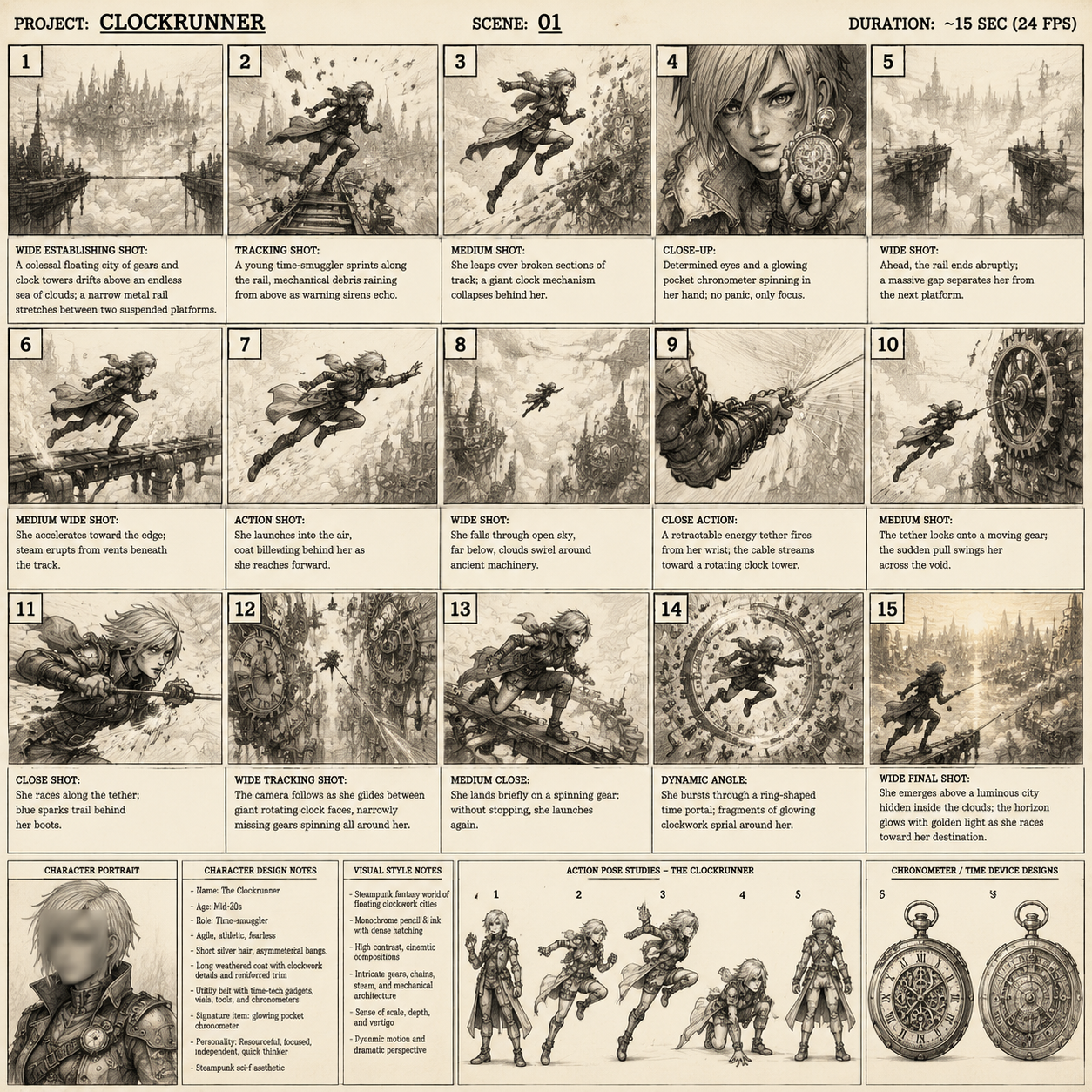


The generative AI video market has crossed a turning point. What began as a novelty that produced blurry, uncanny clips has matured into a production tool that creators, marketing teams, and independent filmmakers rely on every day. Industry analysts estimate that the generative AI video segment will keep compounding for years, and the practical evidence is everywhere: product launch teasers made in an afternoon, music videos with impossible visuals, and short films that would have required a six-figure budget a few years ago. This guide walks through the AI video generation landscape in 2025, explains how the technology works, and shows you how to build a workflow that produces consistent, high-quality results.
Why AI video generation matters now
Three forces converged to make 2025 the year AI video went mainstream. The first is quality. Modern models produce coherent motion, stable characters, and controllable camera work. The second is speed. A clip that used to take hours of manual animation can now be generated in minutes. The third is access. Capable models are available through simple web interfaces, and even free tiers let you test the technology before spending anything.
The business case is equally strong. Social platforms reward video, short-form content demands volume, and every brand needs a constant supply of fresh footage. AI generation lowers the cost of experimentation. Instead of committing a full production team to an idea, you can generate a concept video in an afternoon, test it with a real audience, and only invest in the winners. That is a fundamentally different production economy.
The model landscape in 2025
No single model dominates every use case. The smart approach is to treat the model ecosystem as a toolbox with different strengths.
Image-first models such as the Flux series set the standard for photographic realism and style control. They are not video generators by themselves, but they produce the reference frames and key images that anchor video generation. If you need a consistent product shot or a specific art style, an image model is often the right starting point.
Video generation models have split into two camps. Cinematic-quality models like Runway's Gen-4 series excel at filmic motion, depth, and lighting, which makes them the choice for narrative work and branded content. Narrative and physics-focused models like OpenAI's Sora series understand longer sequences, object persistence, and cause-and-effect, which helps when your scene involves interaction between subjects. Regional players like Kling AI and PixVerse have pushed hard on speed and cost efficiency, making them attractive for high-volume social content. MiniMax Hailuo and similar models compete on character motion and stylized animation, which appeals to anime and game studios.
The practical takeaway: define the job first, then pick the model. A photorealistic product teaser, an anime-style music video, and a fast daily social clip require different engines.
How the technology works
Most video generators are built on diffusion or transformer architectures. Diffusion models start from random noise and refine it toward a target, guided by the text prompt and, increasingly, by reference images. Transformer-based models predict frames sequentially and tend to handle longer-range consistency better. Large language models often sit in front of the generator, interpreting your prompt, splitting it into shots, and translating your creative intent into the exact parameters the video model understands.
The generation itself happens on GPU clusters managed through task queues. Your job is queued, scheduled, executed, and returned. This is why a five-second clip can take minutes: the model is producing and reconciling dozens of frames, not a single image. Platforms that advertise faster speeds are usually optimizing this scheduling layer with better routing and hardware allocation.
Character consistency: the hardest problem
The biggest practical challenge in AI video is consistency. Generate the same character in two different scenes and the face drifts, the outfit changes, the lighting shifts. For any project with a narrative, that inconsistency kills the illusion.
The standard solution in 2025 is multi-image fusion and reference-based generation. You provide one or more reference images of the character, and the model keeps those visual features stable across scenes. Combined with detailed prompts that repeat the same character description, this technique lets you shoot a three-scene story with the same protagonist throughout. For product work, the same approach keeps the packaging, logo, and color palette consistent across a whole campaign.
Image-to-video is the reliable cousin of this technique. Generate a still frame with precise composition, then animate it. You get the compositional control of a photograph and the motion of a video, which is a strong combination for commercial work.
AI director agents and scene management
The next layer of the stack is the AI director. Instead of prompting one clip at a time, you describe the whole sequence, and the agent breaks it into shots, sets camera angles, plans transitions, and generates the scenes in order. This is where AI video stops feeling like a search engine for clips and starts feeling like an actual production pipeline.
A typical director-driven workflow looks like this: write the concept, choose the visual style, define the protagonist with reference images, describe each scene with its mood and camera movement, and let the agent assemble the sequence. The output is a rough cut that you then refine. The human role shifts from pixel-level editing to creative direction: judging pacing, emotion, and story logic.
Building a production workflow
Here is a workflow that works across marketing, social, and indie film projects:
- Concept and script. Write the story in plain language. Keep it short: most AI video projects are 15 to 60 seconds.
- Style selection. Decide the aesthetic: photoreal, cinematic, anime, stylized. Pick the model that matches.
- Reference creation. Generate or collect reference images for characters, products, and settings.
- Shot planning. Break the script into 3 to 10 shots with clear prompts for each.
- Generation. Run the shots, review, regenerate the weak ones.
- Assembly. Bring the clips into an editor, add transitions, captions, and sound.
- Sound and music. Generate a voiceover and background music, or use a royalty-free library.
- Review and ship. Watch the full cut, fix pacing issues, and export.
This loop takes hours rather than weeks, and it is repeatable. That repeatability is the real competitive advantage: you can iterate on a story until it works, without burning a budget on every version.
Use cases that are working in 2025
Marketing teams use AI video for product teasers, ad variants, and localized versions of the same campaign. Instead of reshooting for every market, they change the prompt, the voiceover language, and the on-screen text, then regenerate. The cost per variant drops to near zero.
Social creators use AI video to feed the content machine. A travel channel generates fantasy establishing shots; a fitness brand generates stylized workout backgrounds; a music artist creates a lyric video in an afternoon. The clips are raw material, and the creator's voice comes from the editing and the concept.
Independent filmmakers use AI video for pre-visualization and for shots that would be impossible or too expensive to capture. A director can show an investor a full animated version of a scene before a single camera is rented. That de-risks the entire production.
Monetization and the creator economy
As production costs fall, new revenue models open up. Creators can sell AI-generated assets and templates. Studios can license stylized clips. Educators can produce explainer videos with consistent branded characters. The common thread is that AI lowers the barrier to producing visual content, and the people who profit are the ones with taste, distribution, and a repeatable system. The tools commoditize the execution; they do not commoditize the idea.
If you plan to sell AI-generated work, check the license terms of each tool, because commercial rights vary by platform and plan. A few minutes of reading now prevents a legal headache later.
Common mistakes to avoid
- Picking one model for everything. Match the model to the job.
- Skipping reference images and wondering why characters drift.
- Writing vague prompts and accepting random results. Specificity is the skill.
- Editing frames individually instead of regenerating weak shots.
- Ignoring aspect ratio until export time.
- Publishing without checking license terms.
- Treating AI video as a replacement for storytelling. The story still has to be good.
Building a prompt library that compounds
The single most valuable asset an AI video creator can own is not a subscription, it is a library of proven prompts. Every successful generation teaches you something: which phrasing controls lighting, which model handles motion best, which camera words produce the shot you imagined. Write those findings down. Organize the library by category: characters, environments, camera moves, lighting moods, and finished recipes that combine them.
A practical entry looks like this: "cinematic product shot, matte black bottle on wet stone, soft rim light, slow dolly push-in, shallow depth of field, 35mm" plus the model name and the settings that worked. When a new project arrives, you start from a recipe that is already proven instead of starting from a blank prompt box. This compounds in exactly the way a stock library does, with the difference that the assets are invisible: they are instructions, not files.
The library also protects you from model churn. Models get updated and replaced, but the underlying language of good prompts is stable. When a favorite model disappears, your recipes translate to the next one with minor edits. Creators who keep this discipline get faster every month, while creators who regenerate from scratch stay stuck at the same speed forever.
The economics of AI video for small teams
For a small team, the cost comparison is stark. A traditional 30-second commercial can cost thousands in equipment, location, talent, and editing time. An AI-generated version costs a fraction of that, and the marginal cost of a variant is near zero. That changes the strategy: instead of betting the budget on one perfect spot, you run five variants and let the audience choose.
The economics also change the hiring picture. Teams that adopt AI video do not necessarily need fewer editors; they need editors who think in prompts and curation. The bottleneck moves from execution capacity to creative judgment. For freelancers, this is an opportunity to take on work that used to require a studio, provided they invest in the prompt library and the review workflow described above.
There is a discipline cost, though. Free and cheap generation encourages volume, and volume without review produces noise. Budget time for honest evaluation: watch every render, kill the weak ones, and never publish a clip that does not serve the story. The tools make production cheap; taste makes it valuable.
Frequently asked questions
How long can AI-generated videos be? Most tools generate clips of a few seconds to a minute. Longer films are built scene by scene and assembled in an editor.
Do I need a powerful computer? No. Generation happens in the cloud. A normal laptop is enough for prompting and editing.
Can I control the camera movement? Increasingly yes. Many models accept camera direction terms such as pan, tilt, zoom, dolly, and orbit in the prompt.
Is AI video generation expensive? Free tiers exist for testing. Paid plans scale with usage, and the cost per clip is a fraction of traditional production.
Will AI put video editors out of work? It removes repetitive tasks, but editors who understand story, pacing, and taste are more valuable than ever because the volume of raw material is exploding.
What is the best way to learn? Pick one tool, generate one short project a day for a week, and study which prompts work. Hands-on practice beats reading guides.
Final thoughts
AI video generation in 2025 is no longer a gimmick. It is a production discipline with its own techniques, its own best practices, and its own economics. The tools are powerful, but they reward people who plan: define the story, fix the style, lock the characters, and only then generate. Start small, build a prompt library, and run real projects through the pipeline. The studio you used to dream about now fits in a browser tab, and the only barrier left is the quality of your ideas.
