
What Multi-Model AI Video Platforms Actually Do
If you have spent any time with generative video tools in the past year, you already know the pattern: one tool is excellent at photorealism, another follows complex prompts better, a third renders faster, and a fourth is the only one that keeps a character's face consistent across shots. Choosing a single tool means giving up on the others. Multi-model AI video platforms solve that problem by putting dozens of models behind one interface, so a creator can switch between them without re-learning a new product every time.
This guide explains how these platforms work, what to look for when choosing one, and how to build a realistic text-to-video and image-to-video workflow around them. It is written for creators, marketers, and small production teams who want consistent, cinematic results without maintaining a complicated toolchain.
Why the AI Video Market Moved Toward Model Consolidation
The generative video industry grew faster than almost any other software category in the mid-2020s. Text-to-video went from short, wobbly clips to coherent multi-scene narratives in a remarkably short window. The side effect was fragmentation: every week brought a new state-of-the-art model with its own website, its own subscription, its own prompt syntax, and its own quirks.
For professional creators, that fragmentation was the real bottleneck. A brand campaign might need one model for realistic product shots, another for stylized motion graphics, and a third for consistent animated characters. Managing three or four separate subscriptions, uploading the same reference images everywhere, and stitching together footage from different tools is slow and error-prone.
Multi-model platforms emerged as the practical answer. Instead of betting on a single model, they aggregate a large catalog and let the user pick the right engine for each shot. The value is not any individual model; it is the orchestration layer on top of them: one place to manage prompts, reference images, styles, and output history.
This consolidation matters most for three groups:
- Solo creators who cannot afford several premium subscriptions but want access to a broad range of engines.
- Agencies that need to match a client's brand style across many deliverables and want one consistent workflow.
- Production teams that value speed and want to iterate on storyboards without re-uploading assets to five different tools.
The Anatomy of a Modern Multi-Model Video Platform
A good platform in this category is more than a dropdown list of models. Under the hood, it combines several distinct capabilities that together define the quality of the final video.
A Model Library Organized by Use Case
The library is the core asset. It typically spans three tiers:
- Premium engines tuned for photorealism, complex motion, and strict prompt adherence. These are the models you reach for when the shot needs to look expensive.
- Fast and affordable engines built for iteration. They are ideal for drafts, storyboards, and quick social clips where turnaround matters more than perfection.
- Specialized engines for niches such as anime, cartoon, architectural visualization, product close-ups, or historical re-enactments.
The practical benefit is that you can draft cheap and finish expensive. Rough ideas go through the fast tier, and only the shots that survive review are rendered on the premium tier. That workflow keeps both the budget and the iteration loop healthy.
Text-to-Video and Image-to-Video in One Place
Most platforms support both entry points. Text-to-video is the fastest way to explore an idea: type a paragraph describing the scene, camera movement, lighting, and mood, and the model produces a first pass.
Image-to-video is where the real control lives. You start from a reference image, a keyframe, or a brand asset, and the model animates it. This is essential for:
- Turning product photography into lifestyle video.
- Animating storyboard frames into animatics.
- Keeping a consistent character or location across multiple shots.
- Matching a specific brand palette and composition from the start.
A workflow that alternates between the two is common: generate or upload a strong keyframe, then use image-to-video to bring it to life, then feed the best frame back as the starting point for the next shot.
Multi-Image Fusion for Character Consistency
Character consistency was the holy grail of AI video for a long time. The same person would change face, wardrobe, or body proportions from one shot to the next, which made serial content nearly impossible.
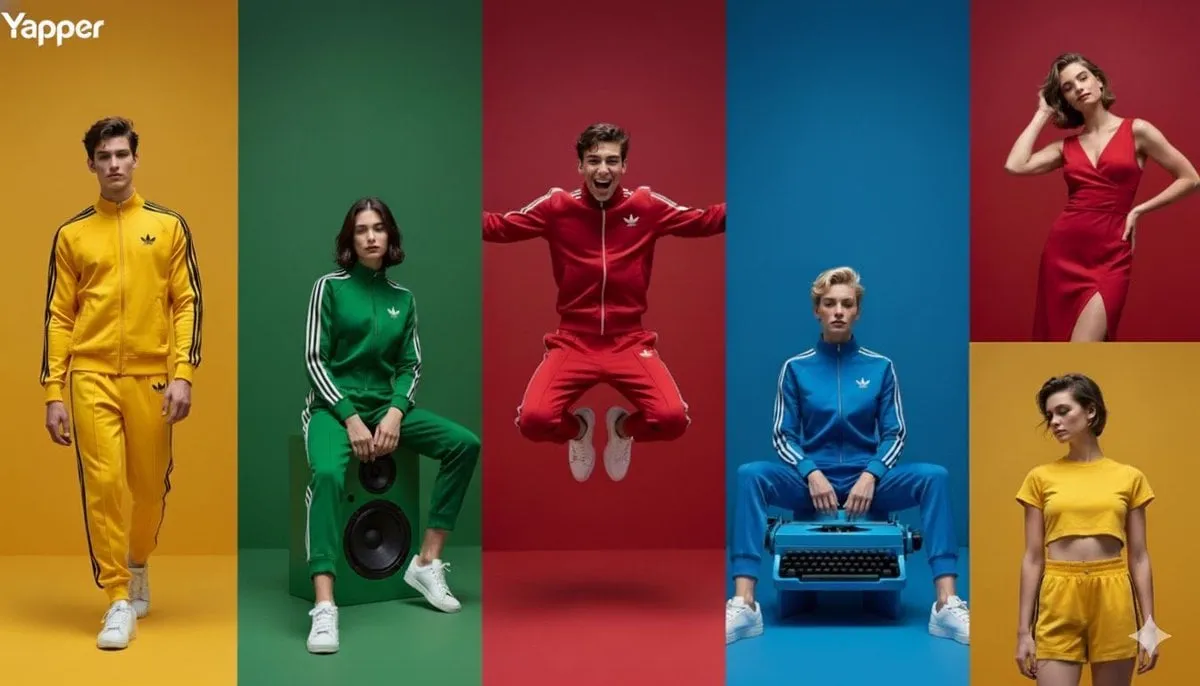
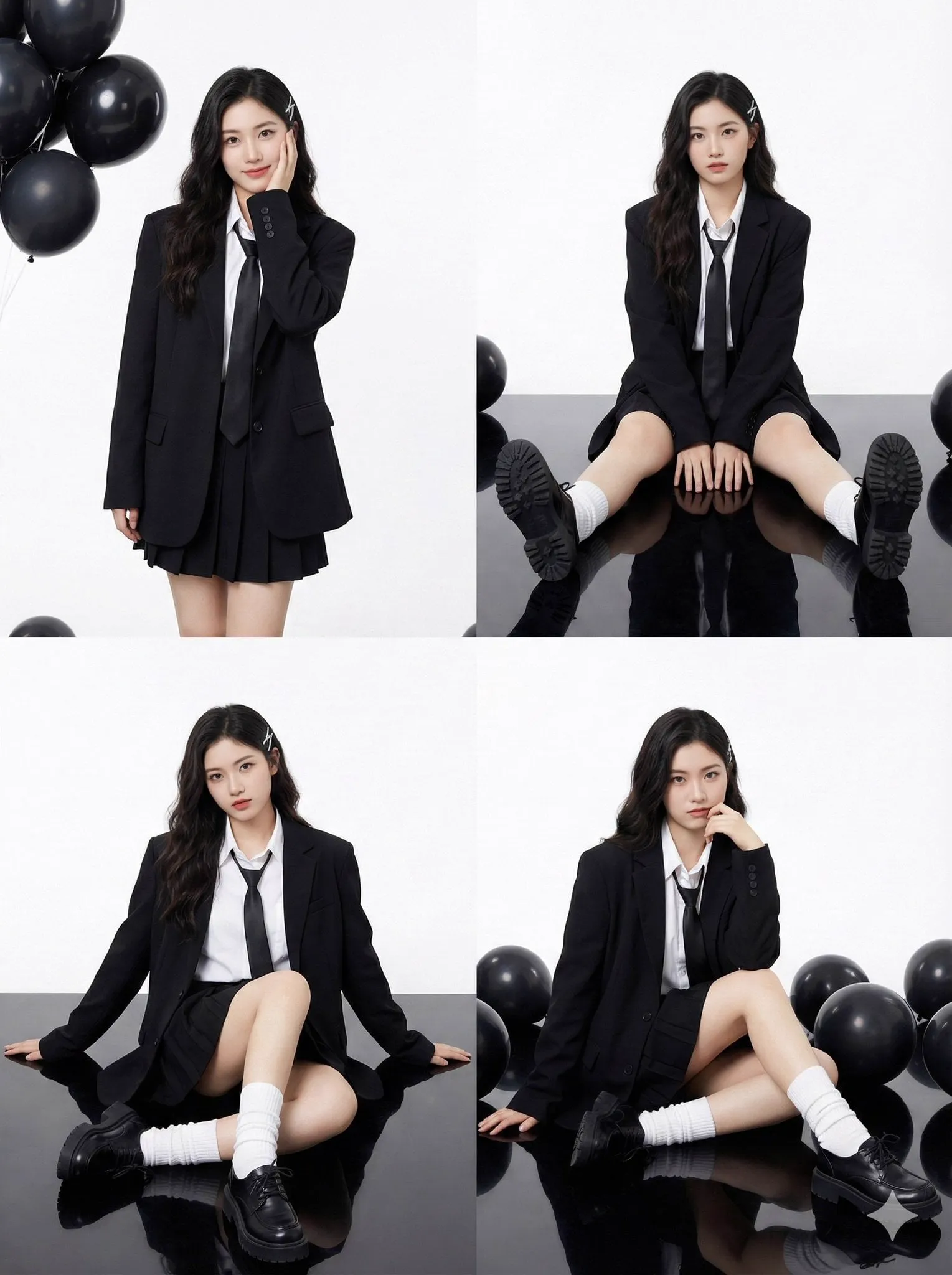
Multi-image fusion attacks the problem by letting you supply several reference images at once, from multiple angles or in different outfits, so the model can lock onto a stable identity. The more coherent the references, the more stable the character across scenes. This single feature unlocked entire categories of content: web series, tutorials with recurring hosts, branded spokespeople, and even short films with the same cast across scenes.
The practical rules for good reference sets are simple: consistent lighting, consistent framing, and enough variety in pose and background to teach the model the character rather than a single photograph.
AI Director Agents
The most interesting addition to recent platforms is the AI director agent: a layer that helps plan the video before the model renders it. Instead of writing a raw prompt, you describe the story and the agent proposes a shot list, suggests camera movements, and maps cinematic techniques onto the strengths of the available models.
For someone without film training, this is a shortcut to better framing. The agent knows that a slow push-in builds tension, that a low angle makes a subject feel powerful, and that cutting from a wide establishing shot to a close-up improves readability. For experienced filmmakers, it is a faster way to translate a scene description into the exact parameters the video model needs.
Director agents do not replace creativity. They reduce the mechanical work between an idea and a renderable prompt.
Audio Tools and Sound Sync
Video without sound is incomplete, and AI platforms have started to fold audio in. Some offer sound effect generation, background music, or dialogue voiceovers that can be aligned with the rendered footage. For social content, this matters: silent videos are skipped, and platforms reward native audio.
The practical workflow is to lock the visual edit first, then generate or select audio to match the rhythm of the cuts, then do a final pass to make sure the pacing works.
Community Marketplaces
The newest layer of the ecosystem is the community marketplace. Platforms now let users train custom models on their own data, publish them, and even share or sell them to other creators. This turns the platform from a tool into a network: niche styles, company-specific visual identities, and regional aesthetics can be packaged as reusable models.
For a brand, a custom model trained on its product line means every future render starts from a consistent visual identity. For a creator, a popular custom style can become a small revenue stream. This is still an early category, but it points clearly at where the industry is heading: models as assets that creators own and trade.
A Practical Workflow: From Idea to Finished Clip
Here is a repeatable workflow that works on most multi-model platforms. It assumes you are producing a short video, but the same skeleton scales to longer projects.
Step 1: Define the Core Idea in One Sentence
Before touching any tool, write the story in one sentence: who, what, where, and what changes. Example: a coffee brand launches a new cold brew; the video shows the can on a sunlit counter, ice being poured, condensation forming, and a hand reaching for it.
Step 2: Build the Shot List
Break the sentence into three to five shots. For each shot, note the subject, the camera movement, and the mood. This is where a director agent helps if your platform has one; otherwise a simple table works.
Step 3: Create or Select Keyframes
For each shot, generate a keyframe image or supply your own reference. Keep the character, palette, and lighting consistent across keyframes. This step determines most of the final quality.
Step 4: Render Drafts on the Fast Tier
Use the affordable engines for the first pass. Check the obvious things: does the motion make sense, is the framing right, does the character look like itself? Expect to discard most drafts.
Step 5: Finish on the Premium Tier
Once a shot passes review as a draft, re-render it with the premium engine for the final look. This two-tier approach is the single biggest cost lever in the whole workflow.
Step 6: Add Audio and Review the Cut
Bring the shots into an editor, add sound, and watch the full sequence. Fix pacing issues by trimming or re-rendering individual shots rather than the whole piece.
Choosing a Platform: Decision Criteria
Not all multi-model platforms are equal. When evaluating one, weigh these factors in roughly this order:
- Model breadth and quality: does the library cover the styles you actually need, not just the ones you might need someday?
- Consistency tools: does it support multi-image fusion and reference-driven generation?
- Entry points: are both text-to-video and image-to-video solid, or is one an afterthought?
- Iteration speed: how painful is it to generate ten drafts and pick one?
- Export quality: resolution, frame rate, and codec options matter if the footage will be edited further.
- Data handling: where do your uploads live, and can you delete them?
- Community and models: can you train or import custom models if your brand needs a unique look?
Avoid platforms that lock your output or make it impossible to export clean files. You should be able to leave at any time with everything you made.
Common Mistakes and How to Avoid Them
Even experienced creators repeat a few predictable errors when they move to multi-model platforms.
The first is over-relying on a single favorite model. The point of a multi-model platform is that different shots need different engines. Test at least two or three models per shot type before standardizing.
The second is skipping keyframes. Text-to-video is convenient, but a project with brand requirements, recurring characters, or a specific palette will not hold together without reference images. Invest in the keyframe step.
The third is judging quality from a single frame. AI video can produce a beautiful still and then fail at motion, physics, or lip sync. Always watch the full clip before approving it.
The fourth is ignoring iteration cost. Drafting on premium engines for every idea burns budget fast. Use the fast tier until an idea is proven.
Frequently Asked Questions
How many models does a creator really need?
For most projects, two or three engines cover ninety percent of shots: one strong photorealism model, one fast iteration model, and one specialized model for the style you use most. A platform that forces you through dozens of similar options is no better than one with a smaller, better-chosen catalog.
Is text-to-video good enough for professional work now?
For exploration, yes. For final deliverables, image-to-video and reference-driven workflows are still more reliable when you need brand consistency, recurring characters, or precise composition. Most professional pipelines start with text to explore and switch to images for the final pass.
Can I use AI video commercially?
Generally yes, but the licensing terms differ by model and platform. Check the license for each engine you use, especially for client work, broadcast, or anything with a large audience. Keep records of what you generated and with which model.
How do I keep a character consistent across an entire series?
Build a strong reference set from multiple angles and lighting conditions, use multi-image fusion, and re-render any shot where the character drifts. Store the winning reference set and reuse it for every episode.
What is the fastest way to learn a new platform?
Do not read the docs first. Pick one simple shot, run it through every model in the library, and compare the outputs. You will learn more about the platform's personality in an hour than in a day of tutorials.
The Bottom Line
Multi-model AI video platforms are the practical answer to a fragmented market. They do not promise that one model does everything; they promise that you can use the right model for each job without friction. Combined with multi-image fusion for consistency, director agents for planning, and community marketplaces for reusable styles, they turn a single creator into a small production studio.
The winners in this space will not be the platforms with the most models. They will be the ones that make consistency easy, iteration fast, and export clean. Choose your tool the same way: on the strength of the workflow, not the size of the catalog.
