

The Shift: From Studios to Prompts
For most of the history of moving images, professional video required professional infrastructure: cameras, crews, studios, and budgets. That barrier is collapsing. AI video generation has moved from a curiosity to a practical production tool, and the change is not incremental. The workflow itself is different. You no longer storyboard a shoot and then light a set; you write a description, choose a model, and iterate until the machine produces the shot you imagined.
This matters for everyone who makes content: marketers, educators, independent filmmakers, and small business owners. The tools are no longer a toy for early adopters. They are a genuine alternative for producing explainers, ads, social content, and even narrative sequences. The question is no longer whether to use them, but how to choose among them and build a workflow that produces consistent, high-quality results.
What a Modern Platform Needs: A Feature Checklist
Before you commit to any platform, evaluate it against a short checklist. Does it offer multiple generation models with different strengths, or a single generic model? Can you control camera motion, duration, and aspect ratio? Does it support reference images, so characters and objects stay consistent? Can it generate or integrate audio, or are you stuck stitching in sound separately? What does the queue look like when you are running twenty clips for a single project? And crucially, how does the platform handle the boring operational side: rendering failures, retries, and batch management?
The platforms that win are the ones that treat generation as a production pipeline, not a single-output toy. You want to iterate on a clip ten times without paying a heavy cost each time, and you want the whole sequence to feel like one project rather than a pile of unrelated files.
Specialized Models vs One-Size-Fits-All
Choosing per shot: photoreal, stylized, anime, 3D
No single model is best at everything. The strongest workflow treats model selection like lens selection: pick the tool for the shot. A photorealistic product demo wants a model known for physical accuracy and texture detail. An animated explainer wants a model with strong stylization and clean lines. A dream-sequence transition wants something experimental and fluid.
The practical approach is to build a small model library: one reliable photoreal workhorse, one stylized option, one fast and cheap option for drafts and test shots. Draft with the cheap model, refine with the good one. This discipline saves both time and money, and it produces better results than hammering every shot through the same pipeline.
Control beyond the prompt: keyframes and direction
Modern tools go beyond text. Many support start and end frames, motion brushes, and directional control, letting you specify that a camera pushes in, a subject turns, or an object moves from left to right. Learn these controls, because they are what separate generated clips from directed shots. A prompt alone gives you a mood; keyframes give you a scene.
Keeping Characters Consistent Across Scenes
The single biggest complaint about AI video is drift: the character looks different in every shot. This is where multi-image fusion and reference-driven workflows matter. Instead of describing your hero in words each time, feed the platform a reference image set, front view, profile, and action poses, and constrain the generation to that identity.
Consistency is a system, not a prompt. Build the reference set once, store it, and reuse it for every shot in the project. Check consistency across adjacent shots during review, not at the end, because fixing drift early is cheap and fixing it after assembly is a rewrite.
Sound: The Often Forgotten Half of Generated Video
Visuals get all the attention, but sound is where generated video still breaks. A beautiful clip with no audio, wrong audio, or audio that does not match the motion feels dead. Plan the audio layer from the start. Generate or choose a voiceover that matches the pacing, add a music bed that fits the mood, and layer in simple sound design cues: whooshes for transitions, clicks for UI actions, ambient texture for environments.
If the platform you chose cannot handle audio, factor that into your budget. A separate pass with AI voice tools and music generators is acceptable, but it doubles your workflow. Platforms with integrated audio produce more finished results in a single pass.
Queues, Compute, and Managing Long Projects
A five-minute video is a hundred five-second clips. That scale changes the problem from creativity to operations. You need a queue that runs overnight, clear retry behavior when a render fails, and a way to track which clips are done, which need revision, and which are approved. Ambitious creators keep a simple spreadsheet or project file per video, with a row per shot, a status column, and a notes column. It sounds obvious, but most failed AI video projects fail at this step, not at the prompt.
Building a Professional Workflow Around These Tools
A repeatable workflow looks like this. Pre-production: write the script, break it into shots, and define the look and the character references. Generation: draft every shot with a fast model, review the sequence for consistency, then regenerate the keepers with the high-quality model. Post-production: assemble in your editor, add the audio layer, grade for unity, and export.
The key insight is to review as a sequence, not as individual clips. A shot that looks great alone can break the flow. Judge cuts the way an editor would, on rhythm and continuity, and you will produce work that looks intentional.
How to Evaluate a Platform Before Committing
Run a standard test before you pay for anything. Generate the same three-shot sequence on the platform: a close-up of a person, a wide establishing shot, and a product shot with motion. Evaluate four things: quality, consistency between the shots, speed, and how much manual cleanup each shot needs. Then generate the same sequence with a competitor and compare side by side. The platform that wins the test is the one to build on, regardless of marketing claims.
Also test the failure modes. Cancel a render mid-queue. Let one clip time out. See how the platform handles it. Production tools are judged by how they fail, because in a real project, failures are guaranteed.
Text to Video vs Image to Video: Which to Use
Platforms offer two primary generation modes, and the choice changes your workflow. Text to video starts from nothing: you describe a scene and the model invents it. It is fast, flexible, and ideal for concepts, backgrounds, and shots where you have no source material. Image to video starts from a photo or a frame you provide: the model animates what is already there. It gives you far more control over composition and identity, because the first frame is exactly what you want.
A good workflow uses both. Generate a hero image first, iterate on that image until it is perfect, then animate it. The image is cheap to refine, and once it is right, the video inherits its quality. Using text to video directly for shots with characters or products, where identity matters, is asking for drift you will have to fight later.
Storyboarding With AI: From Script to Shot List
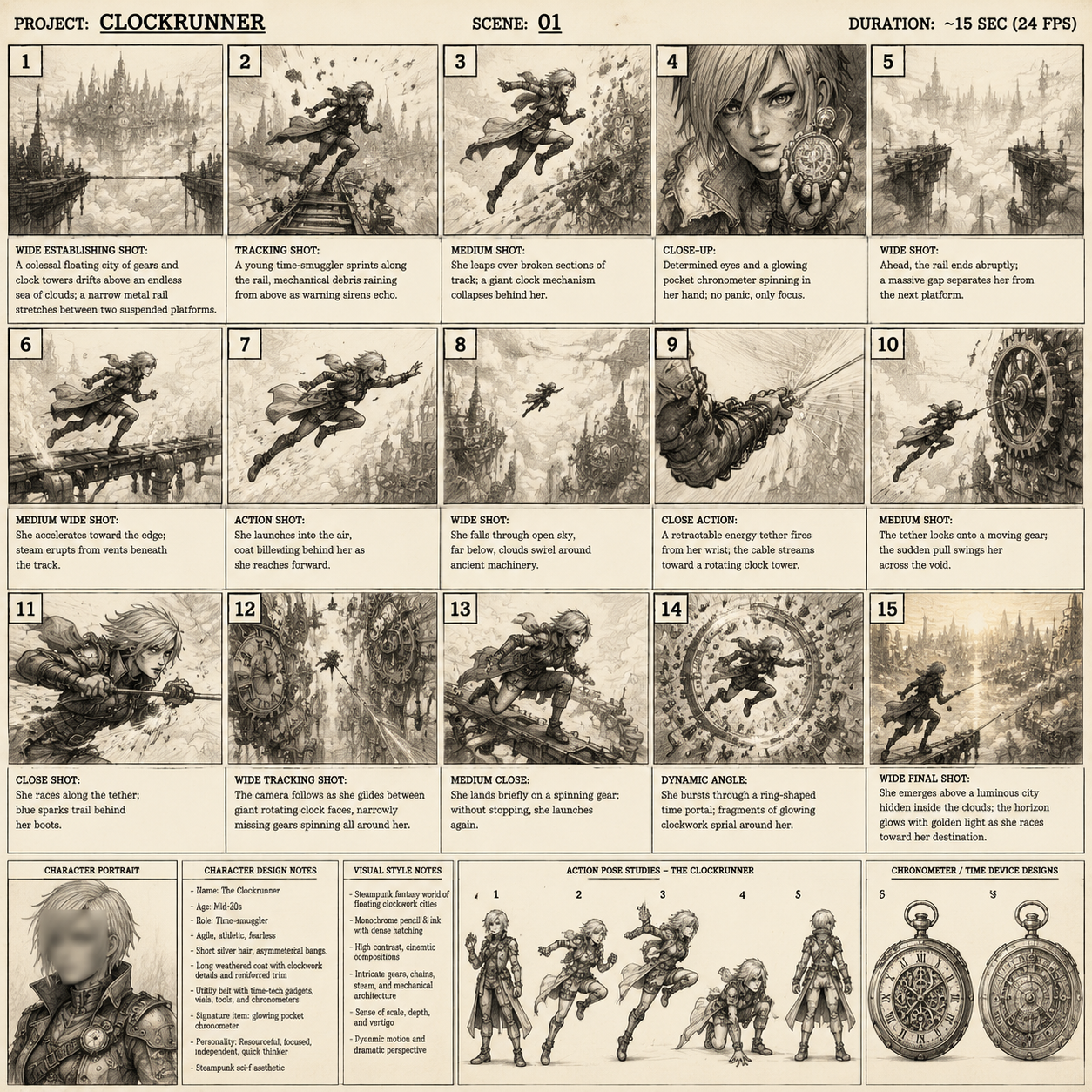
The professionals who get the most out of these tools still storyboard. The difference is that the storyboard is now a shot list written for a machine: each line describes one shot, its duration, its motion, its key elements, and which reference images to use. Write the script first, then break it into shots of three to eight seconds, then expand each shot into a generation brief.
This shot list is your project file. It keeps the sequence coherent, tells you exactly how many generations you need, and gives you a checklist for review. When a shot is approved, mark it; when it needs revision, note what changed. Without the list, a fifteen-shot video dissolves into chaos by the third shot.
Iteration and Review Rituals
Quality in AI video comes from iteration, and iteration needs a ritual. Set aside a review session per project stage: one after the drafts, one after the final generation, one after assembly. In each session, look at the sequence as a whole, not the clips in isolation. Mark every shot with one of three statuses: approved, needs revision, or discard. Revise only the shots that need it, and resist the urge to polish approved shots further; that is where budgets disappear.
Keep a running prompt log with the winning prompt for each approved shot. The next time you need a similar shot, you start from the winner instead of from scratch. Over a few projects, this log quietly becomes your most valuable production asset.
A Sample Campaign Build
Walk through a real example to see the pieces fit. Suppose you are building a thirty-second product ad with eight shots. Day one: write the script, about ninety words, and break it into eight shot lines. Define the look in one sentence and collect three reference images of the product. Day two: draft all eight shots with a fast model, assemble a rough cut, and review as a sequence. Mark four shots approved, three needing revision, one discarded. Day three: revise the three shots, regenerate the discarded one, then regenerate all approved shots at high quality. Day four: assemble, add voiceover and music, grade for unity, and export.
The total effort is four working sessions, and most of the time goes to review and assembly, not generation. That is the shape of a professional AI video workflow: planning and judgment around the machine, not endless prompt gambling.
Common Pitfalls and How to Avoid Them
The most common failure is starting production before defining the look. A video generated shot by shot with no style anchor looks like a collage. Fix it by writing the look in one sentence and repeating it in every generation brief. The second pitfall is reviewing clips individually instead of as a sequence; a clip that looks great alone can break the cut. The third is skipping the cheap draft phase and burning the expensive model on the first attempt, when the first attempt is rarely the final one.
The fourth pitfall is audio. A beautiful generated sequence with no sound or mismatched sound reads as unfinished, and fixing audio at the end is harder than planning it at the start. The fifth is organizational: no shot list, no statuses, no prompt log. These five habits, defined look, sequence review, cheap drafts, audio from the start, and a project file, separate the creators who ship regularly from the ones who post once and give up.
Building Skills Over Time
Treat AI video generation as a craft, not a feature. The tools change quickly, but the underlying skills are stable: describing scenes precisely, judging motion and light, managing a sequence, and making taste decisions about pacing and sound. Spend time on those skills, and the arrival of a new model or platform becomes an upgrade rather than a restart. Watch your own output critically, compare it to professional work you admire, and borrow techniques deliberately. Within a few projects, the gap between what you imagine and what you generate closes dramatically, and the platforms become an extension of your judgment rather than a box you type into.
FAQ
Do I need video editing skills to use these platforms?
Basic editing helps enormously. You still need to assemble clips, add audio, and grade, and editing judgment is what separates a pile of clips from a video. The platforms remove the filming bottleneck, not the storytelling one.
How much does it cost to make a full video?
It varies widely by platform, model, and how many iterations you need. Plan a budget for drafts, because the first pass is rarely the final pass. Draft cheap, refine expensive, and the total stays sane.
Can AI video replace traditional production entirely?
Not yet, and probably not for everything. Live events, interviews, and real product footage still need cameras. AI video is strongest for explainers, ads, and creative sequences. Treat it as a new production tool, not a replacement for all others.
Are there legal concerns with AI-generated video?
Yes. If you generate a recognizable person or copy a distinctive style, you can face rights issues. Use platforms and models with clear commercial terms, and do not generate content that misleads viewers about real people or events.
