
What Changed in Video Production
Ten years ago, producing a thirty-second video clip meant renting a camera, hiring an editor, booking a studio, and waiting days for a rough cut. Today the same clip can be generated from a few sentences of text in the time it takes to brew a coffee. This is not a marginal improvement in an existing tool chain; it is a structural change in who gets to make video and how fast they can ship it.
Text-to-video is the term used for systems that read a written prompt and produce moving images that match it. The technology has existed in research labs for years, but it crossed an important threshold: the output is now good enough for real projects, not just demos. Brands use it for product teasers, creators use it for daily shorts, educators use it for explainers, and filmmakers use it for previsualization. The barrier to entry has collapsed, and the competitive advantage now belongs to people who understand how to direct these tools rather than to people who simply own expensive equipment.
This guide walks through how modern AI video generation works, what the current model landscape looks like, how to choose the right tool for a specific job, and how to build a repeatable workflow that produces consistent results instead of one-off experiments.
How Text-to-Video Actually Works
It helps to understand what happens between typing a prompt and seeing footage, because the mental model determines how well you write prompts and how efficiently you iterate.
Most modern video generators are built on diffusion-based architectures that have been extended from images to sequences of frames. When you submit a prompt, the system encodes the text into a representation it can reason about, then progressively removes noise from random starting points across a short timeline, guided by that representation. The result is a clip that attempts to match your description in subject, composition, lighting, and motion.
Three developments pushed the quality over the threshold of professional usefulness:
- Better text understanding. Newer models parse complex instructions, including camera movement, lighting direction, and emotional tone, instead of just matching keywords.
- Longer and more coherent sequences. Early models could produce a few seconds of plausible motion before objects melted into abstract shapes. Current flagship models hold scenes together for much longer and keep characters recognizable across cuts.
- Faster generation. What once took minutes of compute now completes quickly enough for rapid iteration, which changes the practical workflow from careful planning to try-and-refine.
The practical implication is that prompts should be written like shot descriptions, not like search queries. A prompt that says "a woman in a red coat walking through a rainy city street at night, neon reflections, slow dolly shot" produces dramatically better results than "rainy street woman red coat". The model rewards specificity about the frame, the motion, and the mood.
Prompt Craft: Writing for the Model
The quality of your output is capped by the quality of your prompts, but writing a good prompt is a different skill from writing good prose. The model reads your words as instructions about a frame, and every phrase is a decision about what appears on screen.
Start with the subject: who or what is in the shot, described concretely. Then add the setting, because a subject without a world floats in a visual void. Then describe the action in one clear sentence, because motion is the whole point of video. Then set the camera: a close-up, a wide shot, a slow push-in, a tracking shot. Then set the light and the mood, which are what separate a generic clip from a cinematic one.
A practical formula that works across models looks like this: subject, setting, action, camera, lighting, mood, and, when needed, a style reference at the end. Seven elements, each one sentence, in that order. It reads like a shot description from a director's notebook, which is exactly what the model is trained to understand.
Two habits improve prompts faster than anything else. The first is writing for the frame: specify aspect ratio and composition in your mental image, and mention the framing explicitly when it matters. The second is testing variations methodically. Keep a base prompt and change one element at a time, saving the results. Over a few sessions you learn which words your chosen model respects and which it ignores, and that knowledge is worth more than any list of tips.
It is also worth remembering that a prompt is a starting point, not a contract. The model interprets your words through its training, so the same sentence can produce different results across models and even across runs. Treat prompts as living documents: adjust them based on what comes back, and keep the versions that work in a personal library you can reuse.
The Model Landscape: Cinematic, Regional, and Fast
No single model dominates every use case, which is why serious teams work with several. The current landscape splits into a few broad families.
The cinematic tier includes models like the Flux series and Runway Gen-4. These are the tools you reach for when photorealism, lighting quality, and fine-grained control matter more than speed. Runway Gen-4 in particular is known for strong scene consistency and controlled motion, which makes it a favorite for narrative work. Flux models are respected for their prompt adherence and their ability to preserve subtle style choices across generations.
The narrative tier is represented by the OpenAI Sora series. Sora pushed the field forward by demonstrating that a model could understand physical plausibility and narrative continuity, not just surface appearance. It excels at complex scenes with multiple interacting elements, camera moves that feel intentional, and a general sense that things obey the laws of physics.
The regional and specialist tier brings in models such as Kling AI, PixVerse, and the MiniMax Hailuo series. These tools matured quickly, often focusing on prompt adherence, motion control, and distinctive visual styles. Kling is frequently praised for its control over character movement and for producing output that suits both realistic and stylized work. Hailuo models are strong choices for physical realism and expressive motion. PixVerse is popular with short-form creators because it balances quality with speed and offers practical features for vertical video.
There is also a fast tier, which includes models designed for high-volume work such as Luma's Ray and other lightweight generators. These sacrifice some polish in exchange for speed and lower cost, making them suitable for drafts, mood boards, and content that will be heavily edited anyway.
The practical takeaway: keep a short list of three or four models with different strengths. Use the cinematic tier for hero shots and client work, the specialist tier for stylistic experiments, and the fast tier for iteration and drafts.
How to Choose a Model for a Specific Job
Model selection is not about picking the "best" model; it is about matching the tool to the constraints of the project. Before you choose, answer four questions.
What is the output for? A client deliverable, a social media post, an internal pitch, a storyboard? High-stakes output justifies slower, higher-quality models. Low-stakes output does not.
How much motion complexity is involved? A talking-head style shot with minimal movement is easy for almost any model. A fight scene, a crowd, water, or fabric requires a model with strong physical understanding.
How consistent does the style need to be across many shots? If you are producing a series, you need models that respect reference images and style prompts, plus a workflow that reuses the same seeds, references, and negative prompts.
How fast do you need to iterate? If you are experimenting with concepts, speed beats polish. If you are delivering a final piece, polish beats speed.
A simple scoring approach works well: assign each candidate model a score from one to five on quality, speed, cost, and style fit for the specific project, then weigh the scores according to the project's priorities. This keeps the decision rational instead of emotional and makes it easy to adjust when the project changes.
Building a Repeatable Creation Workflow
The teams that produce great video at scale are not the ones with the most talented prompt writers; they are the ones with the most disciplined process. A repeatable workflow has five stages.
Define the brief. Write down the goal, the audience, the tone, the duration, and the key visual elements before opening any tool. A one-page brief saves hours of directionless generation.
Script and storyboard. Break the project into shots. For each shot, write a short description of the subject, the action, the framing, the camera movement, and the mood. This shot list becomes the input for your prompts.
Generate in batches. Run a first pass with your fastest model to check composition and pacing, then redo the important shots with the higher-quality model. Batch generation also lets you compare alternatives side by side instead of judging one clip in isolation.
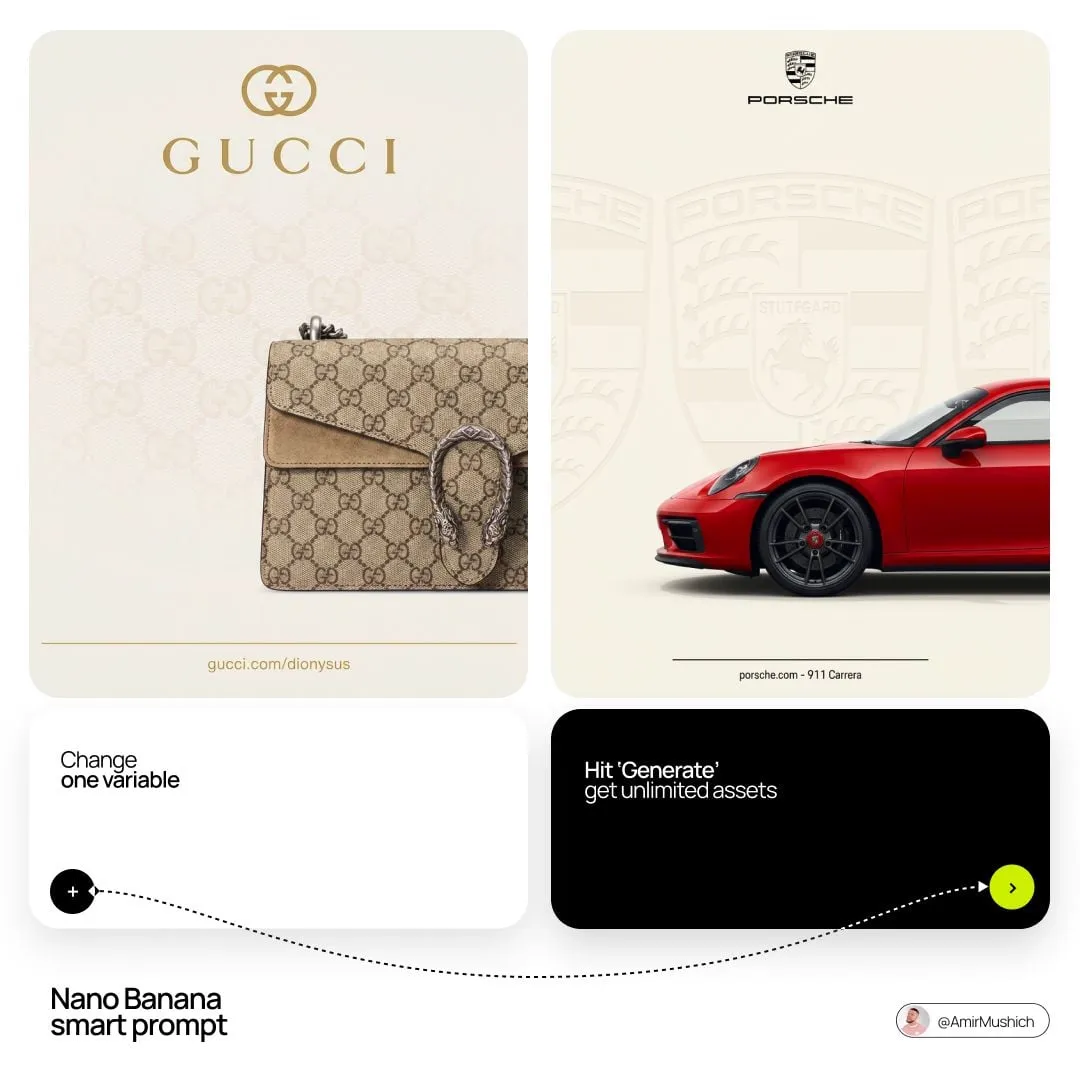
Refine systematically. Change one variable at a time: subject, motion, lighting, camera. If you change everything at once, you cannot learn which change fixed the problem.
Assemble and finish. Bring the clips into an editor, cut to the story, add sound, color, and captions. The finishing touches often matter more than the raw generation quality, because viewers notice rhythm, audio, and polish before they notice individual frames.
Consistency Tricks: Characters, Style, and Motion Across Shots
The hardest problem in AI video is consistency. Generate ten shots of the same character and the face may drift, the outfit may change color, and the mood may shift. Audiences notice this immediately, and it breaks immersion.
Modern tools address this with reference-based features. Multi-image fusion lets you supply several images of a character, a place, or a style, and the model builds a stable identity from them rather than relying on a single seed image. This is a major step forward because a single reference image is ambiguous: one photo cannot tell the model everything about how the character looks from another angle, in different light, or in motion.
Beyond reference images, consistency comes from discipline:
- Keep a visual bible. A folder with approved images of the character, the location, the color palette, and the props. Every prompt references the same visual anchors.
- Reuse exact prompt fragments. Lock the wording that describes the character's appearance, the lighting, and the lens. Small wording changes cause large visual changes.
- Fix the negative space. Be explicit about what you do not want: extra fingers, second shadows, warped text, unintended people in the background.
- Grade in post. Even perfectly generated shots benefit from a unified color grade. A consistent LUT across clips hides small mismatches and gives the whole piece a coherent look.
Common Mistakes and How to Fix Them
Most disappointing AI video is the result of a few predictable errors, and each has a fix.
Vague prompts produce generic footage. The fix is to write shot descriptions with concrete subjects, settings, and actions, and to include camera direction.
Overloading the prompt. A paragraph of twelve instructions usually produces none of them reliably. The fix is to split the shot into multiple simpler generations and combine them in the edit.
Judging single frames instead of motion. A beautiful still can hide jittery or unnatural movement. The fix is to watch every clip in motion before accepting it, and to test motion-heavy prompts on a fast model first.
Ignoring aspect ratio and duration. Vertical platforms, horizontal platforms, and cinematic exports have different requirements. The fix is to set the aspect ratio in the model or crop in post with a plan, never by accident.
Skipping the audio. Video generated in silence feels unfinished no matter how good the visuals are. The fix is to budget real time for music, sound effects, and voiceover, because audio carries most of the emotional weight.
What Comes Next for AI Video Production
The trajectory is clear: generation quality keeps rising, cost keeps falling, and the tools keep absorbing tasks that used to require dedicated specialists. Prompting will remain important, but the bigger opportunity is in workflow design, consistency systems, and editorial judgment.
Expect three shifts in the near future. First, video models will get better at longer-form output, reducing the need to stitch many short clips together. Second, control will become more granular, with sliders and reference features replacing pure prompt luck. Third, the market will reward producers who build repeatable pipelines over those who rely on individual lucky generations.
For anyone starting today, the advice is simple: pick one short project, run it through the workflow described here, and finish it end to end. The fastest way to learn is to ship something complete, see where it falls short, and improve the process for the next piece. The tools will keep changing, but the skills of directing, structuring, and finishing will transfer to whatever comes next.
Frequently Asked Questions
How long does it take to generate a video clip? It depends on the model, the resolution, and the complexity of the scene. Fast models return clips in well under a minute; the most demanding cinematic models can take several minutes per generation. Plan for iteration time, not single-shot time.
Do I need a powerful computer to use text-to-video tools? Most tools run the heavy computation in the cloud, so a mid-range laptop is enough for prompting and editing. You need a decent internet connection and enough storage for the files you generate.
Can I use text-to-video for commercial projects? Yes. Many brands and agencies already use generated footage in campaigns, product content, and social media. Check the terms of the specific tool you use, keep records of your inputs, and follow the platform policies for the channels where you publish.
What is the fastest way to get good at this? Pick a small project and finish it end to end. Generate, edit, grade, and add sound to something complete. Then do it again with a harder project. The skills transfer quickly, and each finished piece teaches more than hours of casual experiments.
Should I worry that the tools will make video editing skills obsolete? No. The demand for editing, direction, and storytelling is growing, not shrinking. Generation produces raw material; the craft of shaping it into a finished piece is exactly the skill that becomes more valuable as the raw material gets cheaper.
