
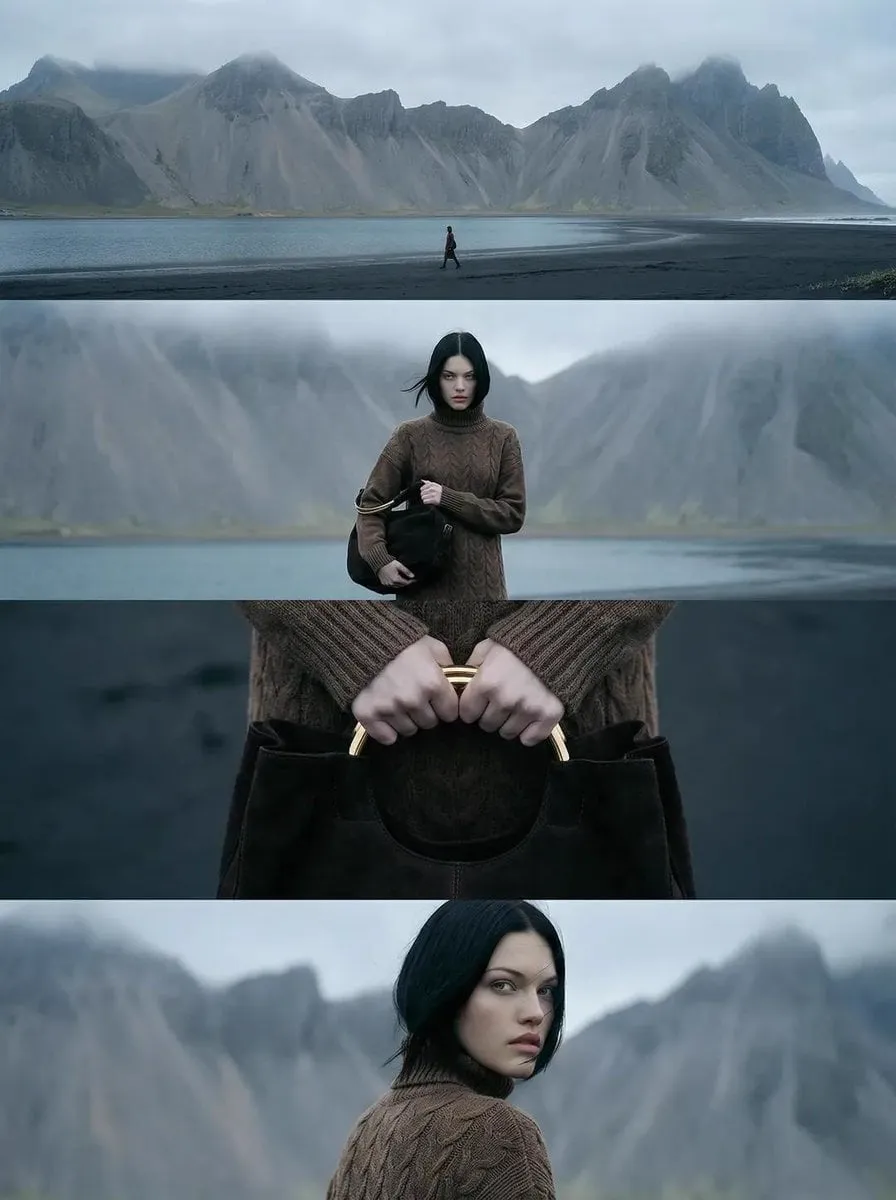


The market for AI video generation moves so fast that any guide written today will be partially outdated in six months. That is exactly why this comparison focuses on the things that do not change quickly: the criteria you should use to judge a tool, the strengths and limits of each major model family, and the workflow habits that produce good results no matter which tool you choose.
If you are deciding between OpenAI's Sora, Runway, Kling, and the growing list of standalone tools, the honest answer is that there is no single winner. There is only the right tool for the right job. This article helps you match the two.
How to Evaluate Any AI Video Generator
Before comparing tools, fix the criteria. Every evaluation should start with five questions.
Visual realism comes first: does the output look like footage or like a collage of moving images? Temporal coherence comes second: do objects stay stable across frames, or do faces, hands, and backgrounds warp between shots? Prompt adherence comes third: does the tool do what the prompt says, or does it reinterpret instructions in annoying ways? Motion control comes fourth: can you steer the camera, the subject, and the pacing, or are you stuck with whatever the model decides? Cost and speed come fifth: how much does a usable output cost in time and money, and does the free tier let you learn without paying?
The weighting of these criteria depends on the project. A brand film needs realism and control. A rapid social media test needs speed and cost efficiency. A character series needs consistency above all else. Judge the tool against the job, not against a marketing page.
The Flagship Models
Sora: The Narrative Benchmark
OpenAI's Sora family set the standard for narrative understanding and longer, coherent shots. Its strength is that it seems to grasp the logic of a scene: how a character moves through a space, how light behaves, and how a story moment lands. For projects where the prompt describes a sequence of events rather than a single image, Sora-class models reduce the amount of hand-holding required.
Its limits are cost, availability, and control. High-end output consumes significant resources, access can be gated, and fine-grained control over every frame still requires iteration. Use Sora-class models when the story matters and the budget allows.
Runway: The Creative Control Suite
Runway has built its reputation on tools for creators who want to direct: camera controls, motion brushes, and a mature editing ecosystem around the generation itself. It is a strong choice when you need predictable, controllable output and a workflow that integrates with professional editing.
The trade-off is that the most powerful features live behind paid tiers, and the learning curve is real. Runway rewards creators who invest in learning the tool, and it punishes people who expect one-click perfection.
Kling: The Motion and Realism Powerhouse
Kling models, from the Kuaishou ecosystem, became famous for physical realism: water, fabric, hair, and complex motion that look genuinely natural. For product shots, fashion, and anything with heavy physical dynamics, Kling-class models are frequently the best first choice.
The weakness is occasionally aggressive interpretation of prompts, and the best quality requires either paid access or careful queue management on free tiers. If your project is about how things move, put Kling near the top of the list.
Hailuo and the Asian Model Wave
Hailuo and other models out of Asia have pushed hard on prompt adherence, especially for complex stylistic instructions, and on character consistency across scenes. For creators working with stylized animation, specific art directions, or multi-scene continuity, these models are often underrated in Western comparisons.
The practical lesson is to test beyond the famous names. The tool that wins the benchmark race is not always the tool that wins your specific production.
Standalone Tools vs. Multi-Model Platforms
A standalone tool is a single model behind a single interface. A multi-model platform aggregates many models behind one subscription, letting the creator switch styles without switching tools.
Standalone tools win on depth: the developer controls the whole experience, and the model is usually the best version of itself. They lose on flexibility: if you need a different style, you pay for a different tool, and your workflow fragments across subscriptions.
Multi-model platforms win on variety and continuity: one library, one prompt history, one billing relationship. They lose when aggregation becomes shallow, with many models available but none of them deeply integrated.
For a solo creator, the deciding factor is usually the workflow. If you mostly need one style, a standalone tool is simpler. If you produce diverse content for different clients, a multi-model platform keeps everything in one place.
Open-Source and Specialized Options
Open-source video models are the budget answer and the customization answer at the same time. They cost nothing in licensing, they run on your own hardware if you have it, and they can be fine-tuned for a specific style or character. The costs are hidden: you need the technical skill to set them up, the hardware to run them, and the patience to manage queues and versions.
Specialized models, both open and closed, exist for everything from anime to architectural visualization to medical education. If your niche has a dedicated model, start there. The generic model will always be a compromise compared to a tool built for your exact domain.
Matching the Tool to the Job
A simple decision process covers most projects. If the project is a narrative scene with multiple beats, start with a Sora-class model. If it is physical motion, product dynamics, or fashion, start with Kling-class. If it is character consistency across many scenes, prioritize models with strong reference-image support and keyframe control. If it is rapid social testing, use the fastest model you have and accept lower fidelity. If it is a one-off experiment, use the free tier of the most capable tool you can access.
Write the decision down. The teams that produce consistently good AI video have a documented playbook for which model to use when, and they rarely improvise during production.
Budget Considerations for Freelancers and Teams
The cost of AI video is not the subscription; it is the iteration. Every rejected output is paid time, and the biggest lever on cost is prompt quality, not tool choice. A clear, detailed prompt on a mid-tier model often beats a vague prompt on the most expensive model.
For freelancers, the practical move is to keep a cheap, fast model for drafts and a high-end model for finals. Draft with the fast model to explore direction, then spend the expensive output on the shots that actually ship. For teams, the same logic applies at scale: standardize the draft-to-final pipeline so that expensive generations are reserved for approved concepts.
Workflow Tips for Getting Better Output From Any Model
A few habits improve results across every tool. Write the prompt as a scene, not a list: subject, action, environment, camera, lighting, and mood in natural language. Use reference images whenever the tool supports them; they communicate more than paragraphs of adjectives. Keep the camera simple unless the shot demands drama. Generate multiple takes and select rather than regenerate from scratch. And keep a prompt library, because the prompt that worked for one client will work, with small edits, for the next.
The creators who excel at AI video are not the ones with the most powerful tools. They are the ones with the most disciplined process.
Three Projects, Three Choices: A Practical Walkthrough
Broad criteria are easier to remember with concrete examples. Consider a cosmetics brand that needs a thirty-second launch film for a new lipstick. The product is physical, the motion of the applicator and the color payoff matter, and the texture must look real. This is a Kling-class project: physical realism and natural motion are the whole game. The team would generate several takes of the product in motion, select the strongest, and edit them into a tight sequence with a macro hero shot.
Now consider an indie game studio that needs a thirty-second trailer with an original character appearing in three different environments. The character must look identical across every scene, and the art style must match the game. This is a consistency-first project: reference images of the character, keyframe control, and a stylized model trained or selected for the game's look. The studio would build a character sheet before generating a single frame, and they would treat every shot as part of one continuous identity.
Finally, consider a small agency that publishes three short-form videos a day for a restaurant chain. The budget is tight and the volume is high. This is a speed-and-cost project: the fastest usable model for drafts, a mid-tier model for the final cuts, and a template for captions and branding. Nobody on the team will notice if one shot lacks cinematic depth, but everyone will notice if the publishing rhythm breaks.
Three projects, three completely different tool choices, and the criteria from earlier in this article decide all of them. That is the point of the comparison: not which tool is best, but which tool is best for the job in front of you.
Frequently Asked Questions
Is Sora better than everything else?
Better at some things, worse at others. Sora-class models lead on narrative coherence and long shots, but Kling-class models often win on physical motion, and specialized models win in their niches. Choose by project, not by brand.
Can I use AI video for commercial client work?
Yes, but read the terms of the tool you use. Most mainstream tools allow commercial use on paid plans, and some restrict it on free plans. The safest habit is to check the license before promising rights to a client.
Do I need a powerful computer?
Not if you use cloud-based tools. Local generation with open-source models requires serious hardware, but the majority of creators get better results from cloud tools with zero local compute.
How do I keep characters consistent across scenes?
Use reference images and keyframe controls when the tool offers them, describe the character identically in every prompt, and keep a character sheet with the exact visual details. Consistency is a workflow, not a feature of one tool.
Which tool should a complete beginner start with?
Start with the tool that has the gentlest learning curve and a usable free tier, produce ten small projects, and learn the criteria in this article by practicing them. Upgrade to a more powerful or more controllable tool once the basics are boring.
How do I keep up with new models?
Follow release notes and benchmark discussions, but test everything yourself on your own projects. A model that wins a benchmark can still be wrong for your workflow. Reserve a small recurring budget of time and generations for trying new tools, and keep the criteria from this article as your filter.
Can I combine AI video with traditional footage?
Yes, and it is often the best approach. Shoot the hero shots you need, generate the elements that are too expensive or impossible to shoot, and edit them into one piece with matching color and grading. The audience does not care which frames were generated and which were filmed; they care that the result feels coherent.
What is the single most important skill for getting good results?
Prompting matters, but judgment matters more. The ability to look at an output, name exactly what is wrong, and write the change that fixes it is the skill that separates good creators from average ones. Everything else can be learned in an afternoon.
How do I choose between a subscription and pay-per-use?
Estimate your monthly volume honestly before buying anything. If you generate occasionally, pay-per-use avoids the pressure of a subscription that must justify itself. If you generate daily, a subscription with a predictable limit usually wins on cost. The trap is buying the most expensive tier for a workflow that mostly uses the draft models. Match the plan to the actual pipeline, and upgrade when the pipeline proves it.
What should I do when a tool I rely on changes its pricing or access?
Have a portable workflow before you need one. Keep your prompts, reference libraries, and process documentation outside the tool, and know which alternative tools can produce the same result. The teams that survive tool changes are the ones that never let a single provider own their process.
