


Why Mobile Game Animation Became the Perfect Test Bed for AI Video
Mobile games live and die by their trailers, teasers, and in-game cinematics. A short animated spot can decide whether a game gets millions of pre-registrations or sinks into the app store noise, yet traditional animation pipelines are slow and expensive. A single thirty-second cinematic can take a small team weeks and a budget that most indie studios simply do not have. That gap between production cost and market pressure is exactly where AI video generation has found its strongest use case.
Generative video models have matured quickly. In the space of a few release cycles, text-to-video and image-to-video tools moved from producing blurry five-second clips to rendering coherent scenes with consistent characters, believable motion, and controllable camera moves. For mobile game developers, this matters because the assets they need are often short, repetitive, and highly stylized. Promo videos, idle animations, ability showcases, and lore teasers all follow predictable patterns that generative models handle well.
This guide looks at what actually matters when choosing an AI video generator for mobile game animation. Instead of ranking tools by hype, it walks through the concrete criteria that affect the final product: character consistency, art style control, render speed, cost efficiency, and how well a model fits into an existing production workflow. You will also find a practical workflow that moves from a simple text prompt to a finished, game-ready animated asset.
What Changed in the AI Video Landscape
The current generation of video models is defined by several breakthroughs that directly benefit game developers. The first is temporal coherence. Earlier models produced clips where objects warped between frames; modern models keep textures, lighting, and silhouettes stable across much longer sequences. That stability is non-negotiable for game content, where a character's face or armor must look identical from one shot to the next.
The second breakthrough is multimodal control. The best workflows no longer rely on text alone. Creators can feed a reference image, a character sheet, or a storyboard frame and ask the model to animate it. This image-to-video direction is the single most important feature for game animation because it preserves the art that the studio already paid an artist to create.
The third is understanding of motion physics. Models now produce natural weight shifts, cloth movement, and particle effects instead of the floaty, rubbery motion that made early AI video unusable for professional work. Combat moves, running cycles, and magic effects can be generated with a level of realism that passes casual inspection, which is often all a social media teaser needs.
These capabilities did not arrive at once. Each release cycle pushed quality forward, and the tools that combine several capabilities in one interface are the ones that teams actually adopt. Understanding the trajectory helps you evaluate new models as they appear instead of getting locked into whichever tool was popular first.
Choosing an AI Video Generator: The Criteria That Matter
Character Consistency Across Shots
Character consistency is the most frequently cited pain point in AI animation. In a game trailer, the hero appears in the opening shot, the mid-action sequence, and the final logo reveal. If the face changes between those moments, the trailer loses all credibility with the audience.
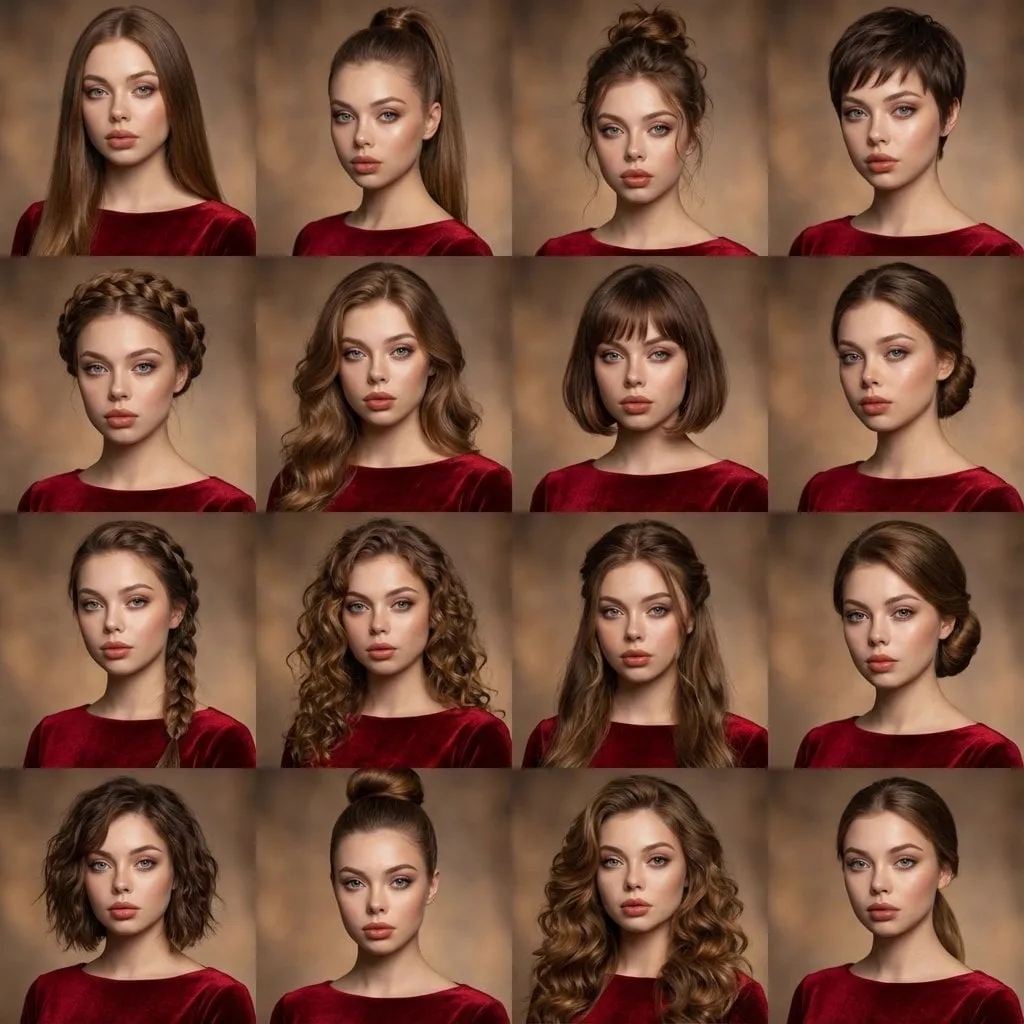
Look for tools that support reference images or multi-image fusion, where you can lock a character sheet and have the model reuse it across generations. Prompt-only consistency is weaker because small wording changes produce visible drift. When evaluating a model, generate the same character ten times from the same reference and compare the results side by side. The model that keeps the hairline, eye shape, and costume details stable is the one worth building a workflow around.
Art Style Control
Mobile games span every visual style imaginable, from chibi cartoon characters to gritty realistic shooters. The AI model must respect the studio's art direction rather than impose its own default look. This is where style reference images and model fine-tuning matter more than raw resolution.
Some models are strong at photorealism but mediocre at stylized art. Others excel at anime and cel shading but produce weak realistic renders. Check the model's gallery and, more importantly, run your own style samples through it. A model that cannot reproduce your specific aesthetic will force you to fight it at every step, which erases the time savings that made AI attractive in the first place.
Render Speed and Cost Efficiency
Mobile game marketing runs on tight timelines. A teaser for an upcoming update is only useful if it ships before the update. Render speed therefore matters as much as output quality. Models differ dramatically in how long a single clip takes, and the difference between five minutes and forty minutes per render changes how many iterations a team can afford.
Cost follows a similar pattern. Faster models with comparable quality let you iterate more, test more variations, and discard more failures. The real cost metric is not the price of one clip but the cost per usable clip. If a cheap model produces one usable shot out of ten, an expensive model that produces one out of three may actually be the better deal.
Automation of Direction and Cinematography
The final criterion is how much cinematic control the tool gives you. Camera movement, shot composition, and pacing traditionally require a human director. Modern tools are starting to automate these decisions through agent-like assistants that can interpret a brief, choose camera angles, and sequence shots.
For a solo developer or a two-person marketing team, this automation is transformative. It converts a vague creative brief into a structured shot list without hiring a director or storyboard artist. The tradeoff is control: automated direction can produce generic results, so look for tools that let you override camera moves and framing when needed.
Matching Model Strengths to Game Content Types
Realistic and Cinematic Renders
For realistic shooters and narrative RPGs, look for models with strong physics simulation and cinematic lighting. These models handle reflections, depth of field, and character close-ups well, which matters for story-driven teasers. They are also the most demanding on render time, so plan iteration cycles accordingly.
Stylized and Artistic Expression
Stylized games need models with strong style adherence and clean line work. Anime, comic, and painterly styles require models trained on those aesthetics rather than photorealistic datasets. A model that renders the game's cartoon mascot with consistent proportions and vibrant colors is worth far more than one that produces stunning but off-brand realism.
Budget-Friendly Production
Not every asset needs a flagship model. Idle animations, background loops, and particle effects can be generated with lighter, faster models while reserving the premium model for hero shots and trailers. A tiered approach keeps quality high where it is visible and costs low where it is not.
A Quality Checklist Before You Ship
Once a shot passes the initial render, run it through a quick review before spending time on polish. The checklist keeps the workflow honest and catches the failures that look fine at a glance but break in context.
Check character identity first: does the face, costume, and proportion match the reference sheet exactly? Check motion physics second: does the character carry weight, do cloth and hair react believably, and do particles behave like real materials? Check the style third: does the frame belong to the game's art direction, or does it drift toward the model's default look? Check legibility fourth: if the shot includes UI elements, text, or brand marks, are they sharp and correct? Finally, check continuity across the sequence: does the lighting, color grade, and camera language match the neighboring shots?
A useful trick is to export a contact sheet of every shot in the teaser at a small size and view it as a whole. Inconsistencies that are invisible when watching one clip at a time jump out when the entire sequence is laid out together. Catching a style drift at this stage costs minutes; catching it after final editing costs hours.
A Practical Workflow for Game Animation
The most reliable AI animation workflow moves through four stages. Start with a locked art package: character sheets, environment references, and a clear style guide. Feed that package into the generator using image-to-video and multi-image fusion rather than starting from text alone.
Second, generate in short segments. A five-second clip per shot is easier to keep consistent than a twenty-second generation, and it gives you more edit points. Third, iterate on failures deliberately. Keep the prompts and settings that worked, and change one variable at a time so you can attribute improvements to specific changes.
Fourth, assemble and polish in an editor. AI-generated shots usually need color grading, sound design, and minor cleanup before they feel finished. Plan for that post-production time instead of expecting a final trailer directly out of the generator. Teams that treat AI video as a first draft engine, not a finished product engine, get dramatically better results.
Building a Shot List for a Game Teaser
The most reliable way to apply all of these principles is to plan the teaser as a sequence of individual shots instead of one giant generation. A typical sixty-second mobile game teaser might contain eight to twelve shots, each lasting four to eight seconds. Write the shot list first: what the viewer sees, what the camera does, and what emotional beat each shot carries. Then generate each shot separately with its own prompt and reference images.
For example, an idle game teaser might open with a wide establishing shot of the village, cut to a close-up of the main character gathering resources, follow a worker walking across the scene, zoom into a building upgrade, and finish with a slow push-in on the new building with a particle burst. Each of those shots is a self-contained generation task. If one fails, you regenerate only that shot instead of throwing away the entire sequence.
This shot-based approach also makes it easier to match the art style across the teaser. Since every shot draws from the same character sheets and environment references, the look stays consistent even though the models and prompts differ. And when you are ready to scale up, the same shot list can be reused with a higher-quality model for the final cut, so the planning investment pays off twice.
Keeping a Prompt Log
Treat prompts as a project asset. Record the exact text, the model, the settings, and the seed for every shot that worked, along with a thumbnail of the result. Over time this log becomes a personal playbook that cuts iteration time dramatically. When a new update needs a trailer in the same style, you already know which prompts and settings produce the look you want, and you can adapt them to the new content instead of starting from scratch.
Common Pitfalls and How to Avoid Them
The biggest mistake is using text-only prompts for branded characters. Without a reference image, the model will invent a face, and it will be different every time. Always anchor generations to visual references.
The second mistake is judging a model on its marketing gallery. Those showcases are curated from hundreds of attempts. Run your own tests with your own assets before committing to a tool or a pricing plan.
The third mistake is skipping prompt engineering for motion. Describing camera movement, speed, and action beats matters as much as describing the scene. A prompt that says "the character dashes forward, camera follows from the side" produces a fundamentally different clip than one that only lists the character and setting.
Finally, do not ignore licensing. Know exactly what you can do with generated assets before shipping them in a commercial game. Terms vary between tools, and a trailer that you cannot monetize is a trailer you cannot use.
Frequently Asked Questions
Can AI video generators replace a traditional animation team?
For short marketing assets, often yes. For full gameplay cinematics with complex rigging and lip sync, no. The realistic role is a force multiplier that lets a small team produce what used to require a larger one.
How long does a typical AI-generated game teaser take?
A finished thirty-second teaser usually takes a few days of iteration, including prompt testing, generation, and editing. The generation itself is minutes per clip; the iteration and polish dominate the timeline.
What resolution should I generate for mobile game marketing?
Generate at the highest resolution the model supports, then downscale for app store assets and social platforms. Vertical formats for stories and reels are often more valuable than widescreen for mobile games, since that is where the audience actually spends time.
Is character consistency really achievable with AI video?
Yes, when you use reference images and multi-image fusion as the foundation. Consistency is unreliable with text-only prompts but becomes dependable once the model has a fixed visual anchor.
Which models work best for stylized anime-style games?
Models known for strong style adherence and anime training data are the safe starting point. Test your own character sheets through them, because style fit is more about your specific art direction than about any model's general reputation.
