

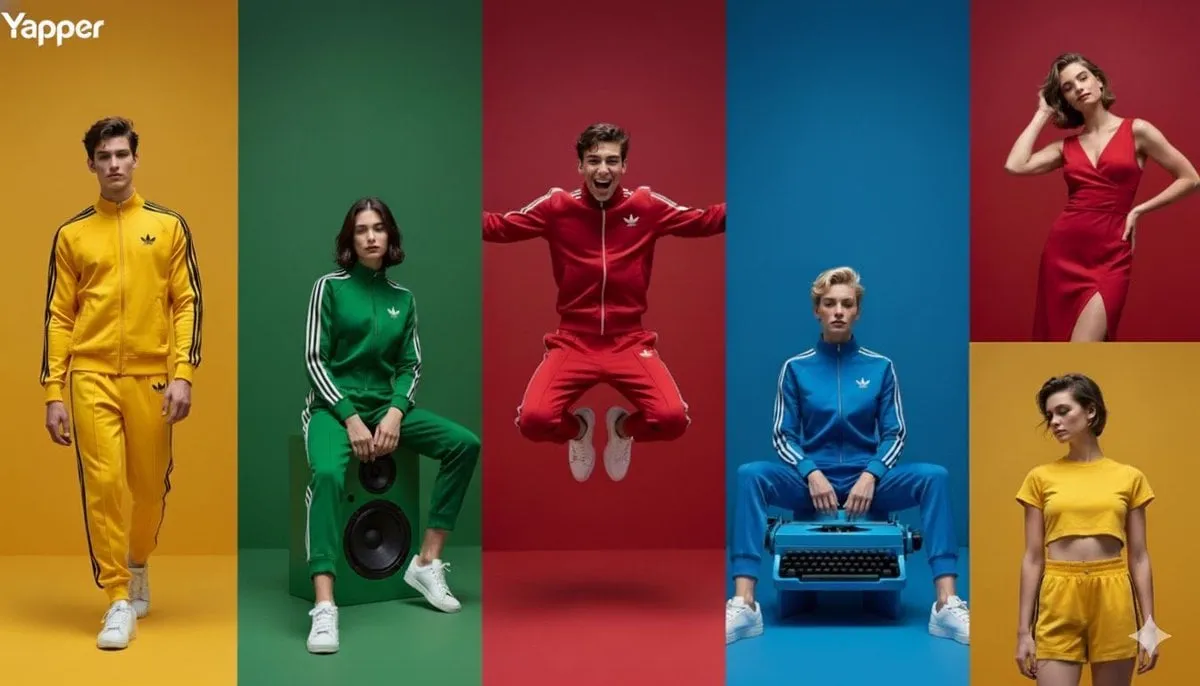
Generic content is losing its power. Audiences scroll past videos that feel mass-produced, and they reward creators and brands that speak directly to them. The challenge has always been scale: personalizing video for hundreds or thousands of distinct audience segments used to be impossible, because every variation required manual production.
Generative AI changes that equation. With AI, a single video concept can be adapted into many versions: different languages, different messaging angles, different visual styles, even different characters. This guide explains how hyperpersonalized video actually works, where it delivers real value, and how to build a pipeline that produces it reliably.
What hyperpersonalization really means
Hyperpersonalization goes beyond inserting a viewer's name into a video. It means tailoring the content itself: the message, the tone, the visuals, the call to action, and sometimes the entire narrative, based on what you know about the audience.
For example, a fitness brand might create one video for beginners emphasizing encouragement, another for advanced athletes emphasizing performance data, and a third for busy parents emphasizing short workouts. Same product, same core message, but three different videos built from one production system.
The key word is relevance. The more relevant a video feels to an individual, the longer they watch, the more they remember, and the more likely they are to act. That is why hyperpersonalization has become a priority for marketers and creators who measure results rather than vanity metrics.
It is worth being precise about the difference between personalization and hyperpersonalization. Personalization typically uses a handful of variables: name, location, language. Hyperpersonalization goes deeper: it adapts the storyline, the emotional register, the examples, and the visuals to a segment's specific needs. That depth is what creates the feeling that the video was made for one person.
Why AI makes personalization possible now
Traditional video production is expensive and sequential. Each version of a video means a new script, new visuals, new edits. AI collapses that cost structure in several ways:
- Text-to-video and image-to-video generation produce new scenes from prompts instead of live shoots.
- Multi-image references keep characters and styles consistent across many versions.
- Language adaptation lets one concept travel across markets without reshooting.
- Agentic direction tools plan scenes and maintain narrative logic, reducing manual coordination.
This combination means the marginal cost of producing an additional video version has dropped dramatically. When the cost of a variation approaches zero, personalization at scale becomes a practical strategy instead of a theoretical ideal.
The consistency problem that had to be solved first
Before personalization could scale, AI video had to solve consistency. If every version of a campaign featured a different-looking presenter or a different style, the brand would lose identity, and the variations would confuse rather than persuade. Multi-image references and reusable style definitions solved this: the same visual identity can be locked once and applied to every segment version.
Case 1: Product launches with audience-specific campaigns
Consider a software company launching a new tool. The general launch video can reach everyone, but different segments care about different things. Designers want to hear about workflow speed; managers want to hear about team collaboration; executives want to hear about return on investment.
With an AI-driven pipeline, the team can build one core script and generate tailored versions per segment. The visuals adapt too: for designers, close-ups of the interface; for managers, diagrams of team workflows; for executives, clean summary graphics. Each version feels like it was made for that audience, because it was.
The measurable effects are typically: higher click-through rates, longer watch times, and better conversion on the specific action each segment is meant to take.
A concrete example
A SaaS company targeting three roles could produce three versions of a 45-second demo video. Version one opens with a designer complaining about manual export workflows. Version two opens with a manager frustrated by status meetings. Version three opens with an executive worried about license waste. The product demo in the middle stays identical, but the framing, the examples and the closing message are segment-specific. Production time: roughly the same as for one video, because the pipeline generates the variations automatically.
Case 2: Adaptive learning modules in education
Education is a natural fit for hyperpersonalization because learners differ in background, pace and goals. A generic lesson video leaves some students bored and others lost.
AI can generate multiple versions of the same lesson:
- A beginner version with more explanations and slower pacing
- An advanced version with deeper examples and technical vocabulary
- A version tailored to a specific industry, using relevant case studies
- A version in the learner's preferred language, with culturally appropriate examples
The consistency requirement is crucial here: the instructor character or the visual style must remain the same across versions, so learners do not feel they are getting a different product. Multi-image references solve exactly this problem.
Why consistency matters for learning
Research on learning suggests that a recognizable, consistent instructor builds trust and reduces cognitive load. When the same teacher appears across lessons, the learner can focus on the content instead of recalibrating to a new face. Hyperpersonalization without consistency would undermine this effect. This is why the technical foundation of personalization is really the same as the foundation of good series production: stable characters, stable styles, reusable assets.
Case 3: Interactive storytelling and creator monetization
For creators, hyperpersonalization opens new revenue models. Instead of a single video for everyone, creators can offer personalized experiences: a story where the viewer chooses the protagonist's appearance, a greeting video featuring the creator's character with the viewer's name, or a series where the ending adapts to audience votes.
Personalized content is also more likely to be shared, because it feels unique. The viewer becomes part of the story, and that emotional connection translates into engagement and loyalty.
Creators who build a library of reusable characters and styles can produce these variations quickly, turning a single creative concept into a portfolio of paid experiences.
From one-off to recurring revenue
The most interesting pattern is recurring personalization. A creator who publishes a personalized monthly video for supporters builds a habit: the audience expects their version, and the relationship deepens over time. Because the production is template-driven, the marginal cost per subscriber stays low while the perceived value stays high.
The pipeline: from audience data to finished video
Building hyperpersonalized video at scale requires a repeatable pipeline. Here is a practical architecture that works for teams of one and teams of many.
Step 1: Define audience segments
Start with your audience data. Identify the segments that matter for your goal: by role, by stage, by interest, by region. For each segment, write down the core message, the tone, and the key visual preferences.
Step 2: Create reusable assets
Build the visual foundation once: character reference sets, style definitions, brand elements, and approved prompts. These assets are the raw material for every variation. The more consistent the foundation, the more consistent the output.
Step 3: Generate variations
Use your video generation tooling to produce a first draft for each segment. Keep the core message intact and vary the framing, examples and calls to action. Generate in small batches and review each version against the segment brief.
Step 4: Validate and refine
Review the variations with fresh eyes. Does the beginner version actually feel easier? Does the executive version actually talk about the things executives care about? Personalization fails when the variations are cosmetic only. Each version must be genuinely relevant.
Step 5: Distribute and measure
Deliver each version to its segment through the channels you already use. Track engagement per segment, and feed what you learn back into the next round of asset creation and prompt tuning.
The feedback loop
Personalization is not a one-time exercise. The best teams treat it as a loop: generate, distribute, measure, learn, refine. Over time, the segment briefs get sharper, the prompts get better, and the assets get more reusable. That compounding effect is what makes early investment in the pipeline worthwhile.
Technical challenges and how to handle them
Hyperpersonalization at scale is not free. Several technical challenges tend to surface.
Consistency across versions
The biggest risk is visual drift: each version starts to look different, and the brand or character identity weakens. Mitigate this with centralized reference assets and strict style rules applied to every generation.
Generation cost and queue management
Producing many versions consumes significant compute. Plan your production in batches, schedule off-peak generation when possible, and reuse cached assets where you can. A task queue that organizes generation work prevents overload and keeps the pipeline predictable.
Quality control
Automated generation produces failures. Build a review step into the pipeline rather than trusting output blindly. For high-stakes campaigns, a human check on every version is still worth the time.
Privacy and data responsibility
Personalization relies on audience data. Handle that data responsibly: collect it transparently, use it only for the stated purpose, and make it easy for users to control their preferences. Trust is part of the product.
Version management
When you produce ten variations of one campaign, you need a way to track which version went where, which one performed, and which assets are still in use. A simple naming convention and a shared spreadsheet can go a long way before you invest in heavier tooling.
Building a personalization strategy
Technology is only half the story. A clear strategy decides where personalization pays off and where it is wasted effort.
Start with a high-impact, narrow use case
Do not try to personalize everything at once. Pick one funnel, one campaign, or one product line where relevance clearly moves the metric. Prove the value, then expand.
Measure the right things
Compare personalized versions against a control version on the same segments. Watch for engagement, conversion, and retention. If personalized versions do not outperform, your segments or messaging need work.
Make it sustainable
Personalization should not depend on a single hero person writing every prompt. Build reusable templates, document what works, and let the pipeline grow with your learnings. The goal is a system that improves over time.
Decide where not to personalize
Some content should stay universal: brand manifestos, company announcements, product fundamentals. Personalization is a tool, not a default. Applying it everywhere dilutes the effect and multiplies cost. Choose the touchpoints where relevance has the highest leverage.
Budgeting and team setup for personalization
Hyperpersonalization changes cost structures, and teams need to plan for that shift. Here is a practical view of what to budget for and who should be involved.
Where the budget goes
In traditional production, most of the budget goes to people and shooting. In an AI-driven personalization pipeline, the mix changes: generation compute, prompt and asset development, and quality review become the main cost centers. Plan for several iterations per version, because the first pass rarely nails the segment brief.
Who does what
A small personalization team can be remarkably compact. One person owns the segment briefs and audience understanding. One person owns the asset library: reference images, style definitions, brand elements. One person owns generation and review. In a solo setup, one person does all three, but the roles should still be separated mentally so nothing is skipped.
The tooling stack
Keep the stack simple at first. A video generation platform with multi-image references, a shared folder for assets, and a simple tracking sheet for versions is enough to start. Fancy workflow tools can come later, once the volume justifies them.
Time expectations
The first personalization project takes longer than it should, because the asset library and prompt templates are being built from scratch. The second project is faster. By the third, the reusable assets pay for themselves. Set expectations accordingly, and do not judge the approach by the first project alone.
FAQ
How many segments should I start with?
Three to five is a good starting point. Enough to test the concept, few enough to manage quality.
Is hyperpersonalization only for big brands?
No. Solo creators can use the same techniques for audience-specific series, personalized offers, or niche content. The pipeline scales down as easily as it scales up.
Does personalization always improve results?
Only when the variations are genuinely relevant. Cosmetic personalization, like inserting a name without changing the message, rarely moves metrics and can feel gimmicky.
What role does character consistency play?
It is the foundation. If every version features a different-looking presenter or style, the audience loses trust in the brand identity.
What should I do first?
Define one segment pair that clearly differs in needs, create the reusable visual assets, and produce a test version for each. Measure, learn, then scale.
How much time does a personalization pipeline take to build?
A first version can be up in a day or two if you already use AI video tools. The asset library and prompt templates take a few iterations to mature, but the core loop is simple.
Final thoughts
Hyperpersonalization is not about doing more work; it is about doing smarter work. AI gives you the leverage to treat each audience segment like a real relationship, at a cost that makes it sustainable. The teams and creators who master this will not just produce more videos; they will produce videos that people actually feel were made for them. Start small, measure honestly, and let the system compound.
